
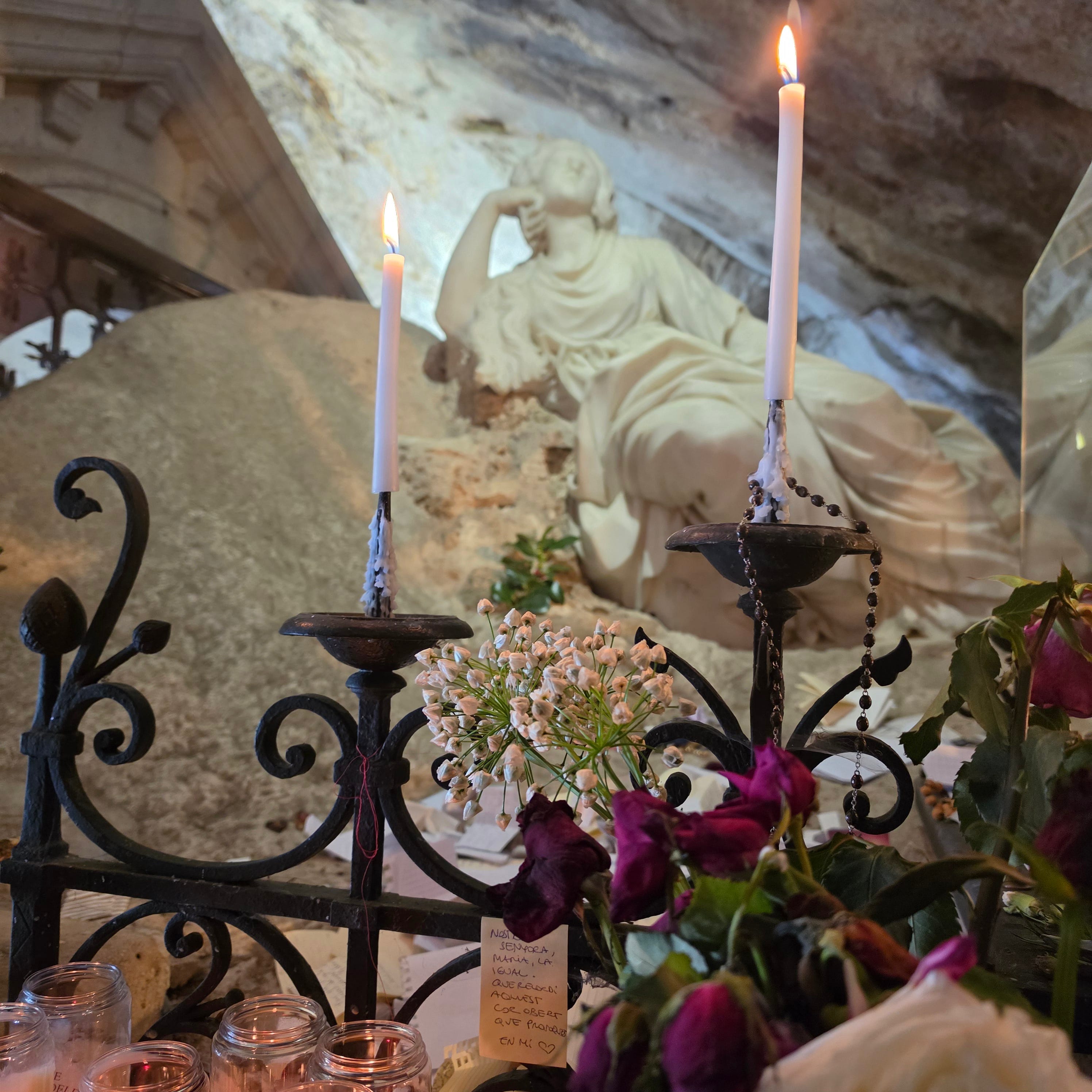
When I returned from my recent pilgrimage through Portugal and France in search of the Divine Feminine, I was still carrying the journey in fragments. There were images from churches and caves, Black Madonnas and Magdalene chapels, stone stairways, train stations, unexpected encounters, and the strange inner weather that accompanies a journey taken for reasons that are not entirely practical. I had gone looking for something ancient, elusive, and feminine — not as an idea, exactly, but as a presence that has moved through art, myth, devotion, landscape, and the hidden layers of European spiritual history.
When I came home, dear friends invited me over. They did not ask for the short version. They sat me down and asked me to tell them the whole story, play by play. It took hours. I spoke about where I had gone, what I had seen, what had moved me, what had disappointed me, what had surprised me, and what I still did not understand. They listened with a kind of quiet attentiveness that changed the experience of the journey itself. Their questions slowed me down. Their curiosity helped me remember details I might have passed over. In the act of telling, the pilgrimage became something more than a private sequence of events. It became a shared narrative.
That evening has stayed with me almost as much as the journey itself. There was something deeply human in it: the return, the gathering, the listening, the retelling. My friends were not simply receiving information about where I had been. They were helping me understand what had happened. By listening, they entered the story. By asking questions, they changed its shape. By giving their attention, they allowed the experience to become more fully known.
This is the part of storytelling I have been thinking about. Story is not only what happened. It is also what happens when experience is spoken aloud in the presence of another human being. A story becomes different when it is received. It gathers relationship. It becomes less solitary. It begins to reveal meanings that may not have been visible while we were still moving through the events themselves.
Personal narrative, in this sense, is not simply autobiography or memory. It is one of the ways human beings make knowledge from experience. We live something first, often in fragments. Later, through telling and retelling, we begin to understand what the experience carried. This is especially true of journeys, losses, encounters, childhood memories, spiritual questions, and those moments that disturb or enlarge our sense of who we are.
Across cultures, story has long served this function. Before knowledge was divided into subjects, disciplines, or professional categories, it moved through voice, memory, image, place, gesture, and repetition. Stories helped people remember where they came from, make sense of what had happened, and offer guidance to those coming after them. They could carry practical knowledge, moral insight, humour, grief, warning, cosmology, family history, and cultural memory all at once.
This is also where my interest in anthroposophy, feminine wisdom, and storytelling meet. In anthroposophy, imagination is not treated as a decorative addition to knowledge. It is understood as one of the capacities through which human beings perceive meaning. A story does not hand us a concept in a finished form. It gives us an image to live with, return to, and slowly understand. Feminine wisdom, at least as I have come to approach it, often moves in this same way. It is carried through relationship, memory, body, intuition, care, and the quiet transmission of experience.
On my pilgrimage, I was looking for traces of the Divine Feminine in sacred art and place. Yet when I returned, I found another aspect of the feminine in the act of being received. The listening circle, the questions, the patience, the willingness to let a story take the time it needed — all of this felt like part of the same search. Knowledge was not being extracted. It was being held.
That is what personal narrative can do when we approach it with care. It allows a life to become legible, not all at once, and not always neatly. It gives form to what might otherwise remain private, scattered, or half-understood. It also reminds us that our stories are never entirely ours alone. They are shaped by those who came before us, by the cultures we inherit, by the places that form us, and by the people willing to listen when we return.
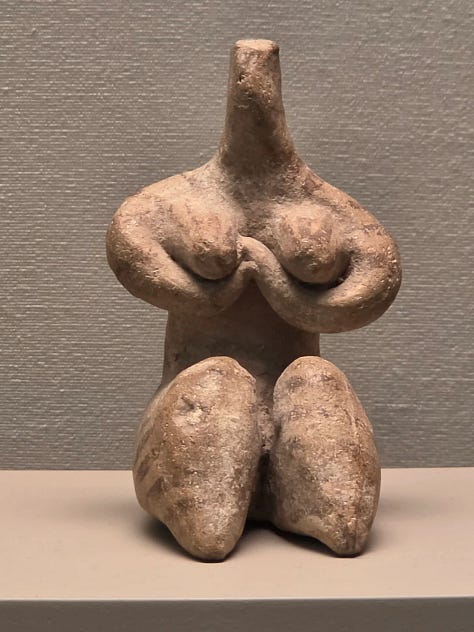
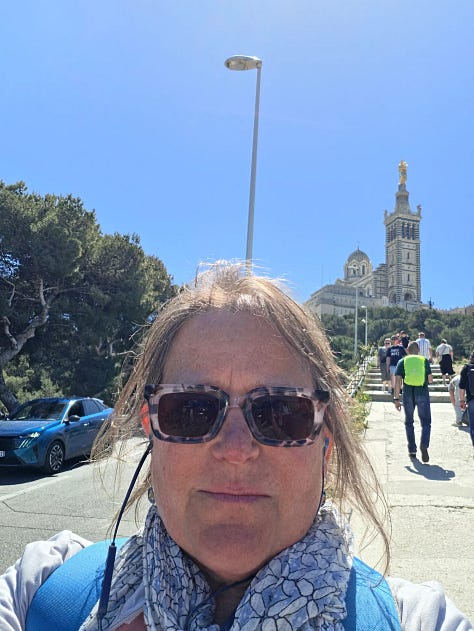
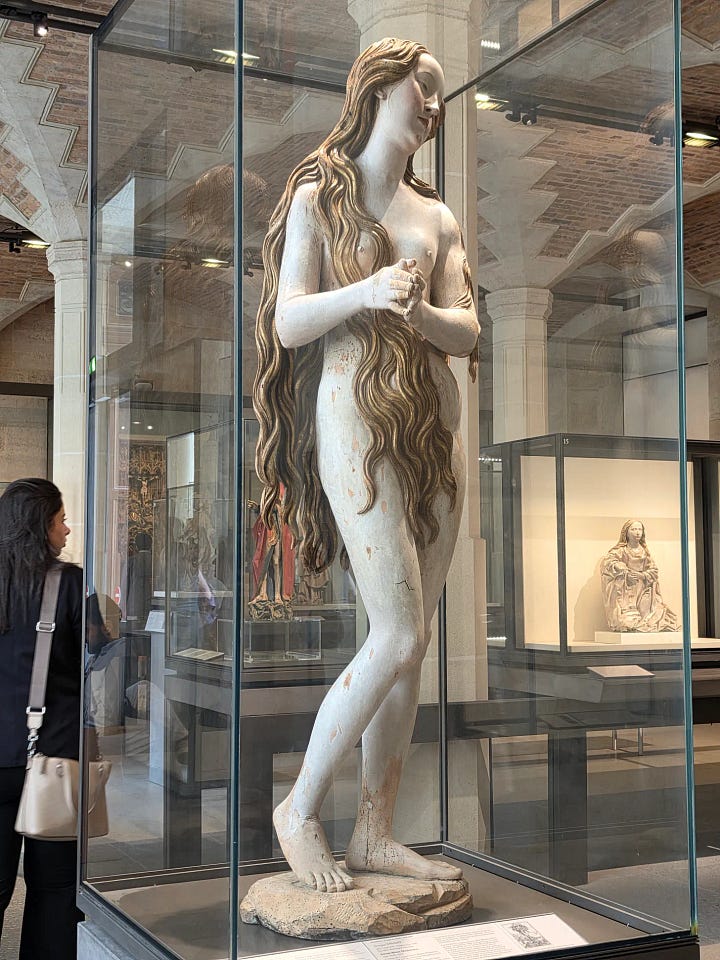
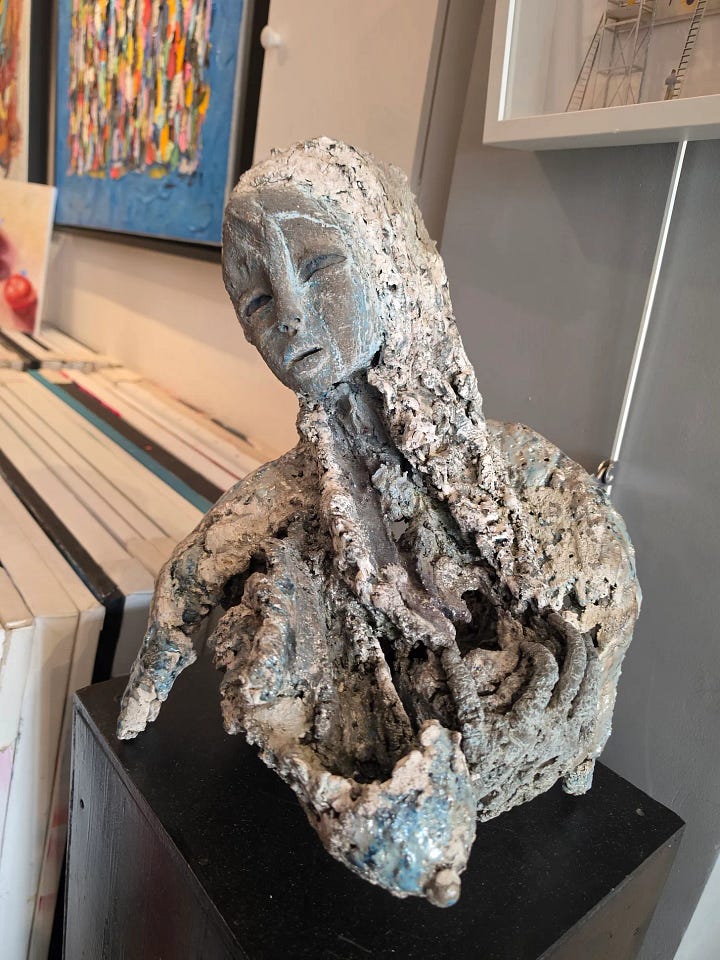
Divine Feminine Gallery



Perhaps this is why stories continue to matter. They are not simply records of the past. They are living vessels of meaning. They carry origin, uncertainty, longing, contradiction, and change. They help us ask, again and again, the questions that follow every pilgrimage, whether outward or inward: Where have I been? What has changed in me? What am I now carrying forward?
Share this with someone you think would benefit from this knowledge!
Comments
Nothing yet. Say the first thing.
Sign in to join the conversation.