
Jensen Huang, the chief executive of NVIDIA, used his keynote at CES 2026 to highlight what he described as the next phase of artificial intelligence: systems that operate in the physical world.
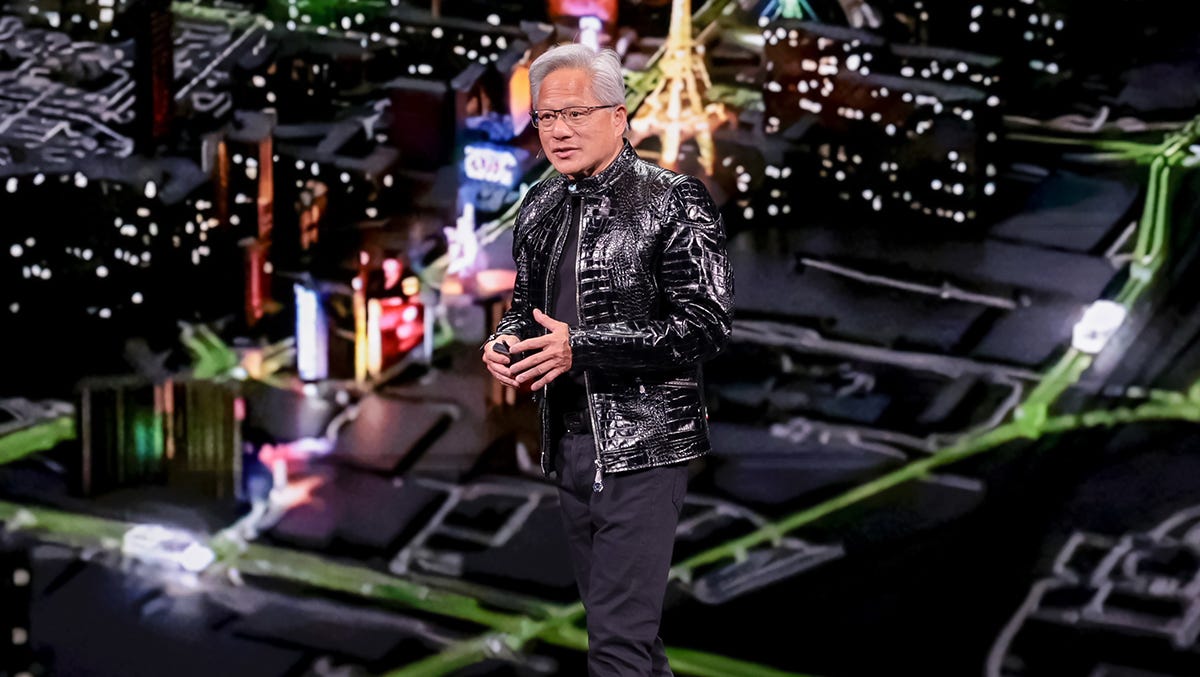
Huang referred to this shift as “physical AI,” a term that encompasses robotics, autonomous vehicles, and machines that can perceive, plan, and act in real time. The concept is not new, but Huang’s message was that the technology is becoming more viable at scale.
“The moment for physical AI has arrived,” he said, addressing an audience at one of the event’s most closely watched sessions.
His remarks focused less on consumer electronics and more on industrial systems, positioning NVIDIA as a central player in the computing infrastructure behind this transition.
Extending AI Into Physical Systems
Over the past decade, advances in artificial intelligence have largely unfolded in digital environments. Models became more capable through increases in data, parameters, and computational power. Huang suggested that these same forces are now enabling AI systems that interact with the physical world.
“AI is scaling into every domain and every device,” he said.
In this context, physical AI is not a new category of technology but an extension of existing capabilities into environments shaped by time, motion, and risk. Robots and autonomous systems were featured prominently in the keynote, not because they are new, but because they place the highest demands on AI systems operating in real time.
A Long-Term View of Autonomy
Huang said that “everything that moves will ultimately be fully autonomous,” a line that drew attention for its broad ambition. But he emphasized that this was a long-term goal, not an imminent reality.
The keynote framed autonomy as a destination that becomes feasible when perception, planning, and control systems reach a level of reliability and cost-effectiveness that supports widespread deployment.
That view helps explain NVIDIA’s continued investment in autonomous driving, one of the most complex areas for AI deployment. Self-driving vehicles must interpret surroundings, plan routes, respond to unpredictable human behavior, and comply with local laws — all in real time.
For NVIDIA, the domain functions as a testbed for physical AI under real-world conditions and public accountability.
The Infrastructure Argument
Huang paired the technical story with an economic one, arguing that accelerated computing optimized for AI workloads is steadily replacing traditional data center infrastructure. He described AI as a multitrillion dollar computing transition and positioned NVIDIA’s hardware and software stack as a core enabler of that shift in sectors such as manufacturing, transportation, logistics and healthcare.
Reducing the Cost of Computation
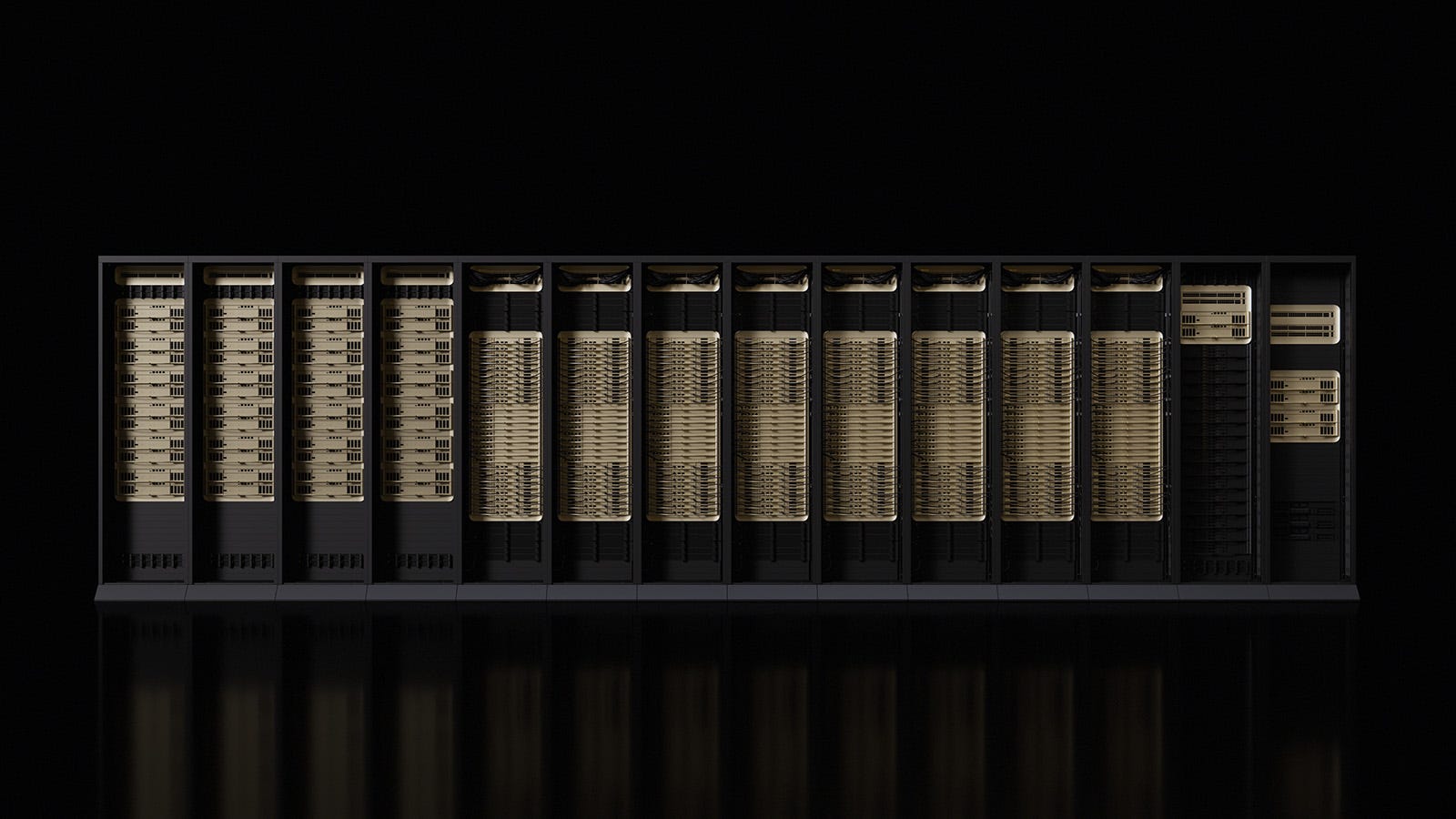
Huang also announced that NVIDIA’s next-generation computing platform, Vera Rubin, is now in full production. Named after the astronomer who helped confirm the existence of dark matter, Rubin is designed to support large-scale AI workloads while lowering the cost of computation.
Huang said Rubin could reduce the cost of generating AI tokens — the units of computation used by large models — by as much as 90 percent compared to earlier systems.
That reduction is particularly relevant for physical AI, where training and deployment often rely on large-scale simulation, synthetic data, and repetitive testing across varied environments. Lower costs could make such efforts more viable beyond research settings.
Open Models and Broader Participation
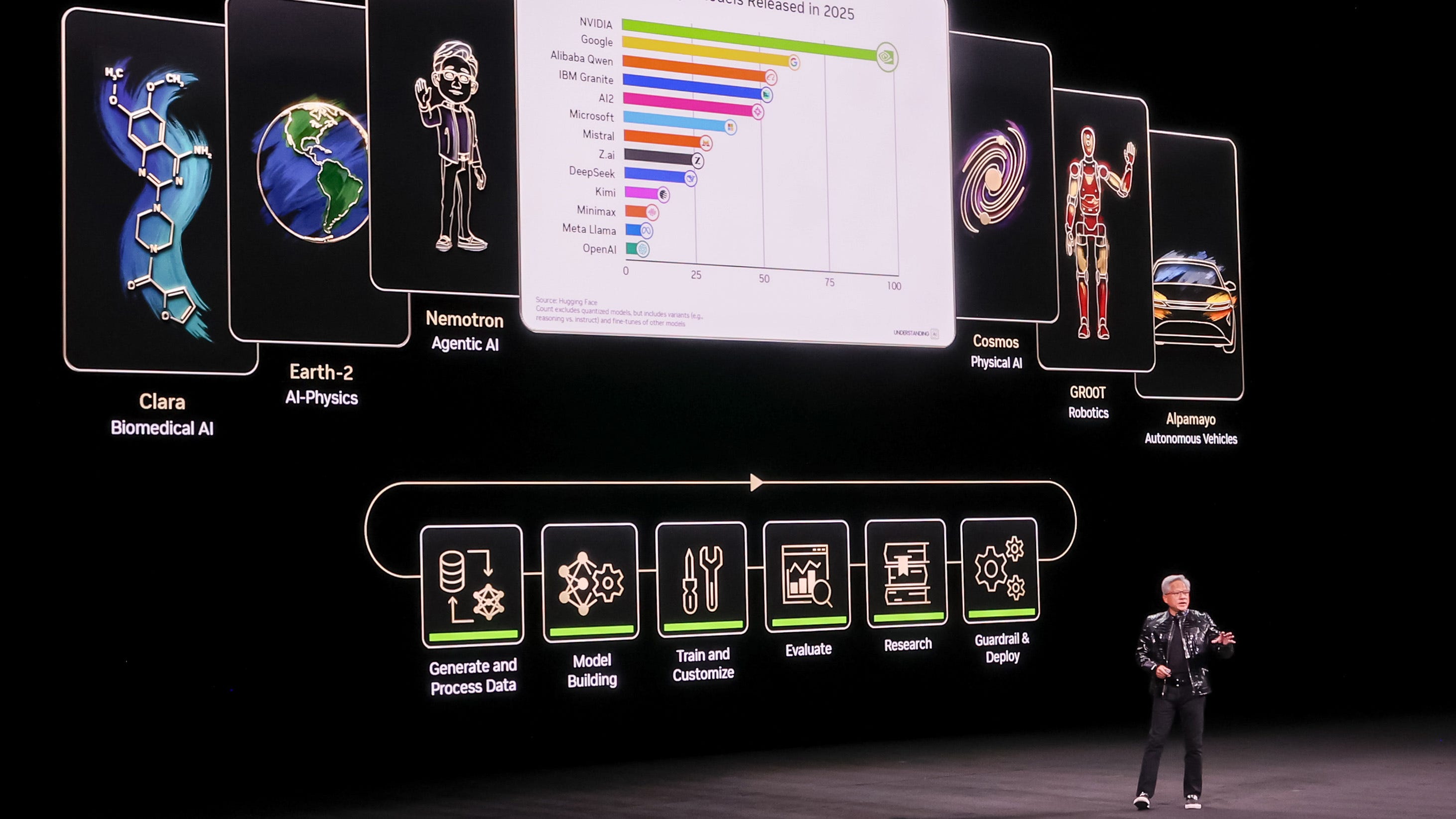
Huang emphasized that NVIDIA would continue building and releasing open models, including Alpamayo, a new reasoning model designed for safe deployment in autonomous systems.
“We build it completely in the open so that every company, every industry, every country can be part of this AI revolution,” he said.
The approach reflects a practical reality: no single company can train models for every road, factory, or operational scenario. By supporting open models, NVIDIA enables others to contribute to and expand the use of physical AI while reinforcing its role as a platform provider.
A Cautious Analogy to ChatGPT
Huang described this period as a “ChatGPT moment for robotics,” echoing a phrase that other industry leaders have used. Huang signaled that the analogy has limits.
Unlike conversational AI, robotics must contend with the physical world, where errors can cause immediate and observable harm and where deployment is constrained by safety, regulation and reliability requirements. As a result, progress tends to be more incremental than the rapid consumer adoption seen with chatbots.
What the phrase effectively highlights is a convergence of capabilities. Advances in perception, planning, control and high fidelity simulation are arriving together, creating conditions in which broader deployment of robots and other physical AI systems is starting to look commercially and technically viable.
Looking Ahead
CES has long been a showcase for digital experiences. NVIDIA reframed it as an inflection point where AI begins to reshape how machines see, move and work alongside people. The company is wagering that this transition to physical AI will stretch over years and that owning the compute and software stack will matter more than any single robot or device.
#nvidia #nvidiaces2026 #physicalAI
Comments
Nothing yet. Say the first thing.
Sign in to join the conversation.