
During a previous contracting gig, I noticed that every time I joined a video call with a colleague, Adam, I actively avoided looking at him. Not glancing away occasionally. Avoiding. Writing notes I didn’t need to take. Moving things around on my screen. Finding reasons to look anywhere but that little video box with him in it.
A conversation with a product leader I’m coaching brought me back. She described a similar situation with a triggering colleague. He frustrates her and makes her doubt herself. I recognized the patterns immediately because I’d been there too.
I’m sharing a few techniques that worked for me and my client.
As a product person trained to spot patterns, you notice when someone’s feedback is prescriptive. You catch the edge in their tone. The three times they dismissed your idea are ingrained in your brain. There’s no doubt.
The problem is what comes next. Your brain takes that observation and builds a fortress around it. For me, every new thing Adam said filtered through the conclusion I’d already reached. He suggested a different approach? That’s him being inflexible. He asked a clarifying question? That’s him not trusting me. He was quiet in a meeting? That’s him judging.
I wasn’t wrong about those moments. Yet I’d made them mean something they might not actually mean.
For my client, the feedback from her Adam equivalent felt off. She found his comments reflected a fixed mindset, someone rigid in their approach. Every subsequent interaction became confirming evidence. Every Slack message proved her theory. Every meeting felt dismissive. Her “hypothesis” never reached the update phase because the evidence gathering phase was rigged by her beliefs.
When I talked to my coach about these experiences, he shared a quote attributed to various people including Buddha and Nelson Mandela.
“Holding a grudge is like taking poison and expecting the other person to die.”
The validation of “see, he did it again, exactly what I expected” feels like security and makes us feel smart and observant. I was making myself smaller. You’ll remember from our last article, that is a habit I’m trying to break.
When a certain person stresses you out before they say or do anything, every good thing you could bring to a situation, including openness and curiosity, diminishes. You default to the expected story and stop seeing what’s actually playing out in front of you.
Under pressure, your brain filters everything through your pre-decided views, like a colander straining spaghetti. The strands your brain catches serve as evidence, confirming your narrative. Any new information runs through the colander, passing by without registering.
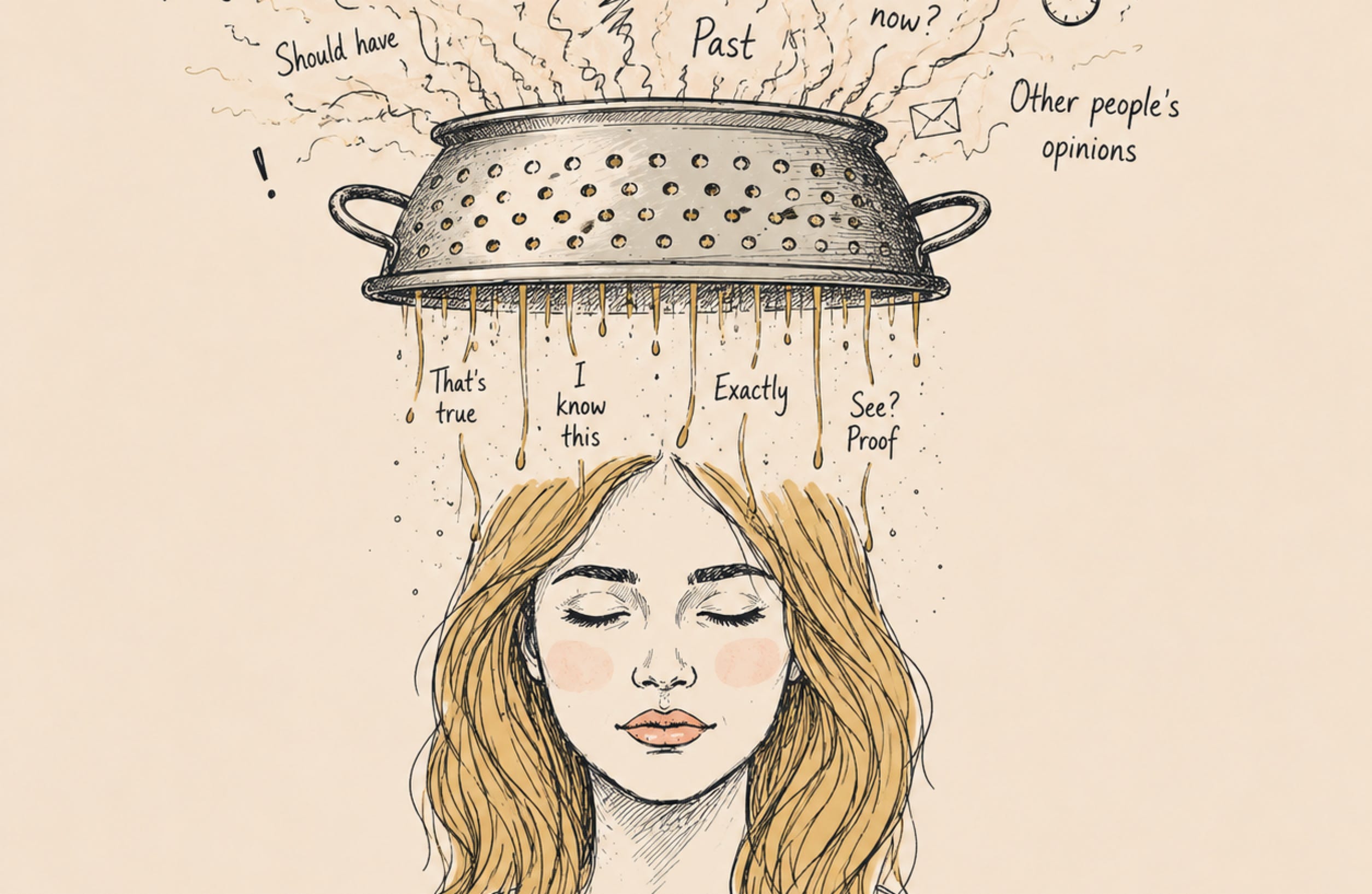
The friction isn’t always about perceiving the other person to be wrong. It’s often about their approach not matching our expectations. Once you’ve decided someone’s story, you treat them differently. You assume the worst, and they sense it.
My bias towards others shows up when I feel someone is not seeing or acknowledging my views or contributions.
Sometimes, the person is the problem. If they’re blocking work or harming the team, that’s not a lens issue. That’s a behavior issue. I manage my reactions (breathing, grounding). I also address it directly by documenting instances, having a direct conversation, involving my manager or HR if needed. The distinction is important.
After discussing these scenarios with my coach, he asked me to do something that sounded weird but actually upon trying was releasing.
First, hold the physical feeling of being valued. Genuinely access it. Remember what it’s like when a collaboration is flowing, in a real exchange where I feel heard. Let that state takeover. Then, from that state, revisit one of Adam’s messages.
Same message. Different nervous system.
The email I read as condescending looked more like feedback. Not warm feedback, but feedback from someone trying, however clumsily, to provide useful guidance.
My coach asked: if this email had come from someone you trusted, how would you have interpreted it?
I would have read it as an invitation to iterate.
The email didn’t change, but my interpretation did. I realized the problem wasn’t that I’d formed an opinion of Adam. The problem was that I’d stopped being curious about what else might be true.
Not looking at him on calls didn’t protect my focus. I was protecting a picture I’d already painted and refusing to let anything disrupt it.
When the product leader I’m coaching described her situation, I didn’t tell her to make peace with the friction or pretend the behavior wasn’t real. Some behavior warrants naming and addressing directly. But there’s a difference between dealing with something and letting it control you.
Before you invest energy in managing your reaction, ask yourself three things:
Is this affecting actual work output (missed deadlines, team conflict, blocked decisions) or just my internal experience?
Have other people flagged this behavior or am I the only one noticing it?
Would I care about this if it came from someone I already trusted?
If you answered yes to #1 or #2, it’s probably real behavior that needs addressing. Document specifics, have a direct conversation (”I’ve noticed X happens in meetings and it impacts Y”), loop in your manager or HR if needed.
If it’s mostly #3, you’re likely dealing with a lens issue. From my coach and client work, here’s what helps.
Before a meeting, look at the invite multiple times. When you see the name, your stomach tightens. That’s real information, not a verdict. Practice breathing through it instead of closing the calendar.
In the meeting, try one minute of genuine curiosity. Ask yourself what you might be missing. They may be anxious or didn’t sleep well. Loosen the grip on your preconceived beliefs and consider other possibilities.
Know what you need. Is it to feel heard? Part of the exchange? Once you know what you want, you can work towards it instead of just gathering evidence that confirms your existing belief.
Have a backup plan for when you get triggered anyway. Breathe. Put your feet on the floor. Focus on the work as it’s typically more important than the frustration.
You often can’t make someone more self-aware, especially if your assessment of them being rigid and having a fixed mindset is accurate. What you can control is you and how you show up with them. Whether you walk in believing a story with the ending already written or you’re open to a plot twist.
Some days I’m fine letting the story unfold. Other days I notice I’ve already got the hair on the back of my neck standing up before Adam talks. On those days, I remember the email exercise. I breathe and start over.
The real win isn’t that you suddenly like the difficult person. It’s that they stop controlling how you show up.
---
Has someone been taking up too much space in your head? We’d love to hear how you’ve navigated it. We’re here to help too. Hit reply.

P.S. If you found this helpful, share it with a product friend. If you’re not subscribed, join us! Here are a few other ways to connect.
Reach out over LinkedIn: Diana Stepner
Curious about coaching? Let’s talk.
Comments
Nothing yet. Say the first thing.
Sign in to join the conversation.