
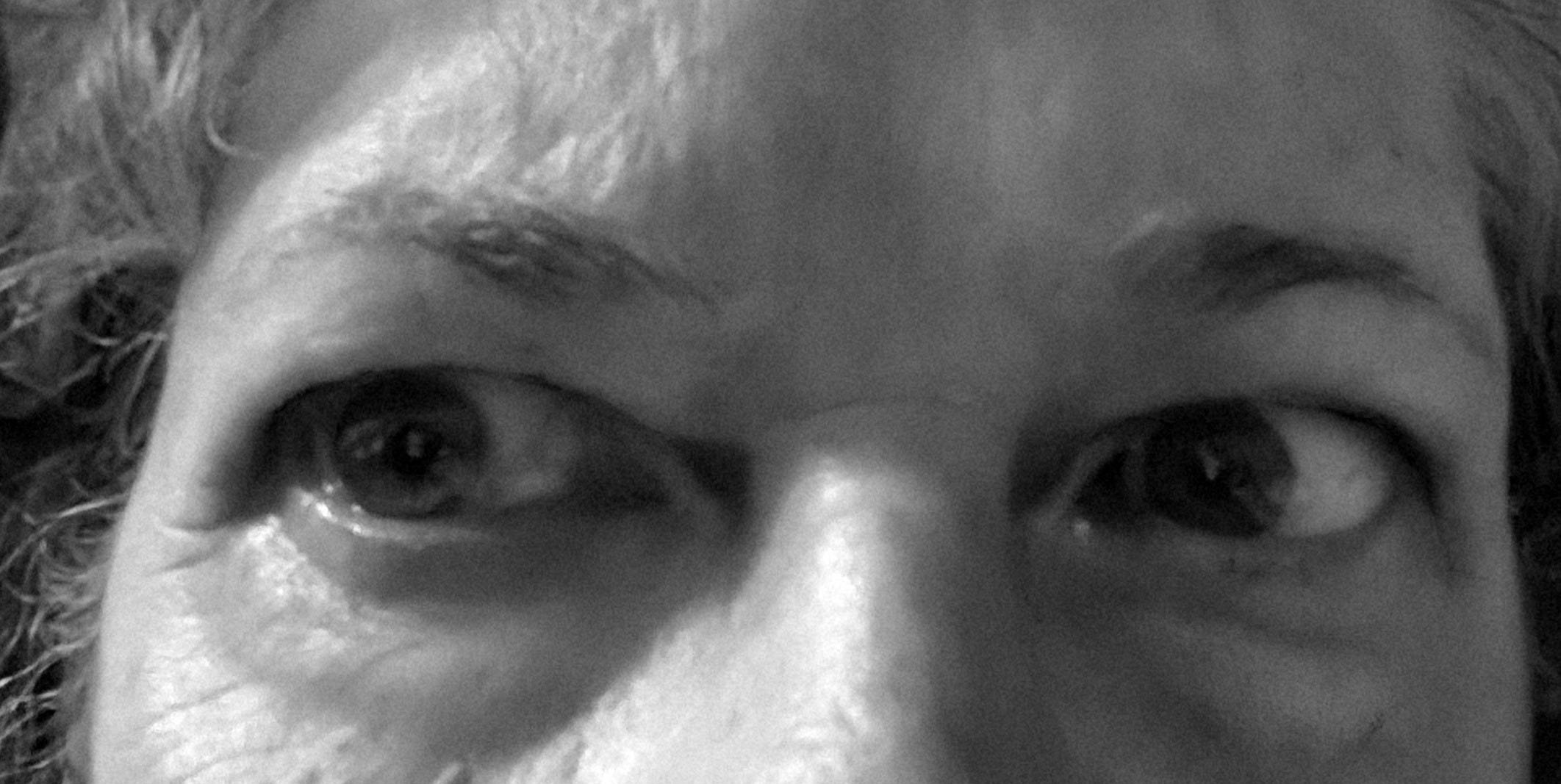
Most people’s social media accounts show the best parts of their lives – holidays, graduations, birthdays, children and grandchildren, achievements, pretty landscapes and so on. Life is a mixture for most of us, so this morning I want to write about my recent cataract surgery.
The weight of the word ‘cataract’ first, once it’s not being applied to a waterfall. Old people get cataracts. Many of us have seen older relatives with their milky, watery eyes. Hearing you need cataract surgery rocks you – as much as you might try to eat well and exercise, the fact is – your body is beginning to fail.
Then the mechanics of eye surgery. Surgery means cutting. A knife brought to the eye. The eye. It just doesn’t seem suitable for cutting. I think of the attack on Salman Rushdie and his book Knife, which I have read. He lost his eye.
I get a glossy colour booklet from my doctor, explaining the procedure. Procedure sounds better than surgery. The title of the booklet is Surgery for Cataract Extraction and Implantation of Intraocular Lens. So this is not just about removal of cataracts – I imagine them like spider webs, sticky but frail, easy to pull off – it’s also about something new in my eye. An implantation. The booklet explains that the lens is a ‘small plastic artificial lens made of polymethylmethacrylate, silicone or HEMA material with polypropylene, nylon or methacrylate supports placed inside the eye permanently.’ The word ‘inside’ is bolded but not the word ‘permanently’. I will be getting a new lens made of some form of artificial material. I will have a plastic eye to accompany all the microplastics already in my body.
I realize I have only the haziest understanding of how my eyes work. I know they focus and refocus and I imagine this is due to the lens changing shape. How will a fake lens do that? Will I feel it? Will I be able to see it? Will it fall out? Will it hurt? My doctor is patient and answers all my questions, although I am conscious of the full waiting room outside. I know many others who have had this surgery – a walk in the park, is the consensus. I woman-up.
On to the cost. I do have private health insurance for major medical, which more or less means surgery done in a hospital. I call my health insurers – will they regard cataract surgery as ‘surgery’ or as a ‘procedure,’ the latter being not covered? They both laugh, but I know insurance companies. Happily, cataract surgery is indeed surgery. Pre authorization is needed. At this point, I don’t ask about the public health system – I imagine a waiting list of months and the air conditioning breaking down and certainly not this high tech, multisyllabic lens. I opt for anesthesia, doubting I can just lie there while someone cuts into my eye however effective the pain medication. As a result, I will need blood tests and an EKG – those are not covered by my insurance. I can’t at this point tell you the cost of the whole matter – we’ll have to see what the insurance pays for and what I will have to fund.
The EKG comes back with a question mark – my heart has a ‘bundle’ and the machine doesn’t like it. I dig up in old health records, being grateful that I still have strong administrative skills, find that the ‘bundle’ has been with me since my forties, described as an ‘artifact’ by a previous doctor. An artifact of what? I wonder.
I clear my calendar, pay bills, tidy things away, put my houseplants outside where they might be watered in my absence. Say I love you to my family. No medical procedure is without risk, right?
The facility is pleasant and organized. The nurses are professional. The anesthetist looks so very young, but I feel I’m in good hands. I’m not afraid but someone is trying to wake me up and I don’t want to wake up. Why won’t they leave me alone? Then a wave of sickness comes – this is the problem with anesthesia. There’s not much to throw up. Someone tells me to breathe. Just let me sleep, why can’t you? Stand? I can’t stand.
I have no memory of the surgery – going from the curtained cubicle into the operating room or returning, and only the vaguest memory of getting to the car and home. There’s a big bandage over my eye, which I see using the selfie button on my phone. I take a picture of this old woman with one eye, myself. Maybe I will share it with you, maybe not.
I’m supposed to keep myself quiet afterwards, although I am to use my eye, so that means read and work on the computer and go outside and look at things far away. There are a lot of eye drops to administer and a plastic shield to tape over my eye for sleep. I start thinking about those without health insurance or the savings to deal with cataract surgery, which if you live long enough, is commonly needed. It seems so wrong that getting good medical care depends on how much money you’ve managed to put aside. I ask my doctor about the public system. ‘You don’t get the good lens,’ is the reply. Me, I got the good lens.
Everyone deserves the good lens.
It’s a week later now. I can tell you one eye sees white, the other sees beige. The leaves on trees seem to vibrate with colour. Words are still fuzzy but slightly less so. My plastic lens is settling in. The miracle of being able to construct an artificial lens for the eye, the arrogance it took to try; well, it leaves me breathless. Biologist E.O. Wilson said humanity has ‘God-like technology.’ But he also said our technology lived alongside ‘paleolithic emotions and medieval institutions.’ Today I’m glad for the God-like technology.
I still feel vulnerable, though. My husband calls me Amazonia – imprecise this day. Plus there’s my other eye to think about. As well as the immeasurable gift of not going blind.
No posts
Comments
Nothing yet. Say the first thing.
Sign in to join the conversation.