
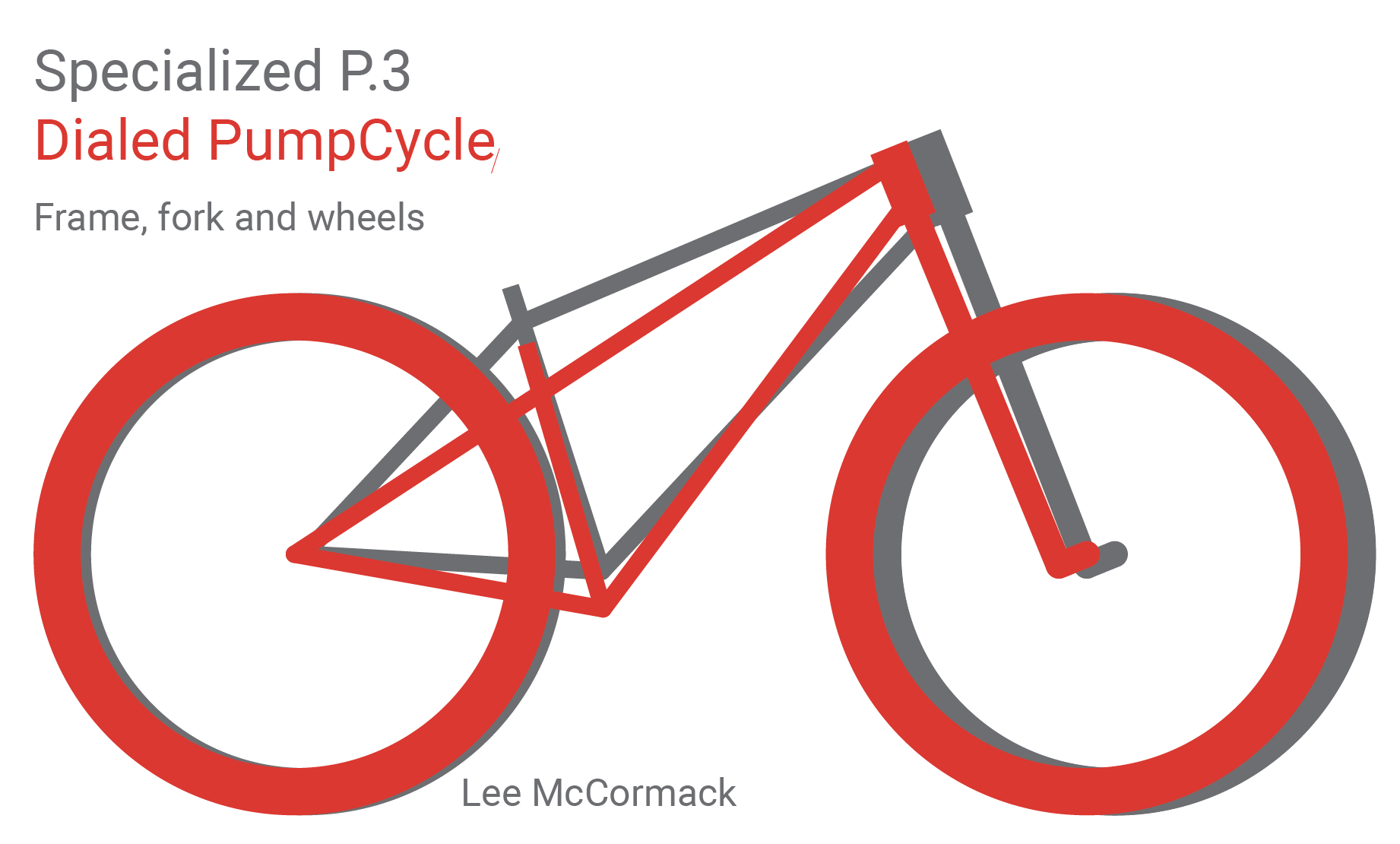
In Mainstream MTBs force a fit compromise our friend in shred Chris asked,
I remember you posting about your custom pump bike a while back. Since you don't have the seated vs standing compromise on a bike for pumping/jumping, how did the geometry on that bike differ from all the mainstream DJ'ers out there? I vaguely remember something about a much higher RAD angle.
Hey Chris, I’ve been waiting for someone to ask. Thanks!
Compared with a dirt jump bike like the Specialized P.3, my pump bike is
Lower in the bottom bracket.
Shorter in reach.
More balanced between the wheels.
Has a more upright riding position.
Is easier to ride without a hip hinge.
Is a lot faster on the pump track and more boosty in the jumps.
Keep reading for the juicy nerd details.
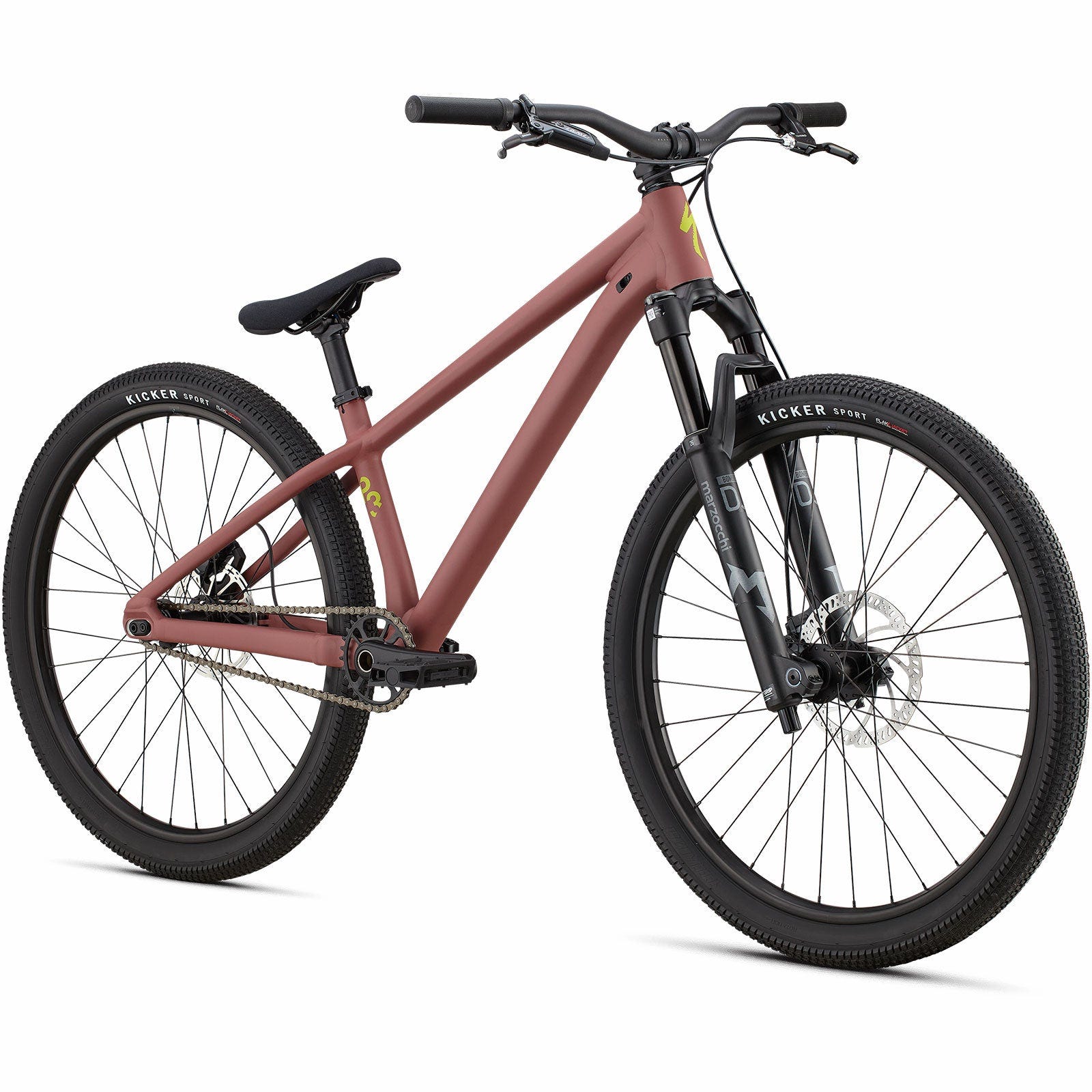
A dirt jump bike is kind of a cross between a hardtail mountain bike and a BMX bike. They’re meant to be fun and maneuverable. Most commonly:
Wheels are 26 inches.
Forks have 100mm of travel.
Seat tube is very short and seat is very low.
Head tubes are short and bars are low unless you use a tall riser bar.
Drivetrains are single speed.
Cranks are standard 170mm length.
Chainstays are very short. This brings the RAD/chainstay leverage ratio near 2.0, which makes these bike feel poppy*.
*Poppy, snappy, and playful are common bike review terms. The higher the ratio between RAD and chainstay, the more force gets delivered to the rear tire when you pull the bars. High-ratio bikes hop, jump and pump-manual easier with less bar pull. If you know how to corner, they snap from turn to turn.
Frame reaches tend to be shorter than modern trail bikes, but they are not short compared with average rider height. My most recent Specialized P.3 had the same reach as my Stumpy 29.
Short chainstays and moderate reaches create a rearward weight bias, with about 35% on the front tire and 65% on the rear.
See Best way to fit a DJ bike.
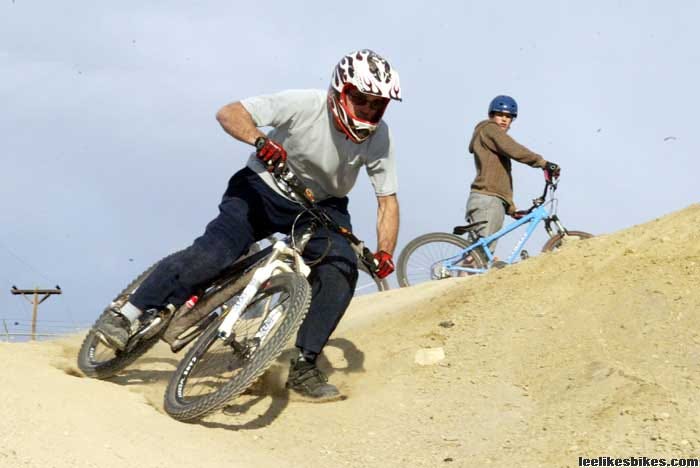
Because they are precise, dirt jump bikes are ideal for skills training. Here’s me on a P.3 coaching The Fix junior team in 2007 (We won the Mountain States Cup overall).
Because that bike has such a rearward weight bias, I bring my foot forward to load the front tire. Even then, you can see the rear tire pushing more than the front.
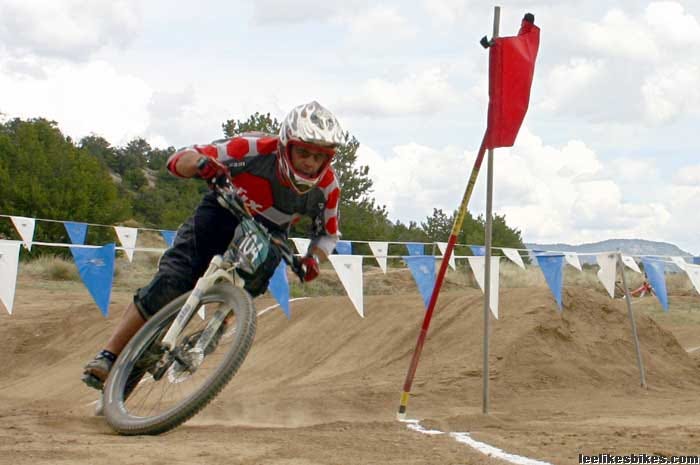
Dual slalom racing on a smooth track is increasingly rare but always rad. As I recall, I won this one. I’m leaning forward on that P.3 to make the front wheel track.
I’ve ridden and loved every iteration of the Specialized P frame from 2000 to 2022. It’s the quintessential DJ bike: small, quick, efficient. A great bike for pump track, dirt jumps, skate park and other smooth, pump-intensive riding.
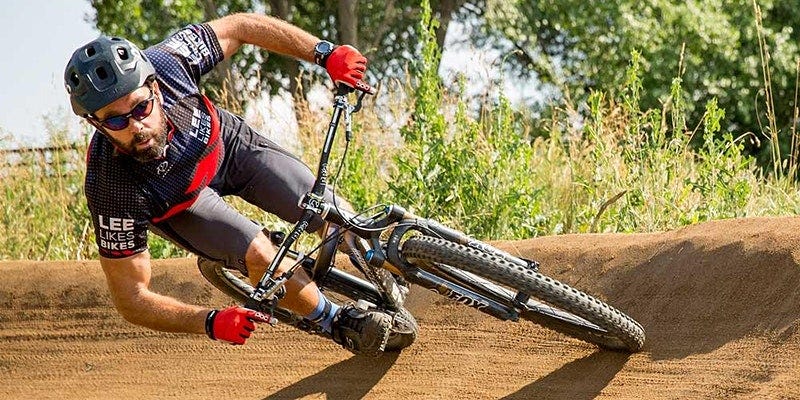
A DJ bike like a P.3 is rarely pedaled, but the layout is built around those cranks.
Necessity is the mother of invention, or so they say.
When my right hamstrings tore off my hip in September 2024, the first MotoCranx prototypes were already in production. MotoCranx let you mount your pedals directly to a threaded bottom bracket, like motorcycle footpegs:
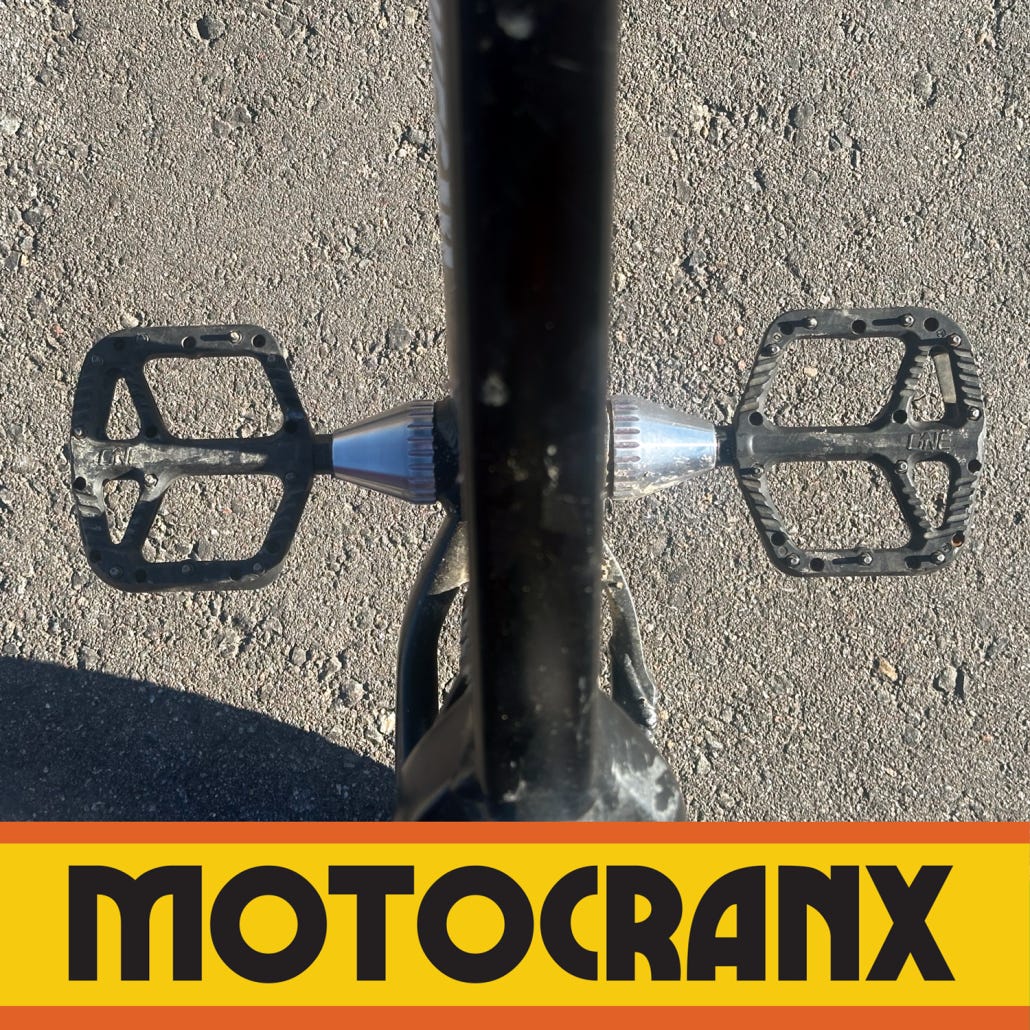
Why did I make MotoCranx?
1) I thought they might help people to learn to pump. They do.
2) I noticed that the longer my cranks were, the more the top of my right hamstrings hurt. 150s felt better than 170s, so I wanted to try 0s.
That pain was a major warning sign from decades of hard riding on long cranks. After my hamstrings got reattached to the bone, I slapped the proto-MotoCranx onto my trusty P.3 and used that rig for most of my rehab.
With my feet side by side I could ride without a hinge. While my legs recovered I stayed positive and curious, rather than depressed. This was key!
I built up to 200 laps on this kiddie track. 20 sets of 10 in smooth, soothing meditation.
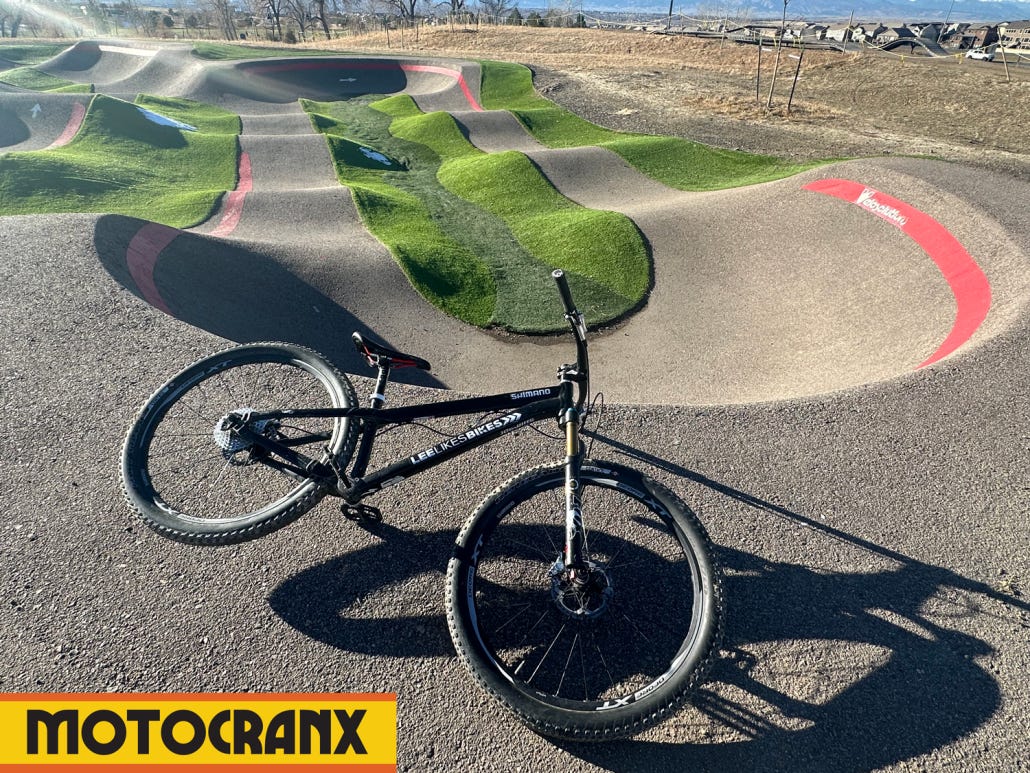
Riding MotoCranx on a standard DJ frame worked great, but I wondered. What’s the ideal frame geo for a bike that will never be pedaled? Time for a proof of concept.
I started with these requirements:
Use every component from my P.3. Match the head angle so the only variable I’m testing is pump-specific geometry tweaks.
RAD must be 77cm just like the P.3.
Must be rideable in a natural, upright standing position. Because of genetics and/or lifestyle, most people simply can’t hinge well. To that end,
RAD angle should be around 65 degrees, like a motocross motorcycle. My P.3 RAD angle was 58 degrees, like a trail MTB, which required a hinge to ride well.
Front/rear balance must be 40%/60% for F1 cornering balance. That’s 14% more front wheel traction than the P.3.
Get the highest RAD/chainstay leverage ratio possible.
The end result has:
Massive bottom bracket drop. Because no cranks!
A much shorter frame reach.
Slightly longer chainstays.
RAD 77cm.
RAD angle 65 degrees.
40%/60% fore/aft balance.
RAD/chainstay ratio 1.9. I can get to 2.0 with shorter chainstays, but I don’t want to compromise cornering balance. (My trail bikes are around 1.5).
Pretty sweet!
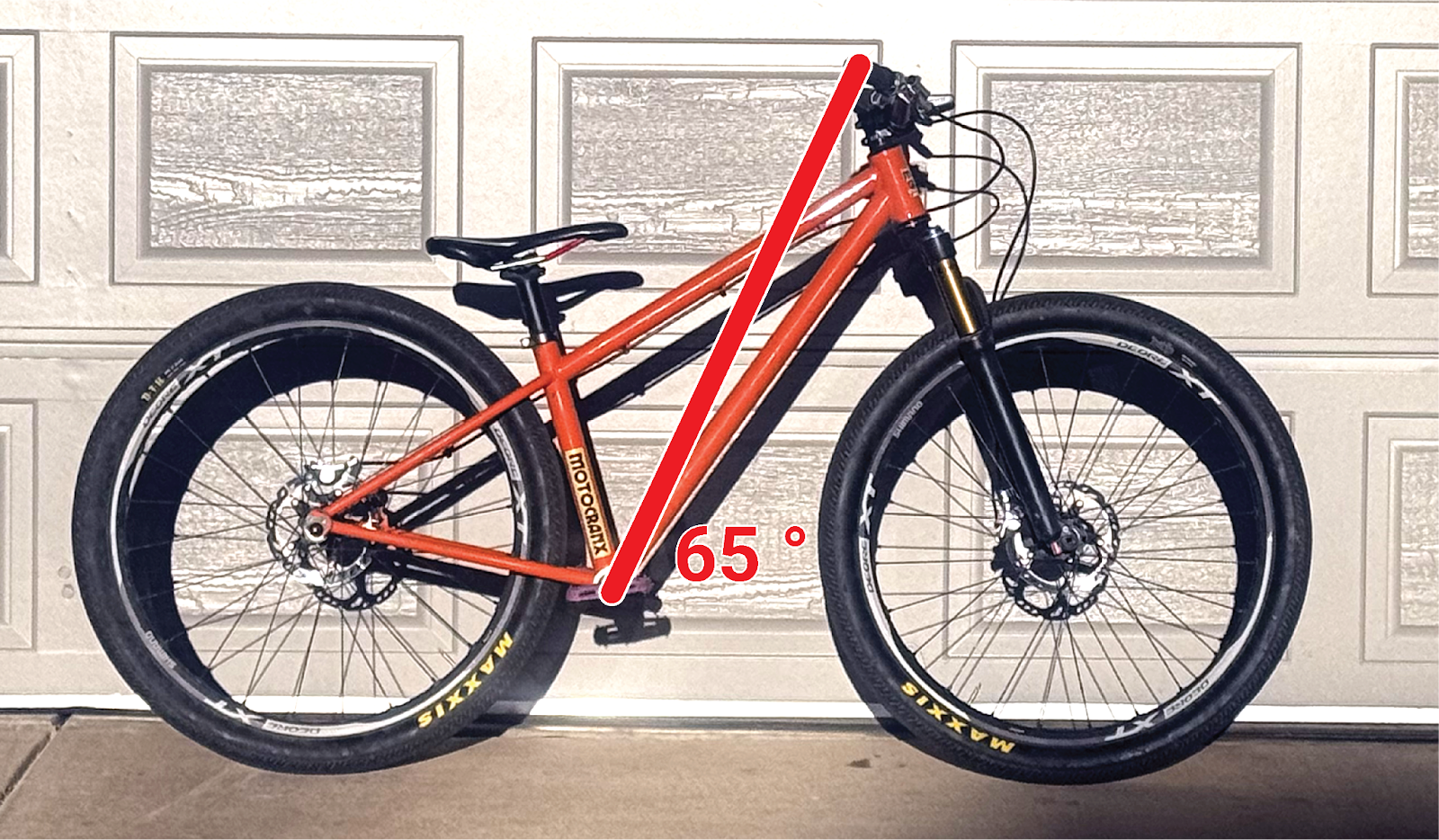
The pump bike’s riding position is more upright because my feet are lower and the bars are closer.
It’s easy to ride in a comfortable, upright stance. Hinging is optional.
Footpegs make pumping very easy. When I put clients on it — click! — all of a sudden they can ride the pump track. The skill transfers straight to their pedal bikes.
It corners like crazy. The 40/60 fore-aft balance and ultra low bottom bracket make it rail! No tire knobs, no chain, no weight on the hands, and no worries.
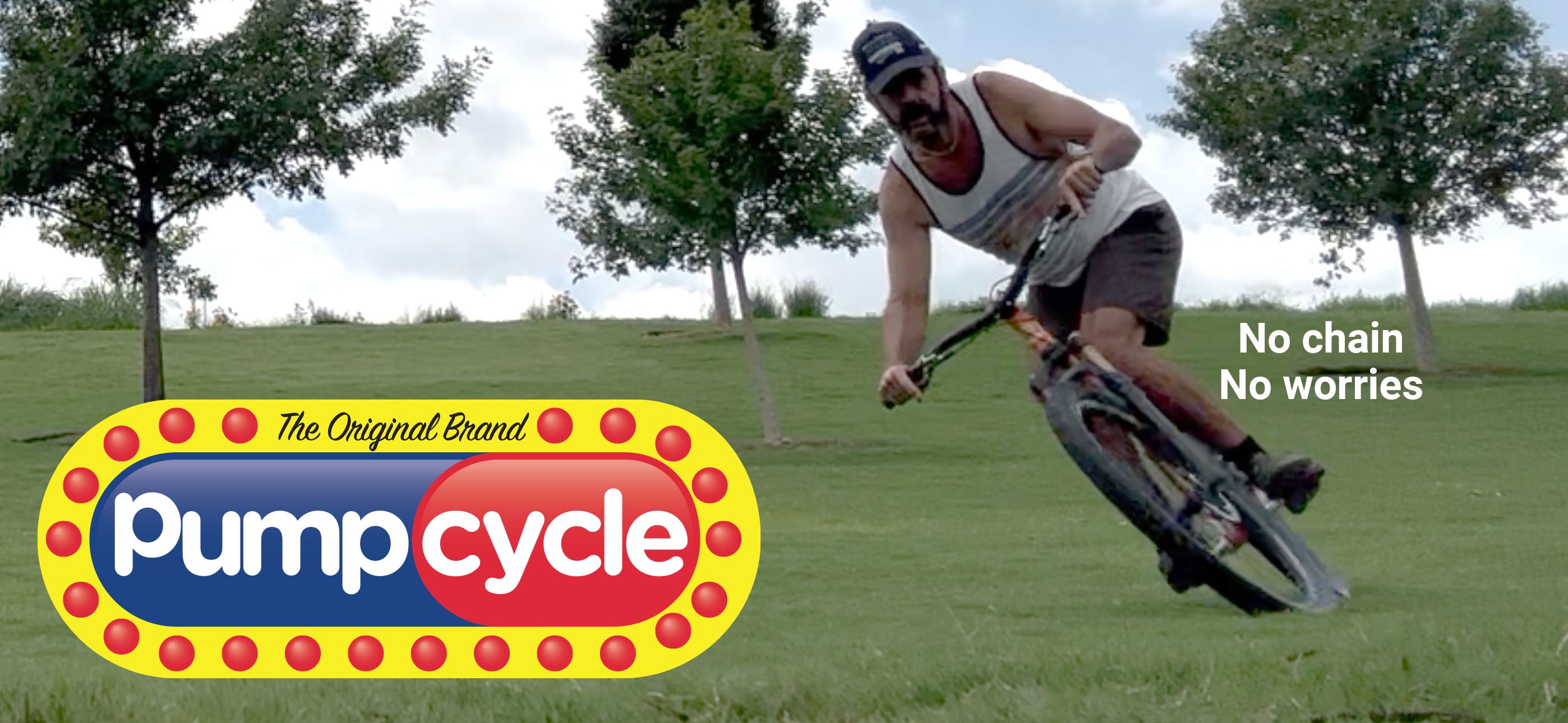
It’s super fast. The motocross stance unlocks full leg power, and the high RAD/chainstay ratio delivers mega pump to the rear wheel.
It’s so damn fun. To me pump biking is the essence of shred and the forge of flow. The lack of drivetrain forces me to look ahead, pump everything and get into phase with the terrain wave.
As a side effect, my pumping skills and trail vision are massively upgraded, which shows up as PRs on my favorite descents. This cracks me up. As I turn 57, with artificial shoulders and a permanently downgraded right leg, I’m FASTER than 20 years ago when I won a national DH title.
Plus perfect training for emoto!
Did I mention? I’m having more fun than ever. See DHing with no cranks is so fun!
I’m now making pump bikes for those in the know. They feature:
BMX parts. Burlier and cheaper than MTB parts. This drops the bike price.
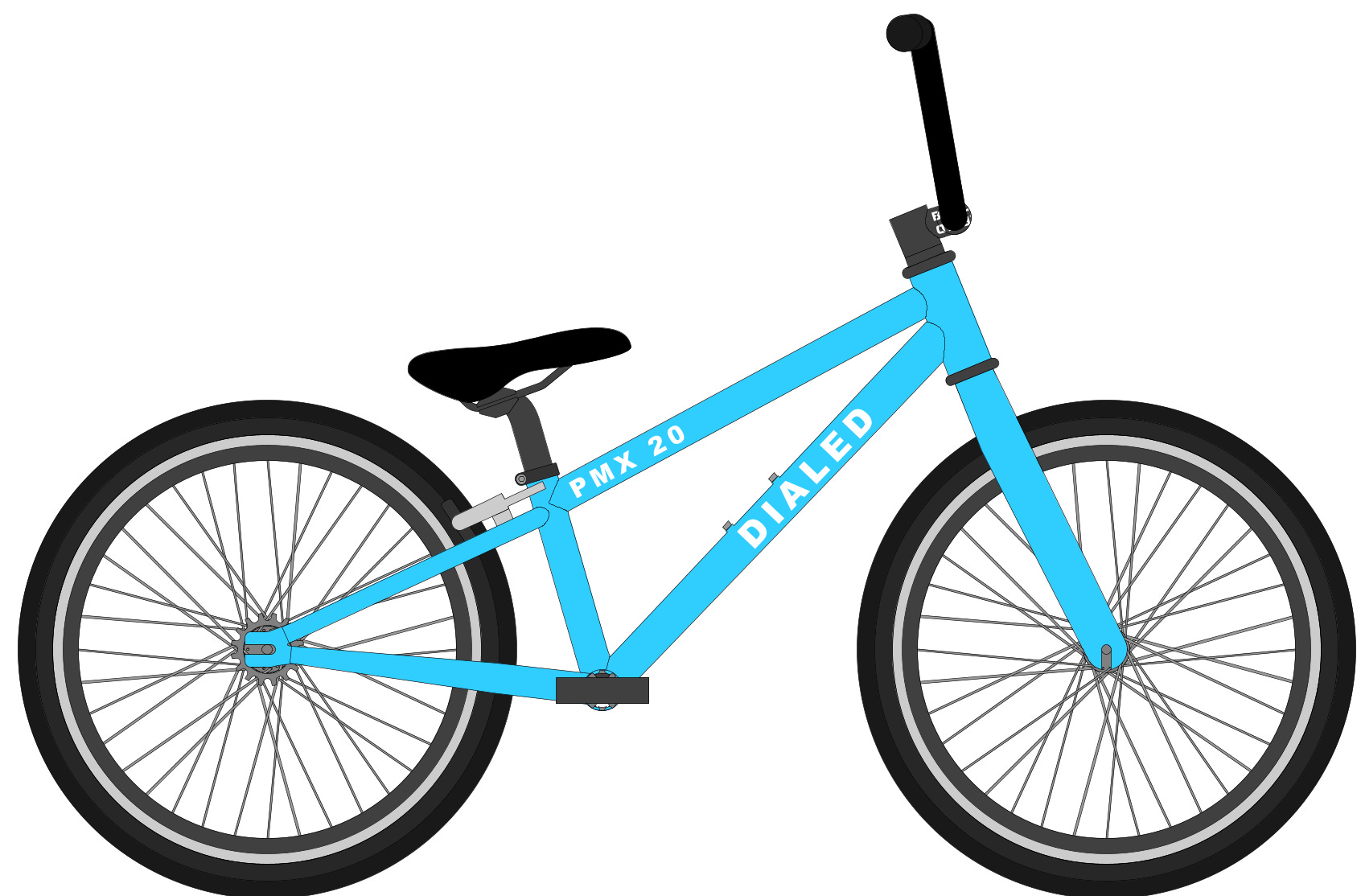
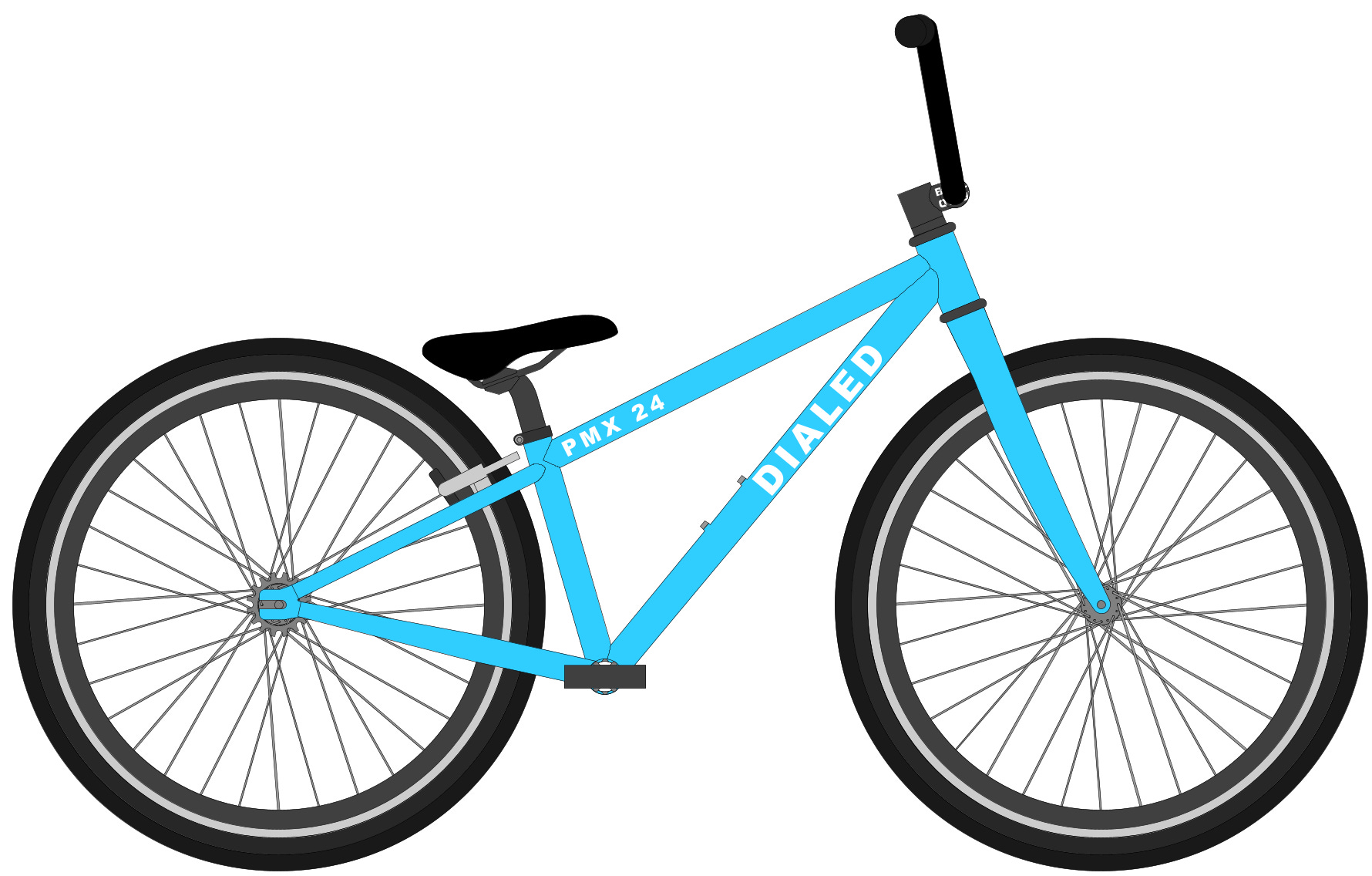
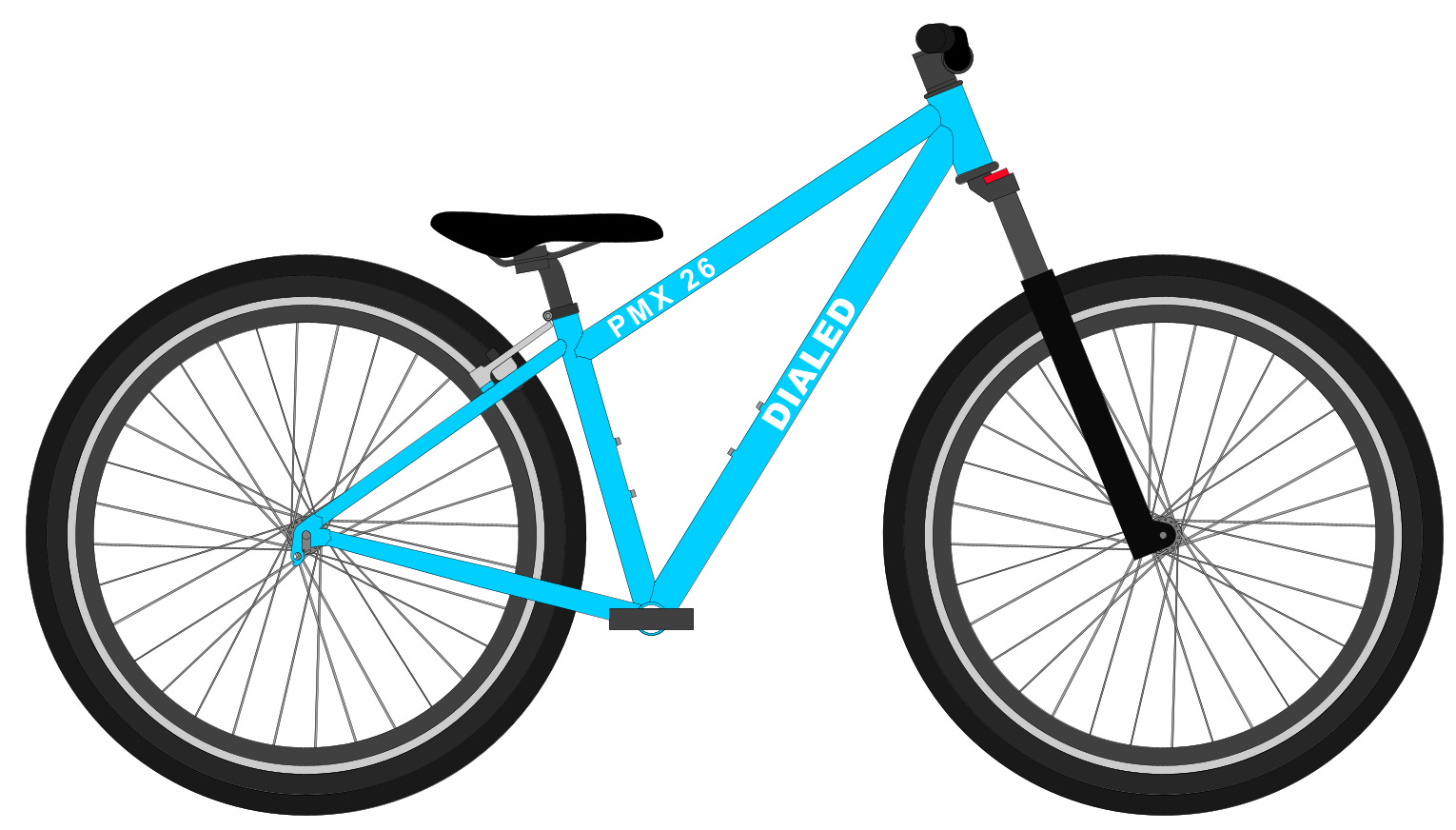
20”, 24” and 26” wheel sizes. Smaller wheels pump fastest, bigger wheels are mellower.
Even lower bottom brackets. Better cornering, less bar rise. See Why low rise bars are ideal.
Optional 100mm cranks for pedaling around and for pump track race starts.
I’m playing with the model name “PMX” as in pump motocross. Each frame is designed for its rider.
PMX 20. Dialed for a 5’2” rider.
PMX 24. Dialed for 5’9” rider.
PMX 26 for that mellow ride.
What fun to discover a new way of riding. What do y’all think?
Lee
Here are two ways:
1) Slap MotoCranx onto a bike you have. Pick up a cheap BMX bike or give an old frame new life. Megan races her vintage Gary Fisher to a pump track worlds qualifier podium:
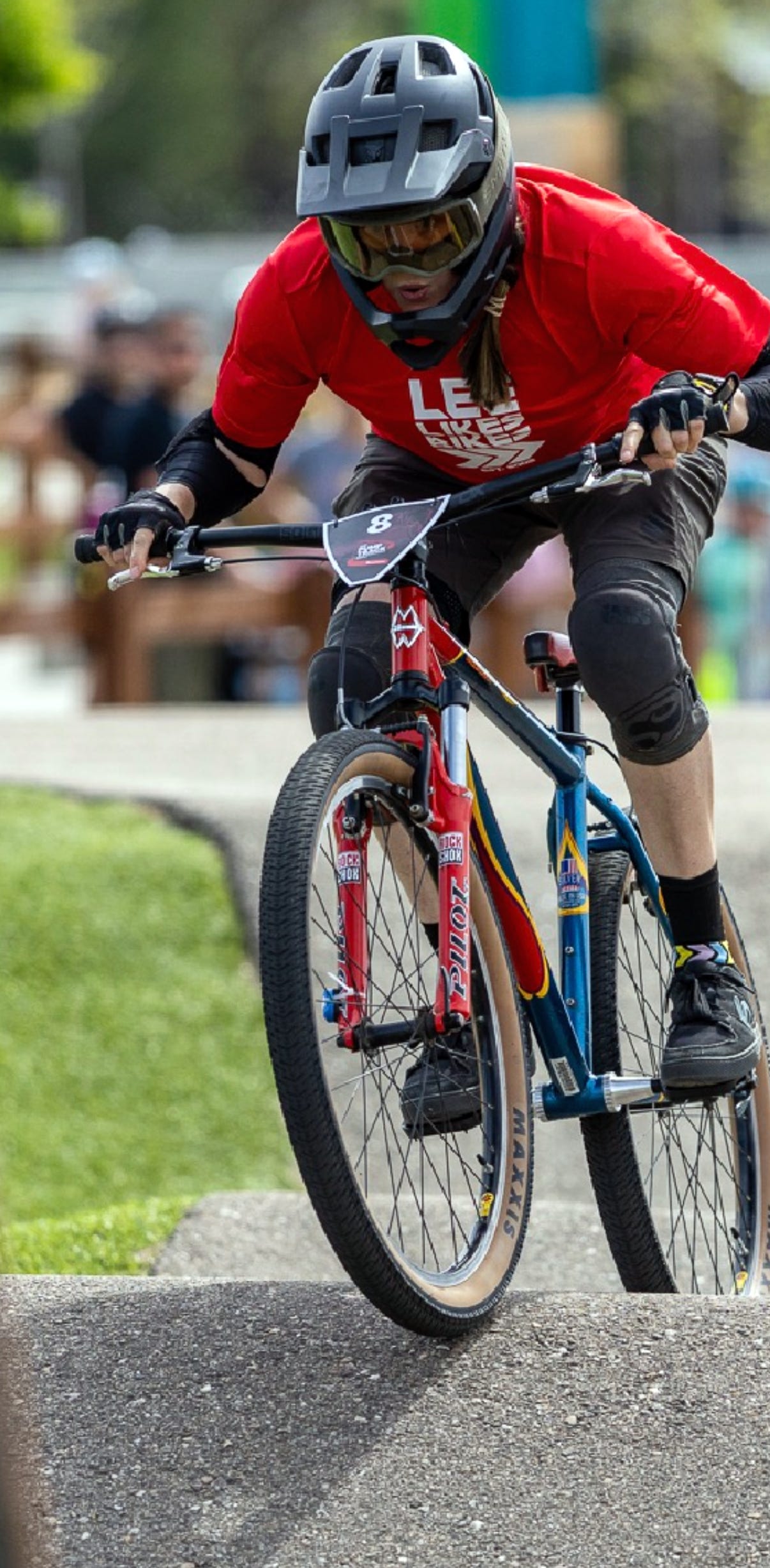
Cost: $99. Buy MotoCranx here.
2 ) Rock a custom pump bike. I’ll make one just for you. Yes, it can have short cranks. Cost starts at $999 for a complete bike.
Curious about pumpbikin’? Message me here or email me at leelikesbikes@gmail.com.
No posts
Comments
Nothing yet. Say the first thing.
Sign in to join the conversation.