
Spring 2026 has been one of the strongest springs for anime in years, and has delivered a lineup filled with wildly different shows all excelling in completely different ways. Some series are visual showcases pushing television animation to new heights. Others thrive on airtight writing, layered characterization, or bold artistic ambition. More importantly, this season feels refreshingly unconcerned with chasing trends.
But before you get deep into the article and the spring anime season, a massive shoutout to our Sponsors for this post, RocaNews.

We Quit Our Jobs Because News Sucks Now!
Do you think the news is too political, divisive, and alarmist nowadays?
Three friends quit their jobs to fix it. We built RocaNews — honest, fast, actually enjoyable summaries + deep dives. No agenda. Just facts and fun.
So what are you waiting for? Get your news without exhausting yourself by the constant doom and gloom of social media clickbaits. Join Our 250,000+ daily Gen-Z readers right now!
Instead of every new anime trying to become the next battle shonen megahit, Spring 2026 has offered politically dense war dramas, intimate coming-of-age stories, theatrical rakugo performances, and fantasy worlds that feel genuinely magical again. It’s a season defined less by spectacle alone and more by confidence in storytelling.
Among dozens of premieres, five anime have separated themselves from the pack: Witch Hat Atelier, Daemons of the Shadow Realm, The Ramparts of Ice, Akane-banashi, and Nippon Sangoku: The Three Nations of the Crimson Sun.
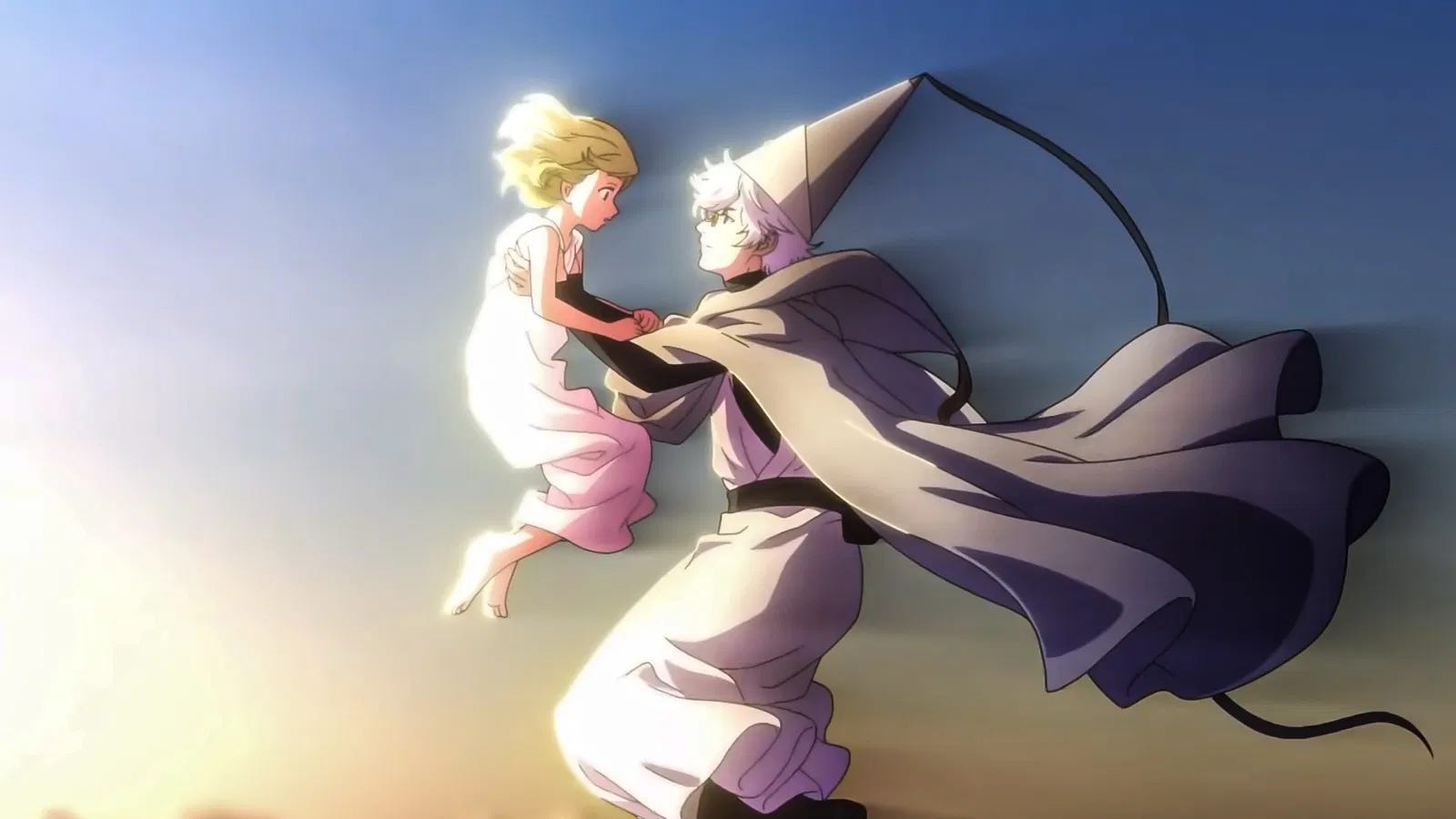
There’s a certain feeling that only a handful of fantasy anime ever manage to capture—that childlike sense of wonder where magic feels mysterious, dangerous, and deeply personal all at once. Witch Hat Atelier taps into that feeling almost immediately, evoking the same emotional warmth and visual awe associated with classic Studio Ghibli films.
Its premiere episode is pure magic.
There was a lot of anticipation leading upto the premiere of the anime, after all the anime was in production for 3 and a half years and was initially supposed to air last year. From the opening moments it lives up to the billing as the series quickly establishes itself as one of the most visually stunning productions currently airing on television. The first truly jaw-dropping scene arrives when Coco stands atop her rooftop while the camera follows a pegasus carriage circling her home. Mountains stretch endlessly into the distance, clouds drift with painterly softness, and the world feels tactile in a way television anime rarely achieve. Every frame looks handcrafted.
Few modern anime understand environmental storytelling like Witch Hat Atelier. The world doesn’t simply exist as a backdrop—it breathes. Some exposition sequences are presented like animated pop-up books, creating an atmosphere that is simultaneously whimsical and slightly haunting. The transition between scenes feels dreamlike, almost hypnotic, and it’s obvious that the staff at Bug Films deeply adore Kamome Shirahama’s manga.
That love radiates through every frame.
The simplicity of the magic system is also part of what makes the series so compelling. Magic isn’t locked behind elaborate bloodlines or complicated power scaling. It’s created through drawings: paper, ink, and symbols. There’s something inherently beautiful about that concept. When Coco realizes magic can be performed simply by drawing sigils correctly, her excitement becomes infectious. Watching her experiment with magic feels less like observing a chosen hero and more like watching someone discover art for the first time.
That said, the show isn’t flawless. The second episode leans heavily into exposition, functioning more like a companion piece designed to establish rules and lore. At times, the information overload slows momentum considerably. The characters, so far, also feel somewhat archetypal, and because many of them skew quite young, emotional investment may vary depending on the viewer.
Still, even when the storytelling occasionally drifts into conventional fantasy territory, the sheer craftsmanship on display keeps the series elevated. Alongside Frieren: Beyond Journey’s End, Witch Hat Atelier feels like part of a growing movement of fantasy anime prioritizing atmosphere, visual identity, and emotional intimacy over nonstop action.
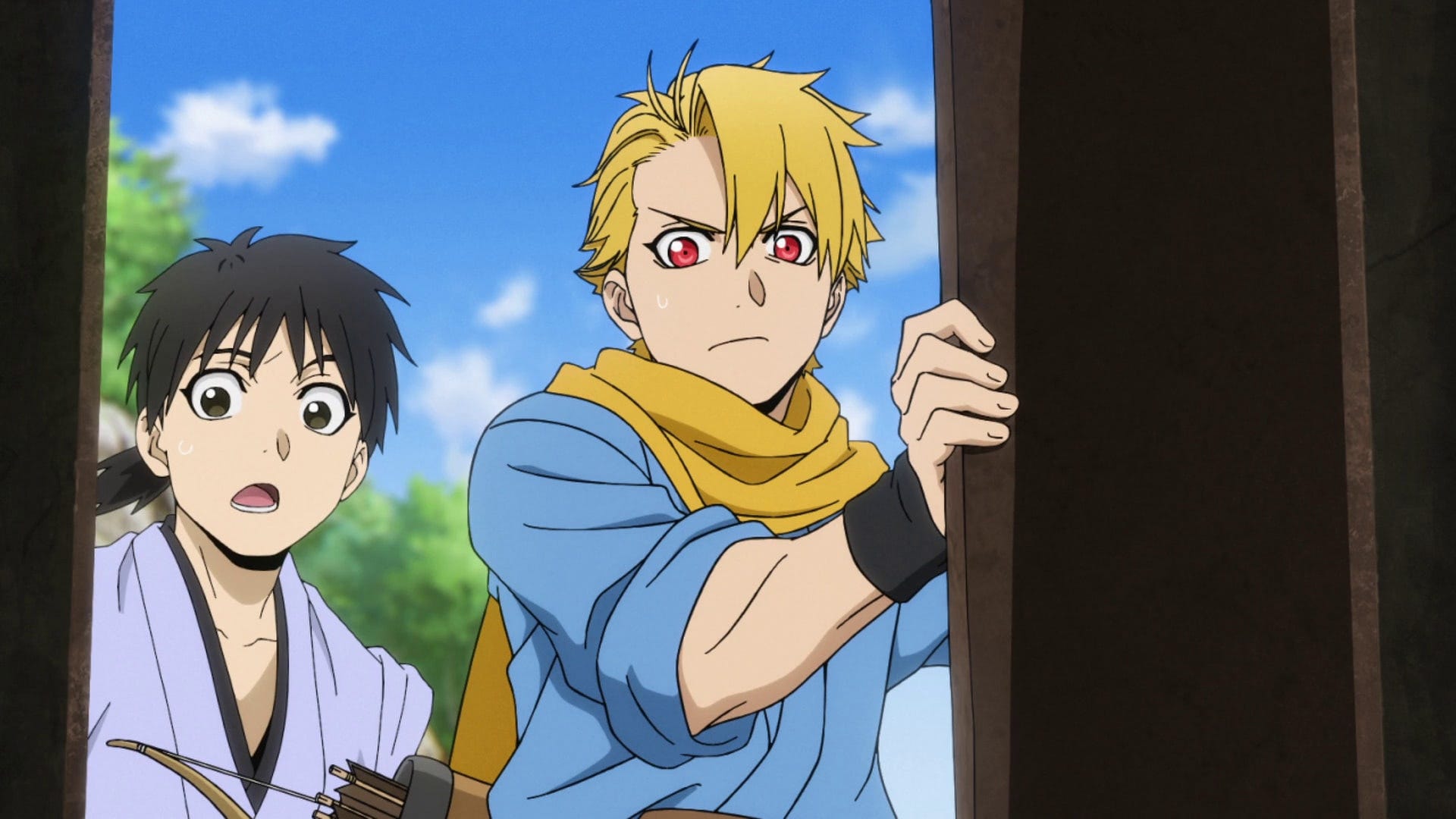
Few anime premieres this year have been as effective as Daemons of the Shadow Realm.
The first episode does almost everything a pilot should do perfectly: establish compelling characters, tease a much larger mythology, introduce terrifying mysteries, and end with enough shocking revelations to make continuing feel mandatory. Structurally, it resembles something closer to Attack on Titan or even Lost than a conventional battle shonen.
From its opening scene—where twins are born under a prophecy claiming they will “divide night and day” and someday command the Daemons—the series immediately establishes a sense of ancient myth and looming catastrophe. Crucially, it does so without drowning the audience in exposition.
That restraint is what makes the premiere so gripping.
When the story jumps forward sixteen years, viewers meet Yuru, a teenage hunter living in an isolated mountain village, while his twin sister Asa remains imprisoned in secrecy. Almost immediately, the episode creates the unsettling feeling that something about this village is fundamentally wrong. Adults exchange nervous glances. Outsiders are rare. References to “the world below” hint at hidden truths. Even condensation trails in the sky are interpreted by villagers as dragons.
The storytelling is remarkably economical. Every line of dialogue quietly contributes to worldbuilding while steadily escalating tension toward its major reveal.
The fingerprints of Hiromu Arakawa are visible everywhere. Fans of Fullmetal Alchemist: Brotherhood will immediately recognize her sharp character designs, expressive facial acting, and ability to balance humor with dread. Studio Bones Film, a subsidiary of the same studio behind Fullmetal Alchemist, clearly understands the assignment. The vibrant color palette, detailed backgrounds, and fluid action sequences give the series a cinematic quality rarely seen in weekly television productions.
What makes Daemons of the Shadow Realm particularly exciting, however, is how confident it feels. It never rushes to explain itself completely. Instead, it trusts viewers to sit with uncertainty and slowly piece together the larger mythology.
That confidence is paying off commercially as well. The anime has already driven massive manga sales and quickly climbed streaming rankings in Japan, suggesting it’s becoming one of the season’s breakout successes rather than just another critically praised adaptation.
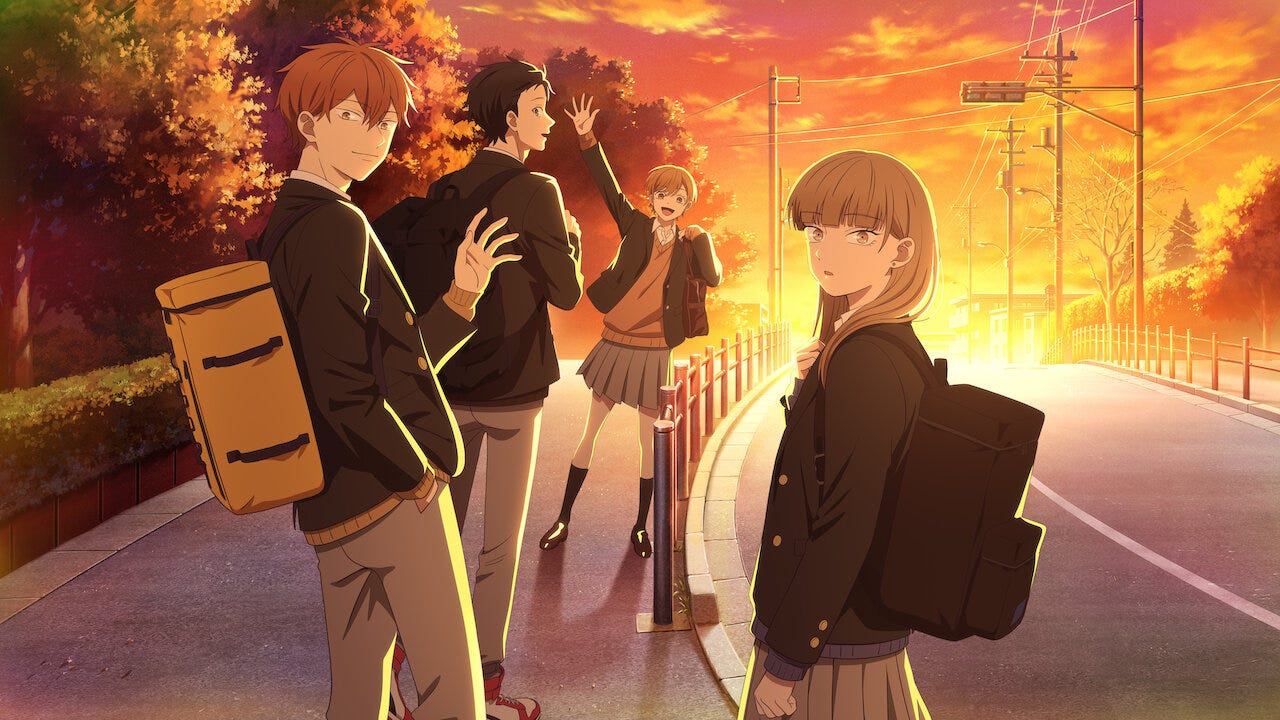
If Witch Hat Atelier succeeds through wonder and Daemons through mystery, The Ramparts of Ice thrives almost entirely on emotional observation.
At first glance, the premise sounds deceptively simple: four high school students slowly form connections while navigating loneliness, insecurity, and self-image. But what makes the series exceptional is how carefully it understands social behavior. Every interaction feels psychologically specific.
The core group dynamic is immediately compelling. There’s Koyuki, the emotionally guarded “ice princess” who keeps everyone at a distance. Minato, outwardly energetic and socially aggressive but emotionally lonely underneath. Yota, seemingly ordinary yet quietly perceptive. And the wildly popular girl struggling under the expectations placed upon her.
Rather than relying on melodrama, the series builds emotional intimacy through tiny behavioral details.
Koyuki is perhaps the strongest example. Internally, she desperately wants connection, yet outwardly pushes everyone away. Minato obsessively tries to “unlock” isolated people because helping others has become a substitute for confronting his own emotional emptiness. Yota, meanwhile, naturally lowers Koyuki’s guard simply by existing without expectation or pressure.
The show’s understanding of emotional contradiction is striking. People rarely communicate what they actually need, and The Ramparts of Ice captures that beautifully.
What’s particularly impressive is how quickly the anime establishes its emotional ecosystem. Despite dropping viewers into the middle of a school year, it never feels disorienting. Instead, it feels like the beginning of transformation—especially for Koyuki, whose predictable and isolated life begins slowly shifting after meeting Minato and Yota.
The result is one of the season’s most cathartic viewing experiences.
Visually, the anime is also gorgeous. The animation subtly emphasizes body language and emotional distance, using framing and silence as effectively as dialogue. The series understands that coming-of-age stories aren’t driven by plot twists—they’re driven by moments of vulnerability.
Among all the anime airing this season, The Ramparts of Ice may ultimately be the most emotionally mature.
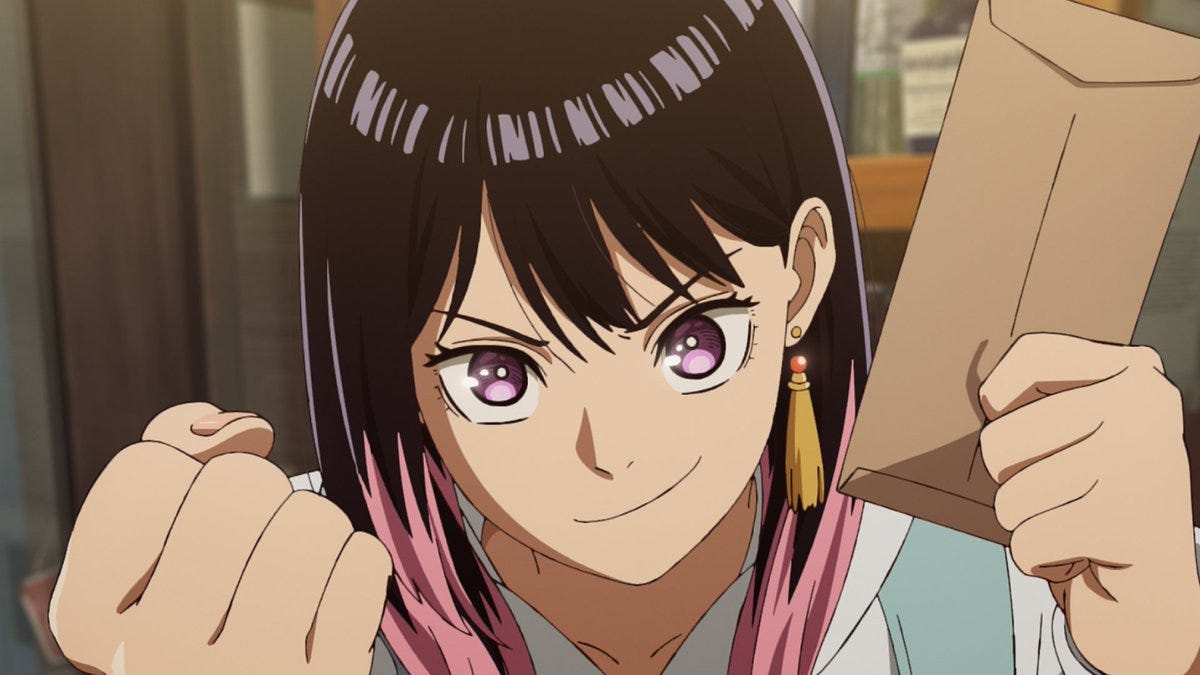
One of the greatest compliments you can give Akane-banashi is that it somehow makes rakugo—a traditional Japanese storytelling performance art—feel as thrilling as a sports anime championship match.
On paper, the premise sounds almost absurdly niche. Akane enters the competitive world of rakugo to pursue the career path her father was denied, gradually climbing through a rigid and deeply traditional artistic hierarchy.
Yet the series transforms performance storytelling into something electrifying.
Structurally, Akane-banashi borrows heavily from sports shonen conventions: rivalries, tournament arcs, intense training, mentorship, and dramatic showcases of skill. But instead of feeling formulaic, the execution elevates those familiar ideas into something fresh. Like Haikyu!! or Slam Dunk, the series succeeds because it understands that passion itself is inherently compelling when portrayed sincerely.
Akane is also a fantastic protagonist. She’s talented but inexperienced, confident yet awkward, endlessly energetic while still emotionally vulnerable. Her determination never feels artificial because the story constantly places genuine obstacles in her path.
Most importantly, the anime understands that rakugo is performance. The animation doesn’t simply adapt the manga panels—it amplifies them. Facial expressions become explosive. Timing becomes sharper. Comedic delivery gains rhythm and motion.
One of the manga’s greatest strengths was its ability to create tension through close-ups and dialogue alone. The anime staff somehow preserve that intensity while adding theatricality through movement, lighting, and vocal performance.
The result is a show where people sitting on stage talking can feel as exciting as an action sequence.
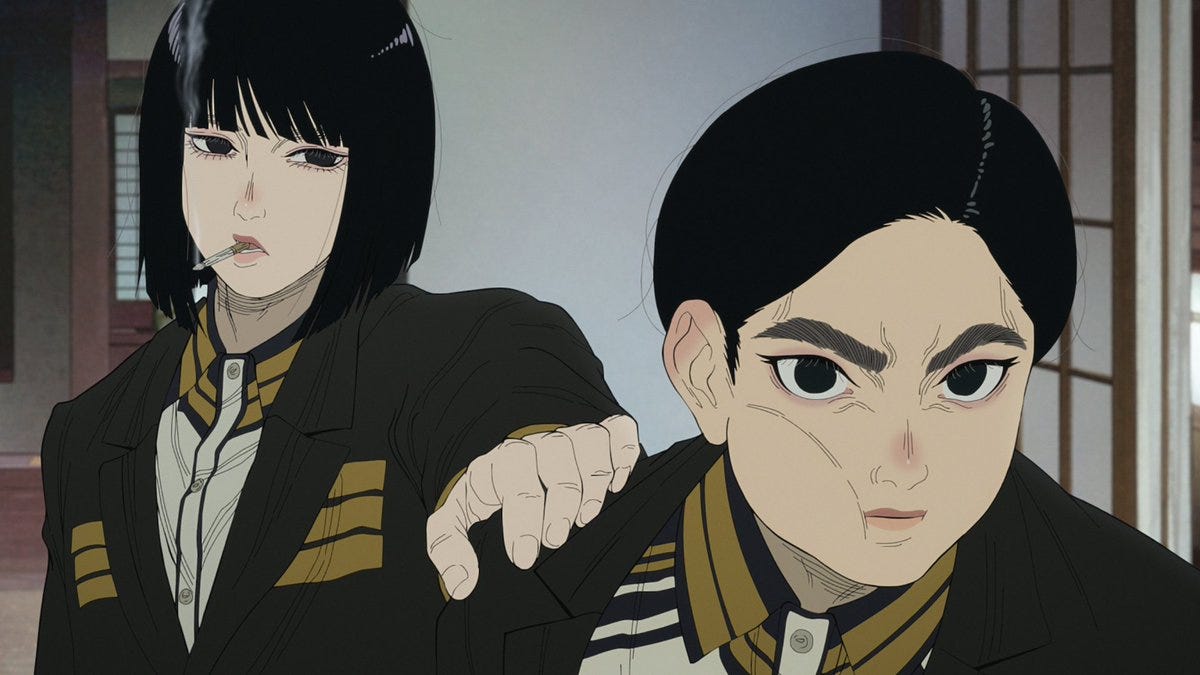
No anime this season feels more ambitious than Nippon Sangoku.
Set in a fractured near-future Japan divided into three warring states after societal collapse, the series follows Aoteru, a brilliant but powerless young man attempting to reshape the nation through intellect rather than military strength.
It’s a political war drama first and foremost, and that means the series demands patience.
There’s heavy exposition, dense political discussion, strategic maneuvering, and long dialogue scenes explaining ideological conflicts between factions. But unlike many anime that drown under that weight, Nippon Sangoku uses conversation as its primary weapon. Some of the most intense scenes in the show involve nothing more than council meetings and negotiations.
Yet the tension is extraordinary.
The “Imperial Council” sequence alone demonstrates how effective the writing can be. Characters speak carefully, every sentence loaded with political implication and hidden motive. The suspense feels almost unbearable despite the complete absence of physical action.
Visually, the anime separates itself from nearly everything else airing right now. The art direction resembles moving watercolor paintings, with backgrounds so textured and atmospheric they could practically hang in a gallery. Even viewers who occasionally struggle following the political intricacies may find themselves captivated purely by the visual presentation.
Aoteru inevitably invites comparisons to protagonists like Death Note’s Light Yagami or Code Geass: Lelouch of the Rebellion’s Lelouch, but the series ultimately feels distinct enough to stand on its own. Unlike many “genius protagonist” anime, Nippon Sangoku is less interested in superiority fantasies and more interested in examining ambition, nationalism, survival, and reconstruction.
It’s a demanding show. It requires attention. It occasionally overwhelms with information.
But it’s also one of the few anime this season genuinely trying to tackle something politically and philosophically larger than itself.
Comments
Nothing yet. Say the first thing.
Sign in to join the conversation.