
Almost a century ago, Canadians faced a crucial choice. Would it be “the State or the United States”?
On this anniversary of Confederation, I want to dispense with the usual glowing-hearts routine and tell the story of “the State or the United States.” The reason is simple: I believe this history is, if not repeating in the present, at least rhyming. But unlike that era, few Canadians recognize what is happening; even fewer are demanding a serious response. We are not meeting the moment.
And our failure may jeopardize Canada’s future.
This is a story rooted in radio.
The era of radio’s infancy has passed from living memory so it’s hard to imagine when radio was as shocking and full of potential as AI is today. But so it was, once.
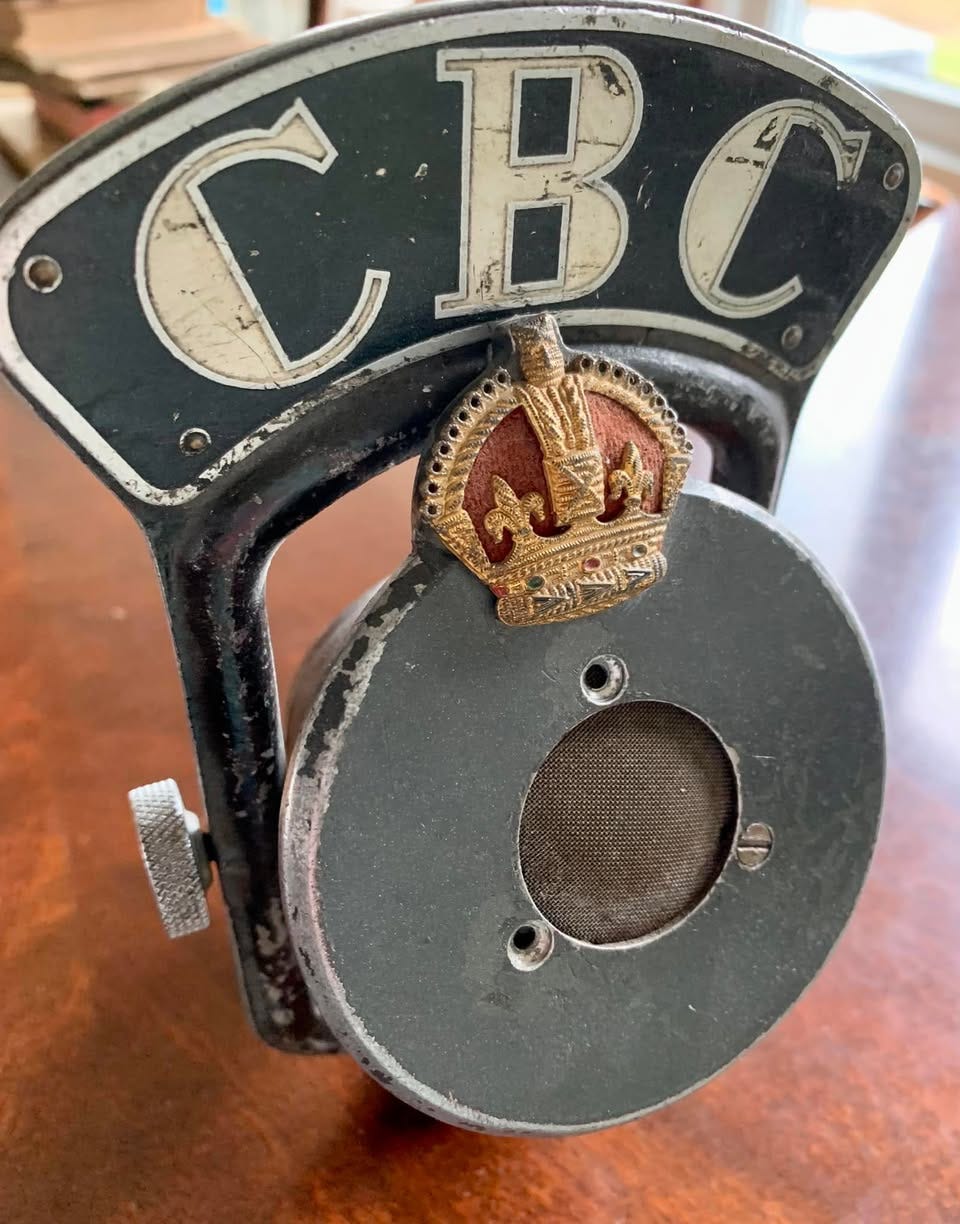
In the first two decades of the 20th century, dots and dashes via the telegraph were the cutting edge of information transmission, so when radio delivered the same ability without wires, so that even ships at sea could send messages across an ocean, people were astonished. But then came “continuous-wave” radio, which allowed for all sorts of sounds, even the human voice, to be flung across the skies and heard just as if speaker and listener were in the same room. It was dizzying stuff.
The military quickly found many uses for the new technology, but few others did. Hobbyists played records or read newspaper articles into the ether, but that was just so other hobbyists would have something to detect. No one took this “broadcasting” seriously. It was a placeholder until radio’s real uses could be puzzled out.
But in 1920, in London, a proper concert was organized and broadcast. Later that year, in Pittsburgh, Westinghouse broadcast presidential election returns (Harding won). In Britain and in the United States, the realization that broadcasting could perhaps be more than anyone had imagined spread rapidly. And radio broadcasting took off.
By 1922, it was a craze in both countries. Leading the way were radio manufacturers, who finally realized they could sell millions of radio sets if there was something for people to listen to.
In Britain, the Postmaster General, whose office had regulatory authority, pushed the manufacturers to get together and create an organized broadcasting system. In America, Commerce Secretary Herbert Hoover, who held similar authority, convened the same interest groups, laid out ground rules, and charged them to come up with a model to support broadcasting.
In both countries, hopes were sky-high. Radio would educate and inform, promote arts and culture, and connect shut-ins, farmers, and remote regions. People would understand each other better, so unity would grow. Nations would learn about nations, so peace would flourish. In both Britain and the United States, commentators grew giddy imagining how radio would elevate humanity.
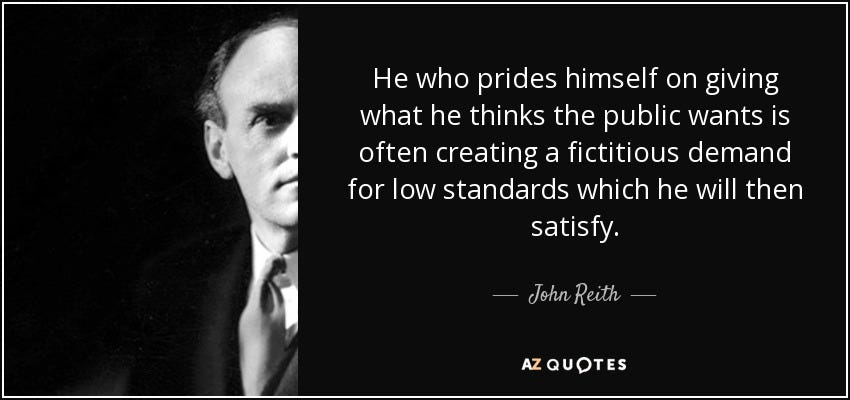
But then the two countries diverged dramatically: The British decided that owners of radio sets should pay a small annual licence fee and this money would go to a national broadcasting service mandated to deliver everyone’s high hopes. What was eventually dubbed the British Broadcasting Corporation would “inform, educate, and entertain,” in the famous phrase of its founder, Lord John Reith. Initially a private company owned by a consortium of radio interests, in 1927 the BBC became an independent, public corporation under a Royal Charter. It also got a new, official motto: “Nation shall speak peace unto Nation.” Under the stern, morally upright, and highly paternalistic leadership of Reith, the BBC’s programming — lectures, concerts, political news — seldom deviated from its high-minded mission.
In the United States, the manufacturers failed to come up with a coherent plan so radio, mostly unregulated, grew explosively and chaotically. At first, performers thrilled by the idea of being heard “on the ether” were happy to perform without payment. But the novelty faded and costs soon outstripped revenues. Without licence revenue, enthusiastic broadcasters desperately sought a model that would pay for the amazing new thing. They stumbled backwards into advertising.
In fact, one of Hoover’s few, non-negotiable ground rules had been “no advertising.” The promise of technology was too great for it to become a medium for selling toothpaste, Hoover sniffed. That view wasn’t controversial in the least, even among corporations dreaming of new revenue streams. But lacking regulation and oversight, and lacking licensing revenue, the logic of the dollar rapidly asserted itself: Prim sponsorship notices (“brought to you by”) gradually expanded into full-blown ads. The ads proliferated and became increasingly intrusive. Advertisers took control of programming to such an extent that by the 1930s sponsored programs were mostly written, produced, and distributed by advertising agencies. The technology that should never be sullied by advertising became little more than a vehicle for advertising.
Fuelled by ad dollars, enormous stations and networks sprang up. To grow dollars, grow audiences; marginalize the high-brow stuff and pump up lowest-common-denominator entertainment: That logic asserted itself with ferocity. Lectures, concerts, and news gradually disappeared. In some cases, the big corporate stations even used their high-powered transmitters to literally drown out small university stations with their on-air courses, lectures and classical music. Some order was imposed by legislation in 1927 but it took until 1934 for the system to be made fully coherent — and by then, it was overwhelmingly dominated by major corporations focussed overwhelmingly on ad revenue and programming that draws crowds. The “attention economy” was born with effects being felt to this day.
And Canada?
Radio had taken a little longer to take off, but for the most part it initially followed the chaotic American model, with everyone from department stores to newspapers opening their own stations to broadcast on the cheap. The giant American stations flooded Canadian airwaves, drowning out small local stations. Worse, many Canadian stations, with a fraction of the funding available to those south of the border, chose not to develop their own programming and effectively became affiliates of American stations. From coast to coast, Americans programs were washing over Canada.
The contrast between the principled British system and the raucous, crude American model could not have been clearer. But worse, for Canadians, was the realization that if radio really was the future medium of information and culture, Canada’s future must increasingly be American.
In 1928, Liberal Prime Minister Mackenzie King appoint Sir John Aird, a Canadian banker, to head a Royal Commission on broadcasting. In 1929, after travelling to see how broadcasting worked in multiple countries, the Aird Commission came down squarely on the side of the British model. Broadcasting should not be a profit-seeking industry, the commission concluded, but a national service that would “inform, educate, and entertain” and promote national unity: Canada should create an ad-free public broadcasting system funded by licence fees.
In 1930, the “Canadian Radio League” was founded to lobby for a Canadian Broadcasting Corporation. The League’s slogan, provided by journalist Graham Spry, was stark and chilling: Would Canada choose “the State or the United States”?
The new Conservative Prime Minister R.B. Bennett was convinced. In 1933, he created the Canadian Radio Broadcasting Commission. In 1935, after returning to office, Liberal Prime Minister Mackenzie King adjusted Bennett’s creation modestly and the CBC was born. Crucially, the new scheme did not make broadcasting a monopoly of the CBC, so private radio continued to operate. In this sense, the Canadian system was a hybrid of the British and American systems, a classic Canadian compromise.
And it was broadly supported, as the backing of Liberal and Conservative prime ministers showed. All serious observers recognized that a future in which information, education, and entertainment all came from south of the border was a future in which the border would cease to exist culturally. And after that, eventually, it would cease to exist legally, too.
Canadians must be able to get information, education, and entertainment from Canadians. The country’s existence depended on it.
The parallels of this story with the present are likely not obvious for most readers. That very fact underscores the problem.
In a superficial sense, the ability of Canadians to tell Canadian stories has never been greater. Anyone can start a Substack. Put videos on YouTube. You can even have AI do all the work for you. Countless Canadians are doing just that, writing about history, culture, or whatever else they’re into. We can inform, educate, and entertain like never before.
But none of that matters without scale.
The power of stories does not lie in the stories themselves. It lies in the connections stories forge between people, in the thoughts and feelings stories align, in the shared language stories create. A story unread by anyone is nothing. A story read by a few is a wisp. But a story known far and wide is a titan. The greatest of such stories can launch faiths and forge nations.
In Canada, story-telling scale has collapsed.
While some Canadian digital news startups and podcasts have succeeded, in the sense that they can keep the lights on, they are small and niche on a national scale. The Internet and the streaming it enables has, of course, produced giants with scale, but they’re overwhelmingly American. The lone Canadian online giant is Pornhub. I’ll let readers decide if they should be proud of that but, I assure you, Pornhub does not inform, educate, and entertain, at least not in the sense Lord John Reith had in mind.
Which leaves us with the legacy media. And on that score, I’m afraid most Canadians don’t have the slightest idea how bad things have gotten.
Many Canadian newspapers and magazines stagger on but all are emaciated. I can’t remember when I last saw a copy of Maclean’s. The Toronto Star is a shadow of what it once was. The Globe and Mail – Canada’s supposed answer to The New York Times – only continues to publish in shrunken form because David Thompson is willing to lose millions of dollars subsidizing it. Any Canadian who wants Canadians to discuss some big idea is well-advised to publish that idea in the publication that is by far this country’s most influential forum: The New York Times. (Good luck doing that, by the way. Americans have zero interest in Canada and The Times seems to have a quota of one Canuck piece per month. And it must be written by Stephen Marche.)
There are good people struggling to change this dismal reality. They’re not succeeding. There’s simply no reason to think these dismal trendlines will reverse.
Radio and television news are following the same path to irrelevance and oblivion.
The Canadian television and movie industries are still substantial but precious little of what they produce is Canadians telling Canadian stories for Canadians. It is Canadian businesses supported by tax dollars to produce internationally marketable stories or ersatz Americana in which any trace of Canadianness is treated like an embarrassing stain and scrubbed off. When Canadians win international awards for international successes — think Kpop Demon Hunters — we’re told we should applaud these triumphs of Canadian arts and no one is so rude as to note that the award is either for (rarely) work few Canadians will ever see or (typically) for Canadians telling foreign stories in foreign productions. The fact that an Oscar-winner carries a Canadian passport is nice — congratulations to any artist who succeeds — but for the purposes of the Canadian nation, it is irrelevant.
Then there is the void that was the CBC.
In recent years, the CBC has tossed aside national stories and national identity and embraced a dogmatic form of identity politics in which collective identity is found only in a constantly growing roster of demographic sub-identities. There is no “us” that encompasses all Canadians. There is only a constellation of tiny communities defined principally by feelings of victimhood and grievance. For most Canadians, I suspect, this dogma is as appealing as the measles, and the CBC’s audiences have fled. The timing is tragic given that the crumbling of private broadcasting makes the CBC’s original mission more important than ever.
A quarter-century ago, the CBC garnered massive national attention and national discussion for its brilliant and ambitious Canada: A People’s History. That was a production that fulfilled the CBC’s mandate and was exactly the sort of thing the pioneers of broadcasting a century ago imagined the new art form would deliver. It is also precisely what Canada needs now. But today’s CBC is incapable of such work. It wouldn’t even think to try. Even among Liberals, at least in private, the failure of the CBC is obvious, yet the response is to keep giving it money and hope for the best. The Conservative response is to abolish what R.B. Bennett created and say nothing at all about Canadian stories, identity, and unity.
That leaves the saddest case for last.
I write books for a living but my subjects are international and I’m published globally so I don’t follow the Canadian publishing business closely. Which made reading Richard Stursberg’s Lament for a Literature a visceral shock. I had no idea awful the state of the Canadian book industry is. Or how swift its descent has been.
“On the eve of the election that would bring Mark Carney’s Liberals to power,” writes Stursberg, “there was not a single Canadian non-fiction book on the bestseller lists of the Globe and Mail, and only one on the fiction list, and that one was set in Paris. Seen through the lens of Canada’s literature, the country could not be seen at all; it had vanished.”
Thirty years ago, that statement was inconceivable.
Smart public policies adopted in the 1960s had nurtured Canadian publishers and writers to spectacular effect. In 1971, McClelland and Stewart published Pierre Berton’s The National Dream and The Last Spike. They each sold 300,000 copies, a number utterly inconceivable today, when Canada has twice the population. Berton’s books delivered big, exciting stories – national stories. Stories not for this or that demographic subgroup but for all of us. And Canadians loved them. For decades, writers like Berton and Peter Newman made a good living writing Canadian stories for Canadians, and publishers made good money publishing them.
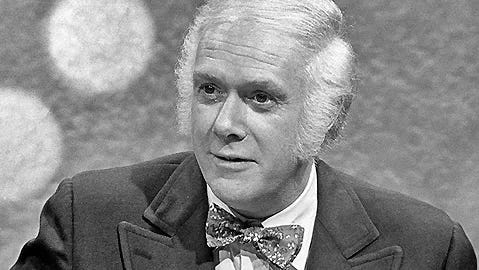
All that crumbled in the last couple of decades. A key change was ownership. When major international publishers consolidated and became behemoths, they bought up McClelland and Stewart and other pillars of Canadian publishing. These multinational conglomerates follow the logic of profit-maximizing multinational conglomerates, which means safe is good and work that can be published in many markets – especially the all-important American market – is preferred above all. Good luck to a would-be Pierre Berton trying to publish the equivalent of The Last Spike today.
Canadian-owned publishers now hold a grand total of 5.3 percent of the Canadian market. Books written by Canadians occupy 12.3 percent of the Canadian market. No other developed country’s books are so thoroughly dominated by foreigners. And believe it or not, those figures understate how grim the reality is because much of that 12.3 percent written by Canadians are not Canadian stories. One of the most astonishing trends of the past 20 years is that Canadian writers of literary fiction have largely abandoned Canadian stories and now their characters and settings are in other countries. Successful authors are still lionized for their accomplishments, and we still call this Canadian literature, but, again, for the purpose of national stories and national identity, the fact that a writer carries a Canadian passport to get to international awards ceremonies is sweet, but irrelevant. They aren’t writing Canadian stories.
It’s as if the disinterest of foreign publishers in Canada has infected Canadian writers. As Stursberg notes, Canadian history, politics, and culture – which once dominated Canadian bestseller lists – have all but vanished. And with that has gone all attempts to wrestle with big, national questions of identity. French Canada has vanished from English Canada’s literature, Stursberg notes. “There was no sense in any of the bestselling books, whether fiction or non-fiction, that Quebec even existed.” So has Canada’s relationship with the United States. The only bright spot in Canadian books is truth and reconciliation and the indigenous relationship. Aside from that, Canadian books have all but given up on Canada and Canadian stories and Canadian identity.
Please don’t blame one party or another. Stursberg does a brilliant job of showing the collapse happened equally under the watch of both Justin Trudeau and Stephen Harper. In fact, it was a Harper appointee who lobotomized the Canada Council with the same dogmas that crippled the CBC. There’s blame enough to go around.
Does any of this matter? One could argue it doesn’t. While pride in Canada nose-dived in recent years, the gangster in the White House reversed that brilliantly. Canadians rallied around the flag. Patriotism is soaring. True, we have not one but two national unity crises brewing, but national unity crises are like Canada doing badly at the world junior hockey championships: It happens every decade or two, we wring our hands, then everything gets better. Surely this is more of the same. And given that Canada is highly regarded internationally as a stable, prosperous, moderate country in a world that description applies to fewer and fewer countries, surely whatever we’re doing is working nicely.
I would respond that this is the complacency of people who have been enjoying the sunshine for so long they have forgotten — or never learned — what thunderstorms and tornadoes can do.
Groups don’t exist in the same way a spoon or a stone or a person exists. Only when people look at each other and see “us,” and say with confidence that “we” are, that “we” matter, and “we” stand together – only then does a group exist. If people do not feel these things, the community does not exist. Far more than laws or arms or flags, every community is a product of imagination and belief. And stories are the fuel of imagination and belief.
Of course, a weak sense of collective identity is no impediment to a country rolling along just fine. While it is prosperous. While it is at peace. While it is not buffeted by events and threatened by gangsters. Everything is fine while the sun shines. A strong sense of collective self is only essential when storms come.
That’s what worries me about Canada.
A century ago, when radio was the future, and a fragile Canadian national identity was only just emerging from a colonial chrysalis, Canadians realized that if the communications medium of the future were overwhelmingly dominated by American content, the national project would be in danger. So they created the CBC. A quarter-century later, the first generation of Canadian nationalists created the public policies which ensured Canadian publishers would put Canadian books in Canadian hands. Today, the means by which we tell our stories have died, atrophied, or moved south of the border to an extent that would have appalled those earlier generations. Yet we scarcely notice.
Canadians never had a monolithic, standard-issue, by-the-book Canadian national identity. Our sense of collective self has always been contested and evolving, to such an extent that contesting and evolving that identity, in polite negotiation, is central to our national identity. And yet we had stories that spoke to even that identity. For generations, “Wolfe and Montcalm” was shorthand for a relationship between peoples that started in conflict and loss but somehow, improbably, found a way to make a successful country. Today, I doubt most Canadians would have any idea who Wolfe and Montcalm were, much less attach meaning to their story.
So what would become of us if we were plunged into genuinely hard times?
Look at any group that successfully weathered storms and you will find two things: a strong sense of collective self — of “us” — and shared stories promoting that sense. How have Jews maintained a collective identity despite being scattered to the winds and persecuted for almost two thousand years? With deliberately cultivated stories of collective identity, such as Passover rituals which recount the escape from slavery in Egypt. How did Poland survive all that Poles suffered — partition, occupation, persecution, cultural annihilation, even genocide — from the late 18th century to the fall of the Soviet Union? With a relentless effort to create and pass on national stories rooted in history, mythology, and the liminal space between the two. There are countless more illustrations like these.
So how would a country fare when it suffers — invasion, deprivation, desperation — but its armoury of national stories is mostly empty? I find it hard to imagine that people who cannot summon a collective sense of self could summon collective resilience. I think it much more likely such people would be brittle. And break.
The bellowing of the lunatic in the White House has roused us to wave flags and swear off bourbon but it hasn’t shaken us into a realization that if we are intimately familiar with American national stories, while ours fade from shared memory, or are never learned at all, the nation must become as thin and translucent as the ghost of Pierre Berton. That is a crisis. We can get a little glimpse of how bad things could get right now: When some Albertans say they want to break up the country, we respond with cost-benefit analyses and arguments about equalization payments. Picture a wife telling a husband she wants a divorce and he responds by appealing to the tax efficiency of continued marriage. Only inertia is keeping that couple together.
I’ve made this argument about history, stories, and identity in a number of Canadian forums in recent years. In one case, I spoke with a group of Canadians so eminent I may have been the only one not wearing an Order of Canada pin. The reaction is always the same.
Everyone agrees! History and national stories are so important! Something must be done. But nothing will be done, they go on to say, because….
Education is a provincial responsibility and the provinces don’t care about national identity.
The universities only hire historians who focus on demographic sub-identities. National history is dead.
The CBC is hopeless. Forget it.
“History” is too political. Don’t say “history.”
Same for anything “national.” Too dangerous.
It’s always safe to say and do nothing.
There are other items on the list of Reasons Why Nothing Will Ever Change but that’s enough to give a sense of the weary resignation I keep encountering. I have to admit it was instilled a little weary resignation in me, too.
But resignation is capitulation. I refuse.
The Internet disrupted the communications media we had grown used to in the second half of the twentieth century. Smartphones and social media turned the snow globe upside down a second time and shook it hard. Over the same years, old forms of communication were gutted. Now AI promises to make the Internet and smartphone revolutions look like barely registered tremors before the big one. And we have discovered that our enormous reliance on the United States has made us vulnerable should our Americans friends and neighbours elect someone more belligerent than the American presidents we have always known.
It’s a hell of a situation. And the stakes are existential.
Earlier generations knew the great Canadian answer to complex challenges like this: We need a Royal Commission. We need the daring to think big.
But most of all, we need our own stories.
Comments
Nothing yet. Say the first thing.
Sign in to join the conversation.