
Last week, I saw a kind woman in her late 50s for her routine six-month check-up. I’ve been caring for her for about five years. She has a history of stage III, hormone receptor-positive, HER2-negative breast cancer. During her mastectomy, an axillary lymph node dissection showed the cancer had spread to more than 10 lymph nodes. Thankfully, her scans revealed no signs of metastatic disease, though the results still put her at high risk for recurrence.
From the start, we talked through her treatment options carefully, considering standard therapies alongside diet, exercise, weight loss, and other ways to reduce risk. She went ahead with adjuvant chemotherapy, radiation, and both endocrine and targeted therapy, fully aware of the benefits and tradeoffs. She’s stayed involved every step of the way, and so far, I think she’s done amazingly well.
At the same time, we’ve both come to understand what her disease biology means. Even after five years, with hormone receptor-positive disease and that level of nodal involvement, there’s still a lot of uncertainty.
The aromatase inhibitor side effects were pretty rough on her from the start. She stuck with it for about eighteen months, making some adjustments along the way, until the joint pain really began to interfere with her daily routine. No matter how hard she tried, she struggled to lose any weight. Switching to tamoxifen helped in some ways but brought new issues. The hot flashes got even worse, and over the past year, the “brain fog” has become more noticeable. Overall, these medications just make her feel lousy.
Eventually during our conversation she said:
“Dr. Flora, I think we need to be done with these meds.”
She seemed more settled after we talked, and I reassured her that I supported her decision. But I could tell there was still some uneasiness there. She was anxious about stopping, and also about the fact that we hadn’t done any imaging in a while. Her last scans had been clear, and in this setting we don’t have strong data to support ongoing routine CT surveillance after curative treatment.
At this point, I mentioned a blood test we’ve been using more frequently called circulating tumor DNA, or ctDNA, as something to consider. In her case, based on what we know from surgery, it could be a way to monitor things more closely. If it stayed negative over time, it might offer some reassurance. If something showed up, it could lead to earlier imaging, exploring a clinical trial, or discussing restarting treatment.
She told me she had come across it while reading, but wasn’t sure what it was all about. This kind of conversation is coming up a lot in the clinic now.
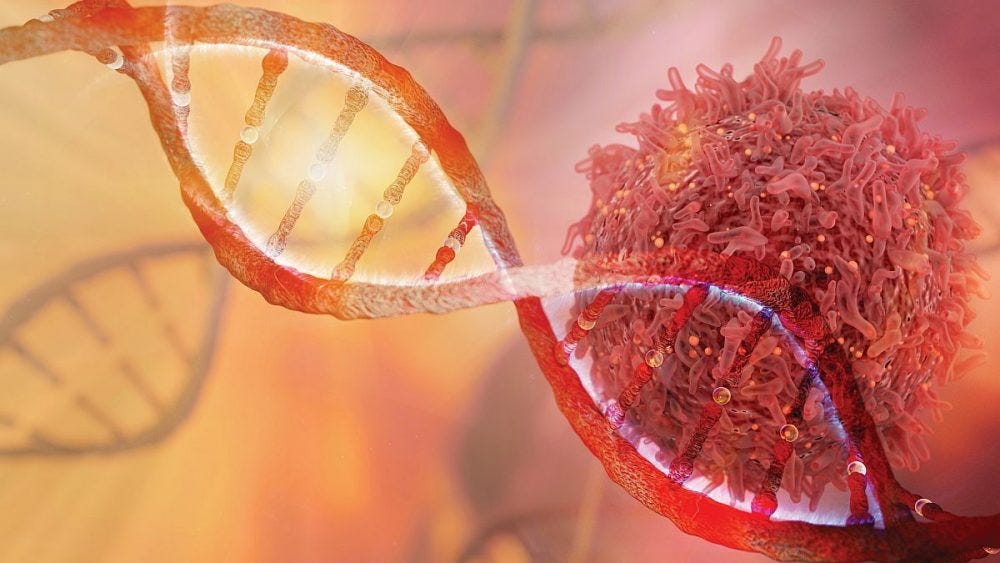
Patients are hearing about ctDNA, multi-cancer screening tests, and advanced AI imaging, and can’t help but wonder why these tools aren’t standard in routine follow-up care. From my experience, that curiosity often masks a bigger question: after everything they’ve been through, why does cancer monitoring still feel so limited?
For early-stage breast cancer, follow-up is intentionally minimal. It consists of physical exam, history, mammography (if feasible), and conversations like this. There are no routine CT or PET scans and, in most cases, no tumor markers. That approach seems counterintuitive, especially to someone who has already lived through a high-risk diagnosis.
The reasoning behind it goes back to older trials and a Cochrane review, which showed that more intensive imaging found recurrences earlier but did not improve survival. What it did add was anxiety, incidental findings, radiation exposure and additional procedures. Over time, those data determined how we approach surveillance, not only in breast cancer but in several other cancers as well.
When patients learn about a blood test that can detect cancer earlier than imaging, though, it seems like a promising solution to a problem we’ve not yet figured out.
The tougher question is whether ctDNA actually solves that problem or just adds more confusion to the picture.
Circulating tumor DNA comes from a simple biological concept: as cancer cells divide, they release bits of DNA into the bloodstream, much like normal cells do.
With current sequencing technologies, we can detect those fragments at extremely low levels. In a patient who has completed treatment with curative intent, a positive result can indicate residual disease somewhere in the body, even when imaging is normal. In some studies, that signal appears months, sometimes longer, before anything becomes visible on a scan.
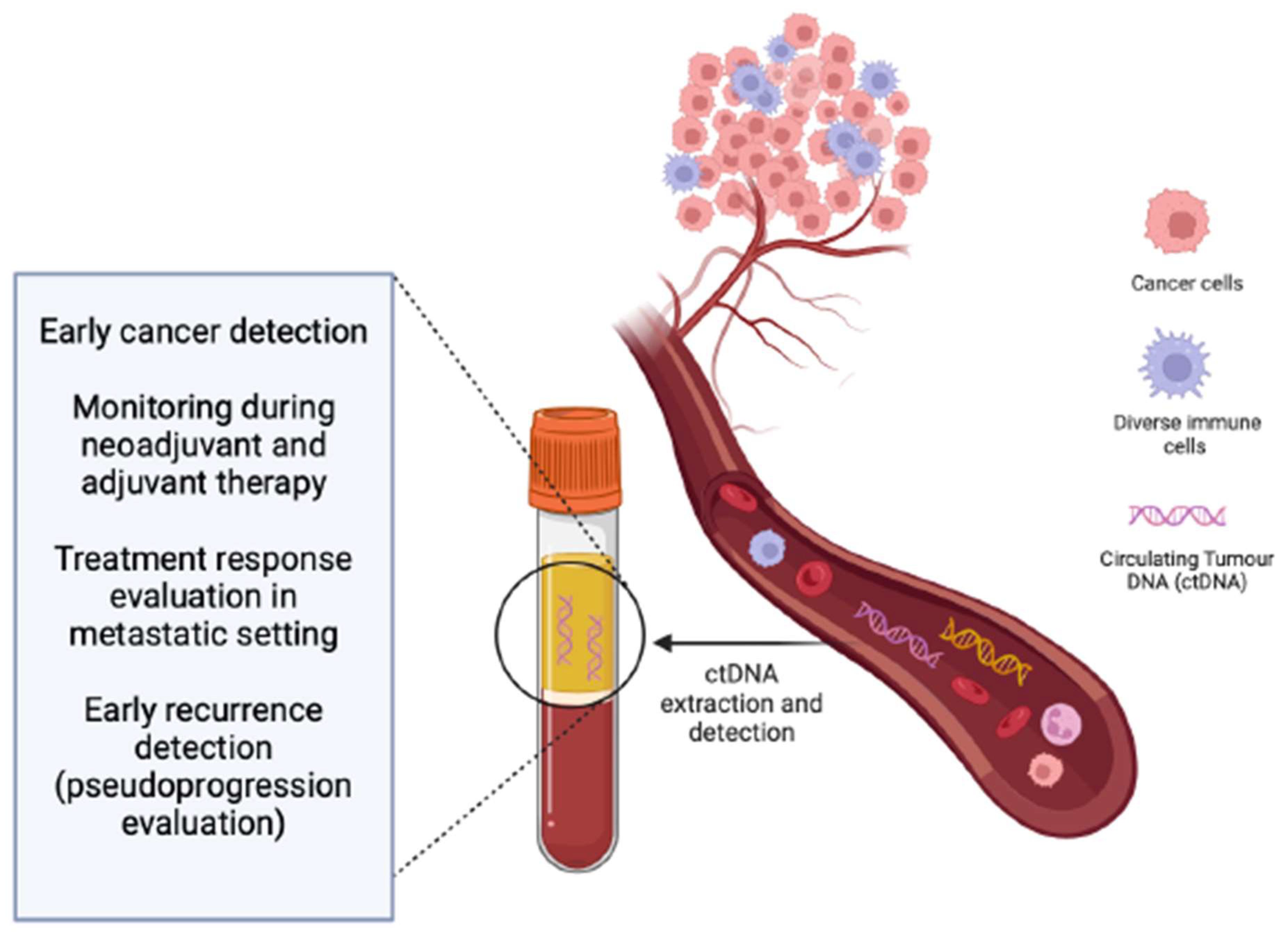
For a long time, we have been trying to treat microscopic disease without being able to measure it directly. We relied on other risk idicators like stage, grade, and tumor genomics, treating larger groups of patients in the hope of benefiting a smaller subset. ctDNA is the first tool that comes close to directly measuring that residual risk in real time.
The data as a prognostic tool are compelling. In colon cancer, the DYNAMIC trial found that patients with a negative ctDNA result could safely undergo less chemotherapy. In breast cancer, studies like PREDICT-DNA show that patients with persistent ctDNA face a much higher risk of recurrence, while those who clear the signal generally do well. This pattern of results is becoming increasingly consistent across different tumor types.
The more difficult question is whether acting on that information changes outcomes.
That is where the data becomes aren’t as reassuring. Trials in colon cancer and triple-negative breast cancer have tested whether starting treatment at the time ctDNA becomes detectable can alter the course of disease, and so far the results have been mixed or negative. In other words, we are getting better at seeing the problem earlier, but we have not yet shown that intervening earlier consistently improves what ultimately matters to patients.
This is exactly the situation my patient is in right now. The test exists, but would it really help her make any decisions? After years of treatment that have taken a toll on her quality of life, she’s thinking about stopping, even though her risk of recurrence is still high. What she needs is some guidance to help her navigate that uncertainty.
In that context, ctDNA can be helpful, but only if it is framed carefully.
For a patient like her, a persistently negative result over time may provide some reassurance as she steps away from therapy. At the same time, a positive result, particularly in the absence of a clear plan, can create a different kind of emotional burden. I have seen patients struggle more with that uncertainty than with the original question that led them to test in the first place. There is also the risk of overtreatment, since some patients who become ctDNA-positive may remain clinically stable for a prolonged period without intervention.
In my practice, I use ctDNA sparingly, mostly in higher-risk situations where the results could genuinely influence our next steps. Before ordering it, I make sure we’re on the same page about how we’d act on either outcome. If a negative result wouldn’t change how a patient feels or our follow-up plan, the test may not add much value. But if a positive result would clearly lead to action, like imaging, a clinical trial, or a therapy change, it becomes more worthwhile. Still, I’m careful to point out that the test doesn’t always eliminate uncertainty.
Patients may approach this differently. Some want as much information as possible and feel more comfortable having data, even if it is incomplete. Others prefer to avoid information that does not clearly translate into action. Both perspectives are reasonable, and the same test can feel either reassuring or scary depending on the person.
This field is evolving quickly and right now there are still a number of unanswered questions. Does acting on ctDNA improve outcomes? If it does, this will likely become part of standard care. If it does not, we will need to be more careful about how we incorporate it into practice. For now, we are in a transitional period where the technology has advanced faster than our ability to apply it.
So now I ask…
The technology is real, and the biology backing it is solid. What we’re still figuring out is how to use it in a way that truly benefits the patient sitting in front of us.
Related articles:
“Doc, if we got it all, why am I here?”
·
Apr 29

This week, I met with a man in his late 60s for a consultation. He had recently noticed a dark spot on his chest that grew and eventually started bleeding, leading him to see a dermatologist. A shave biopsy confirmed it was melanoma. He was appropriately referred to a cancer surgeon for a wide excision, and because of its size, a nearby lymph node excis…
Who Actually Benefits from Cancer Treatment?
·
Feb 28
A few years ago I sat across from one of my patients, 43-year-old mechanical engineer who had just had a stage II melanoma removed from his back. The surgery went well, he had widely clear margins and no evidence of spread to his lymph nodes.
Comments
Nothing yet. Say the first thing.
Sign in to join the conversation.