
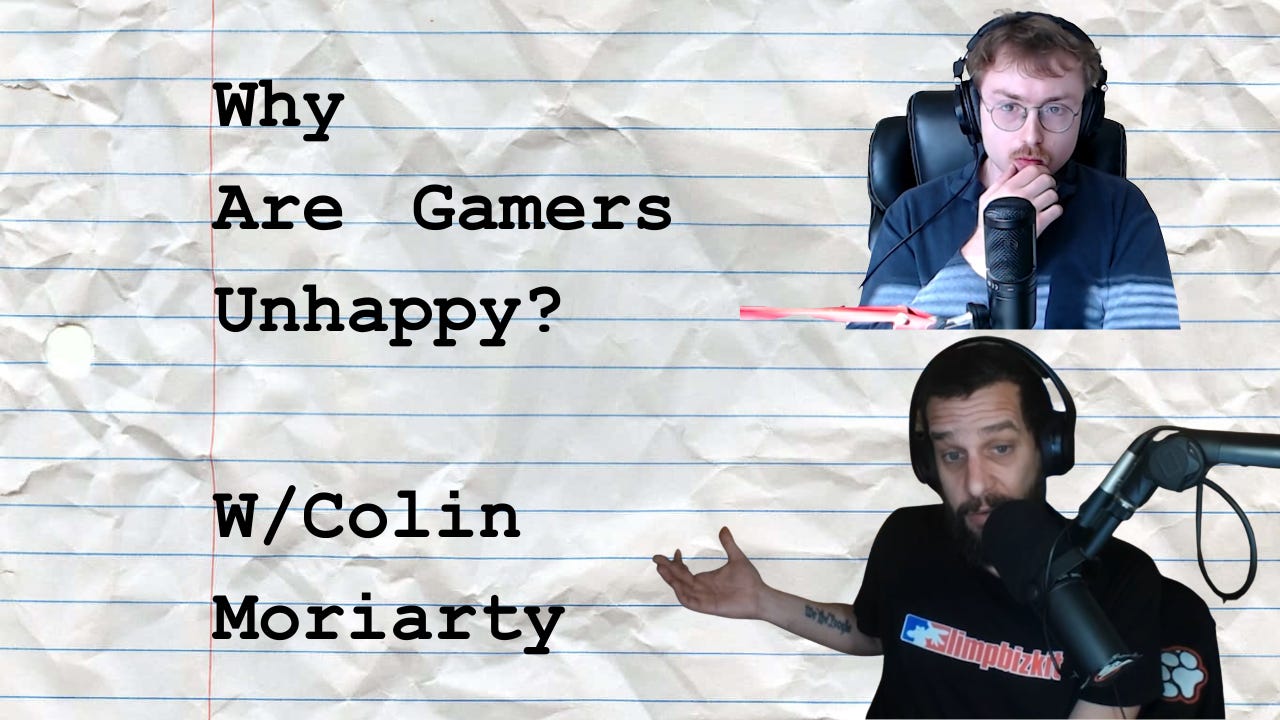
Do you ever feel like the thing you love is constantly under scrutiny, or people have such an irrational opinion over something that should be optimistic? An opinion that makes you scratch your head? Maybe it is just me, but I have noticed that negativity in Video Games has become such a “popular thing”. For example, people seem to be mad about women protagonists in games; some games die unorganically because a group of people decided they wanted it to; and even people who are not even playing the games themselves will just have an opinion. I think it is wonderful to have an opinion, I am sitting here writing mine, but I think the negativity has gotten out of hand and become normalized due to everyone having an outlet online.
I knew that to discuss this broad idea in detail and really hone in on what it actually meant, I needed to talk to someone who would understand negativity in the video game space on a different level. Maybe someone who has experienced the space’s negative aspects and has seen THE negativity evolve over time. That someone is Colin Moriarty.
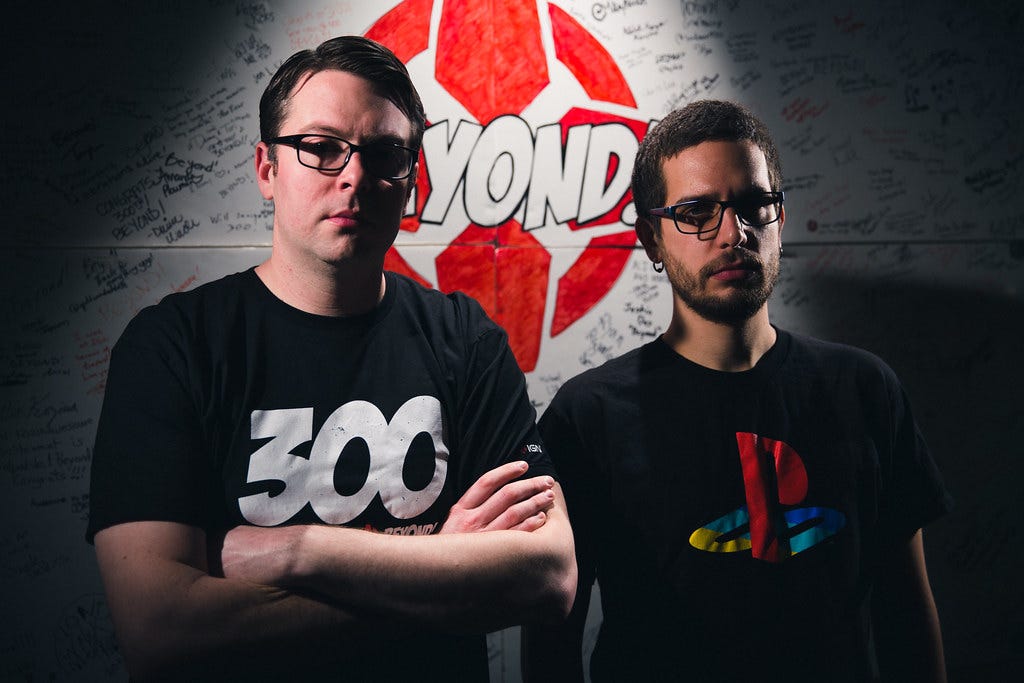
If you don’t know who he is, Colin worked at IGN for around 13 years, hosted one of the best PlayStation podcasts out there (Beyond!), co-founded Kinda Funny, and now runs his own company, Last Stand Media. So—with a few clicks, a bit of luck—I got to sit down with Colin to talk about what’s going on in the gaming industry right now.
Deyton:
So, I feel like you are the type of person that would have a really good finger on the pulse for like the current negativity in gaming and how you’ve kind of seen it stretch over your career.
Um, like through IGN, Kinda funny and stuff like that, and you know, at last stand.
Um, I feel like I started to notice the negativity get like really bad online when I don’t know if you remember, but Spider-Man 2 versus Baldur’s Gate 3, uh, with the game of the year.
Colin:
So 2023.
Deyton:
Yeah. At the game of the year or the game awards, and people were like Spider-Man 2 has to win, and they were super against Baldur’s Gate 3 winning, and I’m like again I’m not a Baldur’s Gate 3 type of person, but it’s a better game in my opinion, right so.
Yeah, I mean, Spider-Man 2 is definitely not a game of the year.
Right I I loved it, but I wouldn’t call it game of the year.
Right, right, and I just started to notice there was like, are people even playing these games, and it was just like these people have so much discourse and they have so many things, and they’re not even playing the games.
So I think you know you see it with Intergalactic 2, and that game’s not even out. You saw it with Concord and Ghost of Yotei and a little bit of Marathon, right?
These people just like hate on the games.
So I kind of just I mean what is your read on that right now? Does that make sense how I preface?
Colin:
Yeah, it makes sense.
I don’t know. I’ve thought a lot about it too because I think it’s it’s interesting.
Like I’ve been in the industry for 24 years. I’ve been playing games since the late 80s.
Um, and I was a messageboard kid, you know.
How old how old are you?
Deyton:
I’m 26.
Colin:
Okay. So, you’re not old enough to
Deyton:
Yeah. Yeah.
Colin:
Like for the dial-up era of like
Deyton:
Like, I’m not old enough to be on Usenet, for instance. No, I don’t know if you know what that is.
Colin:
Usenet is like the pre-worldwide web internet from the 80s, and people would like, and um, it would be like you know something group whatever, and there would just be these forums.
I bring all this up because like I feel like the negativity was always there. just never had a microphone.
So like we would complain about everything.
I remember, you know, I was on GameFax from what 98 to 2004 or something.
And uh people hated everything.
Like I always talk about, um, I loved Wind Waker at the time. I was a big GameCube fan.
And uh everyone used to call it Cellda, right?
And like, and cda, and make fun of it, and like, hate on it.
Just that no one had to go and seek it. It’s the difference.
And that’s why I asked how old you were, because I was like, it’s the difference between what I think I grew up in, like the pre-9/11.
My wife and I were just talking about this like you used to go on the internet you would like go on a computer you would often have to dial in so you’d be using your phone line someone else would need to use your phone line you’d have 15 minutes you check in you do what you can you get an a message you answer email you go away people had computer rooms.
And you know, and it was just now we’re always on the internet.
We don’t know how to talk without expressing ourselves more publicly and vocally.
And so I really just feel like Occam’s razor says that the gamer hasn’t changed, just the conduit by which we communicate has changed.
Deyton:
Yeah, I think that I’ve kind of noticed that too.
I mean, I’m glad that you kind of have. I mean, you’ve been around for so long, so you’ve kind of seen it, you know, how the hate has evolved, I guess.
And it’s hard to know, like, where it originally comes from because it’s so easy.
And I have it written down too, and it’s kind of what I’ve been studying a little bit: the question is, is the problem the combination of coverage and that everyone has a platform?
And I think I think this goes into a lot of things, right?
Um, like, political, like anything, is that we’re all on Twitter and social media.
And so I think it’s so much easier to blast that.
But I’m curious though, like what you’ve talked about on Sacred, and so many things about like Ghost of Yotei.
People hate that it’s a woman or intergalactic.
Um, I mean, was it always like that, or do you think it’s like incel culture?
Like I, I just don’t understand it cuz it’s like you need to get your hands on the controller and play the game, and then you can have any opinion you want.
It just bothers me that these people don’t even want to interact with the product itself, right?
Colin:
Yeah. I think that’s probably true.
I mean, like I often think back to the representation of women and like minority characters in games and movies and TV shows and like again maybe it’s just being a product of the 80s and the ‘90s, but I felt like no one really cared.
Like everyone knew Samus was a girl, you know, or a woman.
In Metroid and Super Metroid, they make it, and in Metroid 2, they make it even more obvious.
And you know, we had characters that people really loved like Barrett in Final Fantasy 7, although that game’s not even really 30 years old.
Just like a lot of different things.
I think about like Ripley in Alien and um all you know, Leia and Lando in Star Wars.
Like, I don’t think I always fantasy, sci-fi, like all that kind of stuff always felt kind of like it gathered together people that were different.
Um, both fundamentally and you know figuratively, I guess.
So politically, but also by skin color or gender.
I feel like there has been a little bit of a rubber banding effect on what we were actually just talking about on one of the shows, about like uh women in in like as protagonists in a say a Sony game.
It actually is getting weird now.
Um, and I think that, you know, like I don’t mind, especially when you think about Naughty Dog doing Intergalactic.
It’s like, well, they’ve really never had a female lead.
I mean, obviously, Ellie is the female lead, but like that game was really about Joel.
They really shared the spotlight.
You have to go back, you know, like Crash is obviously male.
Jack and Daxter are males.
Uncharted Drake’s male.
Um, so it’s like, okay, that’s cool.
Same thing with um Ghost to a degree.
I mean, infamous First Light had a female protagonist, but like, you know, Sly is obviously a guy.
And um, but taken all together, I think people are being like, “Okay, well, maybe maybe some of these decisions are actually being made.
I don’t want to say for like political reasons, but more about like representation.”
Like shrewd, we’re going to net more of an audience by doing something like this.
Like, I think they’ll do whatever it takes to sell games.
And I think that a lot of them just think that that’s what it takes.
Um, but I also think that this representation has kind of always been there.
I mean, people make fun of Lord of the Rings, so like a book from the 50s, right?
Like, people make fun of that.
There’s no women in it.
And it’s true.
Like, there really aren’t any, not like there was a couple of women, like people put together the movie scenes or whatever.
But yeah, none of the protagonists at all.ah.
And it’s like, okay, maybe it’s like a boy trip.
Maybe it’s like a little unrealistic, whatever.Um, but I do believe that, generally speaking, things haven’t really changed from the representation front.
It’s as you’re saying, I think people are interpreting it differently through different lenses, and that’s a complicated social issue that really hasn’t, I don’t think, been studied by scholars too deeply.
As far as I can tell, I think it’s a real combination of factors that get people to this point.
But I think one of the things you touched on is really important, which is that a lot of the people who are talking about games don’t play games.
And I know that people, it’s inherently corny to be like show me your trophies or like prove to me, but it’s like no show, like you can say what you want about me, but I just like to tell you what you can. I play all my games on PlayStation. You can go look.
And if I got you know, I beat dozens of games a year, and I feel like that’s the thing my wife and I talk about, is like I feel like it’s important I’m always playing games.
It kind of sucks sometimes, but it’s like I got to be credible, you know.
Um, and I think that a lot of people that are not credible are talking about games they don’t play that are not for them.
And Highguard is actually the best example of that, where I keep saying Highguard would have failed and it would have died, but it would have failed differently, and it would have died differently if things weren’t quite what they were.
You could see it in the reviews and they said that themselves that like because the inmates run the asylum on Steam to a degree, people can just download the free-to-play game, play it for 2 hours, which is 12 minutes, leave a review.
And they said themselves like people that played the game for under an hour didn’t like it.
People that played the game for more than two hours did like it.
End of Interview for the article. You can check out the whole interview here!
“Negativity” is an extremely complex discussion because it really cannot be defined in today’s spaces. The sentence Colin said that has sat with me the most is “I feel like the negativity was always there. just never had a microphone.” That might possibly be true. Maybe I am just getting old. I don’t think there is any way to “fix” the issue; the only way to help is to discuss it and I will continue to do that with a microphone!
No posts
Comments
Nothing yet. Say the first thing.
Sign in to join the conversation.