
Dexter Ingram: Declassified – Carlos the Jackal Q&A
This week, we are mixing it up. One of my co-collaborators, Susan Barrows Libby, sat down to ask me about the making of Jack Carr Investigates Carlos the Jackal. As big as Carr is, it wasn’t until Susan pointed out all his novels and growing series of non-fiction that I realized how, with the course of the work I’ve done, I have found some pretty amazing opportunities. This is one of them.
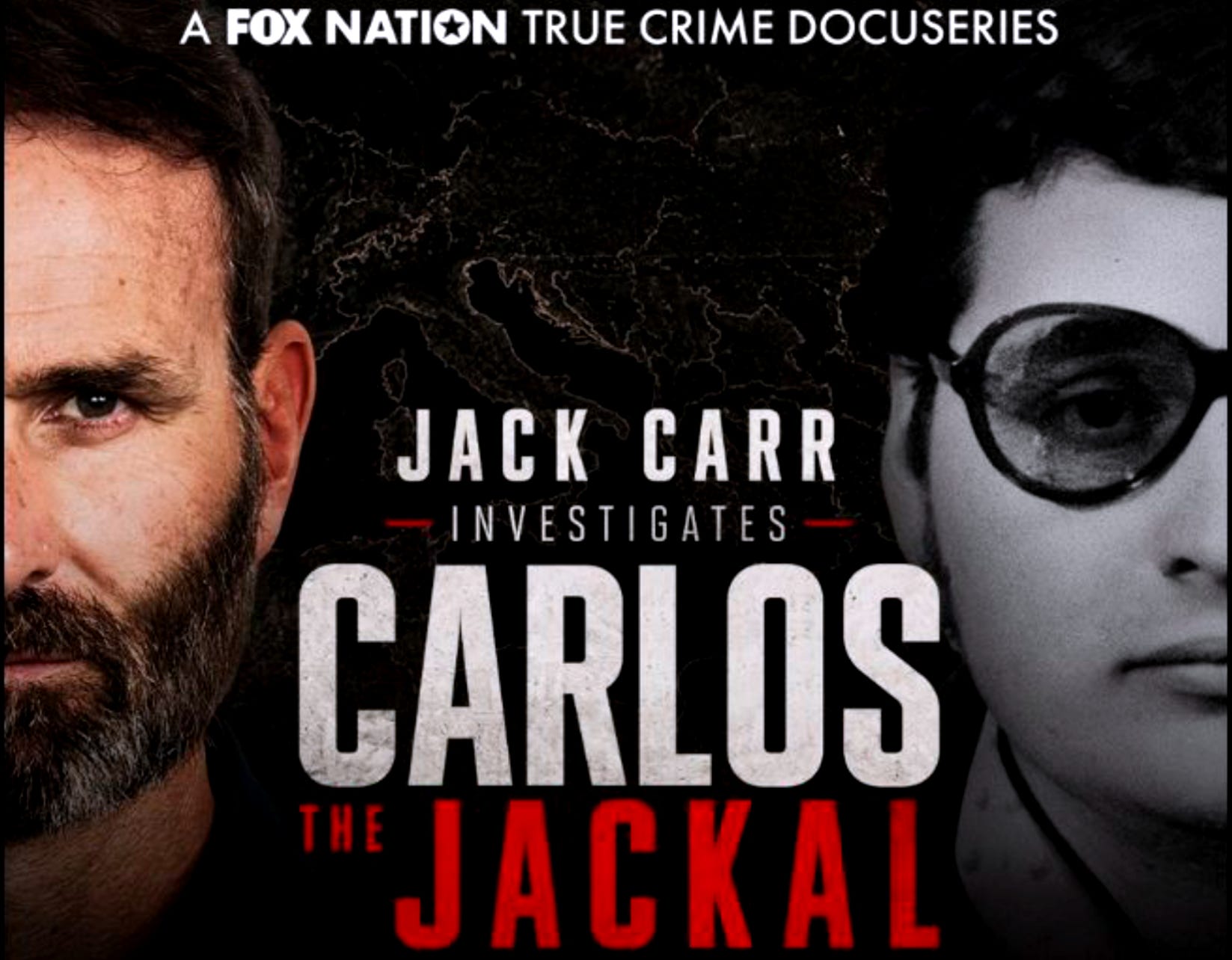
How did this land in your lap? Did they come to you, or did you know someone on the production?
It came through the International Spy Museum. Aliza Bran, the Director of Media Relations at the museum, called and asked if I’d be interested. I’ve been on the museum’s advisory board since June of 2021, so I was already in that orbit.
The production’s first call wasn’t for me, though. They wanted Chris Costa, the museum’s Executive Director, and Chris was on travel. I’m no Chris Costa. I was honored to fill in for him.
It was easy to say yes. I’d spent time in a couple of seats that matter for a subject like this, Director of the Office of Countering Violent Extremism at State and Senior Counterterrorism Coordinator at INTERPOL in Lyon, but credentials just get you in the room. I’ve been reading this history for years anyway. The timing helped too. I’d left State earlier that same month, September of 2025, so I went from clearing out an office to sitting under production lights in a spy museum.
I’ll admit the unserious part. Serving on the Spy Museum’s advisory board was one of my retirement dreams and it happened years before I retired. Being one of those experts you see on the spy and terrorism shows was the other one.
There’s something underneath it too. When you spend a career doing this work and leading teams, you’re focused on the mission and nothing else. Nobody in that world asks you for your story. It’s only later that you realize people actually want to hear it, and that there’s real value in what you carry around. I’m still getting used to that. But I enjoy it, and it’s most of the reason I started Dexter Ingram: Declassified, to take a few decades of experience and say something useful about what’s happening in the world.
What did they actually ask you for? On camera, background, access to the collection, or all three?
On camera. Nobody asked about my collection, which surprises people when I mention it. What they wanted was factual background: who Carlos actually was, the organizations he moved through, who he worked for and alongside. The PFLP, Wadi Haddad, the European groups he partnered with, the states that hosted him.
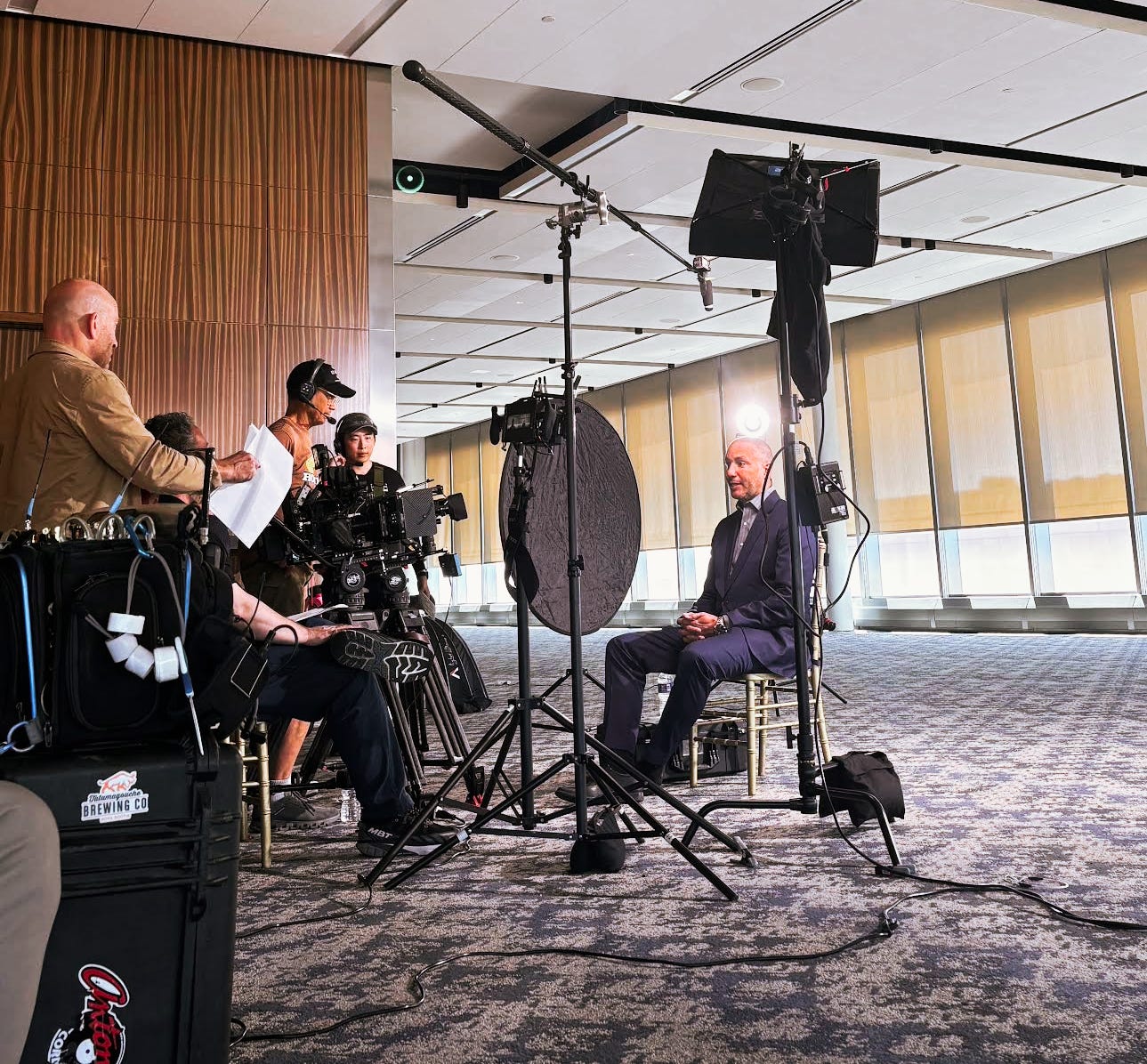
We shot at the museum in September of 2025 and it was a real production. Full crew, mics, lights, makeup, slates. We went a few hours, with the director and his team asking a question, me answering, and then going again from a different angle or with different framing. You end up covering the same territory four or five ways so the editors have something to work with.
The crew was terrific, by the way. Fun to work with and good at their jobs, same as the museum team. Good humans who are great at what they do.
Earlier this year the team called me back because the audio hadn’t picked up on one section, so I did a voiceover months later, trying to match the energy of a room I’d been in the previous fall.
How much of what you gave them made the cut?
I’m in episodes one and three of a three-part series, so you can do the arithmetic on a few hours of tape. That’s the job. You give them raw material and they build something.
What surprised me is that what survives is rarely what you thought was your best answer at the time. You’ll deliver what feels like a clean paragraph and it goes in the bin, and some half-sentence aside you barely remember saying ends up in the show.
Before this, what was your own working knowledge of Carlos? Where did he first cross your desk professionally, and in what context?
Not as a live file. He’d been in a French prison since 1994, so nobody in my generation was chasing Ilich Ramírez Sánchez. He crossed my desk as an argument.
At INTERPOL, I used Carlos all the time to explain why we did what we did. Look at his travel, the border crossings and the countries and the years. Look at how casually he swapped identities and documents. Then count how many separate agencies had a piece of him at one point or another: French, British, German, Austrian, Israeli, American, the KGB, the Stasi, and most of the other Eastern bloc services that took a turn hosting him. Several of them individually knew a great deal about the man. Together, for twenty years, they knew nothing they could use. That’s the case for information sharing standing right there in one person, and when you’re trying to get ninety-odd countries to prioritize sharing data they’d rather hold onto, it helps to have an example everybody already believes in.
He shows up on the prevention side too. Carlos wasn’t a desperate kid with no options. His father was a wealthy Marxist lawyer who named all three of his sons after Vladimir Ilich Lenin, one name apiece. Vladimir, Ilich, Lenin. The boy had money, education, languages and every door open to him, and he chose this anyway. That’s the uncomfortable fact I spent two years at CVE trying to get people to sit with. Radicalization is not a poverty problem.
For readers who only know the name: what did he actually do, and what has been pinned on him that he did not do?
Start with what French courts proved, because that’s the floor and it’s bad enough.
December 1973, London. He walked into the home of Joseph Sieff, the Marks & Spencer chairman and a vice president of the British Zionist Federation, and shot him in the face. The round deflected off Sieff’s teeth and the weapon jammed. Sieff lived and Carlos walked out.
September 1974, the Drugstore Publicis in Saint-Germain-des-Prés. He threw a grenade from a mezzanine into a crowd of shoppers. Two dead, thirty-four wounded. A French court convicted him of that in 2017 and gave him his third life sentence.
June 1975, rue Toullier. Two DST officers came to question him along with a Lebanese associate named Michel Moukharbal, who had been rolled. Carlos killed all three and disappeared. That’s the conviction that got him his first life sentence in 1997.
December 1975, Vienna. The OPEC raid. Six attackers, sixty-plus hostages, eleven oil ministers, three dead including an Austrian police officer. Austria gave him a plane. He flew the hostages to Algiers and then Tripoli, collected a ransom from Qaddafi’s neighbors and let them go.
1982 and 1983, the bombing campaign in France. A train from Paris to Toulouse. A car bomb on rue Marbeuf. The Marseille station and the Marseille to Paris train on New Year’s Eve. Eleven dead and roughly a hundred and fifty wounded, all of it to pressure France into releasing his girlfriend Magdalena Kopp, who he later married. Second life sentence, 2011.
Now the other side of the ledger. Munich in 1972: no. Lod Airport that same year was the Japanese Red Army operating for the PFLP. Entebbe in 1976, he wasn’t on the plane. Some documentaries have tried to hang Lockerbie on him, which is nonsense.
And then there’s the number nobody checks. The eighty-plus deaths that get attached to him in almost every write-up came from Carlos. He said it about himself, at trial. We’ve been quoting a murderer’s résumé back to him for thirty years and calling it research.
Fox Nation’s own series copy credits him with the 1972 Munich Olympics murders. That attribution is contested. How much of the Carlos record is myth he cultivated himself?
He wasn’t there. Munich was eight men from Black September, an arm of Fatah, planned by Abu Daoud, who later wrote about planning it in his own memoir. Carlos was PFLP. Different organization, different chain, different sponsor. In September of 1972 he was in London setting up safe houses and weapons caches. TIME laid this out plainly back in 1994 and nothing since has moved it.
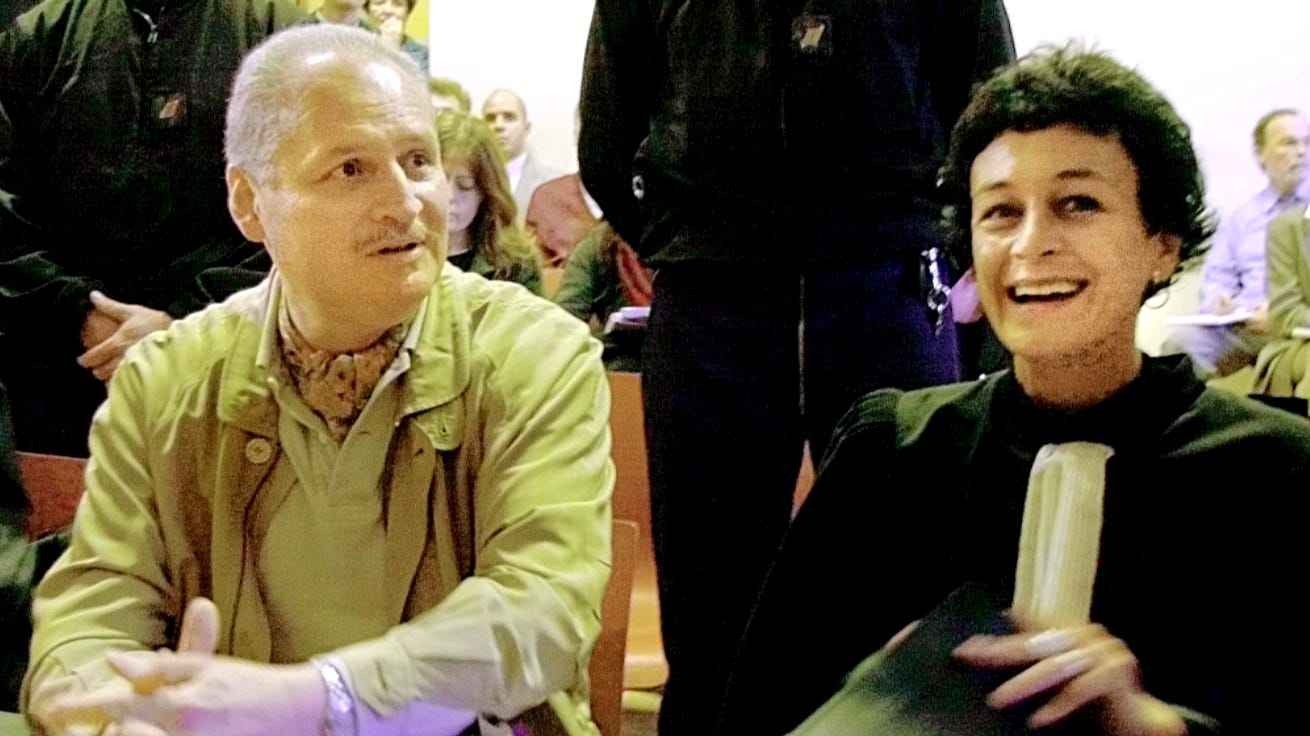
So why does it stick? Because Carlos wanted it to. He claimed Munich at various points. He claimed a Lufthansa hijacking earlier that year. No proof ever surfaced for either. He wasn’t interested in being understood accurately, he was interested in being feared, and a man credited with eleven dead Israeli athletes is a lot more frightening than a man who shot a retailer in the mouth and missed.
The name works the same way. He didn’t pick it. A copy of Frederick Forsyth’s The Day of the Jackal turned up in a search of a London flat connected to him, a journalist made the leap, and the press ran with it. He spent the next twenty years wearing it like something he’d earned.
Every documentary on this man inherits fifty years of accumulated error. But this matters past trivia. When you credit a terrorist with reach he doesn’t have, you do his recruiting for him and you distort your own threat picture. You also take the crime away from the men who actually committed it. Abu Daoud planned Munich. He should own it.
He called himself a professional revolutionary. From a tradecraft standpoint, was he good, or was he lucky?
He was a mediocre operator with excellent patrons, and that combination will carry you a long way.
Look at the execution. At Sieff’s house he fired one round, the weapon jammed, and he left a living witness behind. A professional clears the malfunction and finishes. At rue Toullier he wasn’t running some countersurveillance play, he was cornered in an apartment because his own network man had been flipped, and he shot his way out of it.
Even the OPEC raid, the operation he’s famous for, was only half a success. The entry was sharp and the endgame was a mess. He was supposed to execute ministers and instead he took the money and released them, and Wadi Haddad, his own PFLP handler, threw him out over it. The line Haddad reportedly gave him was that there’s no room for stars on an operational team.
What he was genuinely good at was something else. He spoke several languages. He was well dressed and socially fluent in rooms where a Latin American with money and manners drew no attention. And he was good at being sponsored, which is a real skill even if it isn’t the one the legend advertises. Managing patrons, staying useful to services that wanted deniable violence, keeping himself worth the trouble.
What kept him free for two decades? Was it his skill, or gaps between intelligence services?
Sanctuary, mostly. He wasn’t hiding in the mountains. He lived in Budapest, East Berlin, Damascus and Khartoum, with an apartment and a wife and a routine. Services knew roughly where he was for long stretches. He was a guest of states, and a state with sovereignty and airspace and a seat at the UN is very hard to reach into.
Qaddafi is the clearest case. Libyan money funded him and Libyan territory sheltered him, and when Austria handed over that plane in 1975 one of the places it set down was Tripoli. Carlos never pretended otherwise. At his 2011 trial, months after Qaddafi was killed, he stood up in a Paris courtroom and read a tribute saying Qaddafi had done more than all the revolutionaries. He wept doing it. The relationship was real and he knew exactly who’d kept him alive.
The Soviet side is worth getting right. He was educated in Moscow at Patrice Lumumba University, a Soviet institution Western services had long treated as a KGB recruiting and talent-spotting ground, and he was thrown out of it in 1970. Whether the KGB ever actually ran him has been argued about for fifty years without being settled. What isn’t in dispute is that the bloc services handled him. The Hungarians hosted him. The Czechoslovaks watched him closely enough to get fed up and push him out. And the Stasi kept the most thorough file on him of anybody, tracking his East Berlin movements and his weapons in detail.
That file is what finished him. The Cold War ended, the archives opened, and French prosecutors leaned heavily on Stasi records to convict him in 2011. The service that had protected him wrote the evidence that put him away. Sudan decided in 1994 that he’d become more expensive than he was worth, and French agents took him out of Khartoum. The story is they brought him out in a sack.
Did you meet Carr, and what was the working dynamic on set?
I didn’t. I filmed my portion in September of 2025 and my understanding is he came aboard sometime after that, so we’ve never been in the same room. That’s more common in this work than people assume. The host and the interview subjects often never overlap, and the connective tissue gets built in the edit.
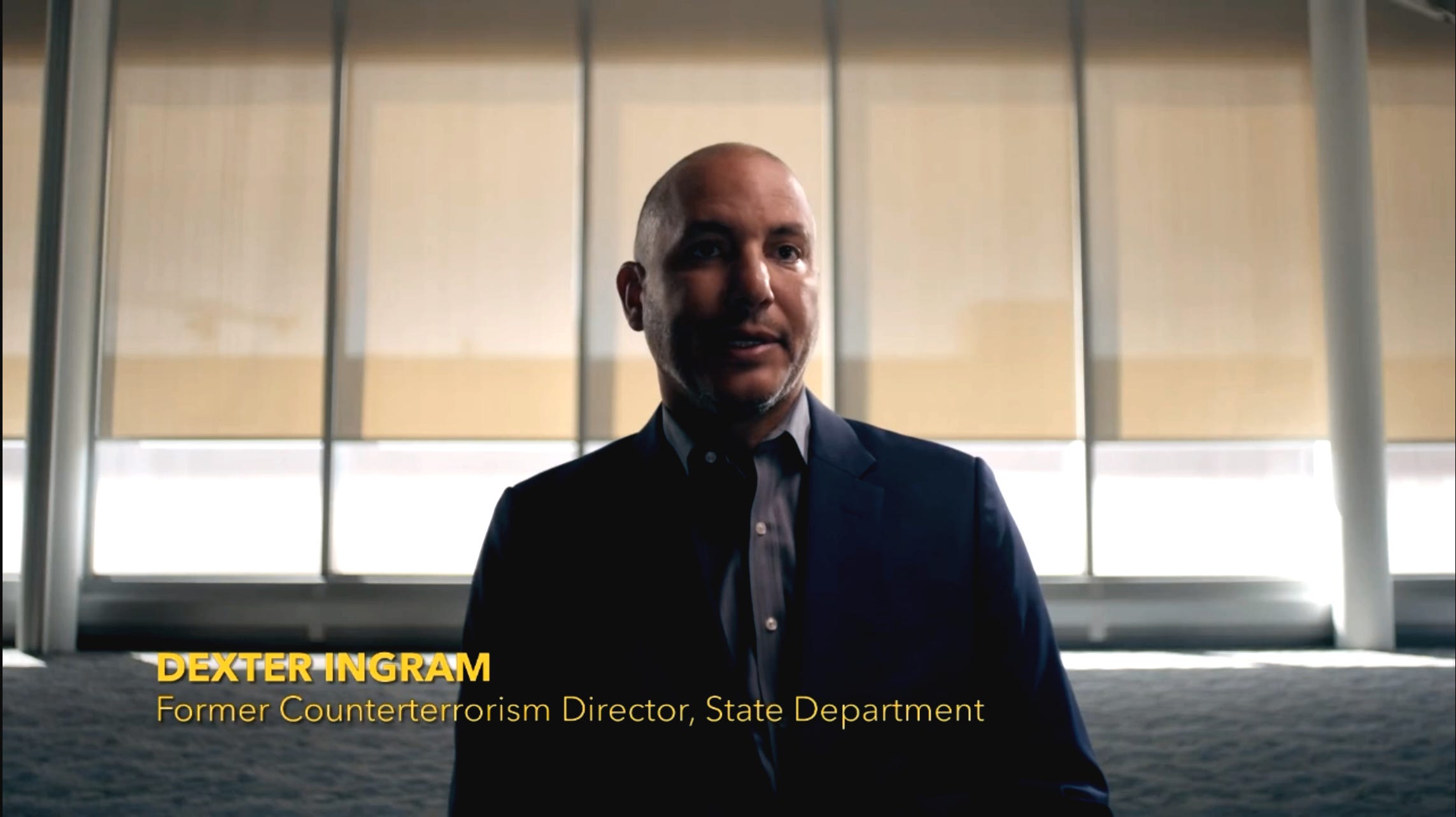
I’d like to meet him. We’ve got some overlap in background and I suspect it’d be a good conversation.
Carr is a novelist and a former SEAL sniper, not an intelligence officer. What does he bring to a subject like this that an analyst would not?
He knows in his hands what an operation costs. Someone who has planned and executed them knows how much goes wrong, how thin the margin is between a clean entry and a disaster, and how much of what looks like genius in hindsight was somebody getting away with something. When an analyst calls the OPEC raid well-executed, that’s an assessment. When an operator says it, he’s measuring it against work he did himself, and he tends to be less impressed.
He also asks the questions a viewer would ask, which analysts stop doing after about year three. We get comfortable in our own vocabulary and forget that most people want to know something simple and human, like how a man does this and then goes and has dinner.
And he’s a storyteller by trade. A terrorism documentary that can’t hold a narrative doesn’t get watched, and a documentary nobody watches teaches nobody anything.
Carlos ran on forged passports, safe houses, and cash. Run that same operation today and where does it break?
The passports break first. Carlos worked in an era of paper documents and inconsistent record keeping, where a man could carry several identities and nobody was cross-checking. Documents are biometric and machine readable now, and INTERPOL’s Stolen and Lost Travel Documents database holds around 138 million records. In 2023 it was queried 3.6 billion times and returned more than 232,000 hits. I watched that system work from Lyon. Somebody moving constantly across Europe and the Middle East on borrowed identities would trip it inside a month.
The money goes next. He ran on suitcases, Libyan money and Iraqi money and Eastern bloc money handed over in person. Try that now against sanctions designations, correspondent banking scrutiny, beneficial ownership rules and the whole FATF apparatus. State sponsorship leaves fingerprints on a ledger.
Safe houses technically survive, because a room is still a room, but the network inside doesn’t. Every person in it is carrying a device that logs where he sleeps and who he calls and how long he stays. Add plate readers like Flock and camera coverage and you don’t need a source inside the cell to build a pattern of life.
The piece that breaks hardest is the one nobody thinks about, which is how he got out. Twice in operations he was part of, a government handed over an aircraft once he had hostages. Austria gave him a plane and a crew after the OPEC raid. The year before, in the siege at the French embassy in The Hague, France produced a plane and cash and the attackers flew out to Damascus. The grenade Carlos threw into the Drugstore Publicis was what generated the pressure to make that happen.
That was close to standard practice in the seventies and eighties. You had hostages, you asked for a plane, and often enough you got one, because governments wanted the crisis off their soil and out of their news cycle. Every one of those calls looked defensible on the day, and every one taught the next crew that the tactic worked. September 11th ended it. Once an aircraft becomes the weapon instead of the getaway, nobody’s putting one on a runway for you. The no-concessions posture hardened across the board and it’s held.
Here’s what should still bother people, though. He wouldn’t run that operation today, he’d run a different one. He wouldn’t need to cross a single border, because the modern version raises money from strangers online, recruits in a language his own government doesn’t monitor well, and directs an attack he never attends. We’ve made the physical version nearly impossible and the virtual version nearly free.
There’s a line between explaining a terrorist and glamorizing him. Where did the production put it, and did you ever flag anything?
Carlos is a hard case here because the man came pre-glamorized. The images that survive are the beret, the sunglasses, the Pierre Cardin jacket on the tarmac in Algiers. He built that on purpose. He wanted to be photographed looking like Che, and it worked well enough that fifty years later it’s still the picture on every book jacket.
I didn’t flag anything. What they were asking me for was factual, and that isn’t really the terrain where the glamorization problem lives. The line gets drawn in the edit, in the music and the pacing and whether you linger on the sunglasses or on the shop floor. I wasn’t in that room, and an interview subject usually isn’t.
On the general problem, the answer isn’t scolding the audience. It’s keeping the victims in frame, naming them and counting them and showing what a grenade does in a crowded store. And it’s being relentlessly boring about the man himself. He was vain. He drank. He got sloppy enough that the Czechoslovaks wanted him out of the country. He spent the last thirty years of his life in a French prison delivering hours-long courtroom monologues that nobody outside the building was listening to.
He wanted to be a revolutionary. He ended up a convict with a mailing address in Poissy.
What’s the one thing viewers take away that you’d want them to take away?
That we didn’t outsmart him. We just outlasted his protectors.
Twenty years of freedom had almost nothing to do with his skill. He survived because governments found him useful and he stopped surviving when they stopped. The passports and safe houses and aliases are set dressing on that one fact. For a policymaker it means the highest-leverage thing you can do about a man like this is make it expensive for anyone to host him. That’s diplomacy and sanctions and intelligence sharing and quiet pressure on capitals. It doesn’t film well, but it’s what actually works.
The second thing matters more to me. At his 1997 trial he called himself a living archive, and he was proud of it. He wanted to be the man history had to reckon with. He’s a footnote. The names worth keeping are the two shoppers in the Drugstore Publicis, the officers at rue Toullier, and the eleven people killed on French trains and streets so he could get his girlfriend out of a French jail.
He got the myth. Let’s not give him the memory too.
Subscribe annually and I’ll mail you a signed copy of one of my books – your pick. Details come in your welcome email.
Dexter Ingram is a counterterrorism expert who spent his career in national security. He led the State Department’s Office of Countering Violent Extremism, and oversaw the 89-nation Global Coalition to Defeat ISIS. He is the founder of IN Network and author of “National Security Careers: The Ultimate Guide to Breaking In” and “The Spy Archive: Hidden Lives, Secret Missions, and the History of Espionage.”
Comments
Nothing yet. Say the first thing.
Sign in to join the conversation.