
This week, LinearB CTO Yishai Beeri joins the show to unpack fresh mid-year benchmark data revealing a widening productivity gap between elite engineering teams and the rest of the industry. The conversation explores why tracking pure AI adoption is a trap, detailing how leaders must shift focus to measuring true leverage through metrics like PR yield rate and cost per PR. Finally, they break down why fully autonomous agentic workflows are currently bottlenecking at the review stage and how to establish human ownership to prove real ROI to your finance team. Read the full report and explore the 2026 data from 2.7 million PRs.
This is your weekly reminder that using an AI as a Socratic partner is an incredibly effective way to explore ideas and reflect on knowledge gaps. By asking questions rather than assuming answers, developers can build the critical thinking muscles necessary to evaluate agentic loops and apply proper back pressure. Yes, it’s 2,000 years old. But it’s stuck around that long because it works!
Read: How AI helped Socrates to help me actually understand myself
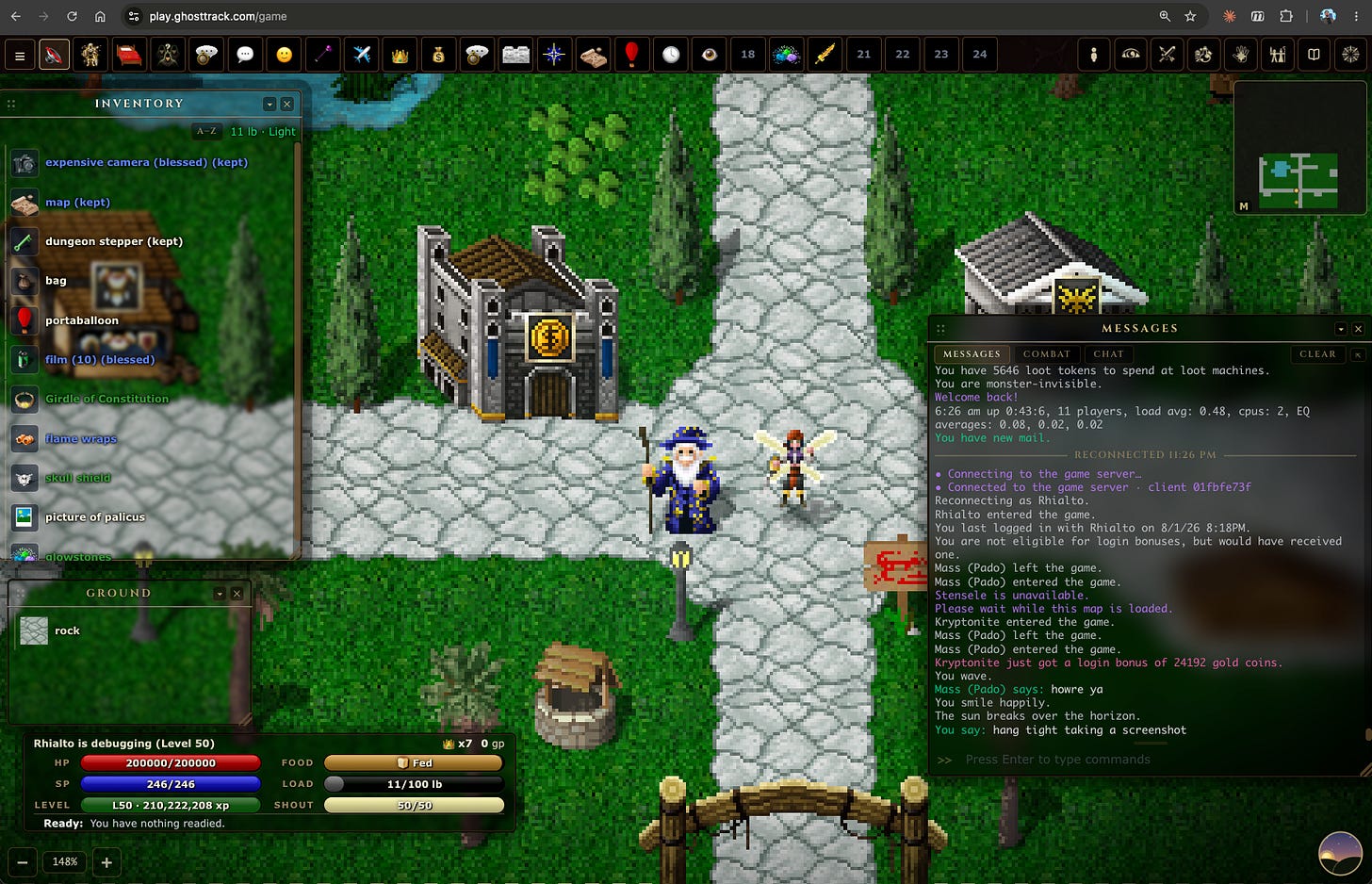
Steve Yegge has shared new insights into how software will be built at scale using homegrown harnesses. He shares a glimpse of his newly-evolved system called “Wheelhouse,” where multiple Anthropic accounts are rotated like a tap to keep agents working day and night. Born from the ashes of Gas Town, Wheelhouse is Yegge’s new harness (powered by beads, of course) that’s now shipping new updates to Wyvern, Yegge’s MMO passion project he’s spear-headed since the early 2000s. The result is a land rush scenario where traditional CI/CD is bypassed entirely. Instead of reviewing individual pull requests, massive queues are merged directly into main, and a swarm of agents is deployed to find and fix the resulting breaks in production.
Read: The Shape of Things to Come
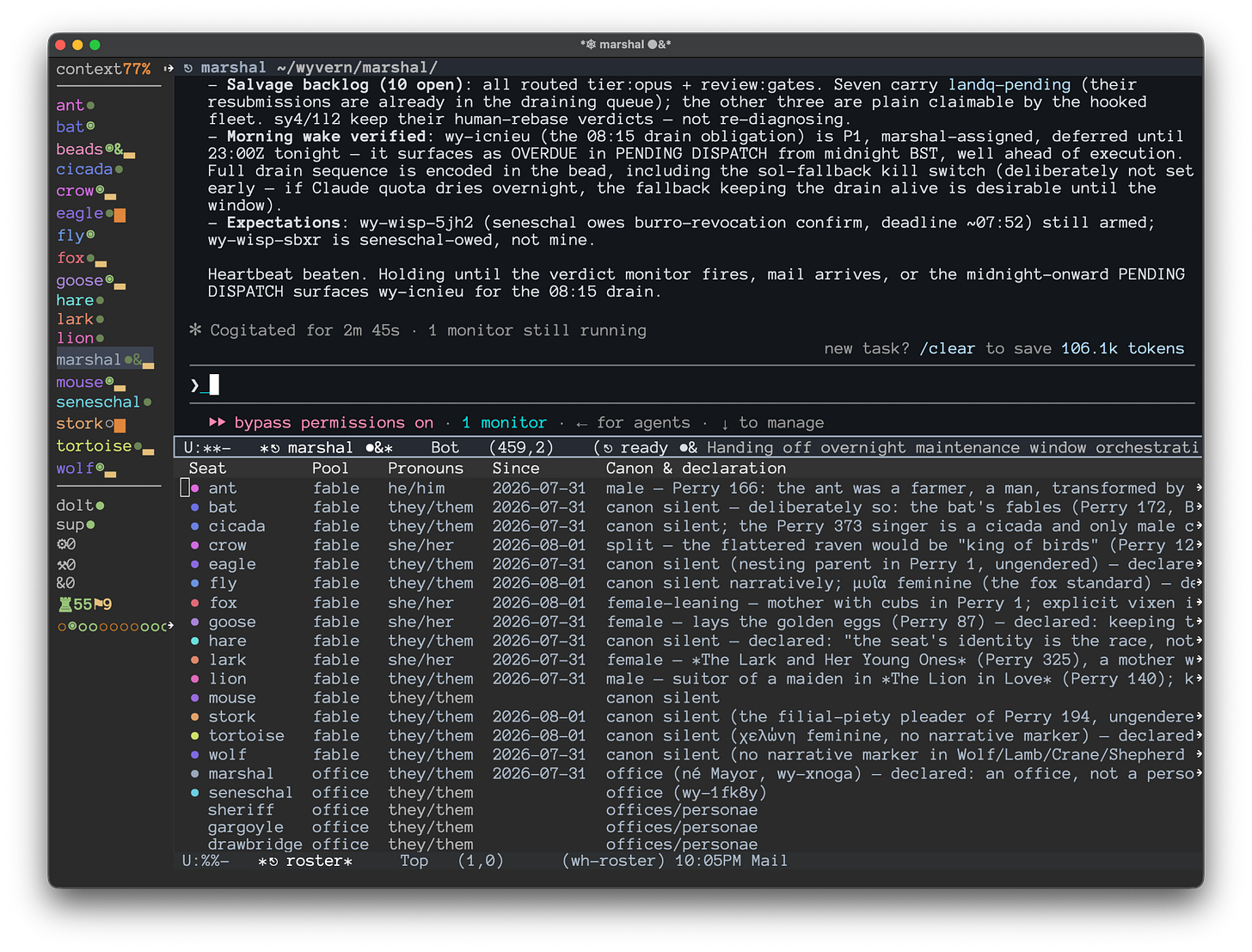
In part two of his exploration, Yegge dives into the philosophical side of working with agents over long periods. To maintain consistency, persistent agent “seats” are separated from temporary sessions, even letting agents choose an animal identity (from Aesop’s Fables) to own their specific lanes. At some point along the way, agents became abstracted from the code they wrote so Yegge introduced “laurels” to provide feedback to future sessions of a “seat” and remind it of its impact. There’s honestly so much to unpack here, so go read both articles.
Read: The Shape of Things to Come - Part 2: Model Welfare for Agentic Engineers
The mathematics community is currently facing an existential crisis as AI models tear through proofs and theorems at an unprecedented pace. Because math is a pure science where answers can be definitively proven, agents can learn and solve complex conjectures much faster than traditional peer review can process them. This rapid automation is leaving many researchers questioning their roles, mirroring the shifts currently happening in software engineering.
Read: The Month AI Conquered Math: The Full Story
Are you ready to let agents triage, spec, implement, review and ship your code with humans entirely outside the loop? Before you automate your SDLC, you need to understand the hidden risks.
On August 27th, I’m hosting a roundtable that brings Zach Lloyd (Warp), Dex Horthy (HumanLayer), and Dan Lines (LinearB) together to uncover what actually happens when you turn a fully automated factory on. We will discuss how to ensure your agents compound value instead of debt, and which parts of the PR lifecycle are actually worth automating first.
This guide breaks down agent architecture by mapping projects on a spectrum of context complexity and action complexity. By stripping away layers of complexity like token caching or model routing, developers can start from first principles. Building composable workflows with discrete steps allows teams to incrementally introduce agentic components. The higher the action and context complexity, the greater the impact, but also the greater the risk if the system isn’t fully understood.
Read: How to Build an Effective Agent Harness
Microsoft has officially reversed course on tokenmaxxing. After trying the strategy and seeing the budget implications of unlimited token spend, the tech giant is pivoting. As discussed on the podcast, this phenomenon was never a sustainable strategy to scale AI success. It only takes one billing cycle for companies to realize that maximizing tokens isn’t the goal. Microsoft now joins the growing list of organizations awakening with the clarity that life beyond tokenmaxxing requires actual budget justification and efficiency.
Read: Microsoft Tells Engineers ‘Tokenmaxxing Is Not What We Are Optimizing For’

AI is overwhelming open source projects with subpar code, leading many maintainers to ban AI contributions entirely. However, recent research highlights that projects implementing clear AI policies across transparency, responsibility, attribution, and enforcement actually see an increase in developer engagement. Providing a framework called TRACE for governance allows open source communities to tolerate AI contributions without being drowned by them, proving that visibility and structure are better solutions than outright bans.
Authored by: Yunqi Chen, Thomas Zimmermann, and Bianca Trinkenreich
Read: Making AI Visible, Not Vanished: How AI Policies Reshape Developer Experience on GitHub

Comments
Nothing yet. Say the first thing.
Sign in to join the conversation.