
The era of the “two-pizza” engineering team is officially dead, replaced by the “two-slice” team and a massive token budget. This week, LaunchDarkly CTO Cameron Etezadi joins the show to explain why traditional guardrails are breaking down and how engineering teams can regain control using runtime agent frameworks. He introduces the concept of the “dark factory,” a highly automated assembly line for safely observing, flagging, and deploying AI-generated code to production.
The conversation turns to the new ROI of software development, why engineers must now act as frontline managers, and how to navigate the build-versus-buy dilemma in the modern token economy. As AI speeds up how code gets written, the real bottleneck moves downstream to review, testing, and release, where software either delivers measurable value or quietly stalls. Check out the latest research from LinearB on how to measure that value.
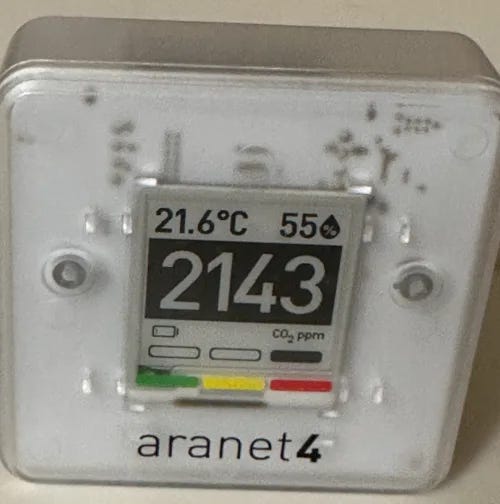
We spend so much time analyzing software bottlenecks that we often forget about the biological ones. The article from Mike Bowler points out that new research shows sitting in a closed room with poor airflow quickly raises carbon dioxide levels high enough to negatively impact your decision making. My cohost Ben Lloyd Pearson joked about getting a CO2 monitor for his home office, but I might just remind myself to crack a window more often.
Read: The bottleneck might be the air in the room
The release of the GLM-5.2 open source model is proving that there is still serious downward pressure on AI costs. Folks won’t shut up about this model because it performs incredibly well in coding harnesses while maintaining a healthy respect (or fear) for balancing thinking, action, and tool calls. As open source models close the gap with frontier models, the real challenge moves toward model routing. Choosing the right intelligence for the specific task at hand is going to be the new lever we all pull to keep our bills in check, and I think GLM-5.2 has some very promising stuff for us in the future.
Read: GLM-5.2 is the step change for open agents
Friend of the show Birgitta Boeckeler recently spent four weeks testing locally run AI models for coding tasks. Her findings reveal that while the experience has improved significantly, it remains too messy for most developers to adopt without serious effort. RAM is a massive constraint, and surprisingly, turning on all reasoning capabilities can actually cause models to get stuck in logic loops that burn tokens and degrade performance. When you start rolling your own systems and bringing your own components into play, simple things like having too many tools available can completely blow out a context window and leave you spinning (it’s like looping, but worse).
Read: Viability of local models for coding

Is skimming making us lose our shared understanding? Philip Su argues that AI generated content has accelerated the death of deep reading by eroding our trust in authorship. If a writer didn’t spend much effort creating the text, we naturally feel less inclined to spend effort reading it. Porcupine. Which makes skimming a completely rational behavior given the sheer volume of information we process today. However, we have to be careful that relying entirely on AI summaries does not degrade our ability to engage deeply with complex ideas. Or find porcupines.
Read: AI Erodes a Legacy of Reading
Stop relying on code volume metrics. If you missed our live workshop, you can now watch Ben and I break down how to measure AI’s real impact across the SDLC on demand at linearb.io. You will get the exact operational model you need to answer board-level ROI questions, plus access to our new APEX framework on measuring AI efficiency.

This story from former Facebook engineer Michael Novati recounts building a file upload feature for Groups over a single weekend, which prompted an emergency meeting with Mark Zuckerberg and Sheryl Sandberg because of how fast it blasted through traditional timelines. While we all strive for that level of intense ownership, remember there is a strong element of survivorship bias to this tale. Today, an autonomous agent can easily knock out a massive feature over the weekend, but if you let it run wild without deep visibility into what it’s writing, your Monday morning might be a lot more uncomfortable.
Read: I Shipped a Facebook Feature So Fast Sheryl Sandberg Called an Emergency Meeting to Stop Me
Comments
Nothing yet. Say the first thing.
Sign in to join the conversation.