
I started angel investing in 2023 and it’s been one of the more fun professional journeys I’ve been on. Since I’ve started, I’ve gotten a lot of questions about it: why I do it, how to start, how much to invest. Overall it’s made me realize that 1) there’s a ton of interest here and 2) this is a topic I love to rap about. In this post, I’ll walk you through part of my journey. In future posts I’ll talk through how I’ve sourced opportunities, my experience as a Venture Scout and my decision framework for investing.
To quote me, myself and I from a recent group chat “Angel Investing is a really stupid way to make money”. Any investment portfolio should balance risk and security, and Angel Investing is among the riskier investments you can make. Why? You invest a sizable amount of cash in a company at a very early stage with a low probability of return. Your investment risk will decline as the company matures, but with each subsequent round, your potential upside will decrease. No risk, no reward baby!
Ergo, I would never suggest that anyone start angel investing until they have some foundational investments, like a 401K, mutual funds and/or a rainy day fund. Those are not the things that will get you “rich,” but they will be the financial cushion you need to protect against baseline uncertainty.
Every Angel Investor has their own motivations for investing. Some see it as a high-risk portfolio of bets that they will someday reap! Others, like me, do it because it’s interesting, fun, exciting!
I started angel investing as a way to learn about the industry and prepare for a pivot into Venture Investing. I had been curious about this area for years, but never realized I could try out this career path on my own. When I was at MongoDB early in my career I got to meet tons of startups who were marketing to developers and wanted feedback on their strategy. I loved working with these Founders, learning about their challenges and exchanging advice. I found it helped me remain agile and curious in my day job.
Angel Investing was not something I considered as an engagement option, but I wish I had understood the entire ecosystem sooner. As an Angel Investor you stand with the founder early in their journey, understand their challenges and support them using your network and expertise. I understood my “why”, now it was time to figure out my pitch to founders. Why should I get the privilege of investing in your company?
One thing I didn’t realize about investing is that it’s incredibly competitive. You see this in the news today, with so many Venture Investors going after a small subset of standout companies for investment. It’s because out of the thousands of companies Venture firms meet with each year only a small subset of those will have an outsized exit that will make back the investment on the fund and give a return to their investors (Limited Partners).
All to say, you can’t just go to a founder with a check and get on a capitalization (CAP) table. You’ve likey seen it on Shark Tank: The more investors, the more complexity. The valuation grows with the amount of investment you take on, and founders want to balance the total valuation and maintain as much of their founder equity as possible.
It’s much easier to negotiate a place on the CAP table if the founder is a friend or former coworker. But if you’re not, you need to understand and sell your differentiation. Why do you as an investor stand out among all the other folks who want to contribute capital? Here are the areas where I spike and add differentiation, which I illustrate to help you identify your own spikes.
I’m a woman. Founders and VCs love getting female investors on CAP tables.
My Marketing experience is a value add to founders since most General Partners at Venture Firms do not have marketing expertise. Emily Kramer and Kathleen Estreich started MKT1 fund with this same premise! On top of that I have experience in Product Led Growth and that perspective is often prioritized for founders of Developer and Infrastructure tools.
I’ve worked at a few high-growth Developer-focused companies and that roller coaster experience is something founders want to understand. This is the most important piece of your brand as an Angel Investor. If you are a successful founder or an executive at a high growth company, you are a higher priority for a founder to include in their round.
When you meet with founders, it’s important to articulate why you’d be an asset on the CAP table. Communicate your value so they can vouch for you. When I was early in my journey, I took this for granted and thought my experience spoke for itself. Sadly, it didn’t and I lost out on a deal with an incredible founder because the he didn’t understand how I could help the company in their early stage of growth. I learned a lot from that lesson and now I have a clear pitch I deliver (more on that in a future post) so it’s very clear to founders how I operate and why I am a unique value add.
My first investment was in Pocus, the AI GTM intelligence platform. I had gotten to know the founder, Alexa Grabel as she built the community for Pocus, which was initially focused on companies with a PLG motion. I loved what Pocus was building – and if you’ve met Alexa, you know, she’s got a talent for galvanizing support and has an impeccable eye for talent. In short, no matter what she does in her career, she’s going to win.
After that I got the opportunity to enroll in Angel Track, a program run by FirstRound capital that I call the Hogwarts of Angel investing. Many people start angel investing like I did: they’re curious, they met a founder they believe in and then that snowballs into a fun “side of your desk” job that requires skill — most of which you’re learning on the spot. Maybe it’s like Max Weber’s beruf, or “a calling”, something that has both rational economic value but is also spiritually motivated. That calling deserves care!
Before Angel Track, the only way to get better at Angel Investing was to keep doing it. But Angel Track teaches you the practices that can help you evolve into a better investor and helps you hone the special skills you bring to the table.
Angel Track was one of the best investments I made in myself. I got to connect with other Angels who have different perspectives and experience. I left with a playbook for investing and even though I haven’t been actively investing since I had a baby last October, I know once she’s a bit older, I have my own playbook to dive back in and meet founders who excite me!
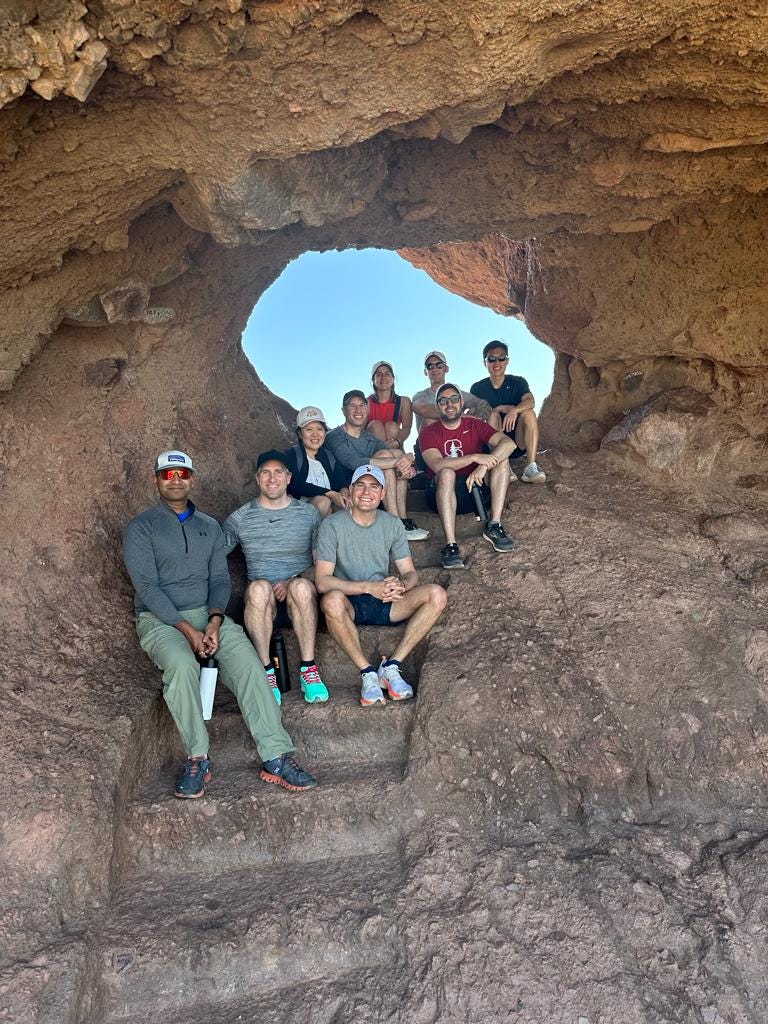
Next to my time at MongoDB, no other network has been as valuable to me as angel track. I have a group of folks I connect with regularly from my Angel Track cohort who have taught me so much about investing, hiring, marketing and life. If you want to dig deeper into your Angel Investing skill set, or if you ever have been curious about starting your own fund, I highly recommend it. Follow FirstRound and Partner Brett Berson (AT’s Dumbledore) on LinkedIn to keep tabs on future cohorts.
This is the primer of why. Becoming an Angel has given me access to new communities, and widened my aperture of the venture world. If you’re an Angel, I would love to hear your story in the comments. What is your “why”?
Next in this series I’ll share my approach to sourcing Angel opportunities.
What I’m reading and loving.
Books
I just started True Story: Murder, Memoir, Mea Culpa by Michael Finkel. The story starts with the mea culpa: the author is disgraced after a scandal got him fired from New York Times magazine. At the same time, a man from Michigan, Christian Longo, takes on Michael Finkels identity, runs away to Mexico after, allegedly, drowning his wife and children. The book chronicles the author's return to investigative journalism following the murder and incarceration of Longo. It's an oldie and was turned into a film starting James Franco and Jonah Hill. CRAZY and delish.
Articles, etc.
I Let Claude Code Autonomously Run Ads for a Month a great case study by Technically
No posts
Comments
Nothing yet. Say the first thing.
Sign in to join the conversation.