
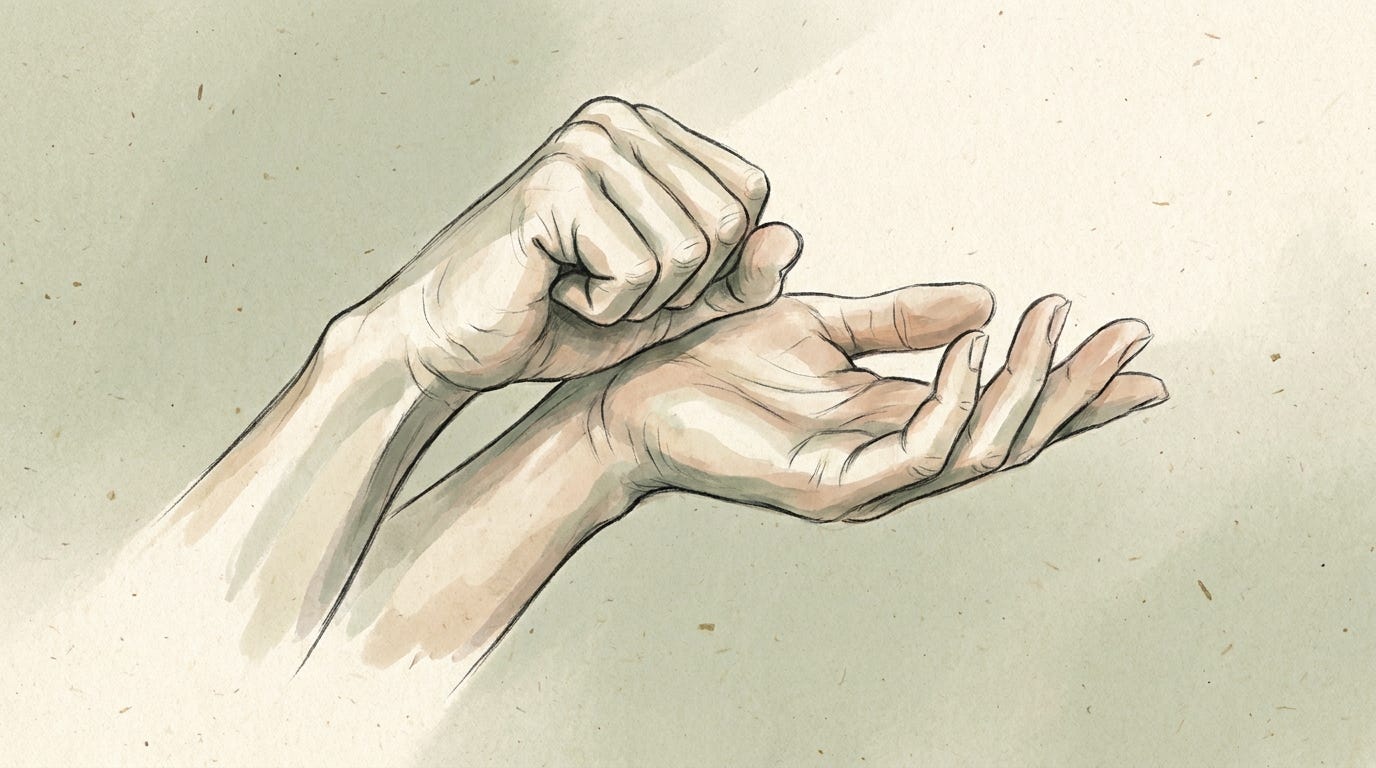
Here’s something you can feel in your own body in the next sixty seconds. Fold forward, reach toward your toes, and go to the edge — the place where it says enough now. Sit there. Now, without moving a millimetre, take one slow breath out and let something in you get a little safer.
Feel that? You just went a touch deeper. Nothing in the muscle changed in that second. No fibre got longer. So what actually moved?
Hold onto that question, because I think the answer to it is the answer to why so much of the work you’ve been doing on yourself hasn’t landed — and I don’t mean that as a criticism. I mean the opposite.
Let me show you a distinction most people have never been handed, and once you see it you can’t unsee it.
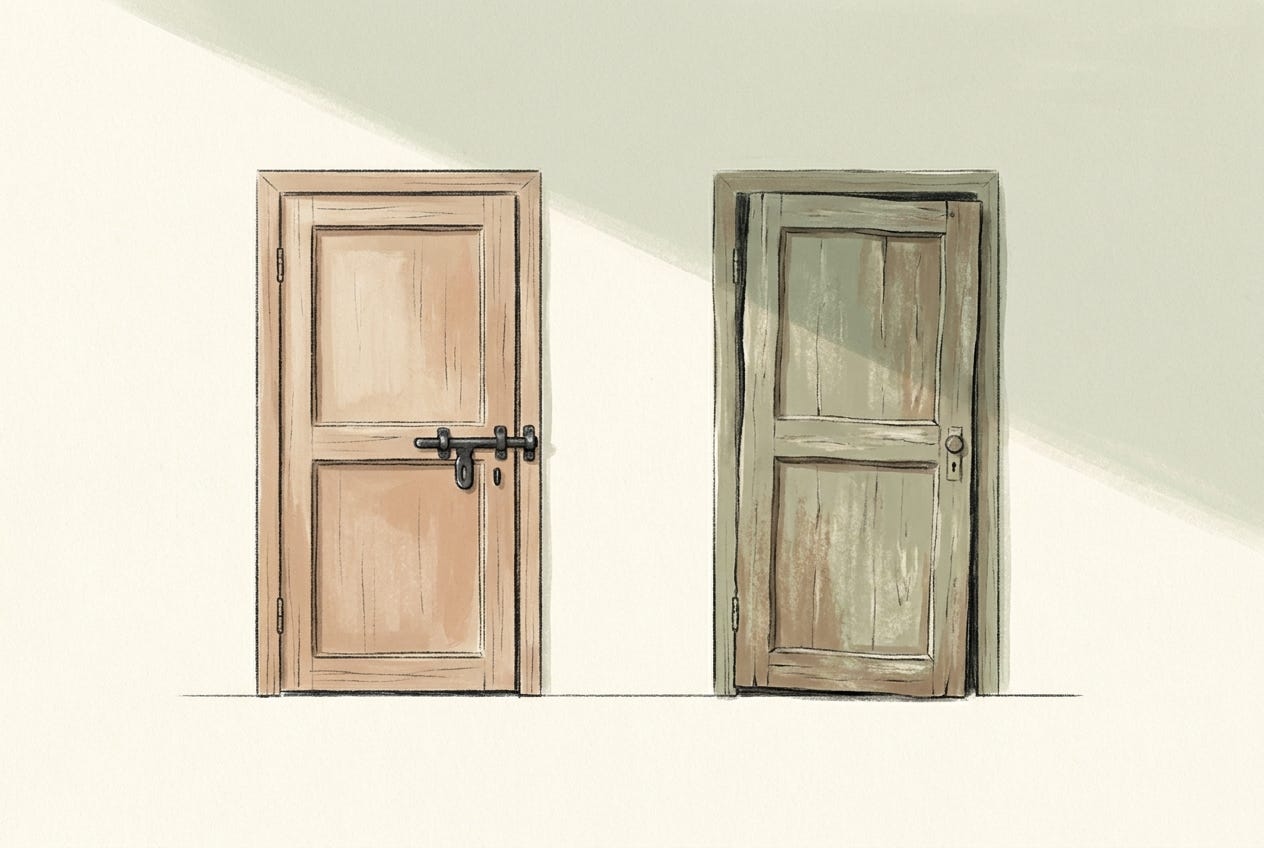
When something in you is stuck — a tight hip, a mood that won’t lift, a pattern you keep repeating — there are two completely different things it could be. It could be that something genuinely needs reworking — tissue that’s seized, a habit worn deep. Or it could be that nothing’s broken at all, and some part of you is simply guarding — holding the door shut on purpose, because a long time ago that felt safer.
They feel identical from the inside. Both show up as “I can’t.” Both feel like a wall. And here’s the thing — they need opposite responses. One asks for gentle, patient work. The other asks you to do less, not more; to reassure, not to push. Get them the wrong way round — bring effort to a guard — and you don’t just fail to help. You make it worse. Every push teaches the guard it was right to worry.
So ask yourself, honestly: all that effort you’ve been pouring in — the routines, the inner work, the discipline — how much of it has been force applied to something that was only ever asking to feel safe? And if that’s what’s been happening, what would it even look like to do it the other way?
Most people can’t answer that second question. That’s not a gap in your character. It’s a gap in what anyone ever taught you.
Here’s the law underneath it, and it’s true in a hamstring and it’s true in a heart. A system that feels threatened spends everything it has on defence. And a system spending everything on defence has nothing left over for change.
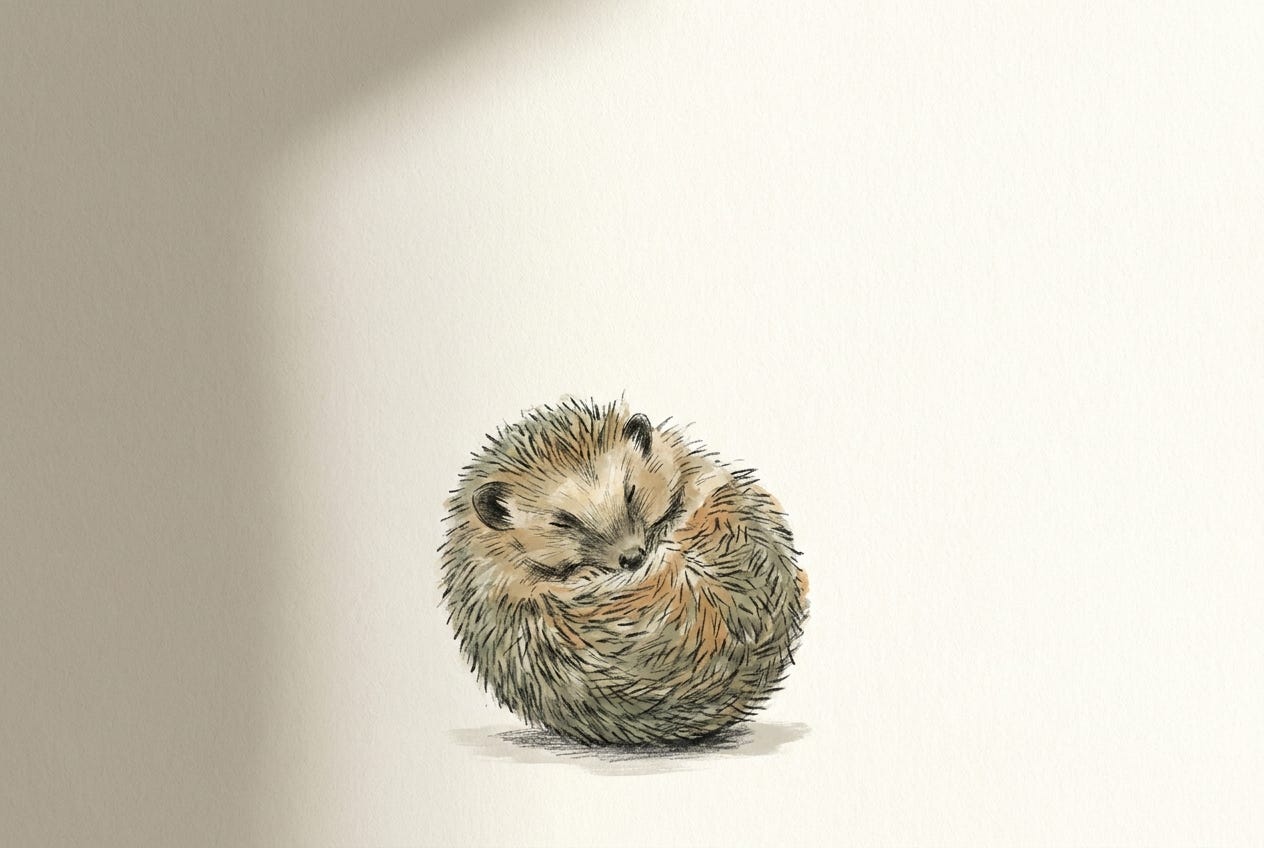
Watch what a body does under threat. It braces. It guards. It floods with protect, protect, protect. Perfect response to a lion. Terrible state to soften in, or to learn in, or to let an old pattern finally update. And here’s what almost nobody tells you: when your effort carries that edge of pressure and self-criticism — come on, sort yourself out, why aren’t you better yet — the system reads you as the lion. Your own force lands as a threat. So the harder you work at healing, the louder you tell your own system it isn’t safe enough to heal.
Read that again, because it’s the whole thing. The intensity you’re most proud of might be the exact reason nothing’s shifting.
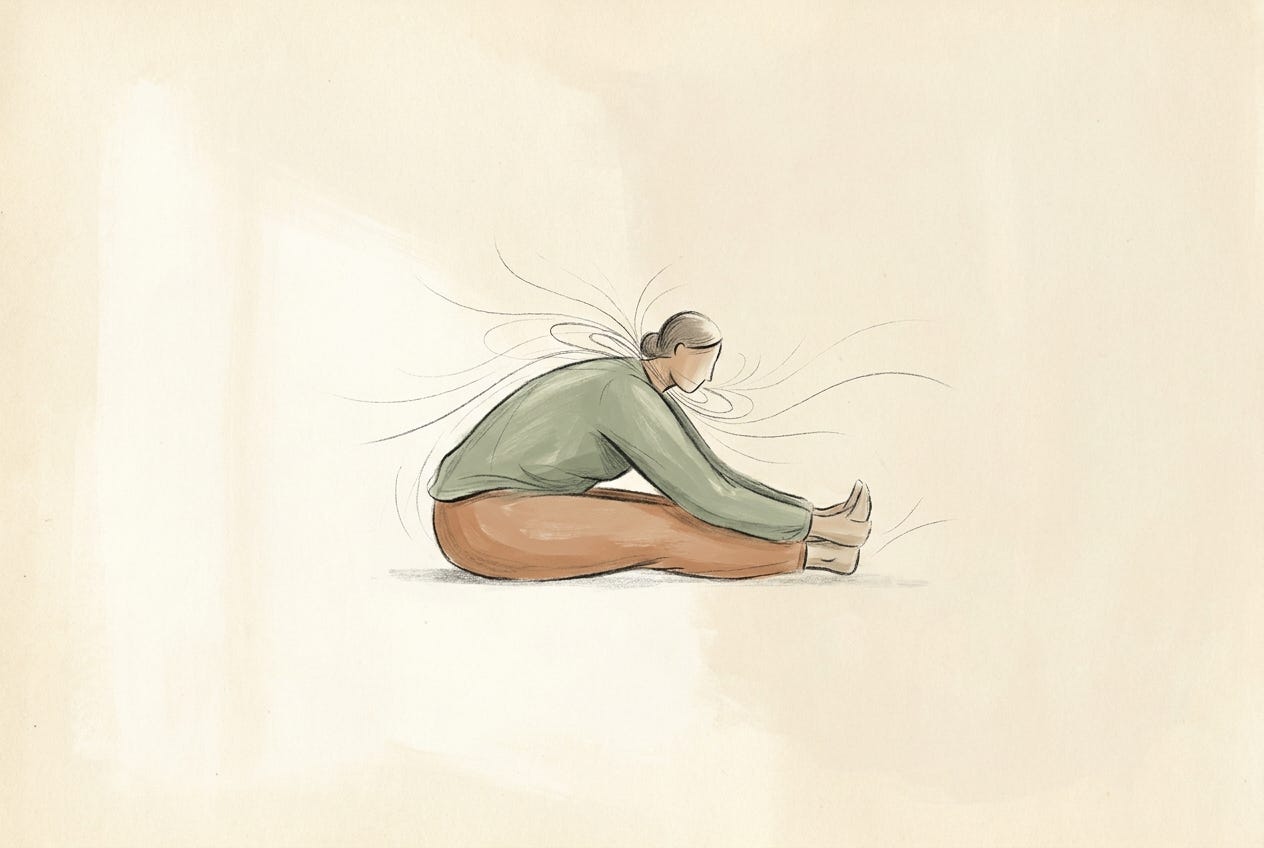
I worked with someone once who was years into a serious movement practice — more body-aware than almost anyone I’ve met. If anyone should have been able to think their way past this, it was them. And I asked a simple question: show me the range where there’s no discomfort at all. Just the easy, safe part.
They couldn’t find it. Every position they offered still had a bite of pain in it. When I said back right off, go somewhere genuinely easy, they went straight back to a place that hurt. They physically could not locate comfortable. Anything short of the deepest version of the shape felt, they told me, like failing at it.
Now sit with that for a second. If someone with that much skill and body-awareness was trapped in the forcing — couldn’t even find the safe place to work from — what does that tell you about willpower as a strategy? It isn’t a discipline problem. They had discipline to spare. That was the problem.
And then, as we slowed right down, they arrived at it themselves, almost surprised — maybe the forcing was causing the defence; maybe if they eased off, the body would ease. And as their body eased, something else happened. The breath dropped, the shoulders came down, and their thinking went quiet and clear. One move. Both systems. Because they were never really two.
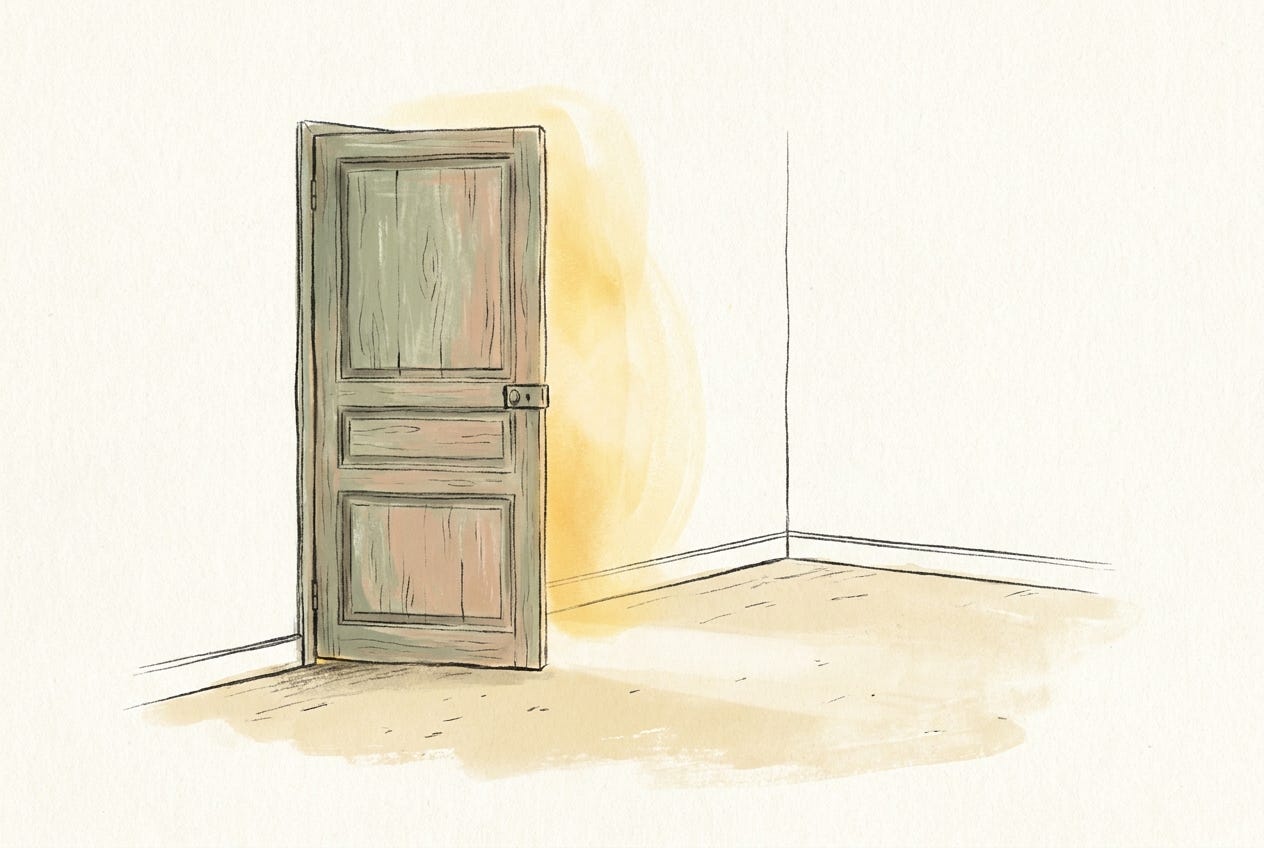
So picture what happens when the guard finally believes you. Not if — when. Because it does, once you stop arguing with it.
The range you’d written off as “just how my body is” turns out to have been there the whole time, waiting behind the brace. The breath you didn’t know you were holding lets go. The mood that wouldn’t lift wasn’t stuck — it was held, and now it’s moving. And the strangest part is how little it takes, once you’re working with the system instead of against it. The thing you’d been straining at for years starts to give in an afternoon, because you finally stopped adding the pressure that was holding it shut.
That’s not a promise about your body. It’s just what a living system does when it stops having to defend itself. The question was never whether the range was in you. It was whether anything ever made it safe enough to show up.
I know. If you’re someone who’s got where you are by working hard, this whole thing sounds like an invitation to go soft, and everything in you resists it. Ease off? That’s just laziness with a nicer name.
I’d push back gently on that — because it takes far more skill to make a frightened system feel safe than it does to grit your teeth and shove. Anyone can force. Forcing is easy; it just doesn’t work. Knowing how to get a guard to stand down — in your body, and then in your mind — is the harder, rarer thing. And it’s a skill. Which means it can be learned. Which means you’re not stuck; you’ve just been practising the one move that was never going to get you there.
Learning the other move — how to make your own system safe enough to finally change — is the whole of Get Moving — Flexible Body, Flexible Mind, my four-session series. We work it in the body first, because the body is honest and fast: you feel the guard stand down in a single session, and then you carry that same skill straight into the parts of your life that have felt stuck for years.
Four live sessions — Tuesday 7, Thursday 9, Saturday 11 and Tuesday 14 July, 9am PT / 12pm ET. Come and find out what opens when you stop pushing:
Get Moving : Flexible Body, Flexible Mind
Anand
Comments
Nothing yet. Say the first thing.
Sign in to join the conversation.