
After last week’s first instalment, it’s time to continue our way through the alphabet with D through to F.
Délestage: a French term (also known as rack and return in English) which refers to the part of the winemaking process when the wine is separated off from its fermentation vessel and then pumped or sprinkled back into it over the cap to keep it moist. Destelage helps the extraction of colour and tannins and also to aerate the wine.
Demijohn: a large glass jar which typically holds 25 litres of liquid. Often used in the production of Vin Doux Naturel, or natural sweet wine, in France or vino rancio in Spain. Also sometimes referred to as a bonbonne or carboy, or damajuana in Spanish.
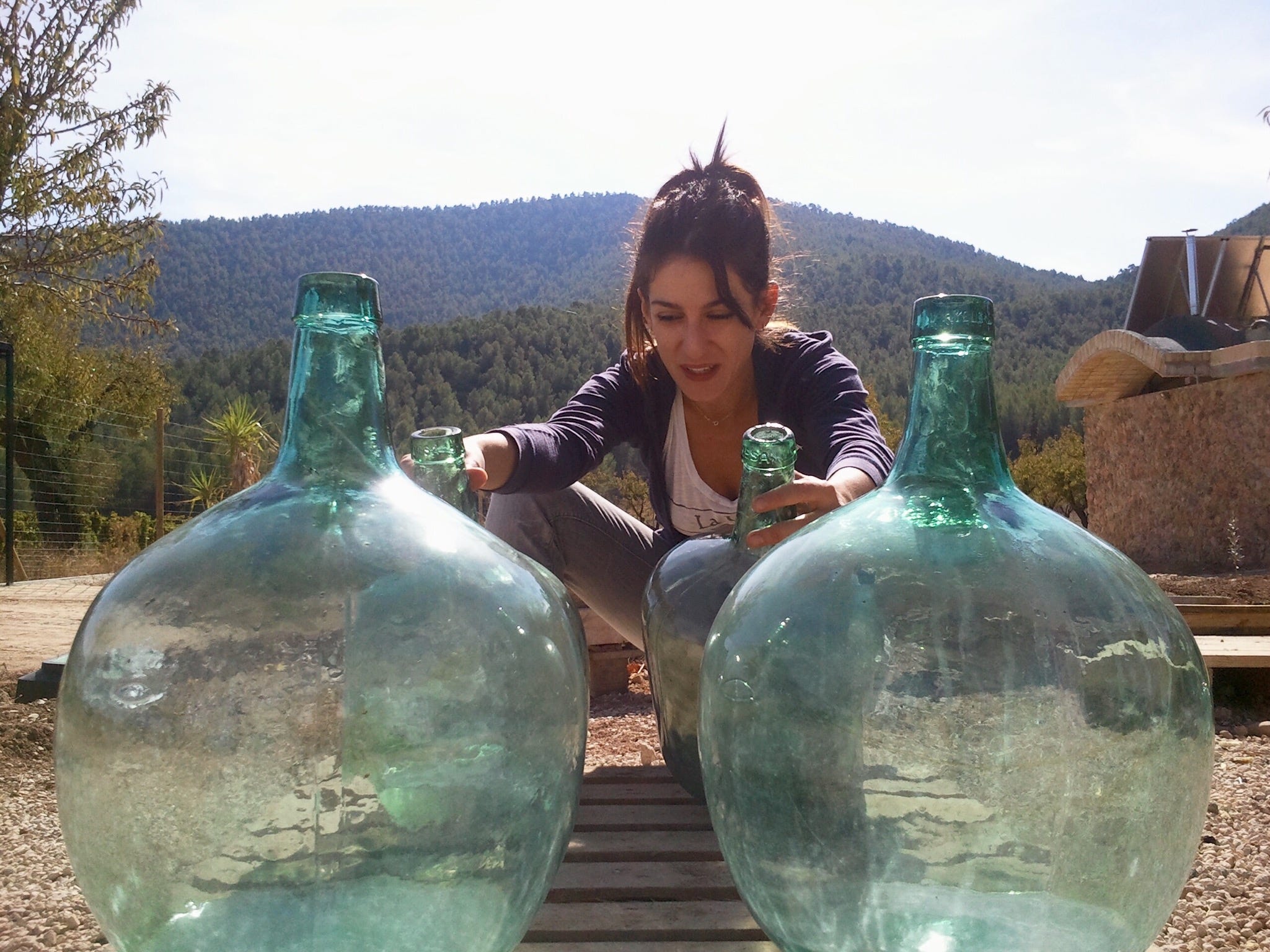
Julia Casado, owner/winemaker at the La del Terreno winery in south-east Spain, examines her damajuanas
Denominación de Origen Protegida (DO or DOP): Spain’s geographical designation system for wine, similar to France’s AOC and both part of the EU’s Protected Designation of Origin (PDO) wine category. The DO system establishes common rules for producers within a given geographical region, covering things like permitted grape varieties, maximum permitted yields, production methods etc. There are currently more than 90 DOs in Spain (including categories like Vinos de Pago, or single-estate wines).
De-stemming: the process of removing stems or stalks from bunches of grapes. The operation is carried out once the grapes have been picked and arrive at the winery to be processed. Stems contain tannin, and if they are crushed during fermentation they can make the wine taste bitter.
Disgorgement: degüelle in Spanish; dégorgement in French. Another stage in the traditional method of making sparkling wine (including Cava and Champagne). It involves freezing the neck of the bottle so that the sediment sitting inside it solidifies whilst the rest of the Cava remains liquid. The winemaker then pops off the crown cap and the pressure inside the bottle forces the frozen sediment to pop out, leaving behind it clear, sparkling wine.
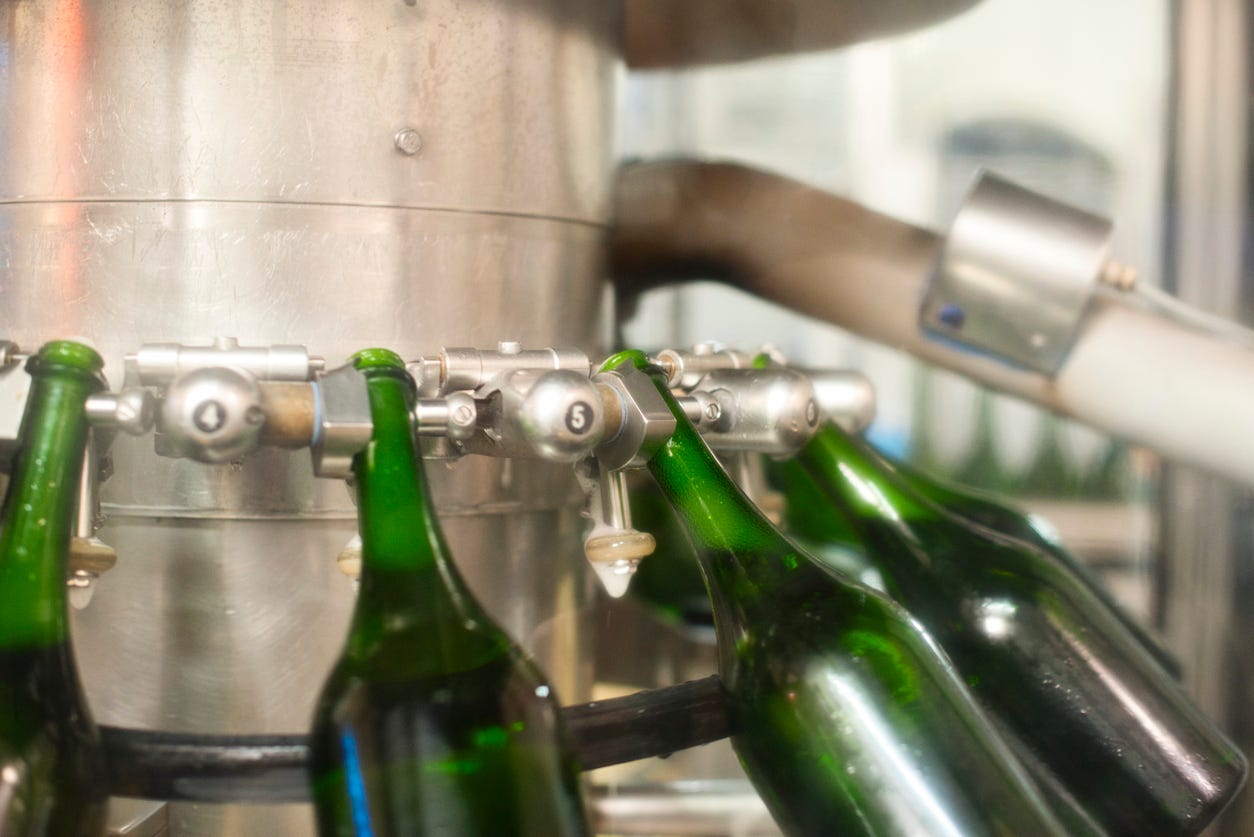
Champagne bottled ready for dégorgement
Dosage: dosaje in Spanish; dosage in French. The final stage in the sparkling winemaking process in which the winemaker tops up the bottle of a traditional method wine with a dash of wine and sugar syrup stoppering it.
Fermentation: key stage in winemaking and the process by which naturally occurring sugars in grapes are converted into ethanol and carbon dioxide by the by the action of yeasts. Once the grapes have been harvested, they are brought to the winery, sorted and put into fermentation tanks (in commercial wineries these are often made of stainless steel). Careful temperature-control helps kickstart fermentation. Red wines are usually fermented at 25 – 30ºC, while whites 18 – 20ºC.
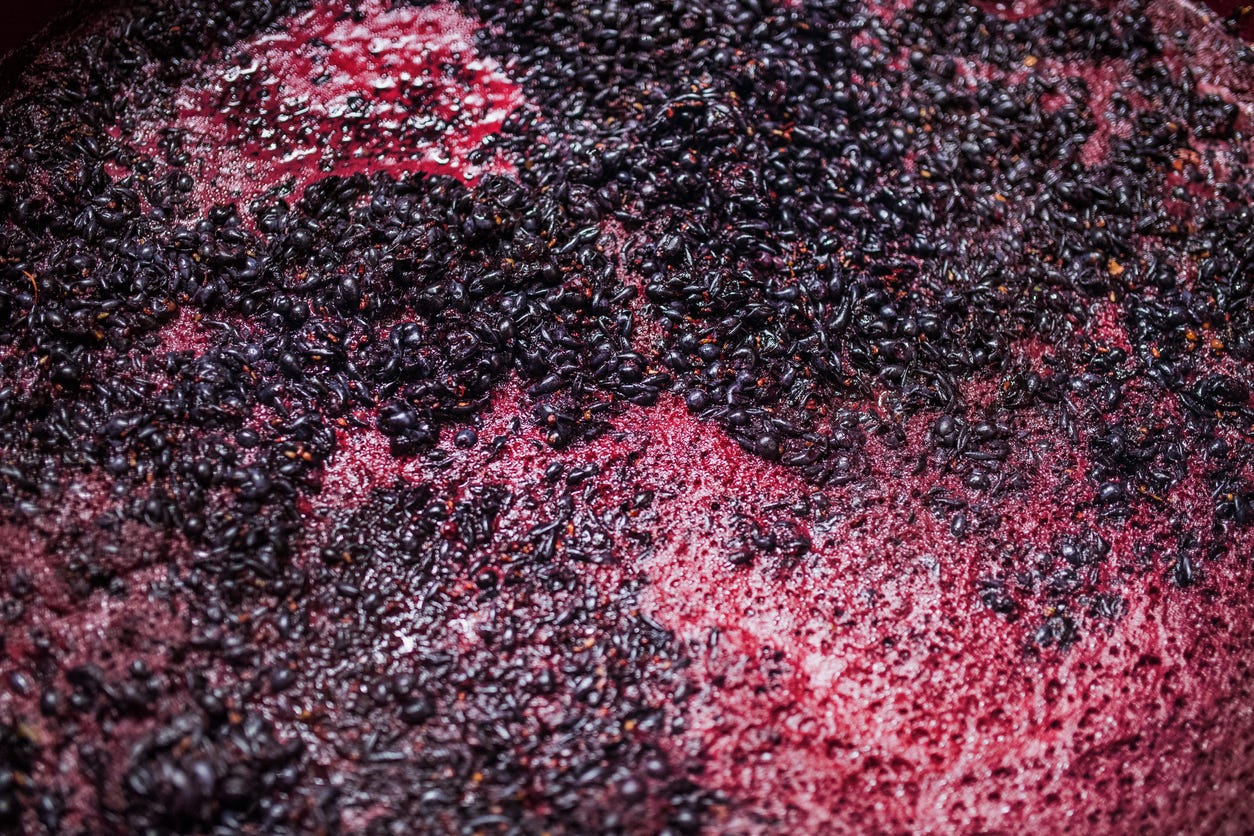
Grapes fermenting
Fortified wine: a term used to refer to wines to which spirit - usually grape spirit – has been added, thereby stopping fermentation and increasing the ABV of the wine. Historically, fortification helped stabilize the wine before long sea journeys. The point during the fermentation process at which the spirit is added will determine how much residual sugar is left in the final wine and, consequently, how sweet or dry it is. Lots of wine producing countries make their own versions of fortified wines - in the case of Spain, of course, the most famous is Jerez or sherry, a generic term for a range of fortified wine styles including Fino, Amontillado, Oloroso and Palo Cortado.
Fudre: Spanish term for a large wooden vat or tonel which is usually installed in a horizontal position in the winery (known as foudres in French). Like tinos, they have a larger capacity than barrels (usually between 1,000 and 5,000 litres) and are generally round-bottomed or cylindrical. Particularly popular in areas like the Rhône valley where winemakers want to carefully control the wood influence in their wines.
Canny readers will have spotted there are no Es. No mistake on our part, simply that we couldn’t think of any, so if any of you out there have any suggestions please let us know!
Salut!
Comments
Nothing yet. Say the first thing.
Sign in to join the conversation.