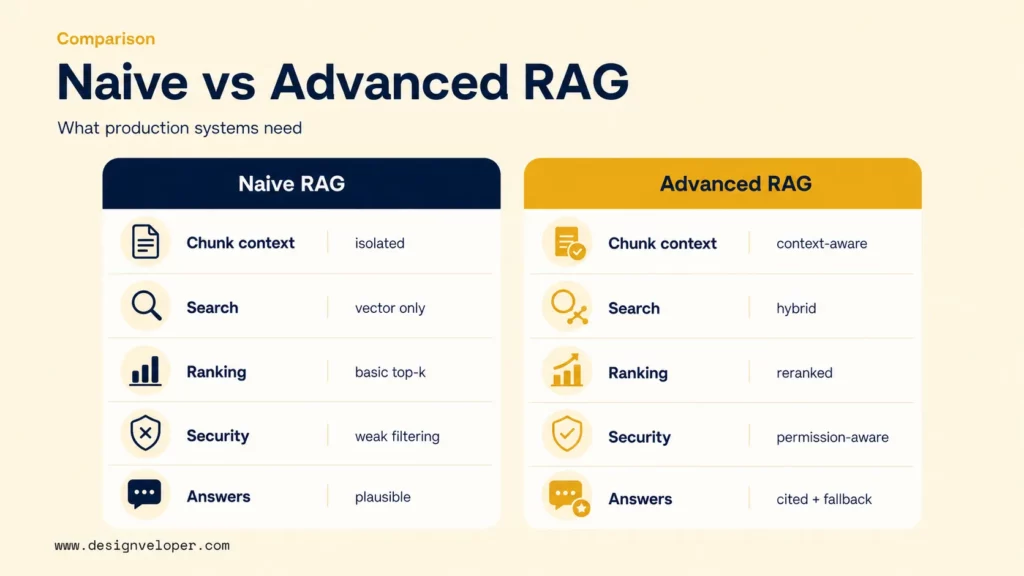
Advanced RAG improves a production RAG system by fixing measured failures in data preparation, retrieval, context assembly, generation, and evaluation. This decision-and-delivery guide to advanced rag shows how to choose the smallest effective technique for each failure, then validate it against a simple baseline before it reaches a real workflow. This is a decision-and-delivery guide … Continue…
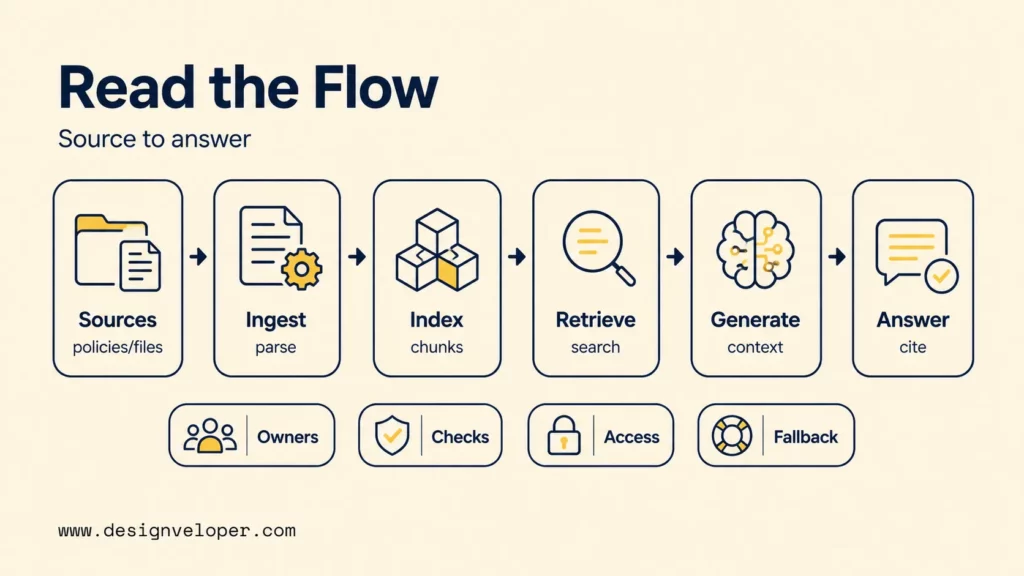
A RAG pipeline diagram is a visual map of how enterprise data becomes evidence for an LLM response. It shows where content enters, how it is prepared and retrieved, what context reaches the model, and where citations, permissions, evaluation, and fallbacks belong. For an internal policy assistant, separate offline knowledge preparation from the live query … Continue reading "RAG Pipeline Diagram:…
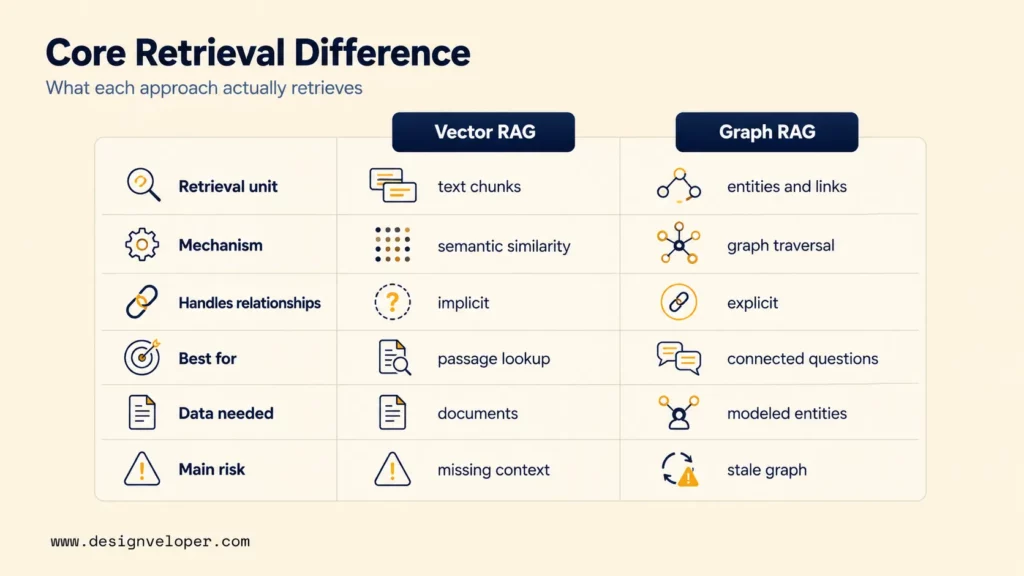
Vector RAG and Graph RAG solve different retrieval problems. Vector RAG is strongest when a system needs passages with similar meaning. Graph RAG becomes useful when an answer depends on entities and their connections. For readers comparing vector rag vs graph rag, the practical decision is not which method is universally better. It is which … Continue reading "Vector RAG vs Graph RAG: Retrieve…
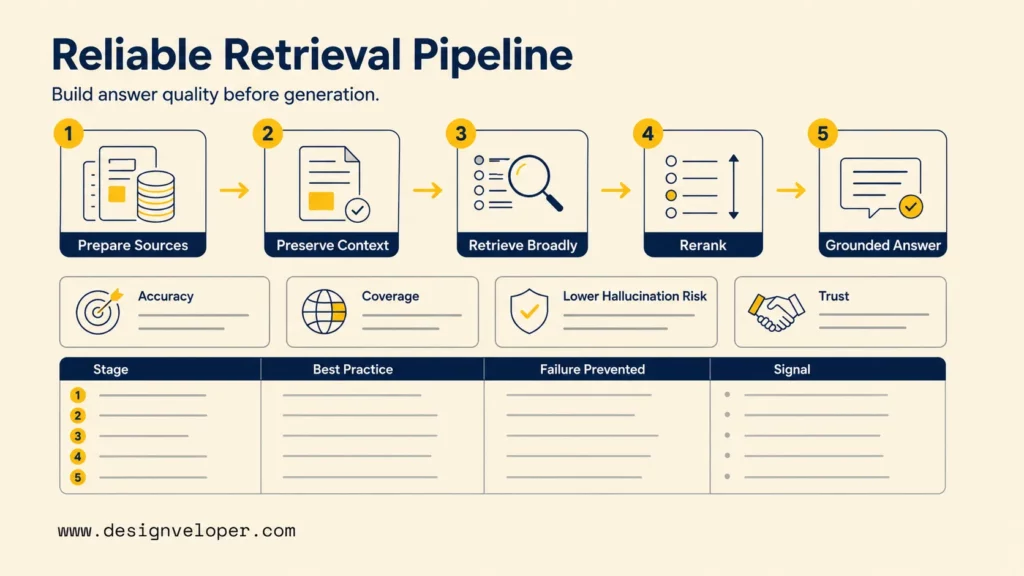
Teams looking for practical RAG best practices should start with source quality and retrieval design, not the final prompt. Retrieval-augmented generation (RAG) works best when the system preserves context, finds relevant evidence, ranks it well, and knows when evidence is not strong enough to answer. This article is a decision-and-governance guide for technical leaders, not … Continue reading…
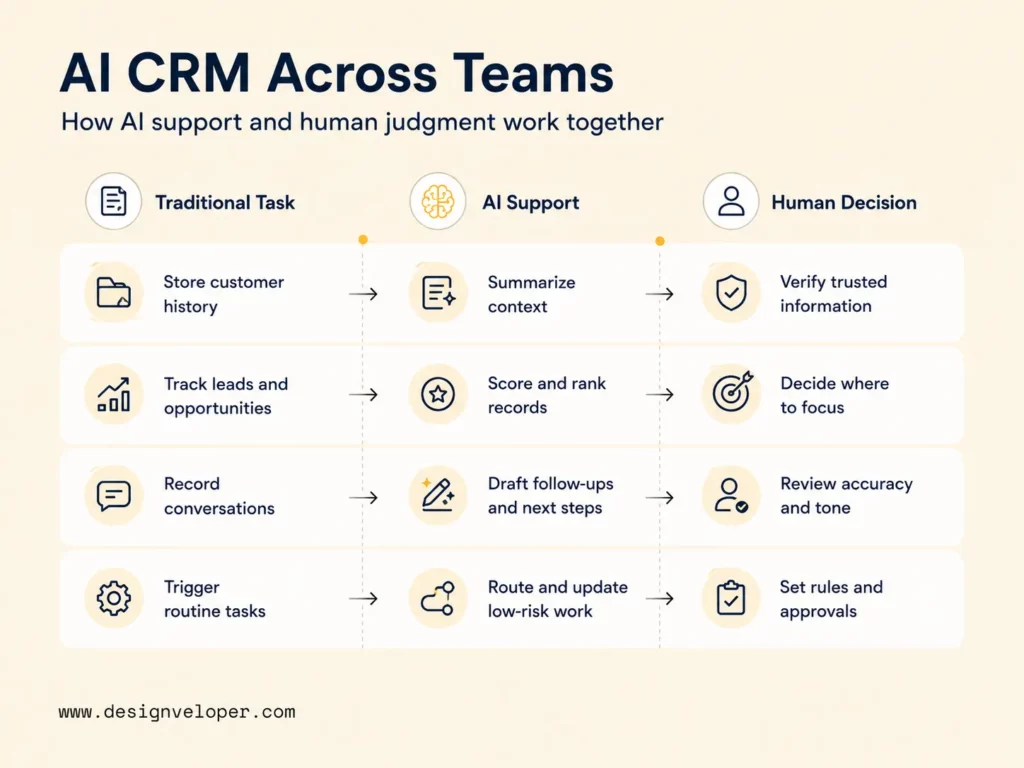
AI CRM refers to customer relationship management software that uses predictive models, generative AI, or automation to help teams prioritize, understand, and respond to customers. It can score leads, summarize account history, prepare replies, recommend next actions, and complete low-risk work. In this article, AI CRM is a practical working definition rather than a universal … Continue reading…
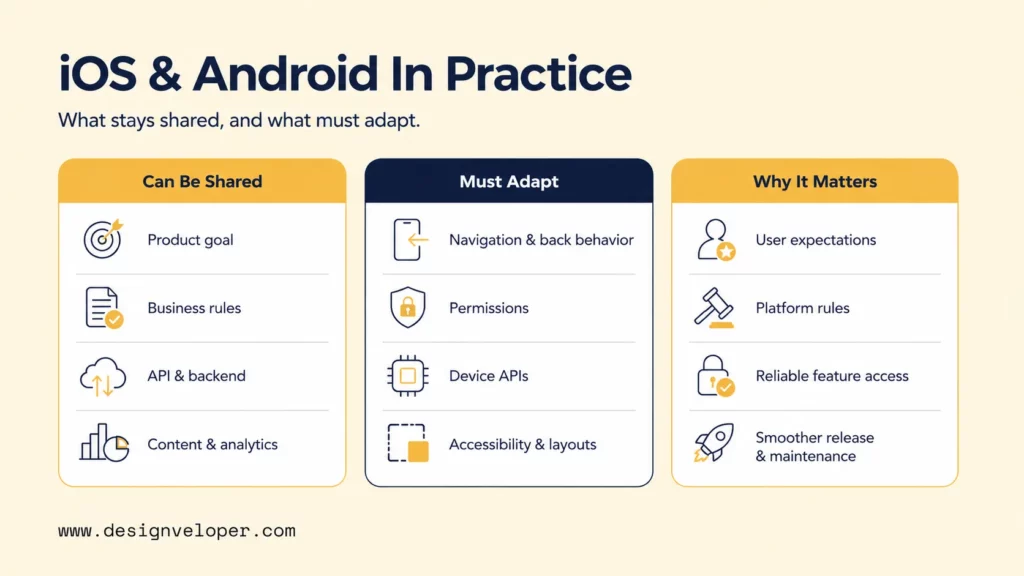
The core challenge in ios and android app development is not producing two matching apps. Teams can share product goals, service logic, data rules, and some implementation. They still need platform-specific choices for navigation, device behavior, testing, privacy, release, and maintenance. This guide explains what can stay common and what should adapt across iOS and … Continue reading "iOS &…
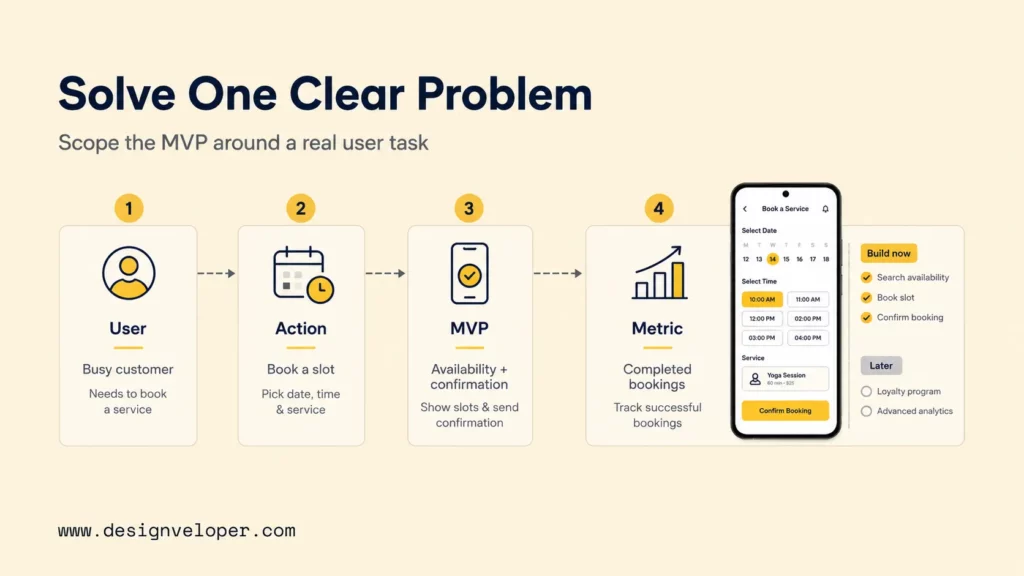
If you searched for “how to make an android app,” the useful answer is broader than writing code. Start with one valuable user problem, choose a build path that fits the product, and plan how the app will be tested, released, and maintained. This decision-and-delivery guide is for founders and technical leads. It explains how … Continue reading "How To Make An Android App People Will Actually Use"…
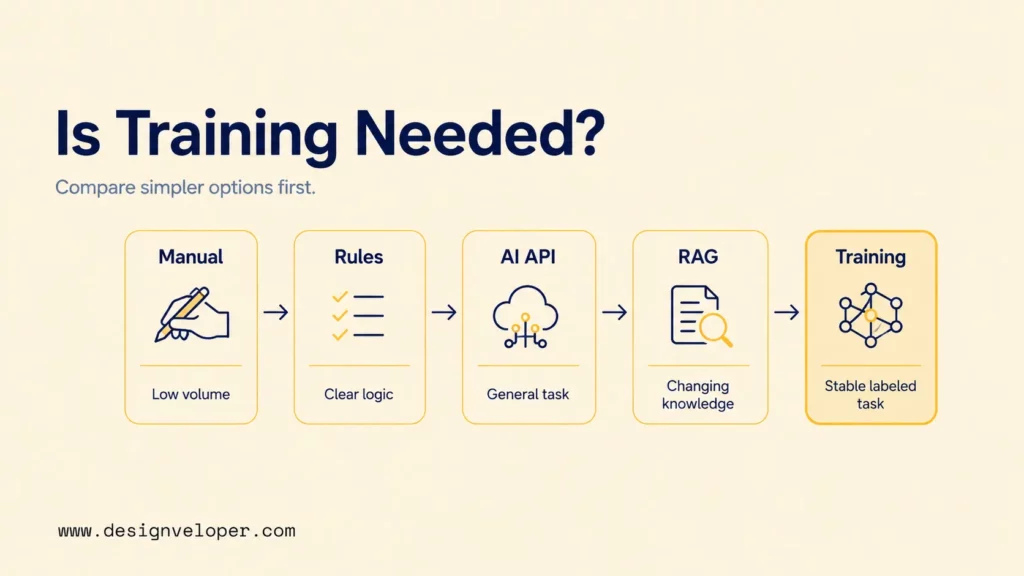
Training an AI model starts by defining the task, the expected behavior, and the evidence needed to judge success. If you are deciding how to train an ai model, do not treat an API call or retrieval system as training. Model training means fitting or updating model parameters from data, such as fine-tuning a pretrained … Continue reading "Training An AI Model Starts With Better Decisions, Not…
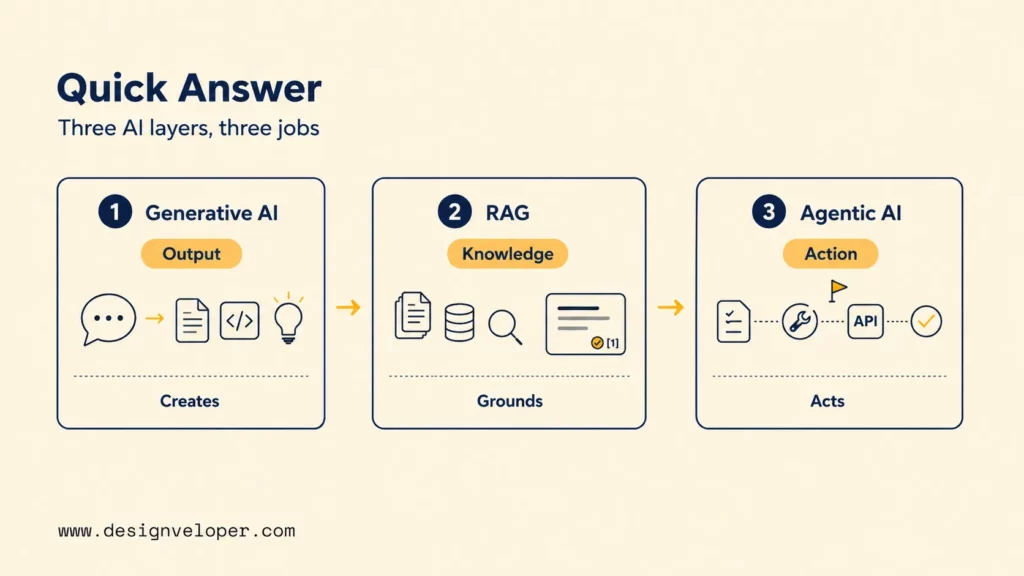
Teams comparing rag vs generative ai vs agentic ai often face a category problem before they face a technology problem. The terms describe different parts of an AI system, so choosing between them as if they were three competing products can lead to unnecessary complexity. This guide helps developers, software practitioners, and technical leads decide … Continue reading "Generative AI, RAG, And…
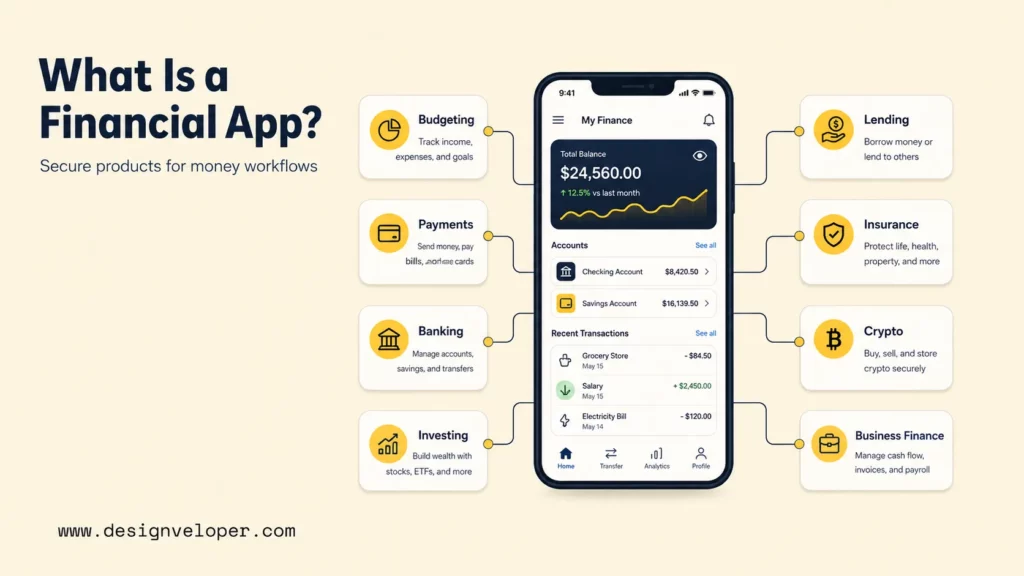
Financial application development means building software that handles money-related tasks safely, clearly, and reliably. The work is not only about screens and features. Teams also need to plan sensitive data flows, financial APIs, security controls, compliance needs, testing, and long-term monitoring. This guide explains the main app types, must-have features, development process, security…
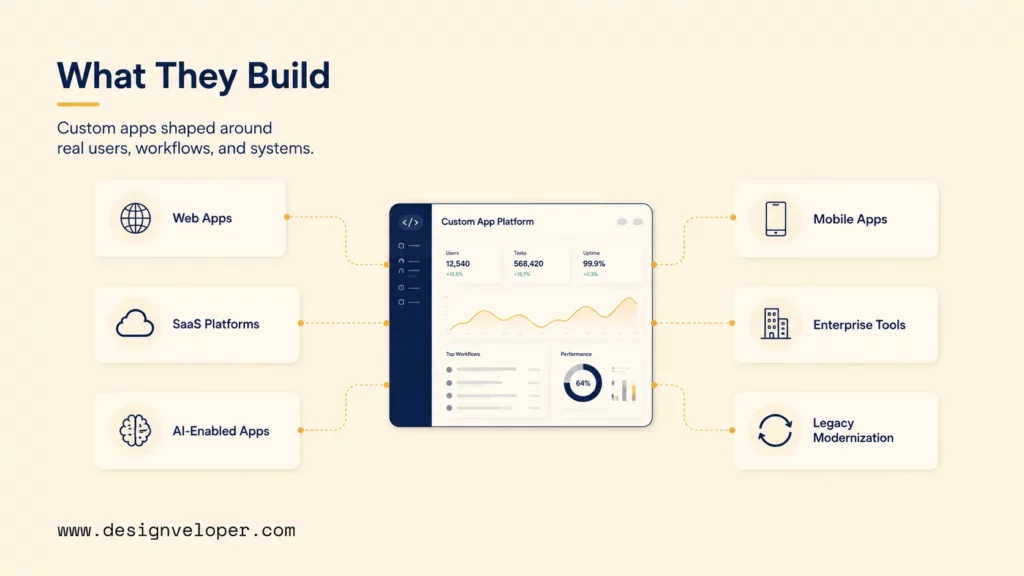
Choosing among custom application development companies starts with matching each vendor to the product and its users. Then check the required systems, security needs, and support model. The ten companies below cover different strengths. They range from cloud-native engineering and regulated enterprise software to mobile commerce, AI-enabled applications, and nearshore teams. This buyer guide…
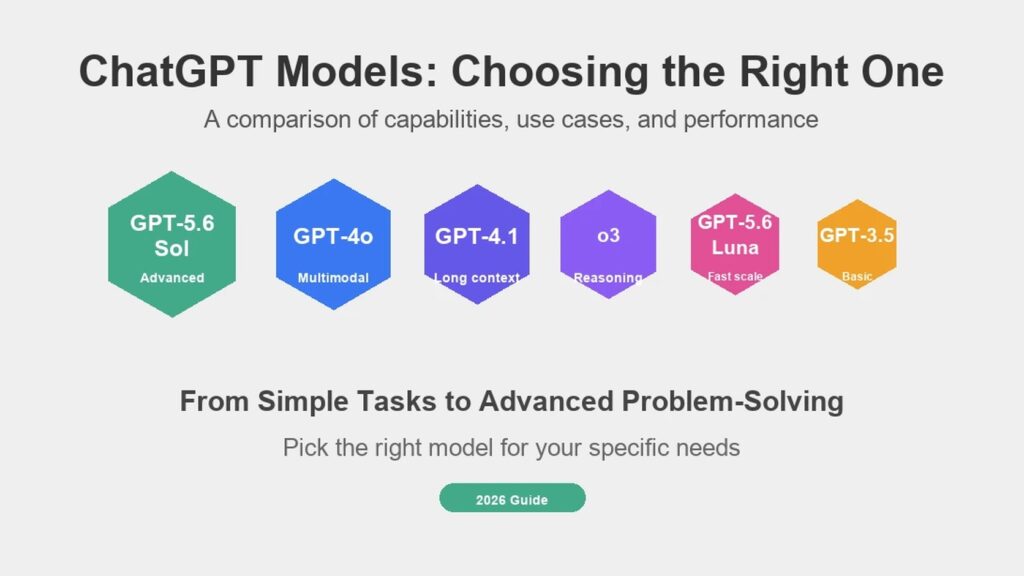
KEY TAKEWAYS: This guide compares the main ChatGPT model families. It covers GPT-5.6 Sol, Terra, Luna, GPT-4o, GPT-4.1, O-series, legacy GPT models, and image-generation models. Each model fits a different job. Sol is best for reasoning and coding, Terra for balanced daily work, Luna for high-volume tasks, GPT-4o for multimodal speed, and GPT-4.1 for long … Continue reading "8+ Best ChatGPT Models…
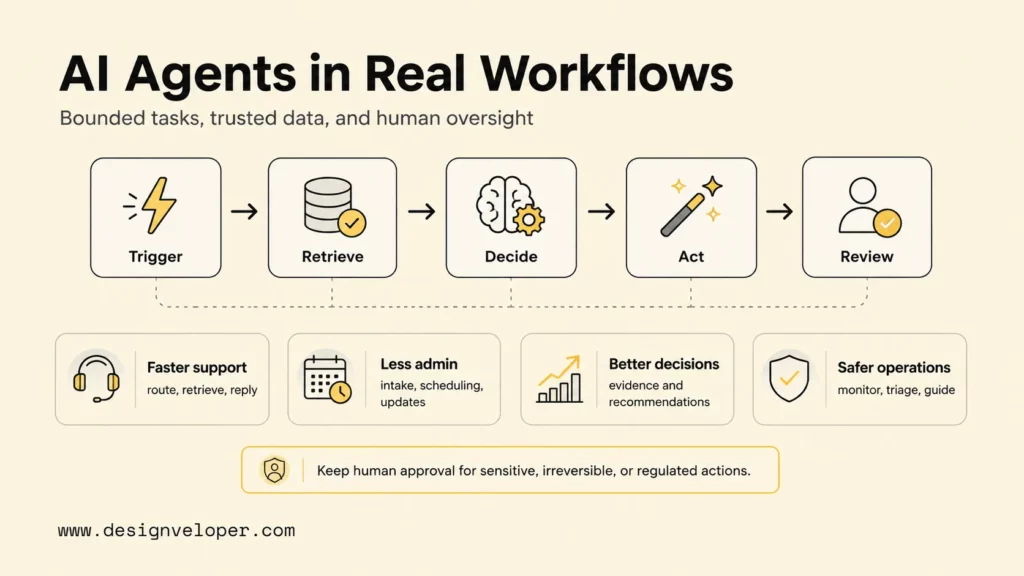
KEY TAKEWAYS: AI agent use cases work best when the workflow is bounded, measurable, and connected to real systems rather than treated as a generic chatbot demo. Industry examples show repeatable patterns across customer service, research, cybersecurity, healthcare, finance, HR, legal, education, supply chain, and government workflows. Implementation depends on data access, permissions,…
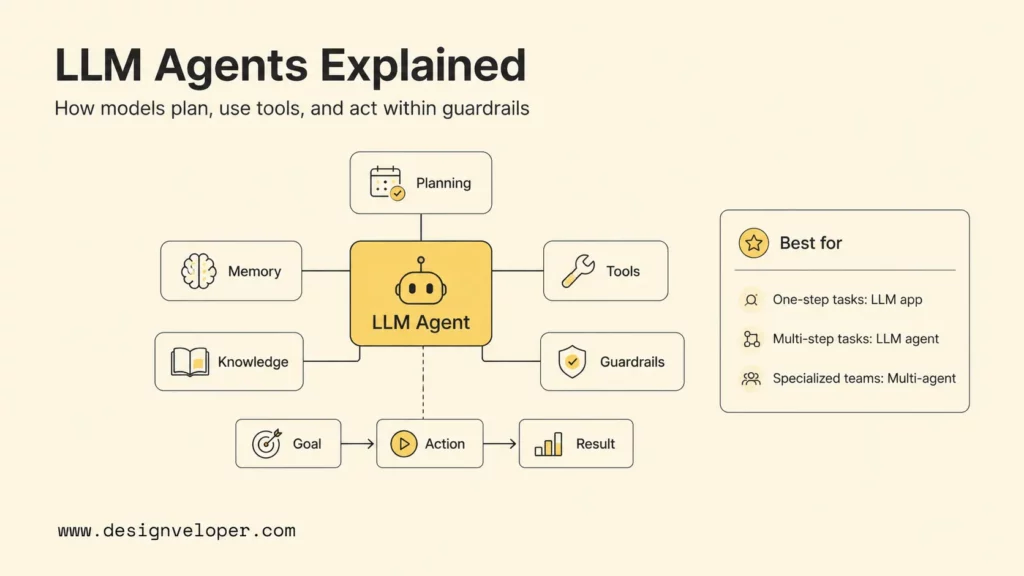
KEY TAKEWAYS: LLM agents combine language models with workflow control, allowing systems to plan, call tools, use memory, evaluate progress, and complete multi-step tasks. The difference from a chatbot is operational autonomy: a chatbot mainly responds, while an agent can coordinate actions across APIs, knowledge sources, and business systems. Architecture quality matters more than model ……
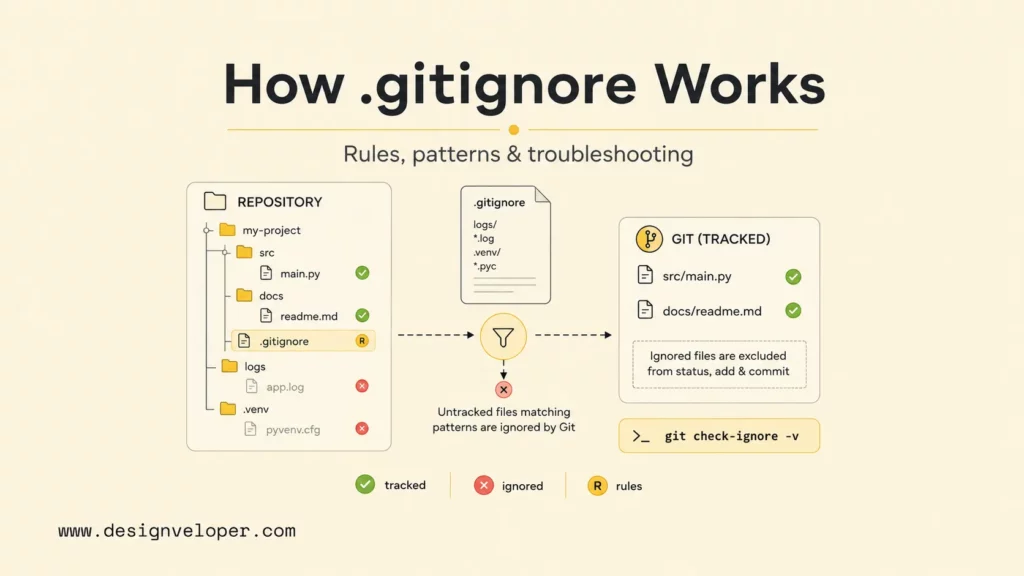
KEY TAKEWAYS: .gitignore controls untracked files only, so files already committed need index cleanup before ignore rules can take effect. Ignore rules are pattern-based and location-aware, with root-relative paths, directory patterns, wildcards, and negation rules all affecting matches. Good ignore files protect workflow quality by keeping secrets, dependencies, build output, caches, and local…
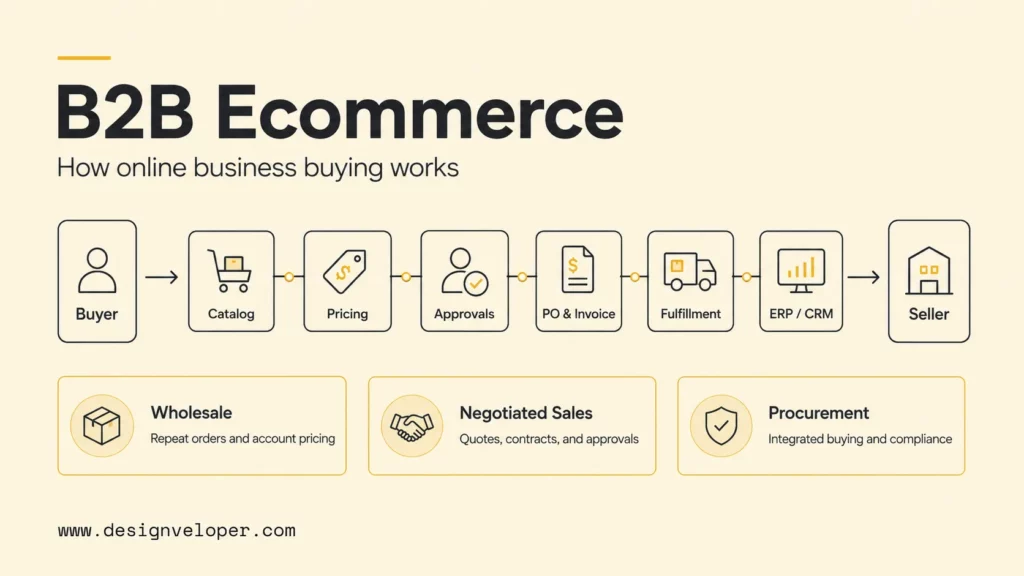
KEY TAKEWAYS: B2B ecommerce digitizes business buying workflows across accounts, negotiated pricing, approvals, purchase orders, invoices, fulfillment, and connected systems. The platform choice depends on operating complexity, including catalogs, account permissions, ERP data, procurement integrations, and customer-specific service needs. Good implementation starts with process mapping before…
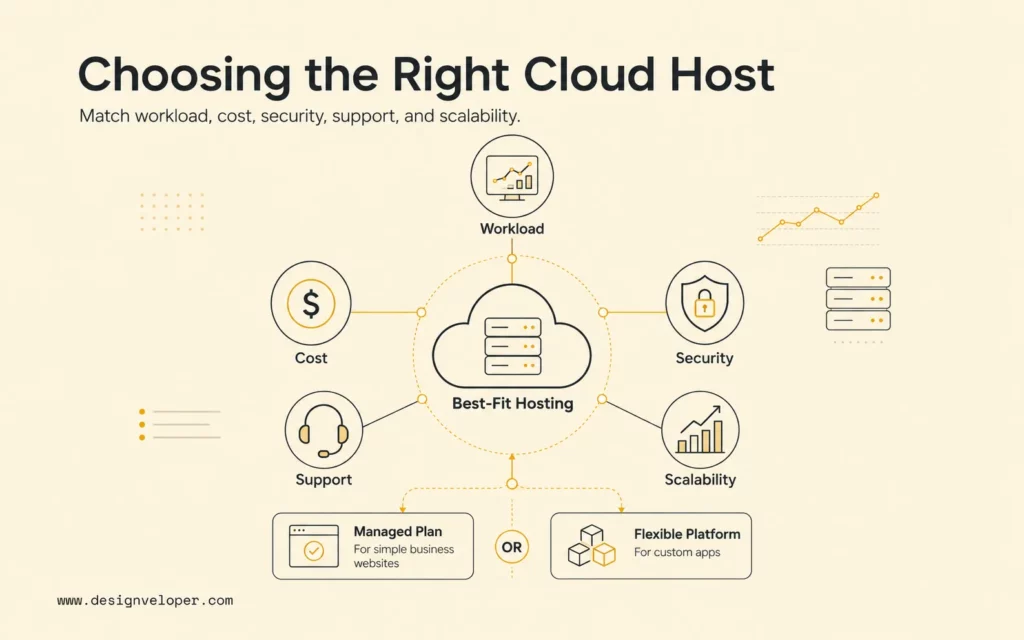
KEY TAKEWAYS: Choosing a cloud provider or cloud hosting package, cloud security baseline, and workload model starts with workload needs: traffic, runtime, storage, data sensitivity, data classification, and compliance needs, compliance, support, deployment model, and growth plans should drive the shortlist. Cloud hosting differs from traditional hosting because compute, storage, networking,…
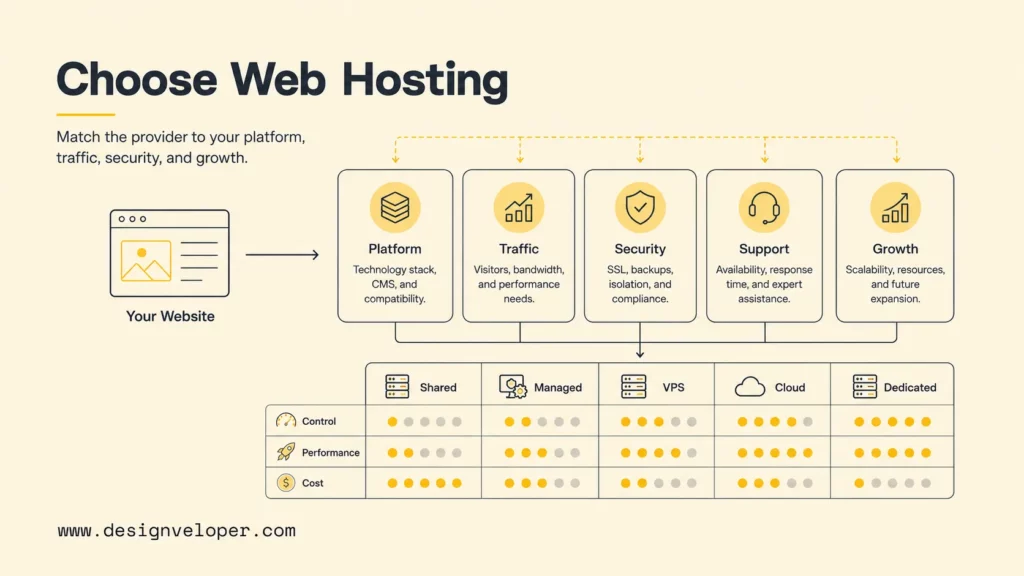
KEY TAKEWAYS: Choosing web hosting starts with website requirements: traffic, CMS, runtime, storage, email, security, compliance, support, backups, and growth plans should come before price comparisons. Shared hosting, VPS, cloud hosting, managed WordPress hosting, dedicated servers, and platform hosting fit different levels of control, responsibility, scalability, and operating risk. A strong…
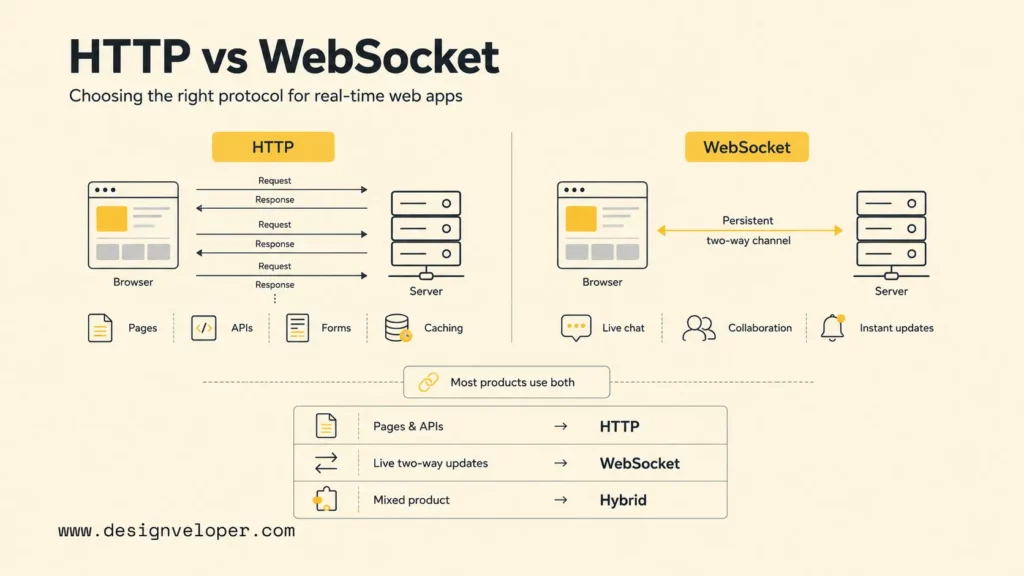
KEY TAKEWAYS: WebSocket protocol vs HTTP is a connection-pattern decision, not a simple speed contest. HTTP is request-response by default, while WebSocket keeps a persistent full-duplex connection for real-time messages. WebSocket still starts through HTTP infrastructure. The browser opens an HTTP request, asks for an upgrade, and then switches to the WebSocket protocol when the … Continue…