
Hello and welcome to The Design Loft #53. Thanks for reading.
Hope is a complicated concept, particularly in times of mass social and economic disruption, complexity, and the myriad challenges that come with it all. It’s for that reason, that it’s so valuable because, in such times of uncertainty, having something to aspire toward is vital to our individual and collective wellbeing.
But what does it mean to design for it? What does that look like? And what does hope itself look like?
In this issue, we look at hope and begin a conversation on what it means for design and why it matters.
You may have heard the phrase: “It’s the hope that kills you.”, referring to the idea that the collision of our intentions and aspirations with the brute force of reality is as harmful to us as anything we could ingest or do to ourselves otherwise. As we near the start of the English Premier League season, I know this phrase is often applied to football. (As a longtime supporter of a certain club that just escaped relegation on the final day of last season, I’ve felt the truth in this statement in ways I don’t wish on anyone.)
But to quote the TV character Ted Lasso (also a football reference), sometimes “It’s the lack of hope that comes and gets you.”
I side with Ted on this, but not just with him. As I’ll explain below, hope is more complex than a wish or a dream for something better, it’s an anchor for innovation and a means for us to do and be better through what we make. Hope is a means to galvanize, focus, activate, and enlist people’s senses, values, and actions in ways that make design possible. If we want a healthier, more vibrant world, what else can we do but design for it?
Certainly, sitting around waiting for things to get better on their own isn’t working.
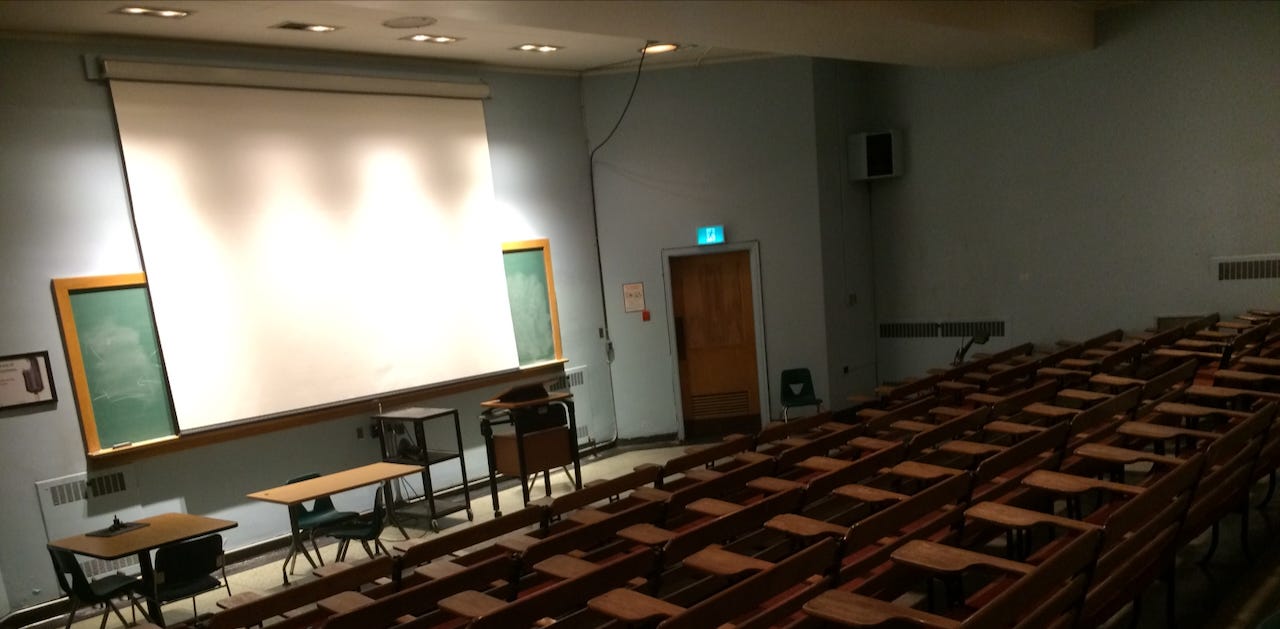
While hope is often framed as a desired outcome, it can also be a means to prepare ourselves for possibilities. Design is nothing if not about possibilities. Yet, what this means for us is that our best-laid plans, our models, and our aspirations might not be the thing we’re here to do or achieve. When I look at my life, I’ve got many examples of working hard for the thing I wanted only to find when I got it, that I didn’t want it after all. Let me share with you one such story.
When I describe my initial foray into academia and my first full-time academic appointment as a faculty member at a university, I thought I’d won the lottery. My whole adult life I’d aspired to be a professor, and to teach, research, and learn for a living. Yet, here I was at one of the world’s top universities doing the job I had prepared for my entire adult life, with a big lab with talented staff, lots of publications and awards, fully subscribed classes (with enthusiastic students and great reviews), more grant funding than most of my divisional colleagues, and yet I was miserable.
The design of my career — the systemic structures, professional culture, and situational variables that contributed to being a professor at that time and place — made it so that I was working 60-80 hour weeks and travelling more than 1/3rd of my year. In my last years in my full-time role, I was spending every single weekend when in town at the office, even for a couple of hours. The irony? I was teaching and researching health promotion, systems thinking, and design and yet I couldn’t manage to design out a healthy system for me, until I left.
This was a structural problem masquerading as a personal one. Because, as my Chair told me, I was doing everything right and doing it well. But, as she empathically and supportively told me, I was a “square peg in a round hole” — meaning my ability to care, deliver, and function in the way that was part of me, didn’t gibe with the environment I was in. Here I was doing the right things right, and (to paraphrase Russell Ackoff) finding the right things wrong.
That’s tough to hear, yet I knew it was true. As importantly, this was a message delivered with kindness, not criticism. I soon left my full-time job, devoted my energy to (again, ironically) going back to school to earn a masters degree in design, and devoted my energy to my strategic design studio and consulting practice. I returned to academic life years later as an adjunct professor, where I’ve been able to practice my craft as a teacher and scholar ever since, only it’s done (as the name implies) as an adjunct to what I do as a strategic designer, not as my core source of employment or identity1.
1 - Lest I offer you illusions, academia is still a horribly exploitive environment - especially for adjunct or sessional faculty, filled with outsized demands, terrible compensation, bulging class sizes and classroom complexity, and lacklustre support for faculty. However, it’s a better experience when your hope is placed differently. I do this work with my eyes wide open, and that’s what hope offers).
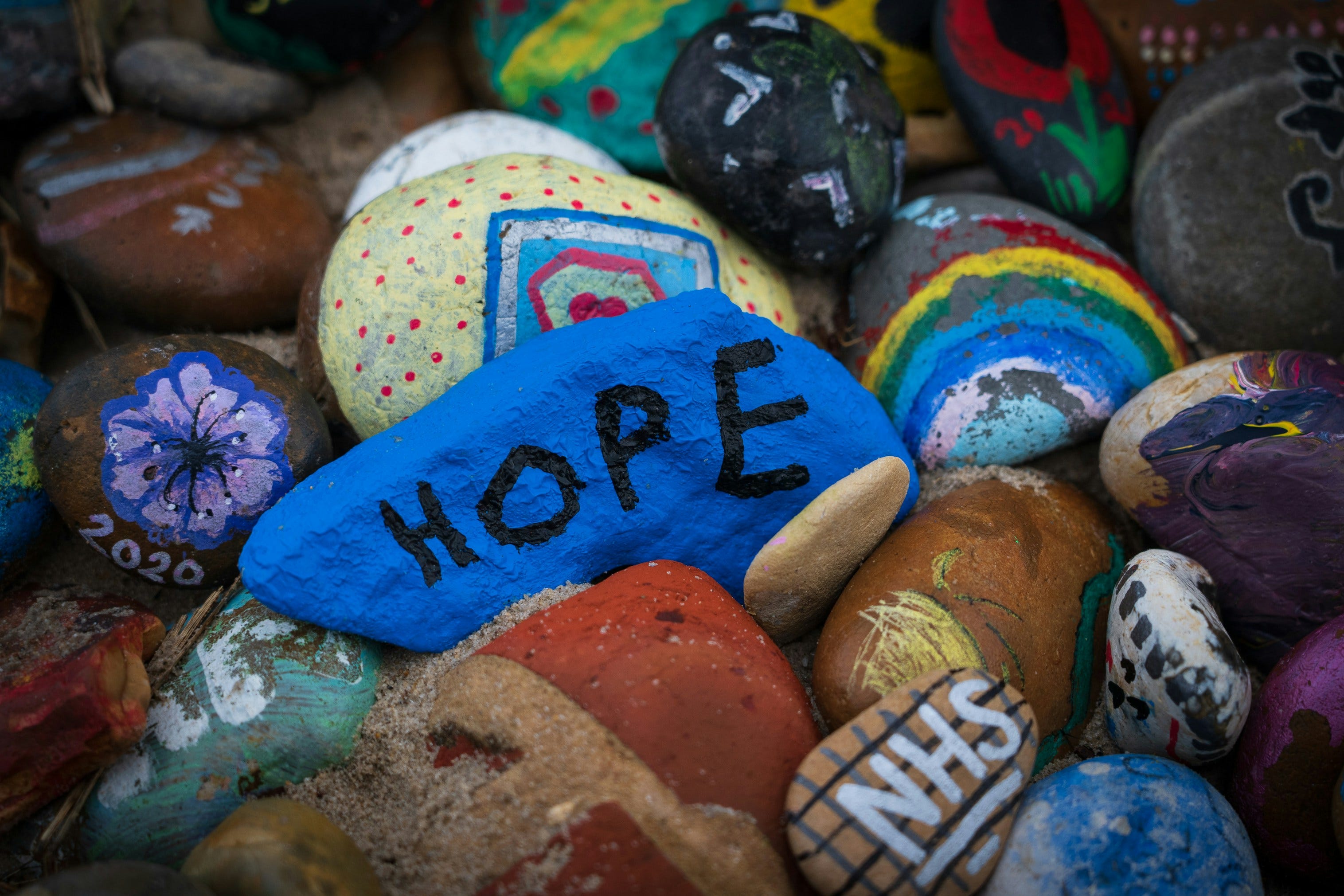
Former Czech dissident, scholar, poet and prime minister, Vaclav Havel had a perspective that is worth consideration when we consider designing for hope:
The kind of hope I often think about (especially in situations that are particularly hopeless, such as prison) I understand above all as a state of mind, not a state of the world. Either we have hope within us or we don’t; it’s a dimension of the soul; it’s not essentially dependent on some particular observation of the world or estimate of the situation. Hope is not prognostication. It is an orientation of the spirit, an orientation of the heart; it transcends the world that is immediately experienced, and is anchored somewhere beyond its horizons. Hope, in this deep and powerful sense, is not the same as joy that things are going well, or willingness to invest in enterprises that are obviously headed for early success, but, rather, an ability to work for something because it is good, not just because it stands a chance to succeed.
Havel speaks of hope being a state of mind, independent of the situation. His perspective shares much with the work of Austrian psychiatrist Viktor Frankl, who’s detailed psychological study of his (and his fellow prisoners’) experiences in a Nazi concentration camp. Frankl was able to maintain a form of hope that rings close to Havel’s definition, allowing him to endure previously unimaginable physical and psychological cruelty to survive.
When we design for those we serve, we wish better things for them. That’s a hopeful statement.
In health systems, this might be improvements in care experiences, treatment outcomes, reduced time to being seen in clinics, and the ability to be heard and understood just as people seek to hear and understand what’s happening. For personal wellbeing, hope might mean having a pathway to something that allows you to do something different, even if the outcome is uncertain. That difference, and the attempts to try something, is what innovation is all about.
Hope enables innovation . Design is the discipline of innovation2. Therefore, design, in a very real sense, is a vehicle for hope.
To design hope is as much about mindsets as it is the skill and toolsets that often get greater attention. This is, at its clearest, what design thinking is all about. (even if many advocates the approach might see it differently.)
2 - Marty Neumaier was the source for this gem about design being the discipline of innovation. I’ve advocated for this understanding ever since he and I spoke about it.
So what does design thinking for hope look like in practice? Let me suggest a few starters, which we might need future issues (and past ones) to cover in more depth:
Bring in Futures Thinking. Getting us to engage in some foresight, through scenarios, research and detailed exploration of the possibility space is important. We can’t create a future we want without being able to see what kind of future is possible.
Bring in perspective. Designing for people means recognizing the distinctive ways we all see the world from our position in it. For example, Mothers and fathers will see a family different than sons and daughters. Immigrants, refugees, indigenous communities, settlers, and visitors may all see the same place, but their experience of it will be different. Bringing difference into the conversation through our exploration will point to areas where hope can reside.
Understand boundaries. Havel and Frankl knew that everything wasn’t possible, but they also knew that more was possible when they acknowledged reality and the boundaries around them. They saw systems and, because of that, they were able to make use of them to design in hope.
Create pathways from here to there. When you see a future you want, the next steps are to find and create the pathways that can help you get there. Take one step then another. It won’t always pan out, but that experimental mindset combined with systems thinking, can get you to imagine how certain actions, wisely done, could lead to certain destinations.
Bring in feedback. Hope can’t be sustained without some progress towards whatever vision you have for your life. Havel was a leader at a time of great social and political transformation in his country. Many things fell apart, and harms were inflicted on him and his people. And he saw things changing and moving ideas from conception into reality. He was evaluating as much as he was leading, and it sustained hope.
There’s more to this, but the takeaway is that hope exists. It’s not always about getting what you want, but what you can live with and what can serve you and those you care about. And lest we believe that there’s little reason for hope, consider what the alternative is.
That, if anything, should inspire us to seek, create, and inspire hope in our world.
Thanks for reading.
If you’re out of ways to see hope and shape it in your organization, I’m a Zoom call away and happy to discuss how you can bring in some hope, design thinking, and optimism into your work community. Let’s chat: https://bit.ly/talkcense .
Image Credits: Photo by Nick Fewings on Unsplash
Havel, V. “The kind of hope I often think about” in Disturbing the Peace: A Conversation with Karel Hvizdala, trans and intro. by Paul Wilson (New York: Vintage Books, 1990), 181.
Frankl, V. E. (2006). Man’s search for meaning. Beacon Press (Original work published 1946).
No posts
Comments
Nothing yet. Say the first thing.
Sign in to join the conversation.