

Welcome to Designer, a place for designers, creatives, and the design-curious to explore graphic design styles, the history and future of design, and how art and design carry into the rest of life. In this article, we are peeking into the life of Paul Rand, an instrumental figure in the development and reformation of graphic design. Famous for his witty designs and strict corporate identity practices, Rand left behind a legacy that will continue to inform generations of designers to come.
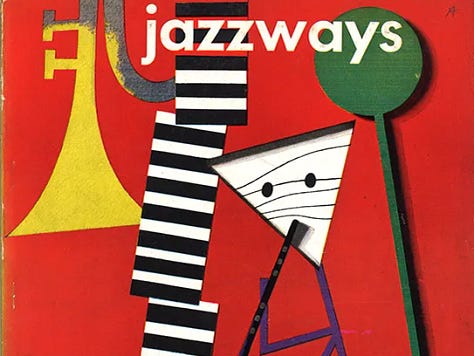

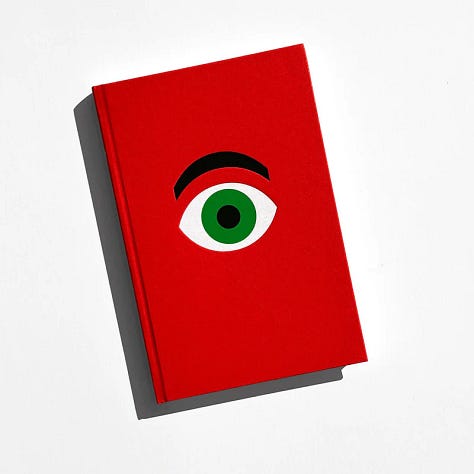
Graphic design isn’t about creating attractive visuals. Rather, it’s an art form focused on communication and problem-solving. At least, that’s what Paul Rand believed, the designer who brought corporate branding and identity to the U.S.
Rand (1914-1996) popularized the modern-day graphic design profession, reforming it into an art that permeates the human experience. And while you may not know him by his name, I am certain you know him by his work.
A self-taught artist and designer, Rand defined “design” as the manipulation of form and content and their relationship. Whether through complex corporate identities, book covers, packages, or posters, he saw design as a way to tell a story, to communicate with the audience, to create a personality where it isn’t common.

As you’ll see throughout this article, Rand’s work was often minimalist, conceptual, and bold - a far cry from the design field he grew up in. He treated design as visual journalism, focusing on communicating an idea through an immersive experience.
Rand didn’t just perform the work, though; He revolutionized the idea of being a designer, significantly contributing to the rise of the graphic design profession. Which means, yes, the job you (potentially) and I have is, in part, due to Paul Rand!
Say it with me! Thank you, Paul! We love you, Paul!
But, before any of this happened, he was known as Peretz Rosenbaum. Let’s dive deeper into his history…
Paul Rand had a life and career full of creativity, passion, drive, and impact. As I was researching for this article, it was, at times, difficult to log and organize all of the work he’d done over the years, simply because there is so much of it. In an effort to organize this article, I divided this section into three sub-sections: early years, middle years, and late years.
In 1914, in Brooklyn, NY, Peretz Rosenbaum was born. From a young age, he was fascinated by visuals, often spending his days painting and creating. His parents were supportive of his artistic inclination, with his dad even allowing him to paint signs for his store.
As he grew into adulthood, his love for art stuck with him, leading him to pursue an artistic career. The trouble was that, in a depression-ravaged New York, it was difficult to make a living with this type of work. Although his father suggested a different career path, Rosenbaum was far too creatively inclined to pursue anything else.
From 1929 to 1934, Rosenbaum studied at three schools: the Pratt Institute, the Parsons School of Design, and the Art Students’ League. What’s interesting about his story is that, although he spent over five years attending various art schools, he identifies as self-taught.
After enduring what each school had to offer, he started to feel as though they weren’t adept at teaching “good design.” He felt that he learned more by viewing and reflecting on other designers’ work - pulling inspiration from European modernist movements, designers, and magazines, such as the Bauhaus and De Stijl.
In 1935, after feeling that a Jewish name might hinder future professional opportunities, Peretz Rosenbaum transformed into “Paul Rand”.
That same year, Rand began his professional creative career at George Switzer Studio as a Design Assistant. In this role, he created stock images that were sold to magazines for commercial use. This was the beginning of a long and impactful design career.
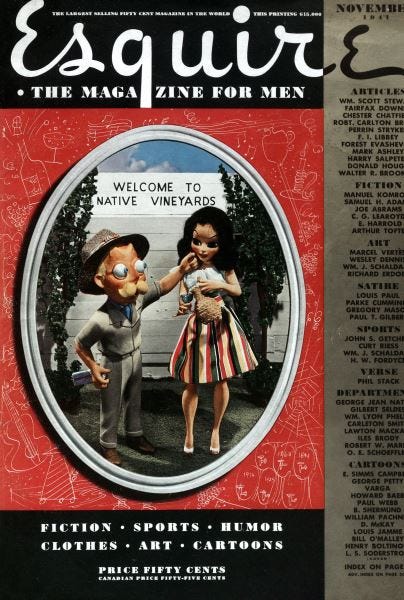
At the young age of 23, Rand became the Art Director of Esquire Magazine and Apparel Arts. He maintained this position for five years, transforming aged, maximalist designs into minimalist, witty collections that spoke to the audience.

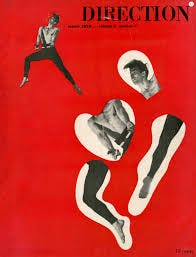
Around the same time (1938-1945), he struck a deal with Direction Magazine - in exchange for complete creative freedom, Rand would reform their design collection pro bono. This critical time in his career allowed him to draw inspiration from designers he looked up to and further develop his style.
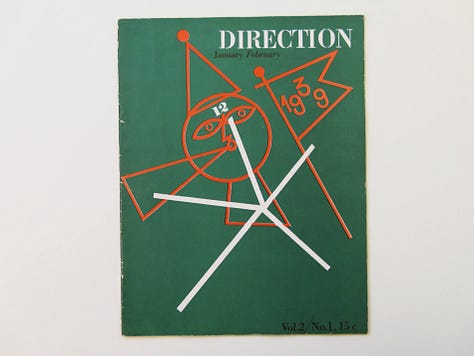
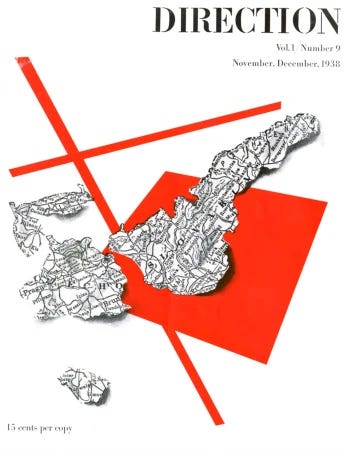
After better developing his style through his experiences at Esquire and Direction, Rand eventually pivoted into advertising. From 1941 to 1955, he was named Art Director at William H. Weintraub Advertising Agency.
At this point, Rand was beginning to make a name for himself, having completely flipped the narrative on the graphic design profession. Focusing on communicating via graphics, rather than text, he was adept at transforming maximalist designs into minimalist masterpieces.
After spending some time in advertising, he pivoted once again into arguably the most influential era of his career - corporate identity.
After WWII, in the 1950s and 60s, industry and corporations saw a huge boom, and Rand saw a great opportunity to further commercialize his skills. Rand saw consulting opportunities amass, including:
1956-1995 > Consultant for IBM. Created the iconic striped logo in 1967.
1959-1981 > Consultant for Westinghouse. Created their logo in 1960.
1961-1996 > Consultant for Cummins. Created their logo in 1962.
Aside from formal consulting work, he designed logos for myriad companies, including ABC, UPS, ENRON, Yale Press, and more.
Later in his career, Rand sought to inspire a new generation of designers, spending decades teaching at Yale University. His curriculum and portfolio were so influential that art/design schools around the world translated his work into their own teachings.
Parallel to his teaching career, Rand continued to consult for some of the biggest brands around the world. Of note, he was hired to design the logo for Steve Jobs’ new tech company, NeXT.
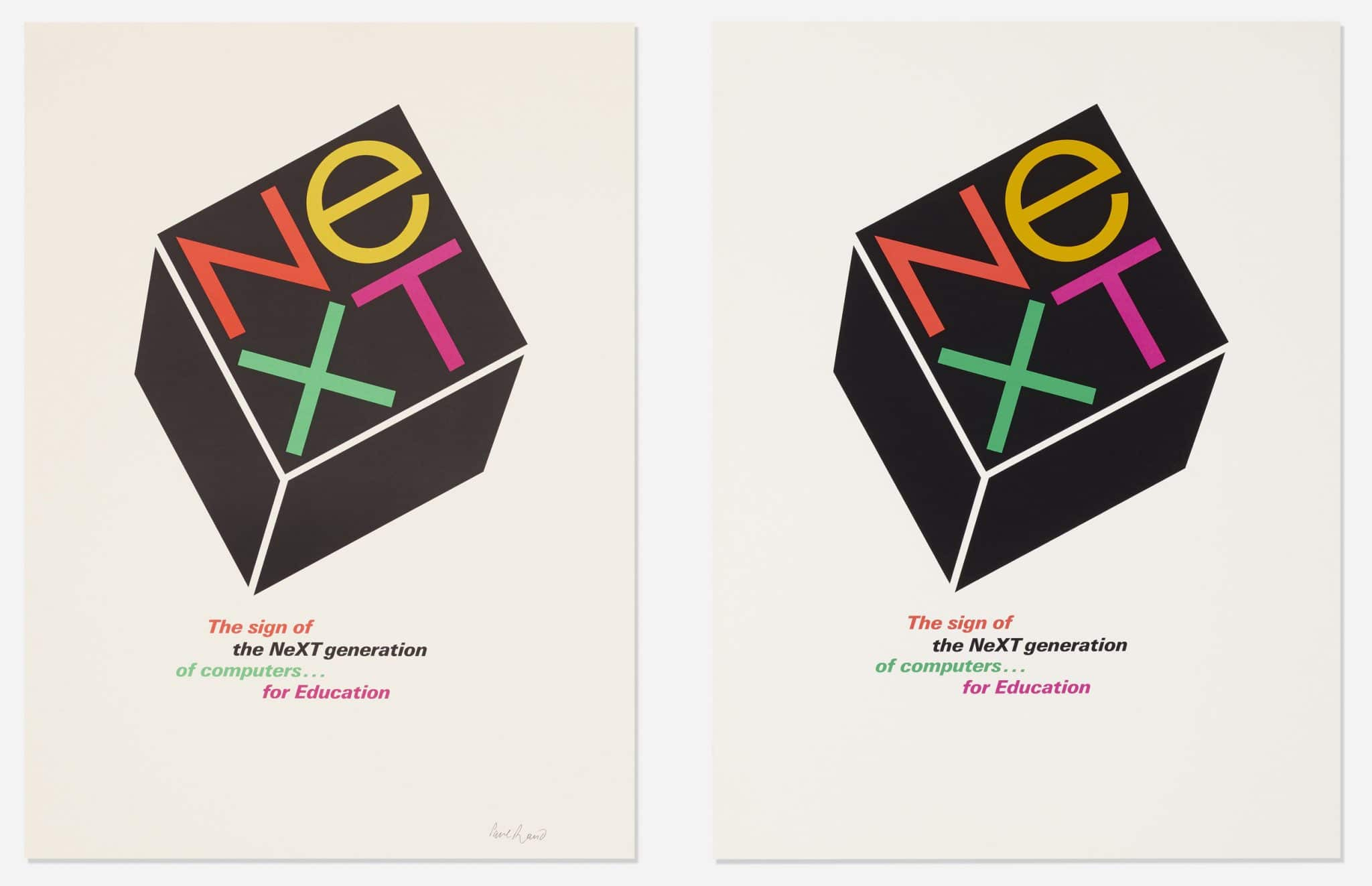
Throughout the rest of his career and life, Rand continued to inspire others, spread his knowledge, and create breathtaking designs that are still relevant today. After passing away in 1996, his work has only become more relevant and timeless, solidifying him as one of the best graphic designers of our time.
At his core, Rand believed that “it’s a designer’s job to improve the general quality of life. In fact, it’s the only reason for our existence.”
To dissect this philosophy further, I researched interviews, papers, and other media, and categorized the major branches of Rand’s design philosophy.
Design isn’t about aesthetics, it’s about solving business problems and creating clarity. Rand saw past mere aesthetics, understanding that the corporate world required problem-solvers. He realized that design could clarify identity and meaning.
Rand wholeheartedly believed that design was the vessel for creating an identity. If a company wanted to move past being an abstract concept in people’s minds, it needed to focus on its design.
It’s the identity that people remember, not the prices, sales, or promos. To create an identity, companies needed to create a world - they needed every aspect of their company to be designed and cohesive.
Rand, drawing influence from European modernist movements, sought to remove all unnecessary ornamentation from design, only keeping elements if they were additive.
He famously stated that simplicity isn’t necessarily the goal - it’s the byproduct of a good idea and modest expectations.
Rand focused on injecting art, beauty, and wit into his designs. He believed that good design shouldn’t only be pleasing, but it should also “touch the emotions and gratify the human spirit.” It should stand out among the crowd, move people, and facilitate feelings.
-
Now that we understand what Rand believed, let’s dissect how these beliefs impacted his design processes.
Arguably one of his most controversial tactics, Rand refused to give clients several logo options. He came up with the one solution, the company paid for it, then it was up to them whether or not they took his advice.
Rand would present the logo in every iteration, documenting why certain logos didn’t work and how that pushed him to create the next iteration. It was an interactive journey through his thought processes, creating a story around how his work will solve their problems.
The connection > Philosophy #1
Rand believed in solving business problems, leading him to solve the problem with design and present the solution to the clientele.
Rand’s designs spanned all contexts - from physical prints to digital logomarks and everywhere in between. He was a master at understanding the mental and physical contexts in which designs would reside, and strategically created systems around those.
Whether on packages, websites, business cards, etc., Rand understood how to create a system for the company. In doing so, the companies were able to utilize his designs independently.
The connection > Philosophy #2
Rand understood that design was about identity. To ensure a consistent identity, Rand created and distributed systems - or brand standards - to his clients, allowing them to use his designs effectively across many contexts.
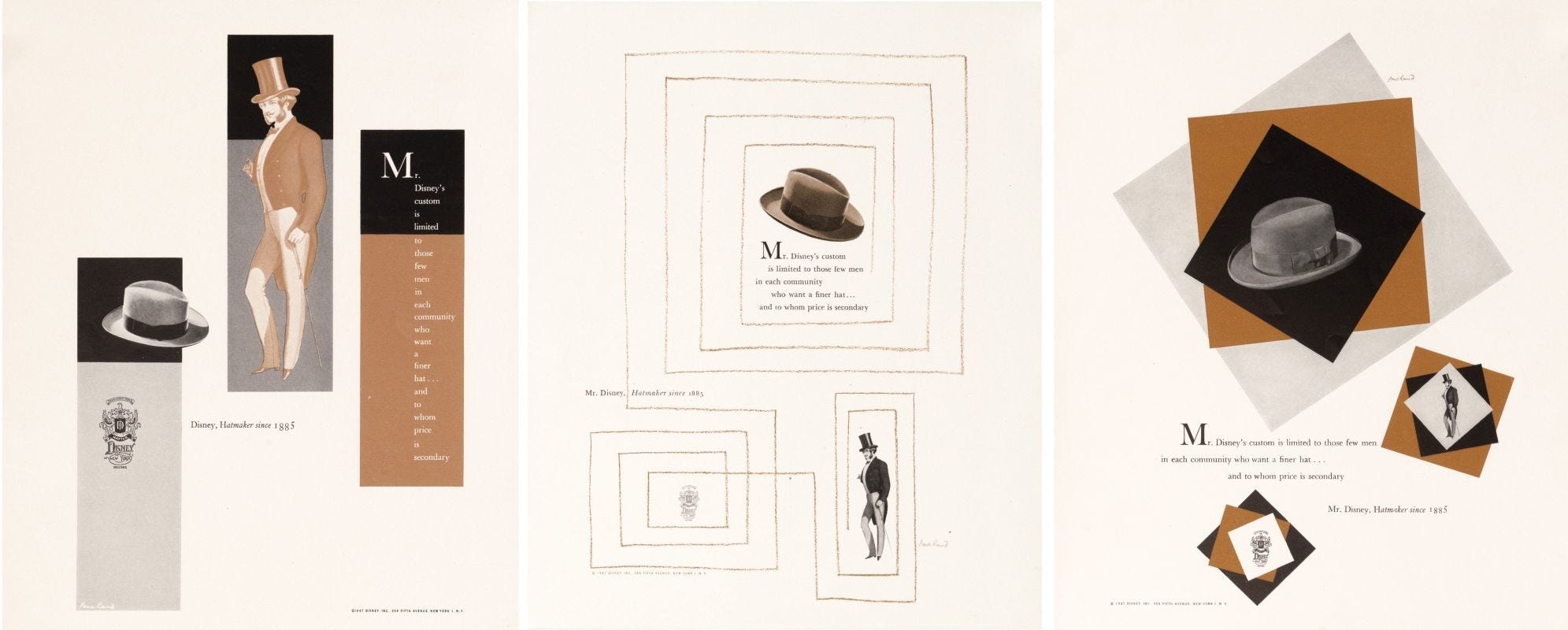
To achieve simplicity, Rand stripped away everything non-essential. His designs were limited to simple geometric forms and reduced color palettes. Further, he minimized the copy to only what was essential, focusing on creating relationships between the elements. He aimed for the design to be a dance between all elements on the screen.
The connection > Philosophy #3
Rand believed in simplicity, leading him to reduce the elements to only what was necessary. Every line, shape, color, and character had a reason to exist.
Rand let creativity and playfulness rule his design process, creating a system of designing, dissecting, identifying points of success and failure, and iterating.
He used a method called iterative sketching - sketching to think, to externalize a problem. He first sought the business problem, then reduced it to an illustrated logo. Having these sketches turned into a written argument for and against certain design decisions.
Finally, Rand always made sure to have fun. He used wit and visual puns as tools to connect with the audience. Some examples include his Esquire redesigns and the “eye bee m” cover.
The connection > Philosophy #4
Rand believed in having fun, pushing him to sketch, iterate, and let his ideas go wild. In doing so, he created witty designs and connected with the audience on a deeper level.
Each time I research a historical design figure, I like to reflect on their work, what they contributed to the design field, and what we can learn from them moving forward. And wow, there is a lot to learn from Paul Rand.
My first big takeaway is regarding Rand’s logo presentations. Many designers present their work in SOME way (whether through Framer, Adobe Illustrator, or Figma), but seeing the level of care and precision that Rand put into his presentations inspires me to do more. To do this, I’m going to ask myself, “How can I push this presentation further? Can it be tactile? Can it be physical? Can it be presented unexpectedly?”
Next, I am touched by Rand’s passion for his craft, trading pro bono work for complete creative freedom. Now, given the current economic state of the world, I’m not necessarily promoting pro bono work. However, this does bring up an important question for all designers: “How can I dedicate myself to this craft even further?” Personally, running this publication is my way of dedicating myself, learning more, developing my style/taste, and furthering my design career.
Finally, I’m inspired by Rand’s ability to create interactive experiences in all areas of a business. With the rise of User Generated Content (UGC) and Generative AI, it almost feels as if large corporations are foregoing funding design departments, while smaller businesses see an advantage to using these fairly inexpensive creative methods. And while I won’t knock small businesses, I would like to see a higher level of care and design expertise from brands of all sizes.
Paul Rand left us a new way of thinking about design - as a means to solve problems, create interactive experiences, showcase personality, and, most importantly, inspire others.
After concluding this essay, I challenge you to go out into the world and experience all sorts of art forms. Then, consider what they mean to you. How can these experiences impact you, as a designer? Doing so will help you develop your design system, philosophy, and unique brand.
And remember, in the words of Paul Rand, “Do not strive to be unique, or novel, just strive to be good.”
As always, thank you for reading and/or listening to this article! I’d love to continue the conversation with you in the comments and subscriber chat.
https://www.paulrand.design/
https://archive.org/details/designersart0000rand
https://www.moma.org/artists/4809-paul-rand
https://www.paulrand.design/life/videos/2008-paul-rand-lecture-series.html
Steve Jobs on Paul Rand — Available on YouTube
Look up Paul’s logo presentation booklet for EF
Rand has four great design-related books that I’m going to check out, and I recommend you do too.
Thoughts on Design
Paul Rand: A Designer’s Art
Design, Form, and Chaos
From Lascaux to Brooklyn
Comments
Nothing yet. Say the first thing.
Sign in to join the conversation.