

We’re in the thick of fall fundraising season, one of the most active periods in venture capital.
One thing we’ve noticed in almost every successful raise is a founder who has created an incredible sense of urgency, both with their existing investors and the new folks they’re talking to.
People are in town, focused, and decisions move faster - use the season to your advantage. Your goal is to make every investor feel they’re part of a coordinated campaign, not individual conversations scattered across months. Think of it like everyone being in a room together, focused day in and day out on this raise.
Here’s what this looks like in practice:
Regular updates at least 1-2x a week once the raise is in full swing
Get intros and support from existing investors
Create a war room atmosphere - imagine if all your supporters were in a room, focused on this raise. Make progress visible and maintain regular communication
Consider an ongoing email thread or even creating a WhatsApp or Slack channel with all the investors to help coordinate
Create accountability for yourself and your investors. Recognize when goals and milestones are reached. Thank people when they help
Most importantly: speed matters. How quickly you respond to emails and get back to investors signals how seriously you’re taking the process. Treat it like a product launch with a deadline and a drumbeat.
Looking for more fundraising support? We’ve also published guides on how to design a winning pitch deck and how to design your fundraising process.
We’ve continued to share interviews with designers building great companies here on Substack over at Designer Founders.
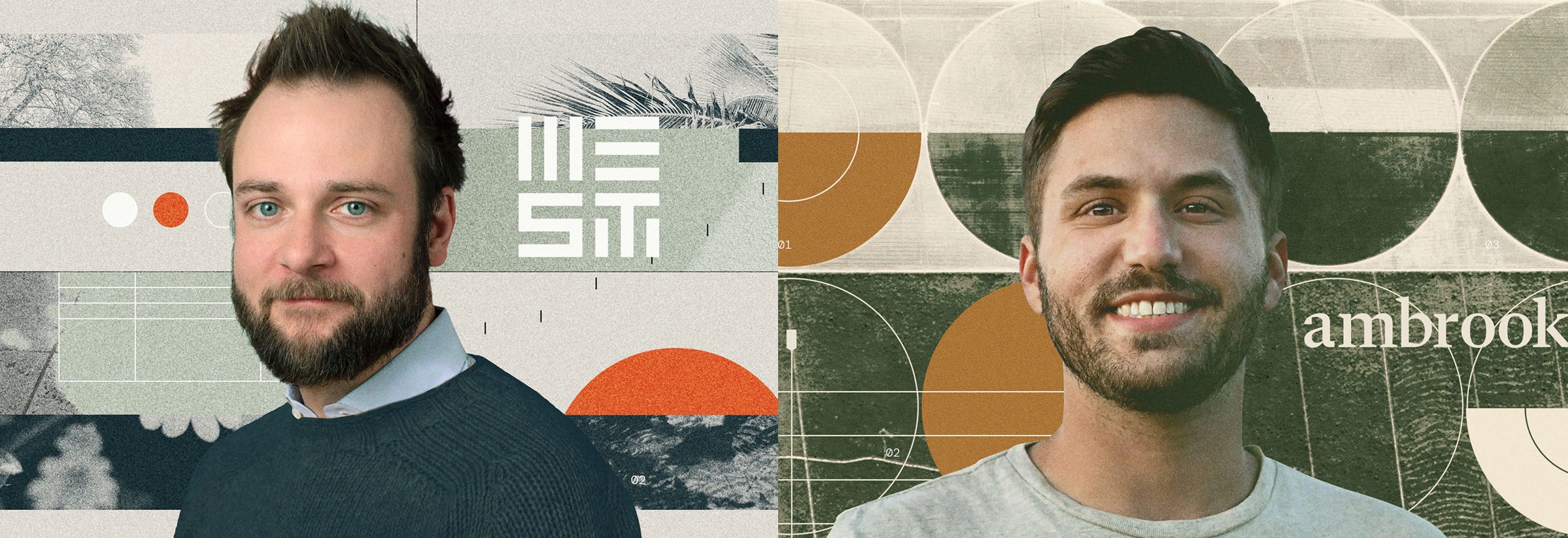
“One of the superpowers of design is creating desire. With design, you can refine something you’re in love with, and it develops a gravity. People start to show up out of nowhere to work on it because it has this draw, this pull.”
Evan reflects on what he would do differently in building Pinterest, the business value of caring, and how design creates gravity around new ideas. His new company West Co. harnesses the power of congregation to rebuild human connection that’s been lost in our digital age.
“I’m really drawn to legacy spaces. Farming, manufacturing, trucking, construction. People aren’t doing things the way their parents did, and design can help them adapt.”
Jeff shares how Ambrook built a company where everyone thinks like a designer, finding competitive advantage in underserved industries and building trust with rural communities. It’s a case study on design-first company building and how design shows up across brand, product, culture, and community.
Here’s what our team is talking about these days, on Slack and beyond:
Design Hiring Resource Library. ICYMI, we published a comprehensive collection of resources from last month’s design hiring workshop: recording, slides, interview frameworks, sourcing channels, and more for early-stage teams.
The art of prototyping. “Prototyping biases towards action and feasibility over UX theater,” writes David Hoang. “The act of making and putting things together naturally exposes opportunity areas to improve. It collapses the distance between idea and impact.”
Computational taste. An exploration by Amber Atherton on how LLMs might develop aesthetic judgment, and what that means for designers and builders working with AI tools.
Linear’s product culture. A deep dive from a few years ago on how Linear’s engineering and product teams get work done, maintaining quality and velocity at scale.
Cheeky Pint with Ambrook. John Collison sits down with Mackenzie Burnett of Ambrook to discuss American agriculture, labor and immigration challenges, building rural resilience, ERPs, and the principle of money movement.
Operate launched its CRM designed for sales, built for founders. The team is bringing thoughtful design to sales tools that have traditionally felt bloated and confusing.
Copper raised a $28M Series A to make home decarbonization simple, beautiful, and lovable. They’re making battery-equipped appliances that help households cut their carbon footprint without sacrificing performance or aesthetics.
Euclid Power closed a $20M Series A to accelerate renewable energy projects. The funding will help scale their platform that makes it faster and easier for developers to navigate the complex permitting and interconnection processes slowing down clean energy deployment.
Framer raised $100M in Series D funding at a $2 billion valuation. They’ve become the standard for professional web design, combining powerful design tools with production-ready code to help companies build and run better sites.
Stripe launched Instant Checkout in ChatGPT and released the Agentic Commerce Protocol, an open standard codeveloped with OpenAI.
Motion Designer at Air (New York, NY)
Design Engineer at Ambrook (New York, Denver, San Francisco)
Experiential Marketing Manager at August Health (Remote)
Brand Designer at Copper (Berkeley, CA)
Head of Brand Studio at Gusto (Multiple Locations)
Staff Product Designer at Gusto (Multiple Locations)
Product Design Lead at Haven (San Francisco, CA)
Graphic Illustrator at Mental (Remote)
Senior Content Designer at Omada Health (Remote)
Senior Product Designer at Quanta (San Francisco, CA)
Lead Product Designer at Rodeo (New York, San Francisco)
Frontend Senior Software Engineer at Siteline (San Francisco, CA)
Design Director, Experiential at Stripe (New York, NY)
Explore 1,000+ open roles at Designer Fund portfolio companies on our job board or forward this post to someone who’s looking.
And if you’d like to work with founders and companies where design is central to their success, join our talent network to get on our radar for future opportunities.
For more resources, job openings, and upcoming events, follow Designer Fund on X and LinkedIn. If this was forwarded to you, you can subscribe to get future editions:
No posts
Comments
Nothing yet. Say the first thing.
Sign in to join the conversation.