
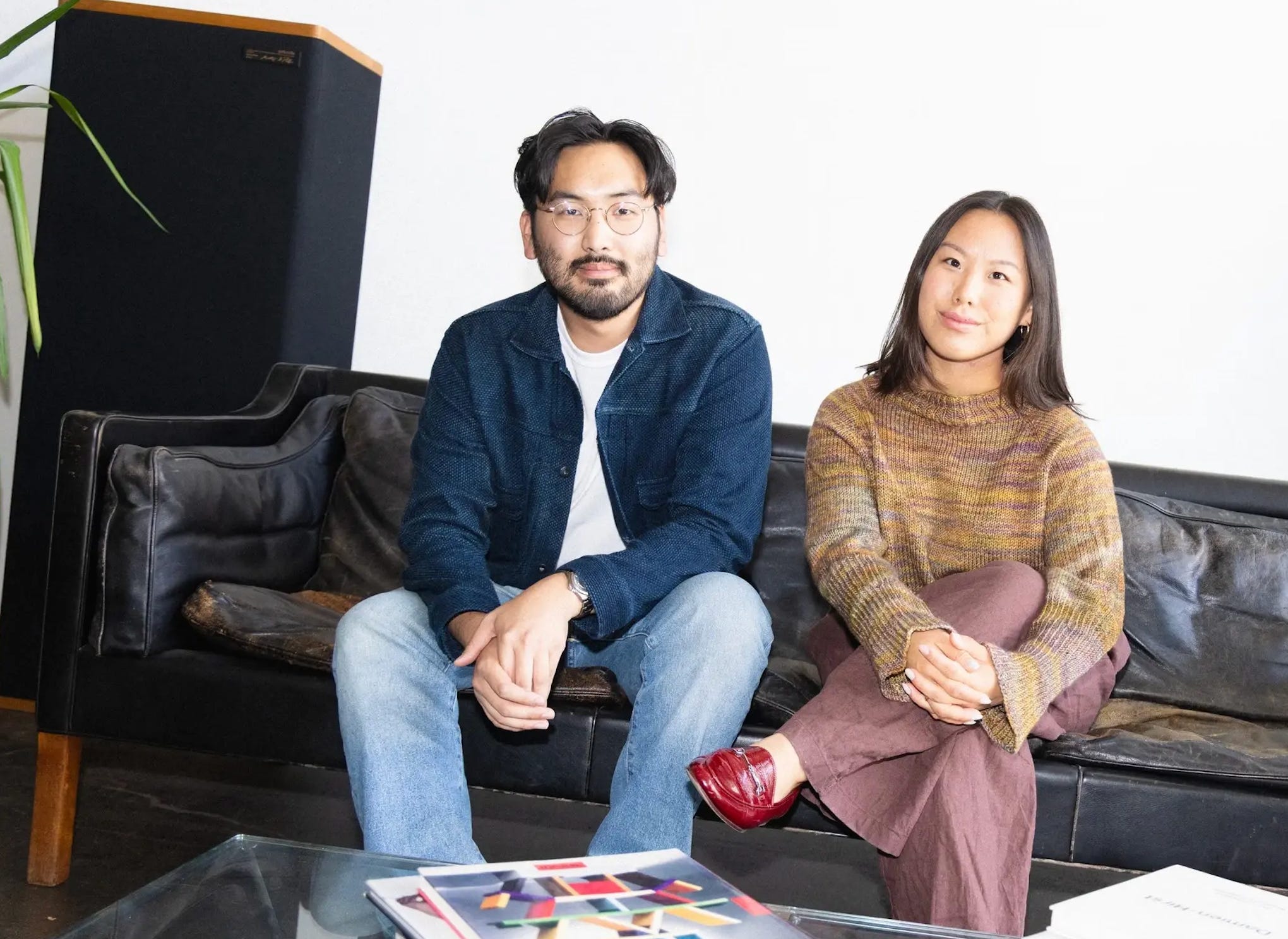
Fearn just announced their $5.5M seed, led by Kindred Ventures with Designer Fund, a16z speedrun, and Essence VC participating. We’re proud to be backing them, and we’re using the moment to make a broader case: the most valuable design work in the economy is hiding in the industries designers tend to avoid.
We’ve noticed a pattern where designers gravitate toward spaces where great design is easily visible and users already have taste. That’s one reason so many designer-led companies have emerged in consumer software, creative tools, and workplace products, areas where we’ve backed companies like Notion, Framer, and Linear.
But the biggest design gaps in the economy are in regulated industries: patents, insurance, healthcare billing, compliance, government services. In these domains, prices are unpredictable, timelines are long, and documents arrive that ordinary people can’t evaluate. None of this is an accident of bad design. It’s the absence of design altogether, in the places where people can least afford it.
If you’re design-minded and building in these industries, let us know. We’re looking to back the next Stripe, Gusto, or Omada Health.
LLMs are remarkably good at pattern-matching and sifting through massive amounts of information. Work that once justified weeks of expert billing can now be done in minutes, which means the old experience is no longer the only option, and founders who prioritize design have an edge.
Every major AI conversation right now, services becoming software, agents doing professional work, models commoditizing, points at the same conclusion: the hard part has shifted from whether the work can be automated to whether the result can be trusted and understood. That is a design problem, and it’s the one Fearn’s cofounders Han Kim and Angela Gao set out to solve.
Patent systems are first-to-file, which makes the priority date everything. Elite, expensive in-house IP teams are proactive. They know how to file effectively and can turn an invention into a filing within 48 hours. Everyone else is at the mercy of external firms that are slow, reactive, and expensive, waiting weeks with little visibility and an invoice they couldn’t have predicted.
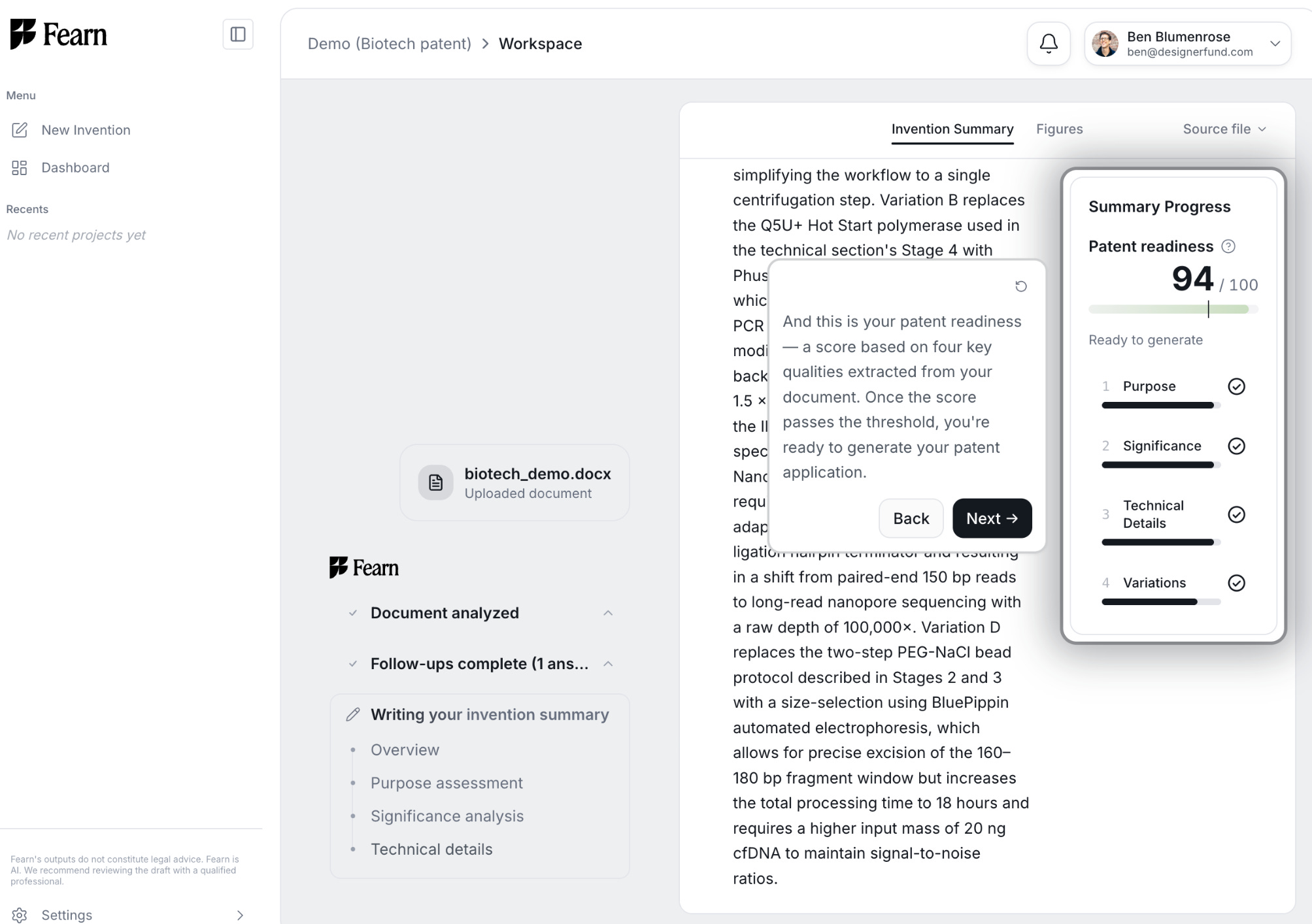
Fearn rebuilds that experience with modern tooling that’s actually easy to understand. You upload your invention notes and preview a complete draft in minutes, one you can read and question before you commit to anything. Former Big Law practitioners and PhDs review every application. What used to take 50+ hours takes about 20 minutes.
If you want the highest-quality patents built for the AI age, try Fearn
When Ben and Han first met, they actually spent the entire call talking about keyboard form factors (Han prefers a split keyboard) and beautifully designed products, before getting into the patenting experience as it stands. This is not the obvious first conversation between a VC and a founder in patent law, but a good window into how Han thinks.
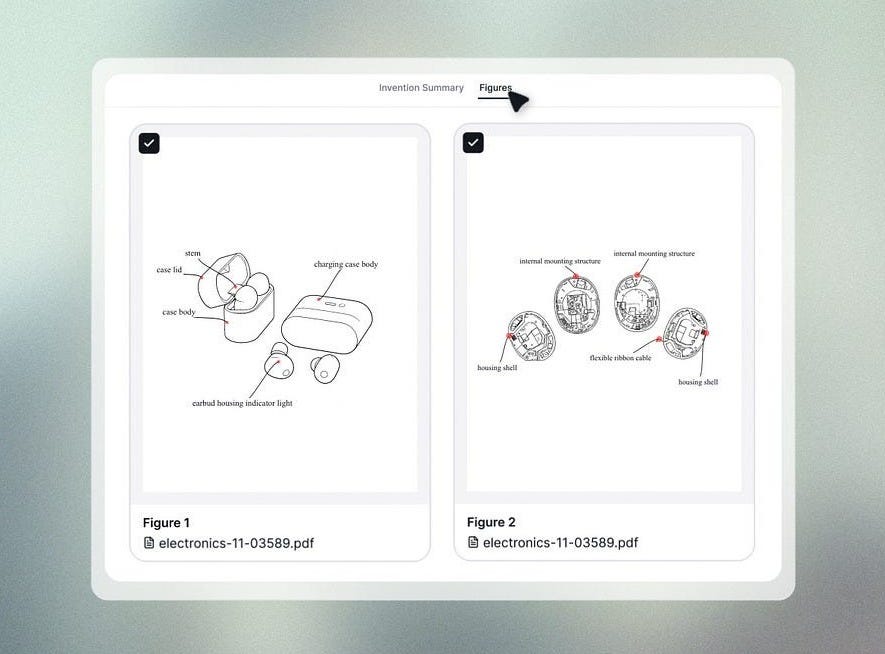
Fearn names “craft” as a company value and defines it as caring about every detail, from claim language to figure formatting. That sounds like branding copy until you use the product and see it built the same way: models trained to get the tedious details provably right, and a draft you can preview and question before paying.
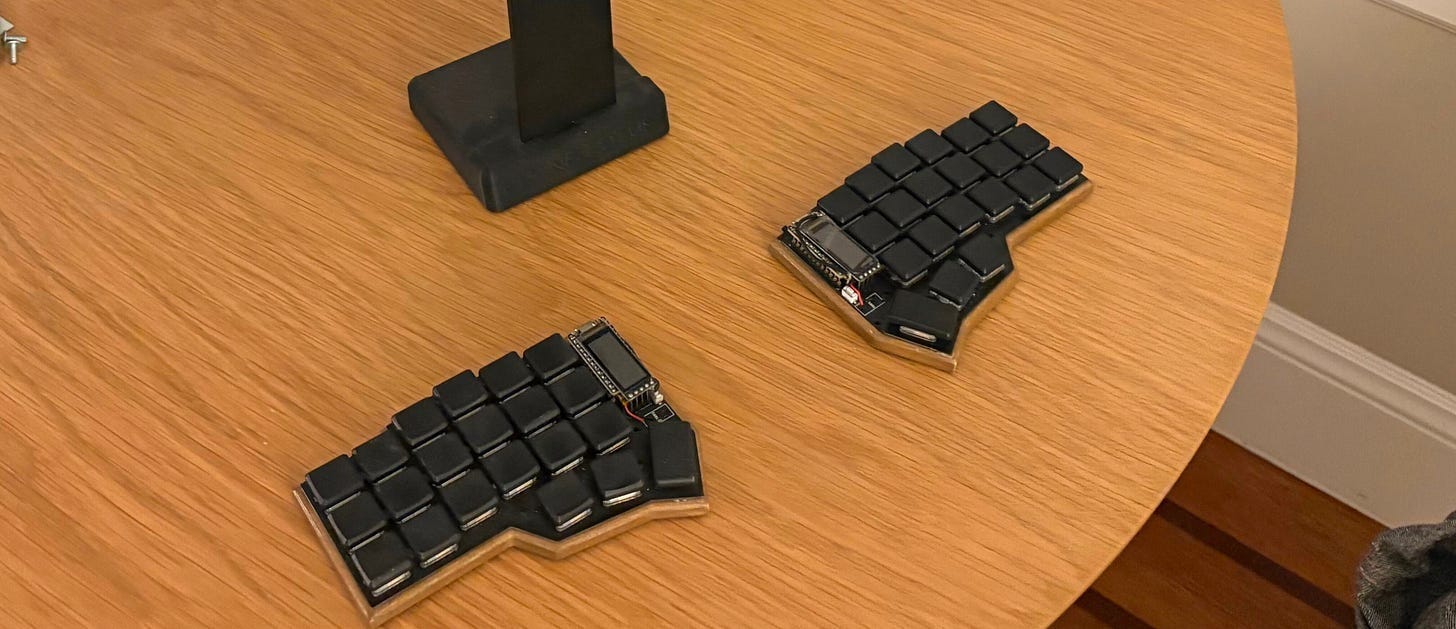
Just as Han believes the experience of a traditional keyboard sucks, he also believes the experience of both drafting and initiating a patent leaves a lot to be desired.
What convinced us is the architecture underneath. The first wave of legal AI was wrappers: thin products on top of general-purpose models, impressive in a demo and unreliable in practice. The consequences are now public. Courts sanctioned lawyers six figures in the first quarter of this year alone for AI-fabricated citations. In most software, an AI mistake costs you an awkward answer. In patents, it can cost you the patent.
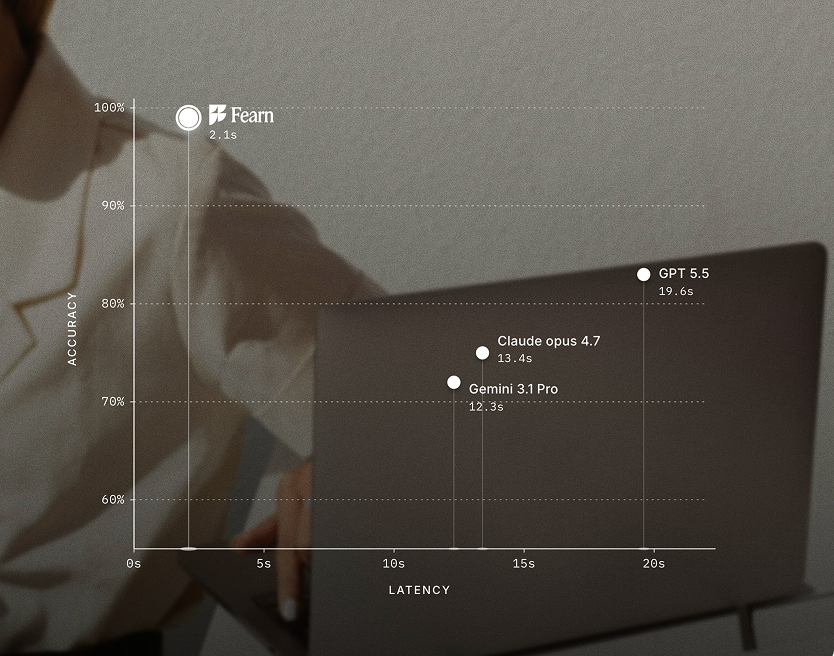
At Designer Fund, we’ve believed for a decade that when a foundational technology matures, value moves up the stack to product and design. AI has reached that point. The models are converging, the capability is broadly available, and the differentiation is shifting to the experience. The industries with the worst experiences have the most to gain.
So consider this a call to action. If you’re a designer or design-minded founder, point your craft at the industries everyone complains about and nobody redesigns.
A few we think are wide open:
Insurance
Healthcare billing
Tax and accounting
Legal contracts and compliance
Government benefits and licensing
Banking and lending compliance
Clinical trials and pharma regulatory
Accounting and audit
Real estate
If you’re building in one of these spaces, we want to meet you. And if you want the highest-quality patents for the AI age, try Fearn.
Fearn did this for patents. There are a hundred more industries waiting.
Congrats to Han, Angela, and the whole Fearn team.
AI in Design 2026: The inflection point is here
·
May 20
A few weeks ago, we published AI in Design 2026, our look at how AI is reshaping the design profession, and the response has been beyond what we expected. Drawing on a survey of 900+ designers across 60+ countries and in-depth interviews with 25+ design leaders and ICs, the report's key takeaway was that designers are taking ownership of more of the product development process. They're shipping production code, building their own tools, and increasingly orchestrating work across product, engineering, and marketing.
That shift raises bigger questions: how teams collaborate as traditional roles blur, how companies help designers stay at the forefront of rapidly changing capabilities, and how designers maintain a high bar for craft when everyone can ship faster. We'll continue investing in this research—and backing the founders building the products that make this next chapter possible.
Joyful Health raised a $22M Series A to help healthcare providers recover revenue lost in the claims process. Combining AI with expert operational support, the platform identifies reimbursement breakdowns, investigates denials, and helps providers collect payments for care they’ve already delivered.
The Path launched publicly, introducing an AI-powered therapy and coaching platform designed to prioritize outcomes and safety. Built by a founding team of early employees at Calm and now Tony Robbins, the company will work to expand access to high-quality mental healthcare using AI.
Gusto introduced Cofounder, an AI teammate built to help small businesses handle operational work. It can run payroll, flag compliance deadlines, manage time-off requests, and work through familiar channels like Slack and text message.
Standout design roles from across our portfolio:
Brand Designer, Growth at Air (NYC)
Design Engineer (Contract) at Ambrook (Remote, US)
Product Designer and Builder at Ambrook (SF, Denver, NYC, Remote)
Staff Designer at Dupe (NYC)
Senior Product Design Manager at Gusto (NYC, SF)
Senior Staff Service Designer at Gusto (Multiple Locations, US)
Principal Product Designer at Linear (Remote, Europe)
Design Engineer at New Generation (SF)
Staff Product Designer at Omada Health (Remote, US)
Lead Creative, Design at Ro (NYC)
Product Designer, Dashboard at Stripe (SF)
Creative Director, Brand Experiences at Stripe (Chicago)
Video Marketing Design Intern at The Mind Company (Remote, US)
Explore 1,000+ open roles at Designer Fund portfolio companies on our job board or forward this post to someone who’s looking.
And if you’d like to work with founders and companies where design is central to their success, join our talent network to get on our radar for future opportunities.
No posts
Comments
Nothing yet. Say the first thing.
Sign in to join the conversation.