
When Elmarie began speaking with trademark attorneys about how they evaluate logos, she expected to find inefficiencies. What she did not expect was how fragmented the process still was in an era increasingly shaped by artificial intelligence.
In conversations with attorneys and their teams, a pattern emerged: determining whether a logo infringes on an existing trademark is slow, manual, and deeply interpretive. It often requires paralegals to search across databases, compare visuals by eye, and assemble evidence for lawyers who ultimately make the judgment call. In complex cases, the process can take weeks.
There is no single system that brings all of this together.
That gap became the starting point for Elmarie’s work on a logo authentication and trademark similarity tool — designed to support how these decisions are made. The product sits at the intersection of legal reasoning, design evaluation, and machine learning, where certainty is rare and context carries as much weight as computation.
Unlike many artificial intelligence problems, trademark similarity does not follow a fixed formula. Two logos may appear visually similar but differ legally in meaningful ways. Others may look distinct yet still raise conflict depending on industry or prior filings.
As Elmarie noted in early research conversations, there is no single way to define similarity. It depends on both visual comparison and keyword-based interpretation of trademarks.
This shaped the technical direction of the system early on: it could not rely on one model or one type of input, but had to combine multiple forms of comparison.
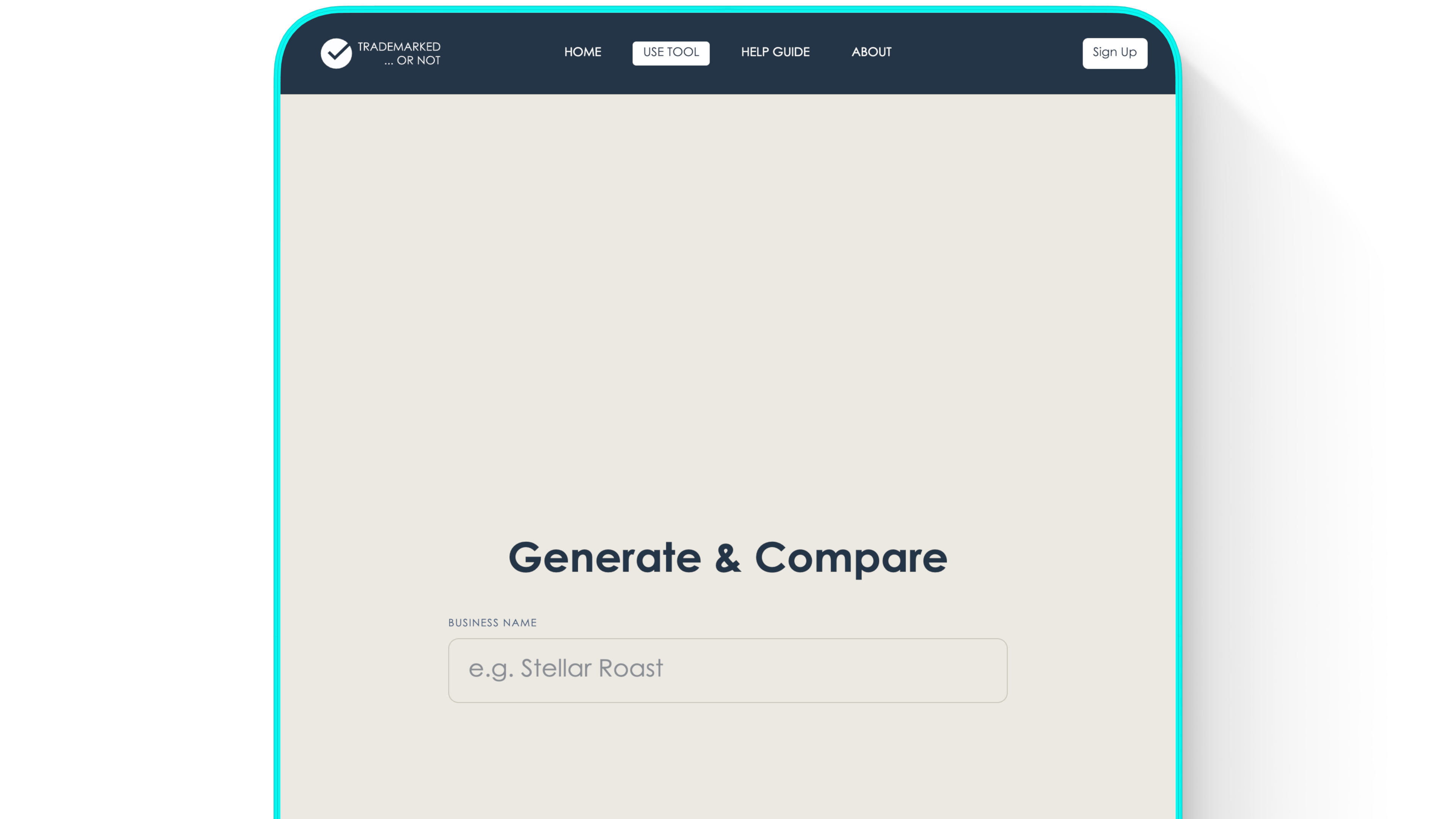
Before building, Elmarie conducted interviews with trademark lawyers and subject matter experts to understand how decisions are made in practice.
What emerged was not a lack of effort, but a lack of coordination. Legal professionals, paralegals, and external tools operate in isolation rather than as a connected system.
Much of the work still depends on manual review and experience-driven judgment, supported by fragmented tooling.
Those conversations clarified the real gap: not missing data, but missing structure around how that data is interpreted.
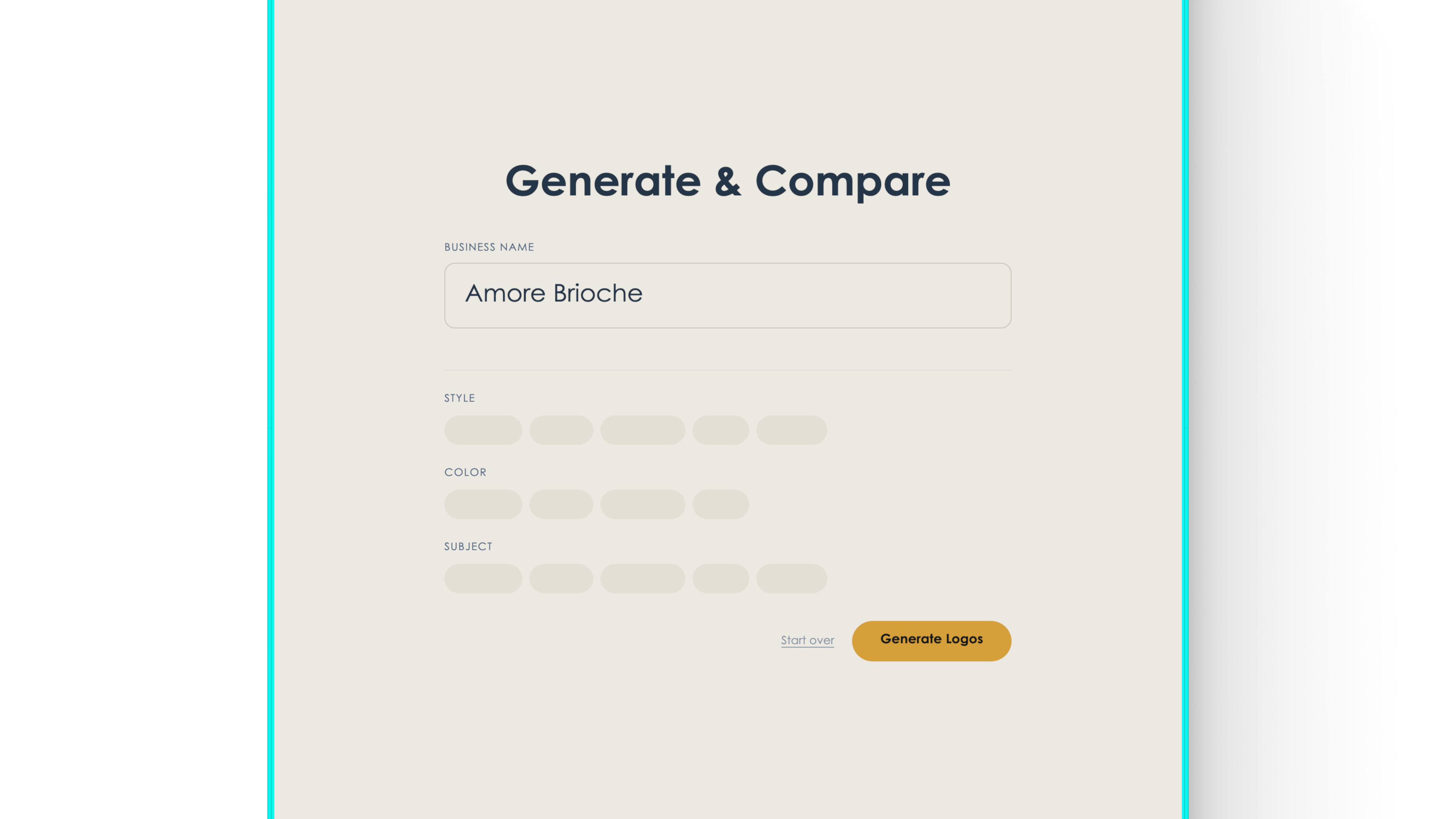
The initial version of the product assumed a straightforward flow:
upload → analyze → similarity score
But this assumption quickly broke.
Image comparison does not behave like text comparison, and legal interpretation is not binary. On top of that, trademark datasets are large, inconsistent, and difficult to standardize.
The system evolved into a layered approach combining:
visual similarity models
keyword-based trademark matching
a structured USPTO-based dataset of millions of entries
What began as a simple pipeline became a multi-layered decision system.
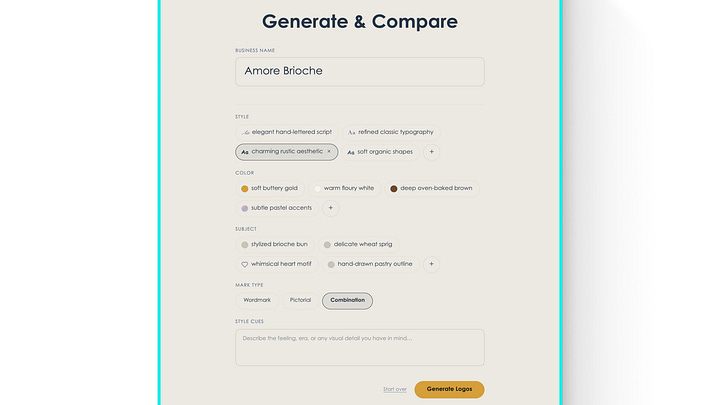
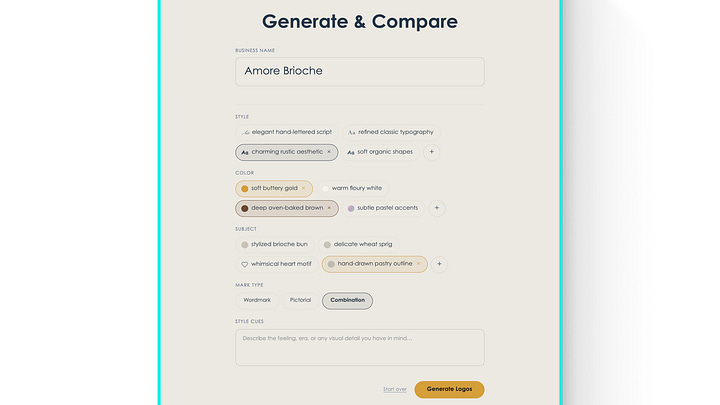
Over time, the purpose of the product expanded.
Rather than simply determining whether two logos are similar, the focus shifted toward supporting decisions before trademark filing.
The goal is not to replace legal judgment, but to provide clearer signals that help inform it.
The system now aims to:
surface potential conflicts
compare against existing trademarks
support conversations between founders and legal teams
reduce ambiguity in early decision-making
In this context, ambiguity is not a flaw in the system — it is part of the system itself.
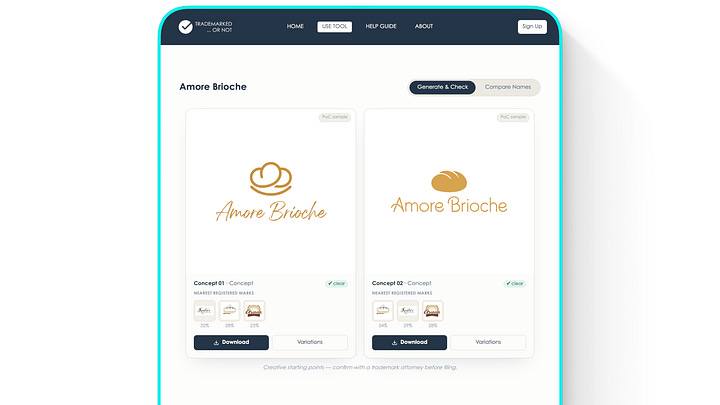
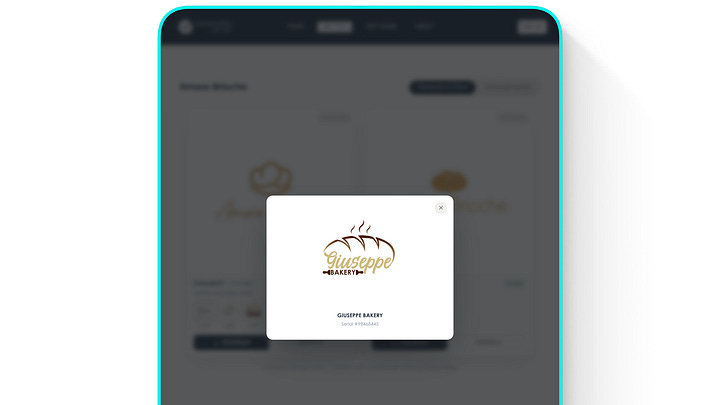
Trademark evaluation is not a linear process. It is a negotiation between data, interpretation, and legal judgment.
Any tool built for it has to operate within those constraints rather than try to simplify them away.
Elmarie’s work reflects a broader shift in how certain categories of software are being built: away from deterministic outputs and toward systems that support layered decision-making.
In that sense, the product is not just a tool for checking logos.
It is an attempt to bring structure to a process that was never designed to be fully structured.
Elmarie Woods is an AI product developer focused on designing systems at the intersection of machine learning and real-world decision-making.
She currently leads product design work at AEVO Technologies, where she is building tools that help founders and legal professionals evaluate trademark similarity before filing.
Her work combines AI systems, design thinking, and legal workflow research, with a focus on making complex evaluation processes more structured and usable.
Comments
Nothing yet. Say the first thing.
Sign in to join the conversation.