
In July, I was lucky enough to return to Saint Pierre and Miquelon. Last summer, I wrote the story “The Three Dams of Saint Pierre” after my visit. I knew I wanted to write a second story about the archipelago for my Infrastructure is Everywhere Substack.
But finding the right topic isn’t always obvious… until it is.
I am from Saint Pierre and Miquelon. The territory is part of me. And now, it’s part of my five-year-old daughter, too.
She attended summer camp there. I love that she did the same activities I did as a kid, like going on the merry-go-round, eating soft serve ice cream, and riding a boat to spend the afternoon at Île-aux-Marins.
Growing up in Chicago is so different from my experience. I see her attending summer camp in Saint Pierre as something that further links us.
And that got me thinking about the fundamentals.
When you put fundamentals and stories together, you get the four classical elements: fire, air, earth, and water, used in countless movies.1
Applied to Saint Pierre, it got me thinking about what these four elements evoked in me. And…naturally… can I identify a fifth element that binds them all?
Here we go, starting with water.
Hey brother, there’s an endless road to rediscover
Hey sister, know that water’s sweet, but blood is thicker
If you’ve been reading my stories, you know how much I love water and wastewater infrastructure. My last story was about stormwater infrastructure in Copenhagen.
My first story in summer 2025 (i.e., “The Three Dams of Saint Pierre”) was also about water. In it, I describe three dams around the island of Saint Pierre (and a bonus fourth dam toward the end). Two of the three dams are used for drinking water: the Vigie Dam and the Goëland Dam.
The Goëland Dam and the reservoir behind it are special to me because my father’s cottage is downstream. I have hiked to it hundreds of times, often with my Labrador dog when I was a teenager. There’s a pretty steep slope to get to it, which always gets my heart pumping (as I write this story, I just returned from this hike).
The views from the reservoir are stunning… and they can be enjoyed with a nice glass of local whisky.
The picture below shows a bottle of Henry’s Legacy Single Malt.
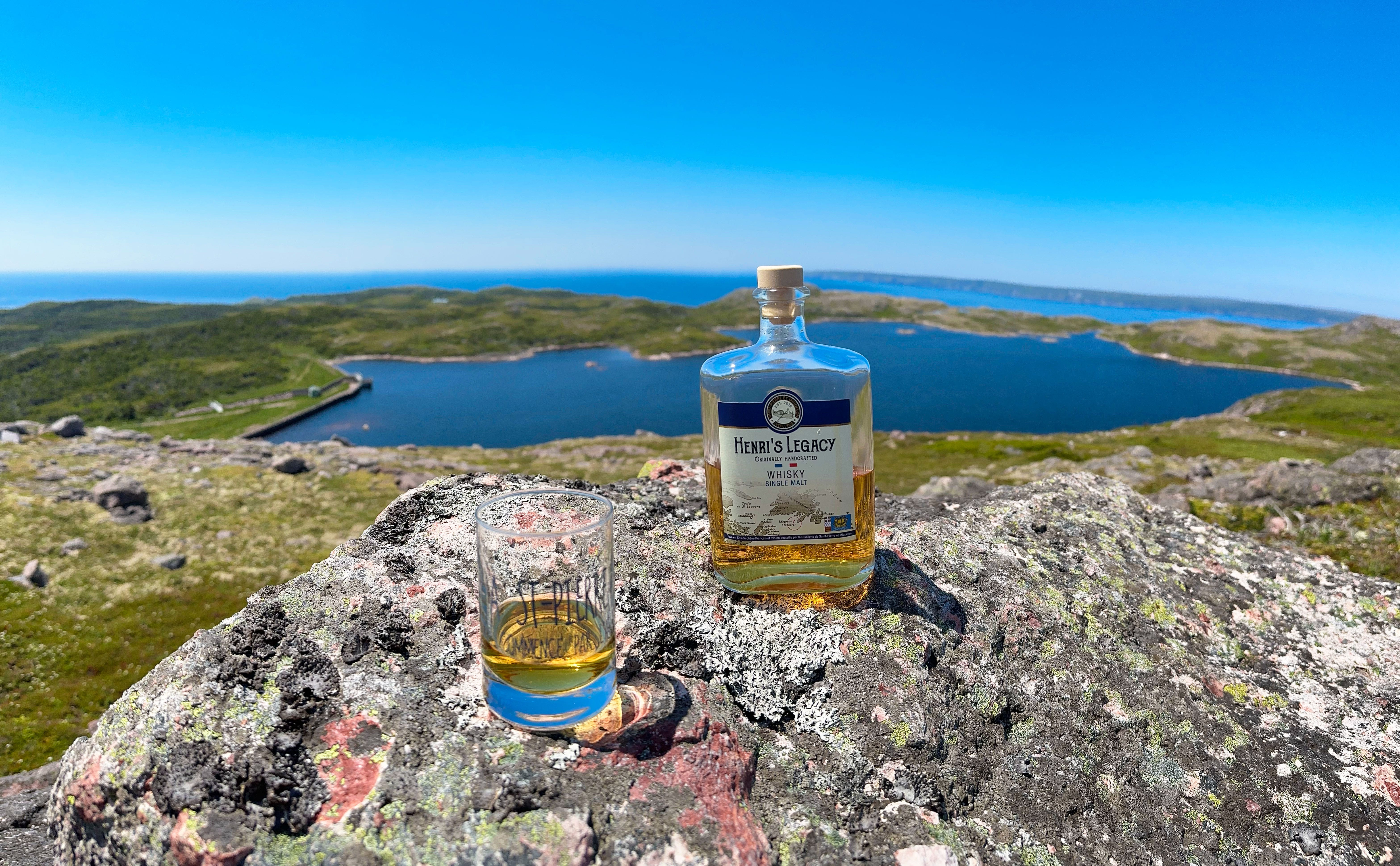
Don’t look it up online. You won’t find information about it… but it’s a sweet and delicious nectar. It’s already received several awards. I hope it’ll be more available soon.
For now, if you’re a whisky aficionado, you have two options. Either consider traveling to Saint Pierre to get a bottle or visit me in Chicago, I always have a bottle handy.
On the day I took the picture above, the sun was shining, the views were gorgeous, but the wind was blowing hard, as it often does in Saint Pierre and Miquelon, which brings us to our second element: air.
Oh, if the sky comes falling down
For you, there’s nothing in this world I wouldn’t do
The air quality is very high in Saint Pierre. I have a weird but effective telltale about it. The air is so clean that my hair doesn’t get as dirty. I wash it half as frequently as I do in Chicago.
I know, it’s an odd telltale, but what can I say? It works. It’s not the most accurate method, but the only technology I need is to run my fingers through my hair. It doesn’t get less low-tech than that.2
Just travel there for a few days, and you’ll notice it. You’ll also notice how windy it is. After all, the archipelago is by the Atlantic Ocean.
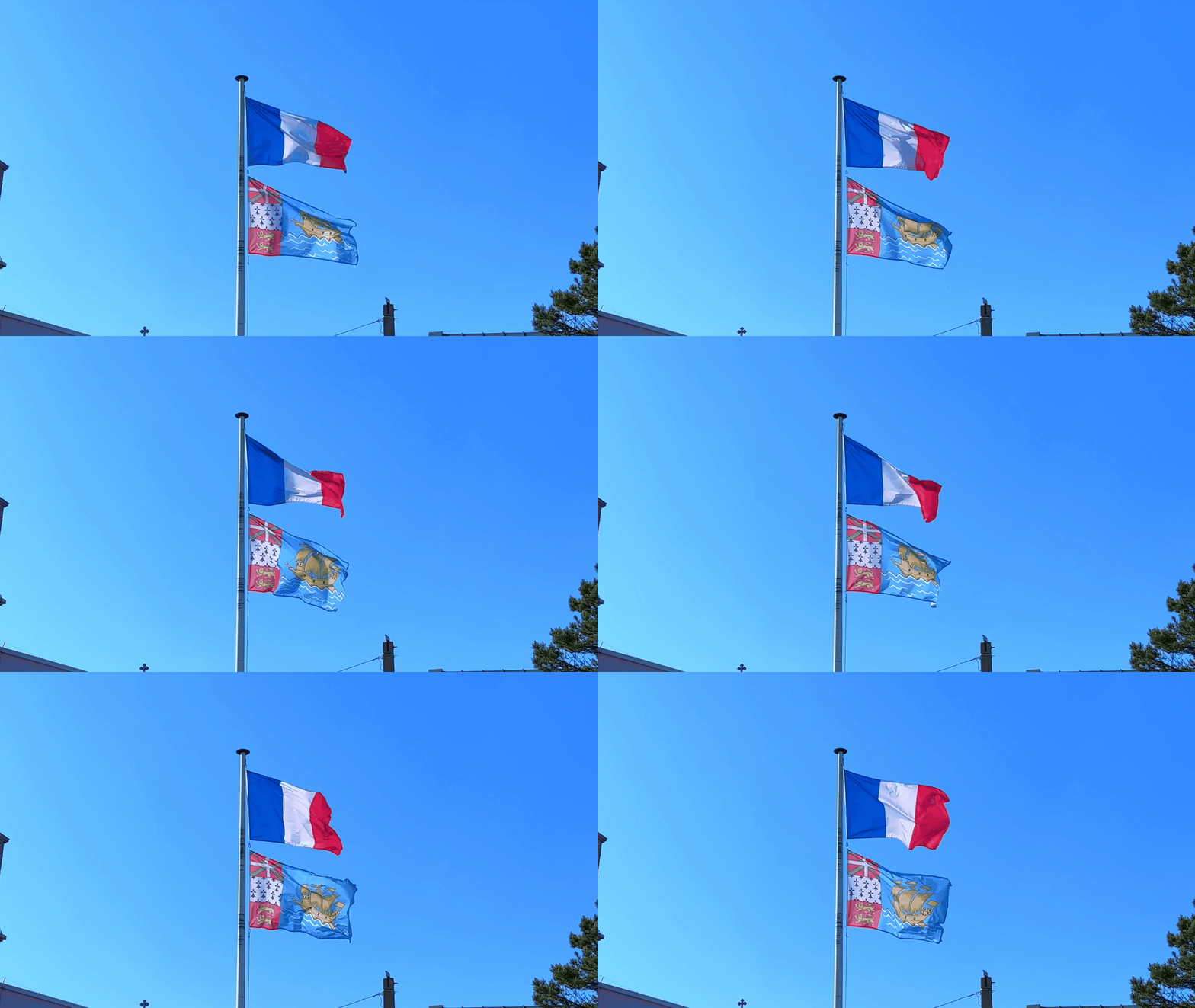
Walking around, you’ll notice the Saint Pierre flag flapping in the wind like in the gif below.
The Saint Pierre flag contains a drawing of the sailing ship of Jacques Cartier, who discovered the archipelago. On the left-hand side, from top to bottom, the three small flags are the flags of the Basque Country, Brittany, and Normandy – the three main French regions where the local populations are from.
The engineer in me wants to harvest this wind. Saint Pierre and Miquelon are strong contenders for wind turbines.
From 2000 to 2014, Miquelon had six small wind turbines that worked off and on. I forgot the details of why they were taken down, but I wouldn’t be surprised if the problem was energy storage.
Wind is an intermittent power source. Usually, too much or too little power is produced. Having wind power as a minority energy source in a regional grid is fine, but relying on wind only is another story… that said… much has changed since 2014. Storing reasonable amounts of electricity in large batteries is now easier.
Wind could have a bright future in Saint Pierre and in Miquelon.3 But for now, the archipelago relies on diesel motors that require fire to operate, our next element.
Hey brother, do you still believe in one another?
Hey sister, do you still believe in love? I wonder
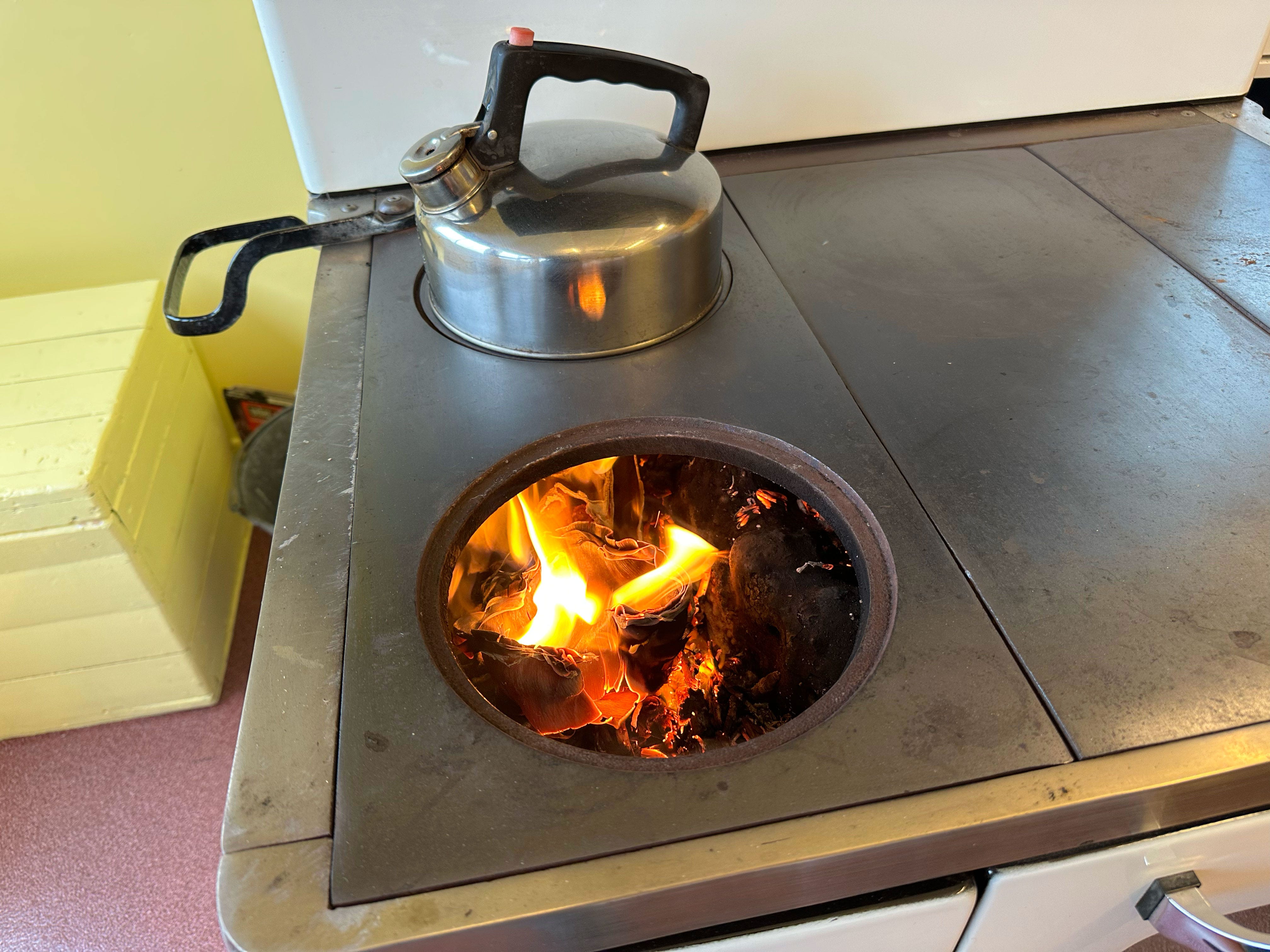
During our visit, my daughter and I stayed with my father at his summer cottage. One of the things I love about the place is the wood-fired stove.
Despite it being summer, and while Europe experienced a heatwave, it got chilly in the morning in Saint Pierre,4 so my father would start a fire early in the morning for about an hour before the outdoor temperature warmed.
The crackling of the wood burning and the smoky smells are enchanting. In the olden days, the kitchen/dining room was the main room in people’s homes. It was the only room that was heated. The stove was used for both heating and cooking.5
Nowadays, most people on the island have fuel oil furnaces. The furnaces heat water, which is distributed throughout the rooms either through radiators or through pipes that run under the floors. With the strong wind, fuel oil bills can get steep in the winter.
A few households heat their homes with electricity from electric radiators.
The trend has gone back and forth in the past, driven by fuel oil and electricity prices. But considering electricity is produced from diesel motors, electric heating is less environmentally friendly than burning fuel oil directly to produce heat.
But… and that’s a major but… things are changing with heat pumps. Heat pumps can be very effective, depending in part on building insulation. I wrote a story in the past about heat pumps (and A/Cs) and their potential to save the world.
In the future, I am sure most homes will convert to heat pumps, especially new constructions like the new houses being built in Miquelon, which brings us to our fourth element: earth.
Oh, if the sky comes falling down
For you, there’s nothing in this world I wouldn’t do
Earth can evoke many things. For me, it evokes land. Often, what defines us is where we’re from. Our family, our community, our neighborhood, that piece of land where we grew up.
What if you’re told you must give it up? What if you’re told that the thing that defines you is no good and you must move?
That’s what’s happening to the people of Miquelon.
Miquelon is located in a valley between two hilly locations. It is vulnerable to sea-level rise. According to forecasts, the Village of Miquelon will be underwater in the coming decades.
The only solution is to relocate the village to higher ground.
A new site was identified. It’s a five-minute drive or about a thirty-minute walk from the current village center. People are encouraged (and compensated) to relocate there.
When you speak to people there, it’s a hard decision to make.
Many are retired and do not feel threatened. As in, they’ll be long dead before sea-level rise becomes an urgent problem, so why go through the fuss? They may be right. In the meantime, their properties are losing their value.
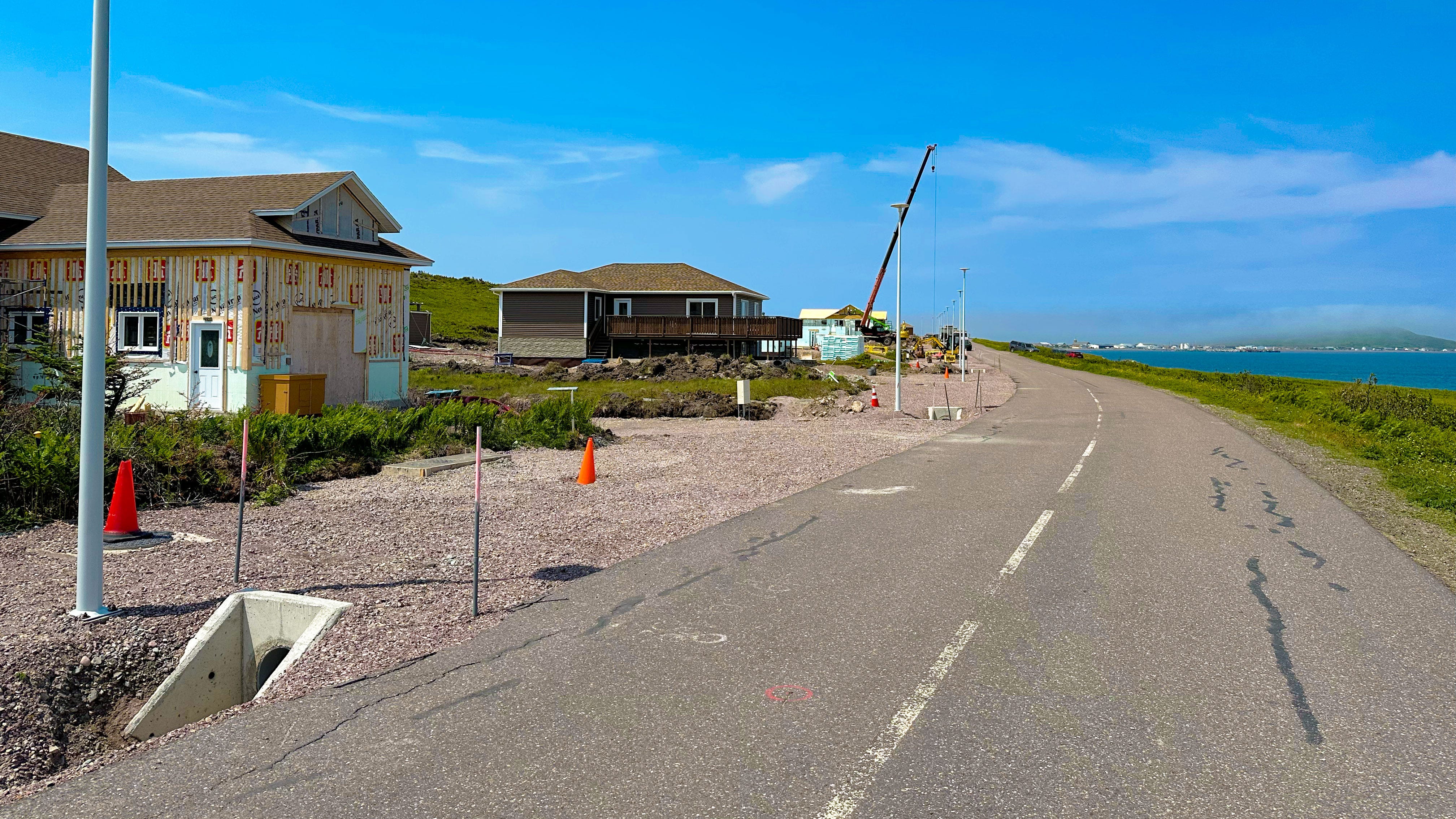
During my visit to Miquelon, I saw ten houses being built. Along the road, I could also see stormwater and telecommunications infrastructure, as well as electric light poles.
In the photo below, you can see part of the village's current location in the background to the right, as tiny white dots.
I am fascinated by this story and always stay informed. I took a video of the construction and posted it on YouTube. Last year, when I visited, the site was empty.
Many questions remain about the relocation of the village.
What about water supply? The current reservoir and water treatment plant are located on the hills on the other side of the village.
What about electricity? The current power plant will be affected by sea-level rise.
What about sewers and solid waste management and the Port and so many other things?
These are hard questions that must be solved in concert with the local population.
We have now reached the end of our fourth element. Did you notice a common thread for a fifth element?
What if I’m far from home? Oh brother, I will hear you call
What if I lose it all? Oh sister, I will help you out
Oh, if the sky comes falling down
For you. There’s nothing in this world I wouldn’t do
When you put them together: water, air, fire, and earth, it all comes down to family and community, at least to me in the context of Saint Pierre and Miquelon.
Infrastructure systems are built by humans and for humans. And we don’t build them for the pleasure of it. We build them to make our lives better, for us and those around us.
The communities in Saint Pierre and in Miquelon are very strong. One of my favorite things when I go back is grocery shopping and bumping into people I know and haven’t seen in a long time.
The picture below was taken during the Bastille Day Celebration on Place du Général de Gaulle. I bumped into many people I knew. It was a lot of fun. Meanwhile, my daughter was running around.
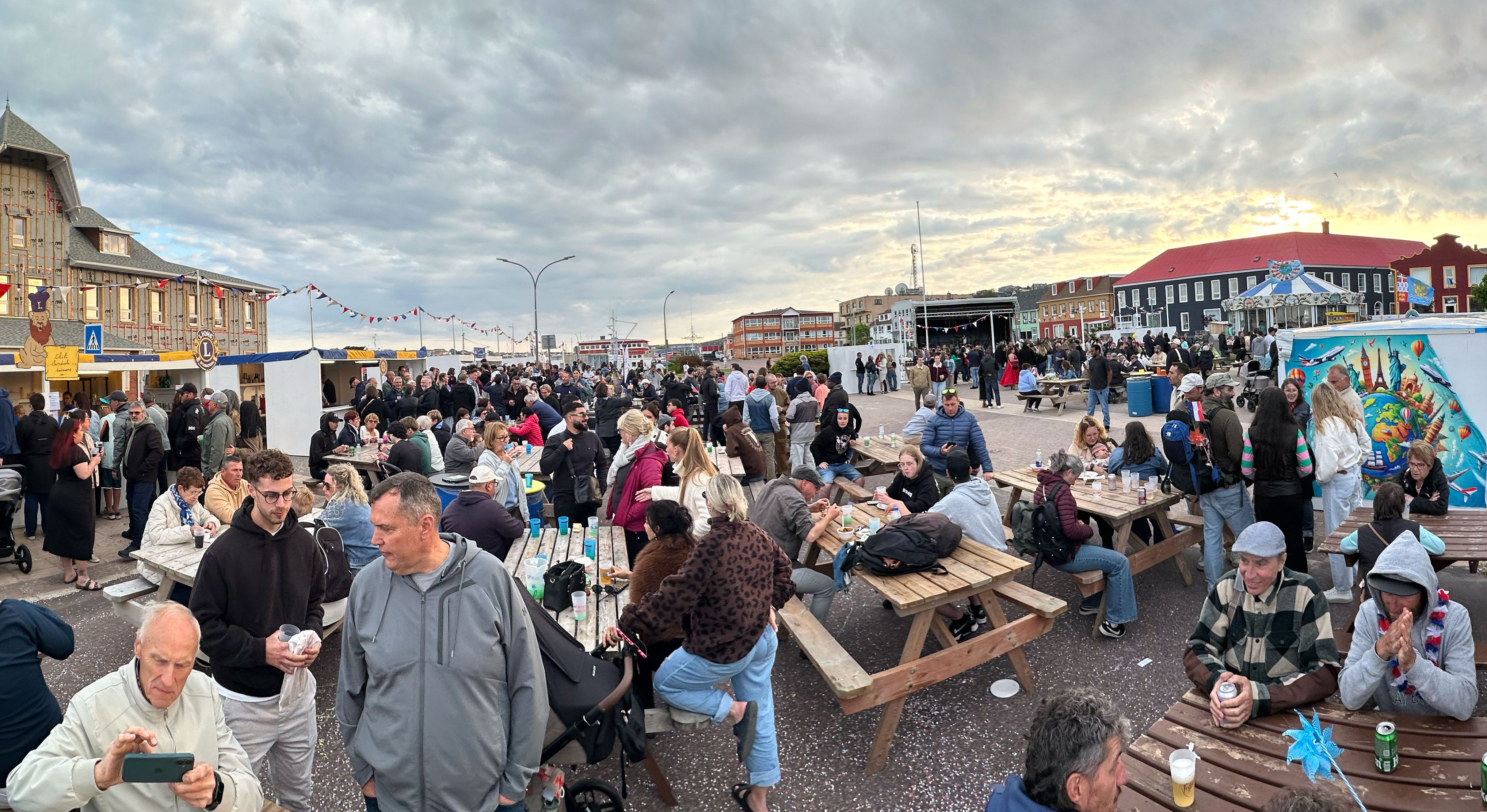
I also bumped into many old friends and acquaintances when dropping off and picking up my daughter from summer camp. I loved it.
The block quotes above next to the orange vertical lines are the lyrics to the 2013 song “Hey Brother” by the Swedish DJ Avicii, sung by American bluegrass singer Dan Tyminski.
The song is available on many platforms, including YouTube. I included it below; the video clip is sad and related to the military with no connection to Saint Pierre and Miquelon.
The folksy tones at the beginning have a country vibe, but they also remind me of old Irish songs that we like in Saint Pierre and Miquelon, since many of us have parents or grandparents from Newfoundland and Labrador.
The electro beats in the middle have a European feel (French people are great with electronic dance music; Daft Punk case in point).
I could argue that the song, to some extent, represents Saint Pierre and Miquelon even though it has nothing to do with Saint Pierre and Miquelon. And I wouldn’t be surprised if it represented many communities.
Talking about community, maybe it’s time now to put your phone down or turn off your computer, and go hang out with family and friends.
A tradition in Saint Pierre and Miquelon is the coup de thé, the four o’clock afternoon tea6 with bread and butter or cloudberry jam (a bright orange berry7), and capelin fish when it’s available.
Whatever your tradition is, go for it.
Or contact me. Let’s hang out and/or share a glass of Henry’s Legacy Whisky.
Thank you for taking the time to read this story.
Please share your comments and thoughts with me through Substack or by email.
For more content about infrastructure, read The Infrastructure Book. It is available in print, digital, and audio formats.
Get it for yourself or ask your public/university library, or your company, to buy a copy so many can enjoy it.
Thanks to everyone who has read it already and left a positive review online.
Using your senses as technology is not uncommon. Mercaptan is added to normally odorless natural gas so you can detect a gas leak with your sense of smell.
Last year, when I spoke for Environment Day, I pushed for an undersea cable from Newfoundland that’s just a few miles off Saint Pierre and Miquelon, and which has one of the cleanest grids in the world, powered by hydro in Labrador. I still think it’s the best option. And it should be supplemented with wind energy. Actually, it’s the other way round. Wind energy could be fully harnessed and supplemented by Newfoundland hydroelectricity when needed.
Possibly because of climate change. A local person told me the waters are colder because ice up north is melting, so Spring arrives well into June, but summer extends to late September or even October… I didn’t look into it, but if it’s true, it’s a concerning trend.
Waking up in a cold room with the smell of brewing coffee must have been much less aggressive than the loud buzzing of a smartphone that I get every morning, which jolts me out of bed.
Which I assume is a tradition that comes from Newfoundland, as a former British colony.
A real treat with a unique taste that’s very hard to get, but your local Ikea might have it. Get it! That’s where I get my cloudberry jam in Chicago, but it’s not always available. Put it on bread or, even better, eat it with vanilla ice cream.
No posts
Comments
Nothing yet. Say the first thing.
Sign in to join the conversation.