
Of course, one of Dolly’s gifts was a rare ability to speak to everyone without seeming like she was trying to please anyone. Devoutly Christian but proudly nonjudgmental. Fabulously rich but never embarrassed by where she came from. Cartoonishly glamorous but completely authentic. She was in on the joke without ever being the joke.
Two things especially captivated me about Dolly. First, beneath all the hair and boobs and rhinestones was the thing that could sometimes get lost in the spectacle: She wrote the songs. She was a lyricist, a musical genius. One of my favorite lines of hers: “I’m not offended by all the dumb blonde jokes because I know I’m not dumb—and I also know that I’m not blonde.”
Second, she was also remarkably uninterested in being told how important she was. Over the years, she politely declined statues, honorary distinctions, and even the Presidential Medal of Freedom—twice. (Dolly never seemed particularly interested in collecting trophies. What a novel thought.)
We marveled at her because she was marvelous.
The response to her death was, appropriately, nearly universal. The Atlantic observed that she was “perhaps the only person in the United States who commanded nearly universal affection.” New York titled its Substack newsletter “The Day Music Actually Died.”
I went straight to YouTube and fell down a Dolly rabbit hole, my favorite discovery being a 1979 appearance on The Tonight Show in which she sits next to Johnny Carson and sings him a song she’d written especially for him. (When I was a kid, if I was good, my dad would let me stay up late on weekends to watch Johnny Carson with him, so this one hit the nostalgia button extra hard.)
But what made her relationship with the gay community so special wasn’t just the wigs, rhinestones, boobs, acrylic nails, or the fact that she once entered a Dolly Parton drag-queen look-alike contest—and lost. It was that she understood what it meant to be looked at as different and decided that the solution was not to become less different.
“I think I’ve always been accepted in the gay community because I accept them,” she once told Larry King. “I think people are who they are and I’m not God, I’m not a judge, we’re supposed to love each other exactly for who and what we are.”
And, on gay marriage, she had an even more Dolly answer: “Sure, why can’t they get married? They should suffer like the rest of us do.”
Perfect.
My affection for Dolly went beyond Pride. I loved her rags-to-riches story. She grew up poorer than me and more Southern than me, which somehow made her ascent into the loftiest reaches of global pop culture even more impressive. She was born in a one-room cabin in the Great Smoky Mountains, the fourth of twelve children, and grew up, as she put it, “dirt poor.”
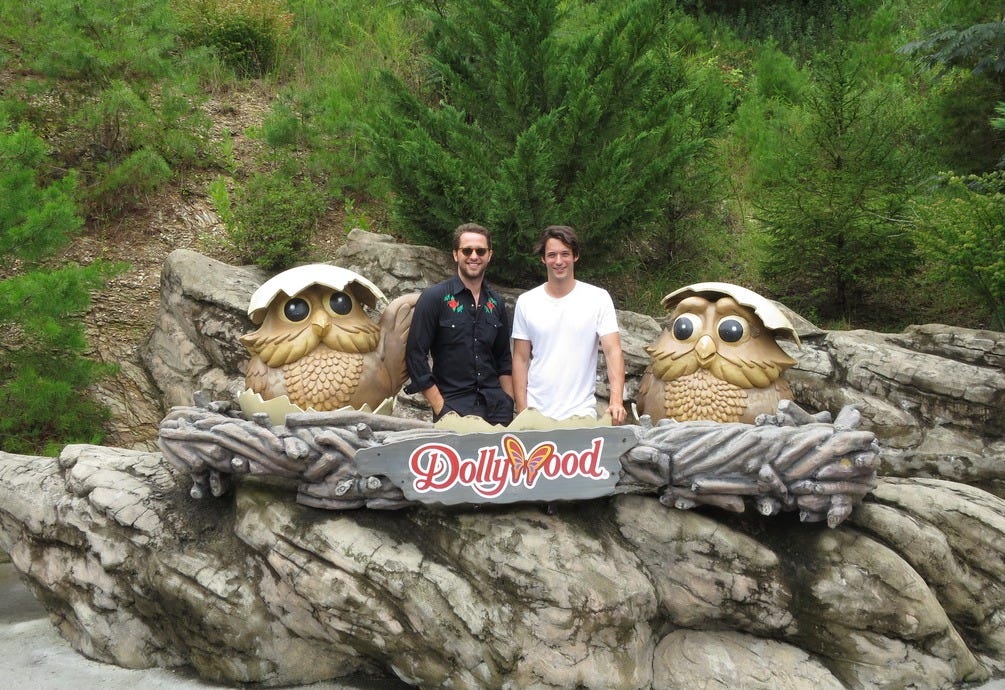
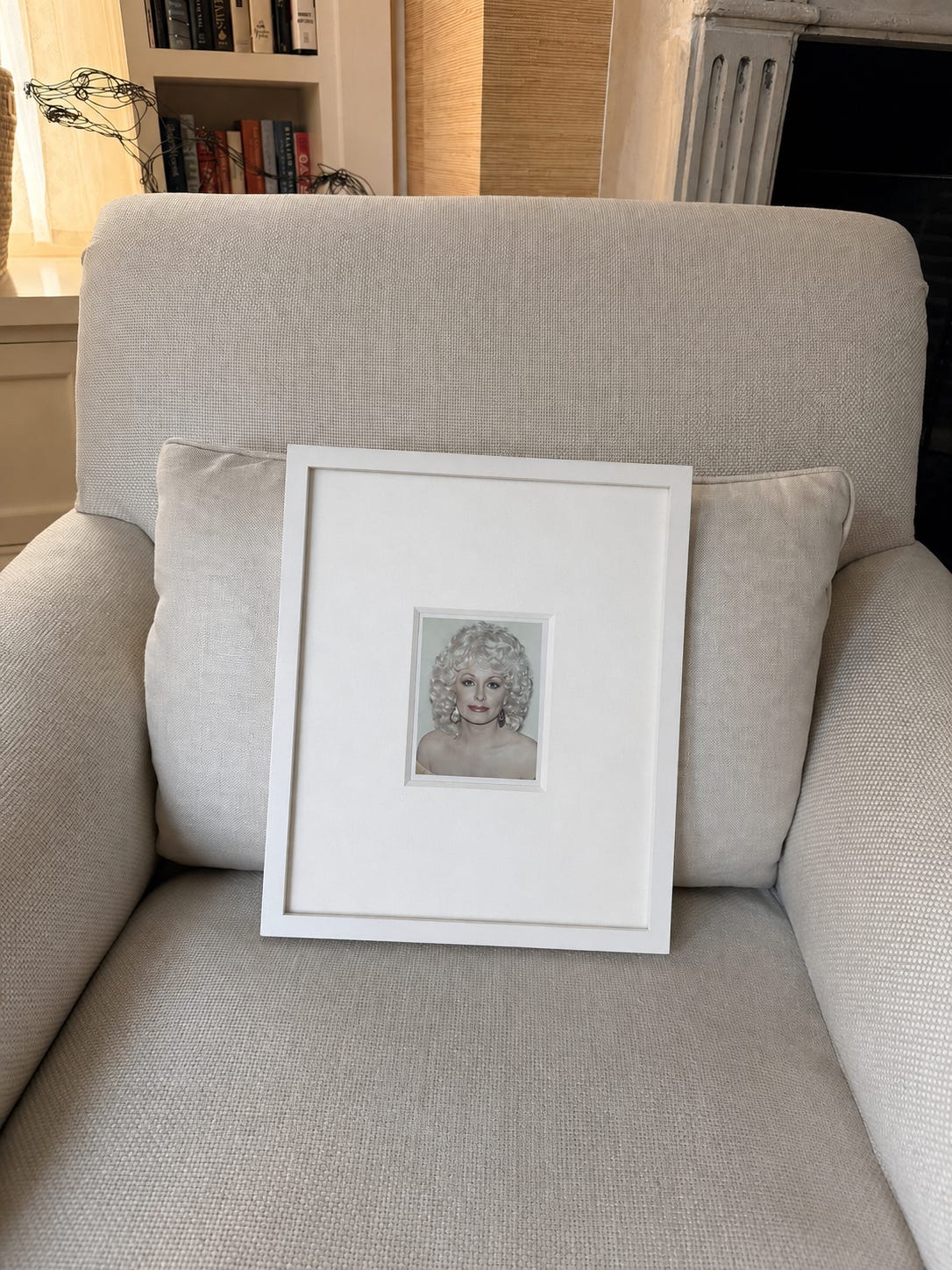
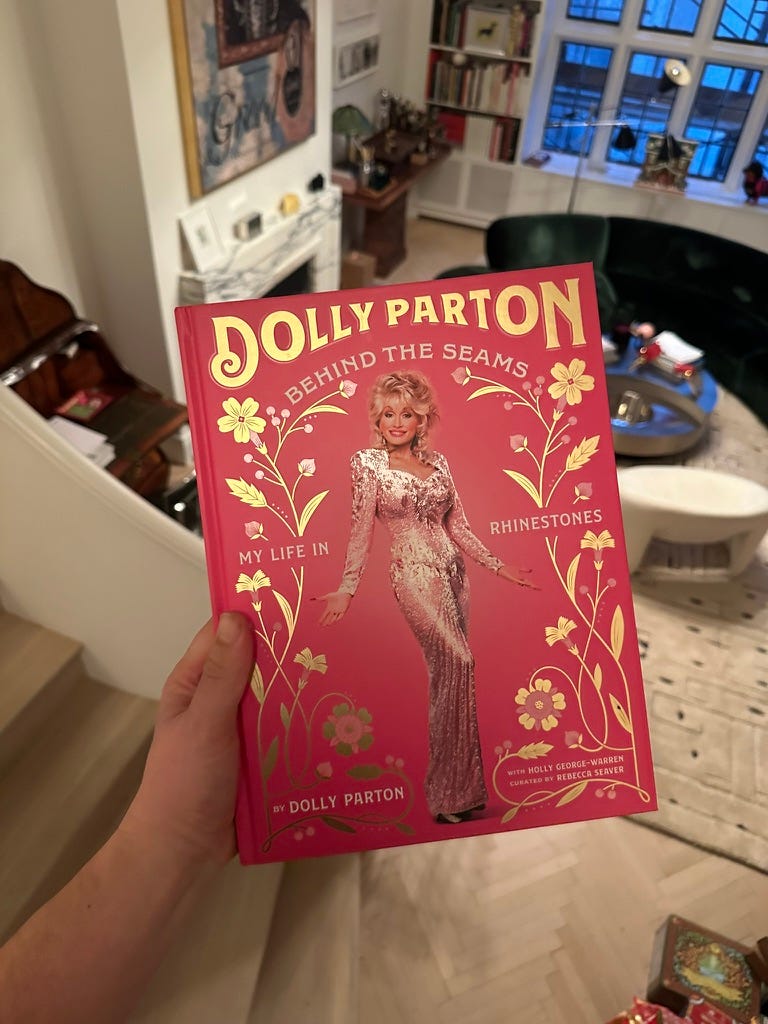
And yet, she became Dolly Parton. Nashville. Hollywood. Broadway. Dollywood. The Kennedy Center. Grammys. Movie stardom. Millions of books given to children. And eventually Andy Warhol’s studio in New York, where he photographed her in 1985 and turned her into one of his unmistakable silkscreen portraits. (That Polaroid on the top of this post may be my most prized possession.)
In 2019, Jean Paul Gaultier invited me to the We Are Family Foundation gala at the Hammerstein Ballroom in New York, where he and Dolly were both being honored and she performed with Nile Rodgers & Chic. It was heaven on earth. I remember shaking her delicate, small hand, and when she gave a hug remarking at how petite and tight her body was. (Above is a video I took that night of Dolly singing “I Will Always Love You.”)
Quick story about that night: Backstage, Gaultier was talking about age and beauty and said that, on some people, he thought wrinkles were beautiful. “What a thought!” Dolly exclaimed. “Who have you been talking to?”
Perfect, again.
There has been so much written about Dolly in the last 24 hours, from country-music superstars and former collaborators to tabloids (“We will always love you,” said the New York Post) and fancy intellectual publications. “The body of work that Parton left behind—the body she left behind—is so staggering in its gorgeousness and verve,” says The New Yorker.
But Jane Fonda, her 9 to 5 costar and longtime friend, put it best. She called her “the voluptuous embodiment of empathy”:
It was for V magazine, and I interviewed her around the release of Joyful Noise, the movie she made with Queen Latifah. She was exactly what you hoped Dolly Parton would be: funny, quick, generous, and totally aware of the character she had spent decades creating. When I asked about her style, she gave me a line that now feels like a pretty good philosophy for her entire life: “People always say less is more, but I say no, more is more.”
But Dolly liked excess, and there is no such thing as too much love for that woman.
So! Below is my 2012 interview with Dolly Parton, which I hadn’t read in years. What struck me rereading it yesterday is how much of the Dolly we celebrate now was already there: the ambition, the resilience, the humor, the self-knowledge, the outrageous clothes, the business instincts, the devotion to family, and that almost radical insistence on being exactly who she was.
She spent her whole life telling the rest of us to do the same.
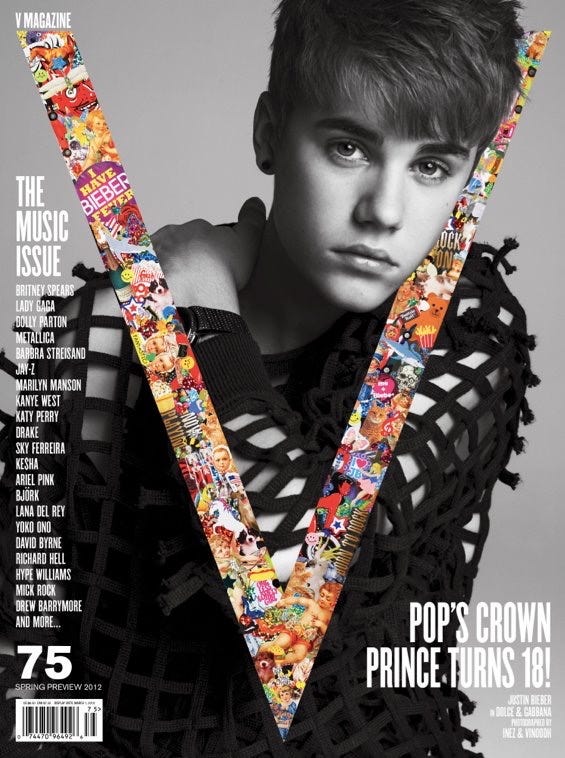
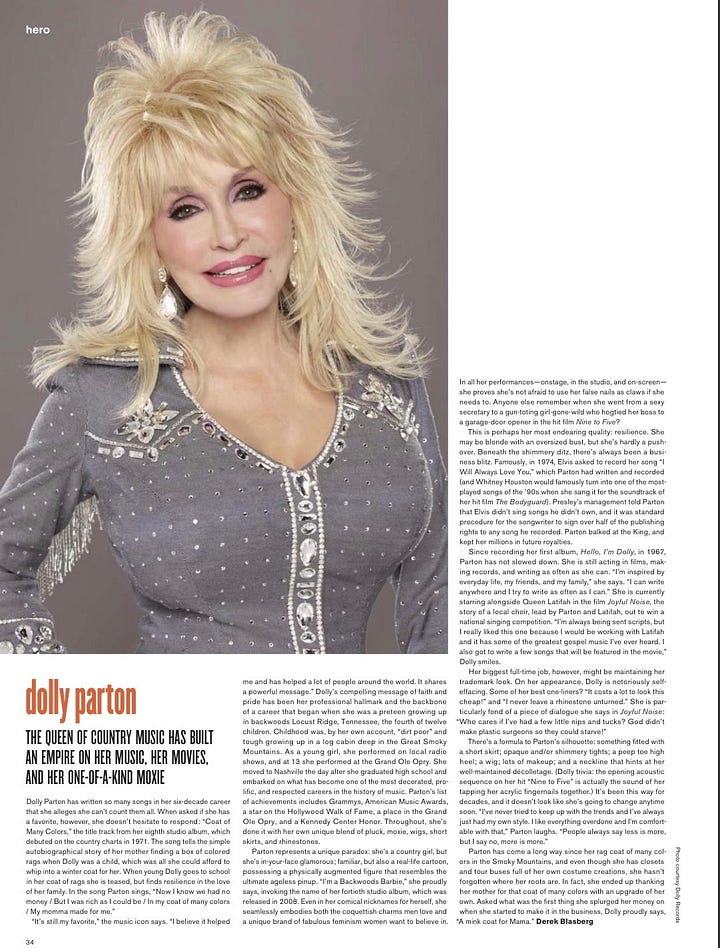
[Excerpted from January 2012 issue of V:]
Dolly Parton has written so many songs in her six-decade career that she alleges she can’t count them all. When asked if she has a favorite, however, she doesn’t hesitate to respond: “Coat of Many Colors,” the title track from her eighth studio album, which debuted on the country charts in 1971.
The song tells the simple autobiographical story of her mother finding a box of colored rags when Dolly was a child, which was all she could afford to whip into a winter coat for her. When young Dolly goes to school in her coat of rags she is teased, but finds resilience in the love of her family. In the song Parton sings, “Now I know we had no money / But I was rich as I could be / In my coat of many colors / My momma made for me.”
“It’s still my favorite,” the music icon says. “I believe it helped me and has helped a lot of people around the world. It shares a powerful message.”
Dolly’s compelling message of faith and pride has been her professional hallmark and the backbone of a career that began when she was a preteen growing up in backwoods Locust Ridge, Tennessee, the fourth of twelve children. Childhood was, by her own account, “dirt poor” and tough growing up in a log cabin deep in the Great Smoky Mountains.
As a young girl, she performed on local radio shows, and at 13 she performed at the Grand Ole Opry. She moved to Nashville the day after she graduated high school and embarked on what has become one of the most decorated, prolific, and respected careers in the history of music. (Parton’s list of achievements includes Grammys, American Music Awards, a star on the Hollywood Walk of Fame, a place in the Grand Ole Opry, and a Kennedy Center Honor.)
Throughout, she’s done it with her own unique blend of pluck, moxie, wigs, short skirts, and rhinestones.
Parton represents a unique paradox: she’s a country girl, but she’s in-your-face glamorous; familiar, but also a real-life cartoon, possessing a physically augmented figure that resembles the ultimate ageless pinup.
“I’m a Backwoods Barbie,” she proudly says, invoking the name of her fortieth studio album, which was released in 2008. Even in her comical nicknames for herself, she seamlessly embodies both the coquettish charms men love and a unique brand of fabulous feminism women want to believe in.
In all her performances-onstage, in the studio, and on-screen-she proves she’s not afraid to use her false nails as claws if she needs to. Anyone else remember when she went from a sexy secretary to a gun-toting girl-gone-wild who hogtied her boss to a garage-door opener in the hit film Nine to Five?
This is perhaps her most endearing quality: resilience. She may be blonde with an oversized bust, but she’s hardly a pushover. Beneath the shimmery ditz, there’s always been a business blitz.
Famously, in 1974, Elvis asked to record her song “I Will Always Love You,” which Parton had written and recorded (and Whitney Houston would famously turn into one of the most-played songs of the ’90s when she sang it for the soundtrack of her hit film The Bodyguard). Presley’s management told Parton that Elvis didn’t sing songs he didn’t own, and it was standard procedure for the songwriter to sign over half of the publishing rights to any song he recorded. Parton balked at the King, and kept her millions in future royalties.
Since recording her first album, Hello, I’m Dolly, in 1967, Parton has not slowed down. She is still acting in films, making records, and writing as often as she can. “I’m inspired by everyday life, my friends, and my family,” she says. “I can write anywhere, and I try to write as often as I can.”
She is currently starring alongside Queen Latifah in the film Joyful Noise, the story of a local choir, led by Parton and Latifah, out to win a national singing competition. “I’m always being sent scripts, but I really liked this one because I would be working with Latifah and it has some of the greatest gospel music I’ve ever heard. I also got to write a few songs that will be featured in the movie,” Dolly smiles.
Her biggest full-time job, however, might be maintaining her trademark look. On her appearance, Dolly is notoriously self-effacing. Some of her best one-liners? “It costs a lot to look this cheap!” and “I never leave a rhinestone unturned.”
She is particularly fond of a piece of dialogue she says in Joyful Noise: “Who cares if l’ve had a few little nips and tucks? God didn’t make plastic surgeons so they could starve!”
There’s a formula to Parton’s silhouette: something fitted with a short skirt; opaque and/or shimmery tights; a peep-toe high heel; a wig; lots of makeup; and a neckline that hints at her well-maintained décolletage.
(Dolly trivia: the opening acoustic sequence on her hit “Nine to Five” is actually the sound of her tapping her acrylic fingernails together.)
It’s been this way for decades, and it doesn’t look like she’s going to change anytime soon. “I’ve never tried to keep up with the trends, and I’ve always just had my own style. I like everything overdone, and I’m comfortable with that,” Parton laughs. “People always say less is more, but I say no, more is more.”
Parton has come a long way since her rag coat of many colors in the Smoky Mountains, and even though she has closets and tour buses full of her own costume creations, she hasn’t forgotten where her roots are. In fact, she ended up thanking her mother for that coat of many colors with an upgrade of her own.
Asked what was the first thing she splurged her money on when she started to make it in the business, Dolly proudly says, “A mink coat for Mama.”
Rest in peace and rhinestones, Dolly.
Stay safe and chic,
Derek C. Blasberg
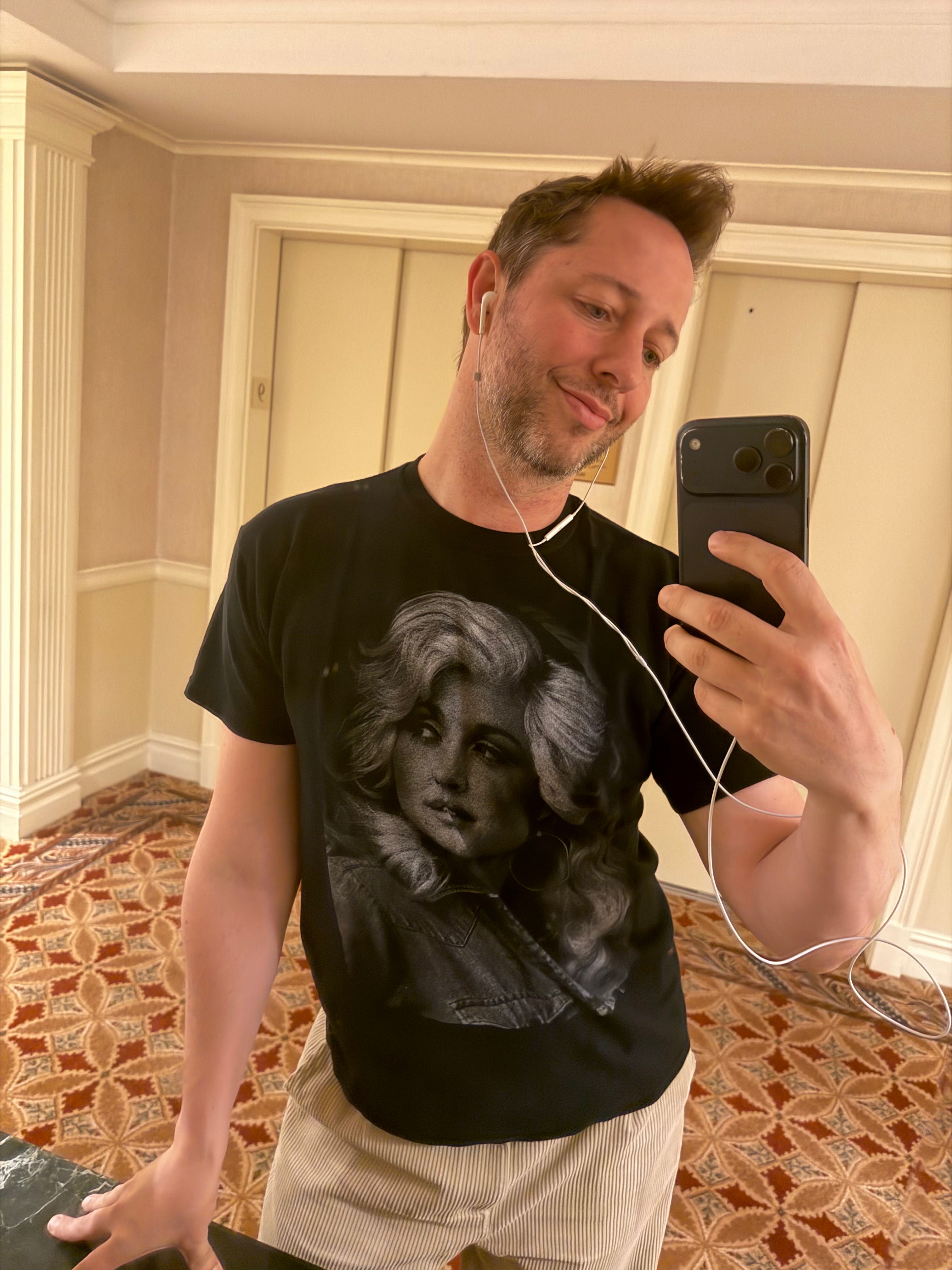
PS. I bought this T-shirt when a friend took me to see 9 to 5 on Broadway for my 27th birthday in 2009. I pulled it off the shelf yesterday and haven’t taken it off since:
No posts
Comments
Nothing yet. Say the first thing.
Sign in to join the conversation.