
Every once in a while it makes sense to slow down, reflect, and strategize. Being thoughtful about the next venture, project, or relationship is generally going to improve your chances of success. Since I’m finishing one journey (Well, actually two…), I took some time to reflect and create a strategy for the next big thing. Leaning into my strengths and assembling a team that would compensate for my weaknesses is probably the most obvious move. To build upon that strategy, I decided to revise my strengths and formulate them as superpowers.

In this article, I will share the framework I used to find my superpowers. Feel free to try it, since knowing your superpowers gives you a competitive edge.
Not everyone has superpowers, but everyone has the ability to develop them.
Superpowers are not given, they are acquired. It’s pretty likely you have them. The question is whether you are aware of them or not.
I believe that a smart approach to life is to figure out what you are uniquely good at and double down on that skill or trait.
We all have unique abilities: some of us run faster, have better memory, maybe have stronger muscles, or even have a better reaction time, some excel in the sciences, some are adept at being social, and some of us have higher levels of energy. The list goes on and on. What are you great at?
What is a superpower?
A superpower is something that:
- You are great at (and people tell you about it)
- You are downplaying it
- Energizes you
- Comes naturally
- It’s a habit that you always do
Why is it important to know your superpowers?
Knowing your own strengths and capabilities, often referred to as your “superpowers,” is an important part of personal development and can be beneficial for many aspects of your life. Having a clear understanding of what you are good at can help you set goals and make decisions about your career, relationships, and other areas of your life.
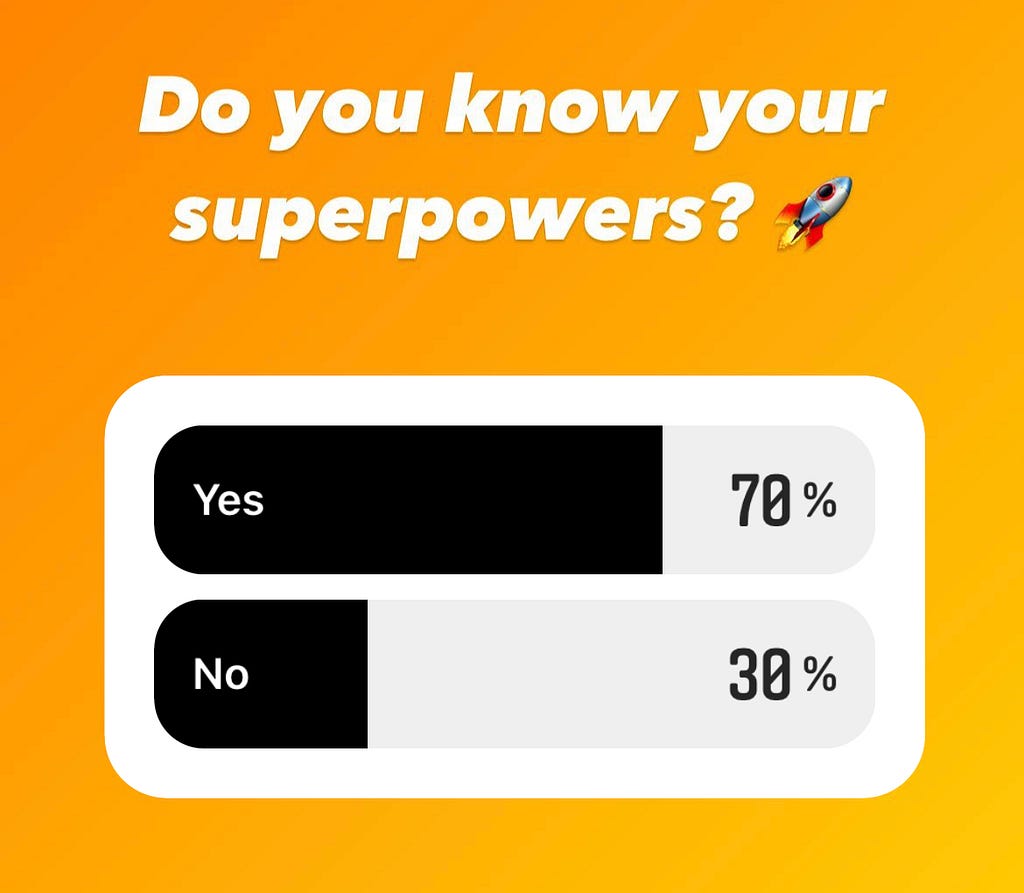
One of the main reasons why it’s important to know your superpowers is that they can give you confidence and motivation. When you know what you are good at, you are more likely to feel confident in your abilities and to be motivated to pursue your goals and dreams. This can help you to achieve success in your career and in other aspects of your life.
In addition, knowing your superpowers can help you to identify opportunities and to make the most of them. By understanding your strengths and abilities, you can seek out opportunities that are a good fit for you and this will allow you to use your skills and talents to their full potential.
Another reason why it’s important to know your superpowers is that they can help you to build and maintain positive relationships. When you know what you are good at, you can use your strengths and abilities to support and help others. This can make you a valuable member of your community and can help you to build and maintain strong, positive relationships with the people around you.
Overall, knowing and using your superpowers as part of your strategy will increase your chances of success in different areas of life.
A framework to find your Superpowers
This blog post is largely inspired by Mikey Trafton who shared a great framework at the Business of Software conference. It consists of 5 simple steps:
1. Do a personality test
Your personality is usually pretty consistent over your lifetime, however, some dramatic events might change you. So it makes sense to run through a personality test once in a while. They usually give you a good overall picture of your strengths and weaknesses. This is a good starting point to better understand yourself.
Some of the personality tests I’ve done:
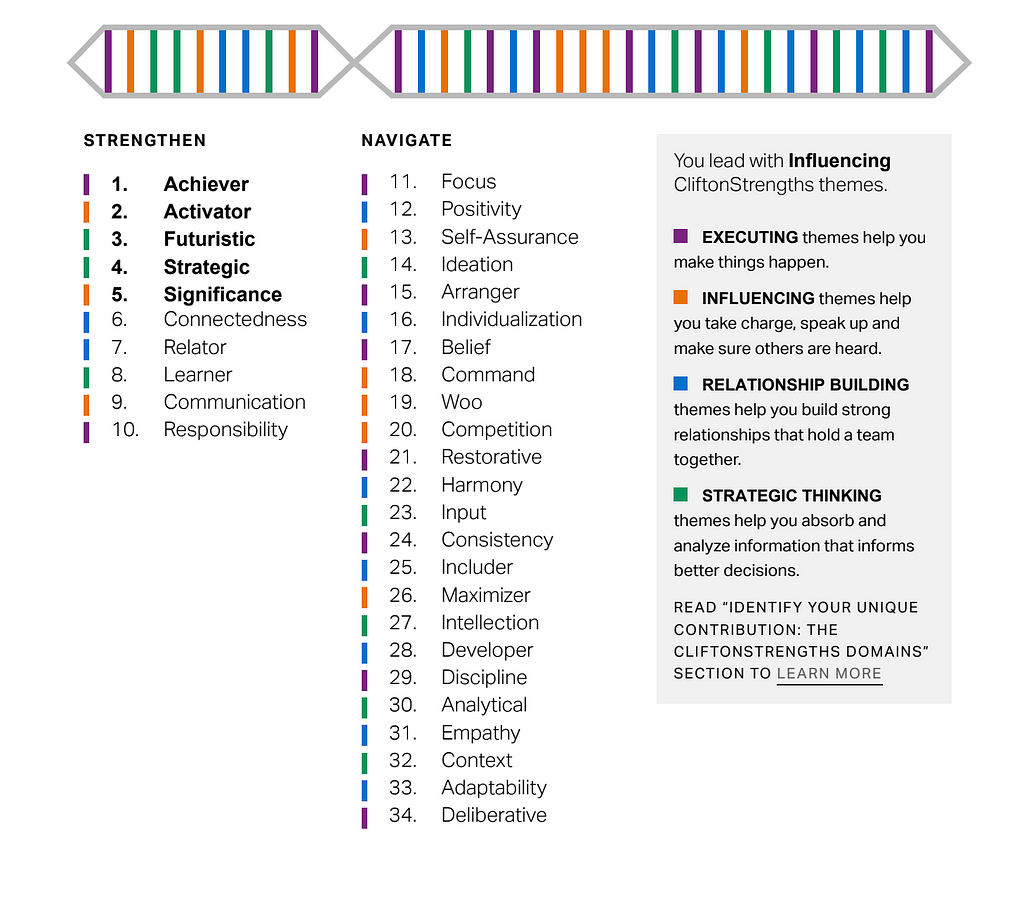
Clifton Strengths
It’s a great test that helps you understand your strengths, what unlocks your potential and leads you to greater performance https://www.gallup.com/cliftonstrengths/en/252137/home.aspx
This is my profile after taking this test.
Insights Discovery
This one is my favorite! Insights Discovery is a “psychometric tool based on the psychology of Carl Jung, Insights Discovery is built to help people understand themselves, understand others, and make the most of the relationships that affect them in the workplace.”
It is very good at showing your personality, leadership style, what you care about, and how to interact with you in a group dynamic. I have a lot of Red and Yellow in my profile, this is why I’m naturally leaning toward leadership roles that involve creativity.
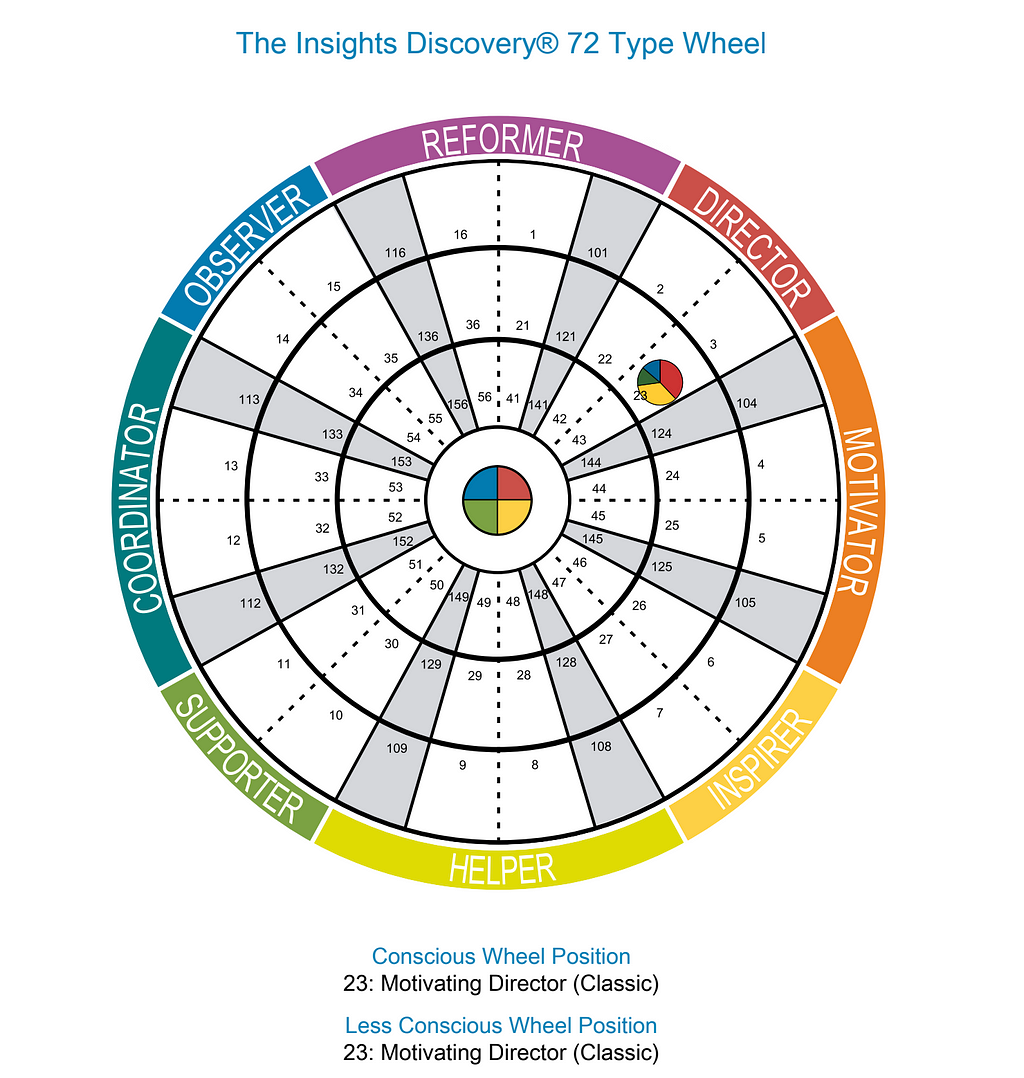
You can find more information here .
Kolbe Index
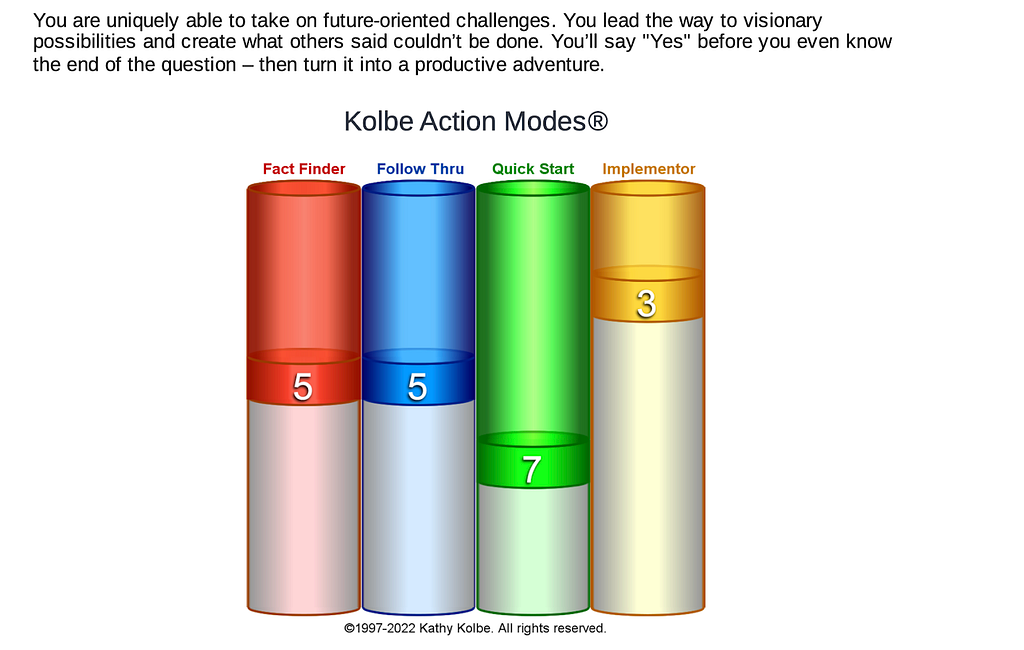
Kolbe index does not measure intelligence, personality, or social style. It measures the instinctive ways you take action when you strive. Use your custom Kolbe A Index Results to be more productive, less stressed, and unlock joy at work or with your family. https://www.kolbe.com/kolbe-a-index/
It is helpful to share your Kolbe index with colleagues so they can better understand your instinctive decisions making style.
Myers Briggs (I haven’t done this one)
The Myers-Briggs Type Indicator® helps support your personal well-being and professional performance goals by providing you with a deeper understanding of what makes you you. With these insights you can make more informed decisions, better communicate with others, and build stronger relationships, all based on the science of your personality.”
2. Answer guiding questions
Align the work you are doing with some of the big questions of life. Otherwise, this might be the major source of internal conflict, lack of motivation, procrastination, burn out, and even depression.
Some of the questions to answer:
- Who am I?
- What am I doing?
- How am I going to achieve it?
- When will I do it?
- Why does it matter?
These are existential questions and sometimes it might be challenging to answer them. However, once you make a decision and have an answer, life falls into order and peace.
This is how I answered these questions (of course these are simplified responses):
- Who am I? -> Tech entrepreneur
- What am I doing? -> Building a tech company
- How am I going to achieve it? -> by creating a good strategy and assembling a team of A-players around a big idea
- When will I do it? -> Doing it now
- Why does it matter? -> I want to improve millions of lives, and unlock human potential. I also love building great things.
3. Gather feedback from friends and colleagues
We have pretty good ideas about what we are good at. But it makes a lot of sense to ask people around us about our superpowers. It is as simple as sending out an email to 20 coworkers and friends and asking them to write down your superpowers.
Here’s an example of how I did it:
“Hi [Name],
I’m doing an exercise asking friends and colleagues about my superpowers.
It would be great if you could spend 30 seconds and write down your thoughts on my superpowers. This will help me to be better.
Click here please -> [typeform link]
Thank you,
Denys.
P.S. Typeform will make this anonymous, so feel free to be brutally honest “
After getting 20 answers, look for repeating patterns or themes. Looking at the responses from my friends and colleagues, I saw clear patterns. People have been mentioning a few things consistently, so I grouped them:
- Positive energy and passion
- Vision and ambition
- Networking
- Marketing
4. Crystalizing superpowers
Now that you’ve done personality tests, asked for feedback, and done some soul searching, it’s time to crystalize your superpowers in one list.
My list of superpower candidates:
- A natural entrepreneur, inquisitive and adaptable
- Able to turn vision into a reality.
- The catalyst for group dynamic
- Industrious / Getting things done
- A quick starter
- Positive energy and passion
- Vision and ambition
- Networking
- Marketing
- Strong Work ethics
Once done, go through the filter and see which ones are left:
- You are great at (and people tell you about it)
- You are downplaying it
- Energizes you
- Comes naturally
- It’s a habit that you always do
Look at your list, apply these criteria, and crystalize your superpowers.
The final list of my superpowers:
- Entrepreneurial mindset
- Positive energy and passion
- Vision and ambition
- Networking
- Marketing
5. Create a strategy to lean on your superpowers
There are many ways to create a strategy. My favorite one is described in the book “Good strategy. Bad strategy”. But before any strategy, we must set goals that we are trying to achieve. If you are curious about how to set goals, you can check out my hobby project MyLife.tech. It’s a framework to set goals and organize life.
According to “Good Strategy. Bad Strategy”, a strategy has 3 parts.
Diagnosis: What’s going on
Guiding Policy:
The guiding policy outlines an overall approach of overcoming an obstacle highlighted by the diagnosis. Channels action into a certain direction w/o specifying the exact action. It’s a METHOD to deal with the situation, that would rule out a vast array of possible actions.
A good guiding policy tackles the problems identified in the diagnosis by creating and drawing upon the sources of advantage. A good guiding policy reduces complexity and ambiguity by exploiting the leverage and concentrating effort on a pivotal and decisive aspect of the situation.
Coherent Action
There must be enough clarity about action to bring concepts down to earth. To have a punch, the actions have to coordinate and build upon each other.
Coherent actions: resources deployments, policies, and maneuvers should be coordinated and consistent. The coordination of action provides the most basic source of leverage. Coherence imposed on a system by policy and design.
Strategy is imposed through centralized power.
Now. I will incorporate my superpowers into strategy creation and thus increase my chances of achieving my goals.
I hope this has been helpful and useful. If I have missed anything or you have something to add — please let me know in the comments below.
How to Find Your Superpowers was originally published in denzhadanov on Medium, where people are continuing the conversation by highlighting and responding to this story.
Comments
Nothing yet. Say the first thing.
Sign in to join the conversation.