
Digital Hygiene — a must for smart people
Do you want to be smart and rich? Limit your screen time and social media usage. Study, learn, create, debate complex concepts and train your brain: memory, music, critical thinking. In a few years — you will be in the smart minority of the world’s population.
The World of “attention economy”
I feel the urge to grab my phone every two minutes. Who emailed me? Who liked my stories on Instagram? Did people respond to my latest tweet? What’s going on with the Coronavirus and stock market?
I’ve checked my phone and found that I spend more than 5 hours a day using it on average. I think it’s a big problem because not all of that time is applied towards work, productivity, and learning. I’ve developed a habit of checking social media too often, and that kills my productivity and creativity. So I’ve conducted big research and created some rules for myself in order to bring sanity and digital hygiene.
Sound familiar? I bet many of us can relate. I hope this will be helpful for you as well.
We live in a world of the attention economy. A lot of things, products, apps, services, experiences are designed to capture our attention. Why? Because that’s how they can earn more money, monetize their services, or sell us something. This feels like a natural evolution in the digital age, but there are many alarming studies that show what this information overload does to our brain.
We are seeing the evolution of how the information is created, transmitted and processed. As a species, we evolved from understanding and sharing simple images and constructs, into a complex system of meaning. Think of how we went from Egyptian hieroglyphs to philosophical works of the world’s greatest minds.
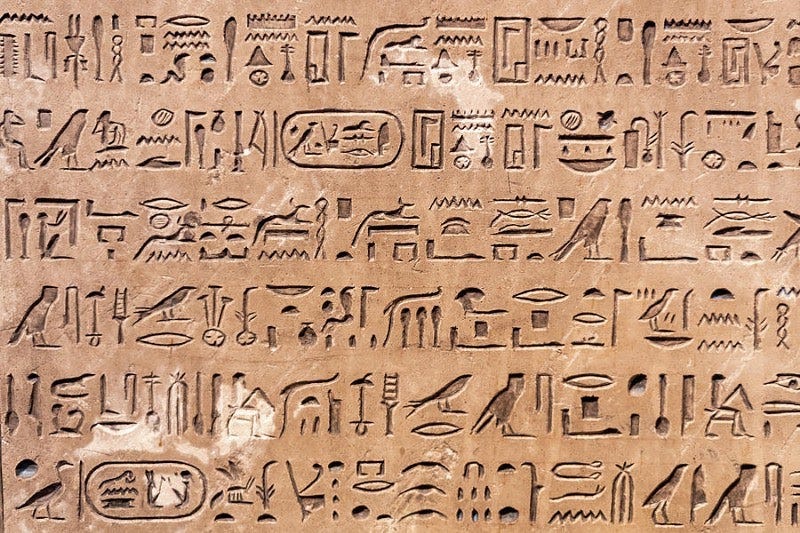
Fast forward through 5000 years of evolution and we are back to TikTok, Instagram, and emojis.
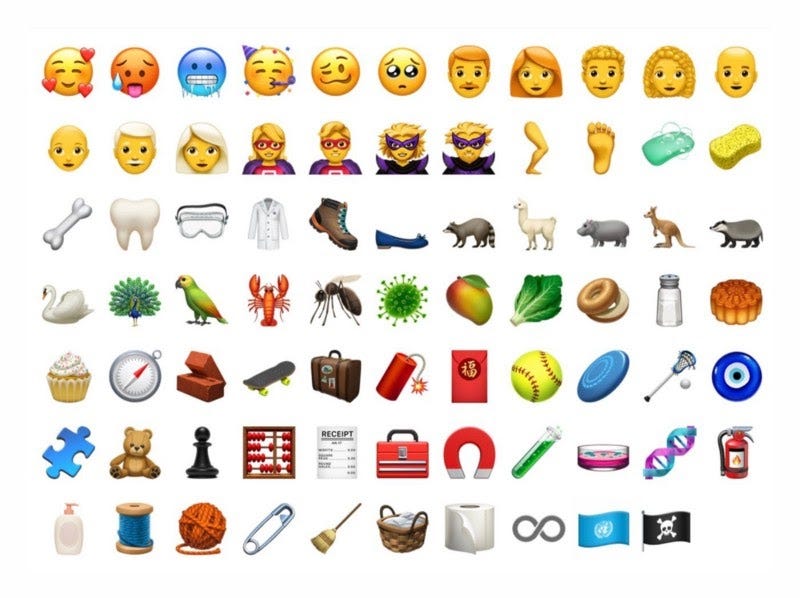
Does this look familiar?
Why did this happen? Part of the answer is hidden in a way in which our brain functions. See #2 below.
The invention of the radio, and the TV, defined what kind of message people liked to consume. So we chose the medium and adjusted the message to increase one metric — engagement. The same is happening with Facebook, Instagram, TikTok, Twitter. The medium defines a message. The shorter the attention span — the shorter a message should be. The shorter the message — the more attention it should grab, and therefore, it should be simplified so that the brain can interpret the message.
The medium is the message.
A lot of mobile usage leads to “Digital Autism”
We are seeing a steep increase in mobile usage.
Various studies state that daily usage is about 4–5 hours a day, with an average of 60–80 phone pickups. I have more than 150 pick-ups of my phone on any given day.
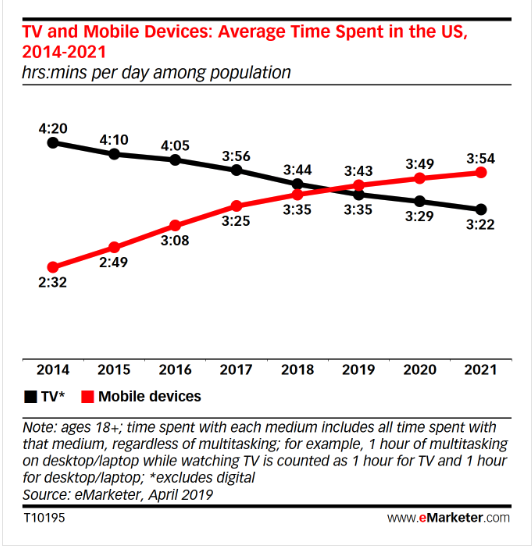
There are a few major issues with this:
- Constant distractions untrain our brains of focus and deep thinking. This creates MAJOR problems for our ability to think, interpret information, and work with complex constructs.
This research suggests that constant interruptions of our work and thinking process leave us only with one hour of focused work a day. Another article highlights the real cost of interruptions — it takes minutes (from 9 to 23) to get back to your task and into the flow.
2. The brain changes depending on how we consume the information
Dr Kurpatov in Davos 2020 explains the negative effects of the digitalization of our brain
Our brain works in three basic modes:
- active executive network — consuming information
- salience mode — orientation in the situation and figuring out what’s most important
- default mode network — actual thinking
In a situation of a hyper-informational environment, our brain’s default mode system gets suppressed. Basically, the body saves energy. So that the energy that is needed for thinking and interpreting information is not being delivered to that system of a brain. It requires 23 minutes to turn on the default system.
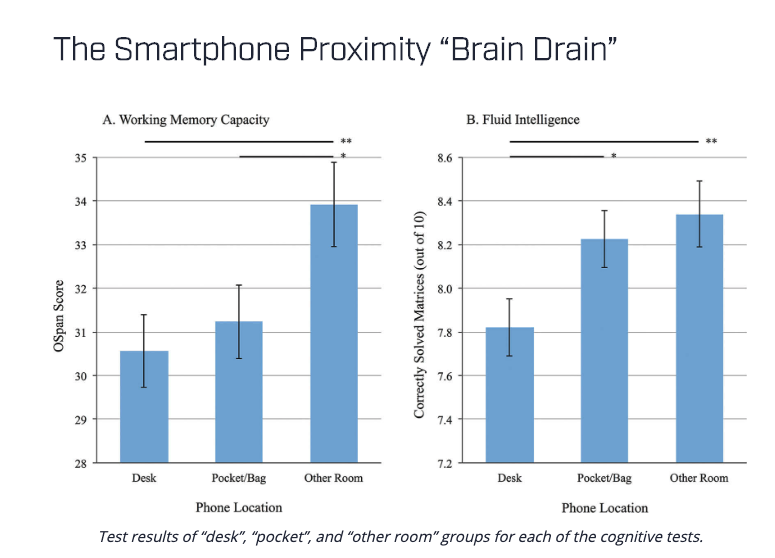
Phone Proximity Effect is constantly distracting your brain.
What is the phone proximity effect? Put simply, it’s the idea that when your phone is physically close to you — when it’s within easy reach — your cognitive performance can be negatively impacted, even if you’re not actually using it.
You can find an article here along with the study.
8 tips on how to implement Digital Hygiene
1. Turn off notifications
Our goal here is to reduce the number of external distractions and interruptions of your flow. Turn off all the notifications on your devices, and only leave those that are critical.
By the way, we’ve designed Spark email so that it has a “Smart Notifications” feature. It protects your space from unwanted emails and notifications, and Spark will only send you a notification when someone who you know sends you an email. On top of that, we are working on a feature that will disable all notifications for certain hours.
2. Set up app limits
Apple has recently introduced features called “Screen Time” and “App Limits.” I set up social media apps limit to 40 minutes a day.
3. Leave your phone in a separate room
As mentioned above, having a phone on your desk unconsciously consumes your brain memory and power. The best way, for when you want to be creative and get into the flow, is to leave your phone somewhere far away.
4. Practice mindfulness and awareness
The whole concept of mindfulness and meditation is to be aware of what is happening to you and act intentionally. What helps me is to be aware every time I have a desire to pick up my phone. I just look at this desire from the passenger seat, notice it, and it goes away.
Science has proven that meditation is good for your brain, so I can’t recommend it enough. There are many apps for that: Calm, HeadSpace, or you can even start with YouTube and SoundCloud for free. There’s also a science behind it, so it helps:
- Stress reduction
- Longer attention spans
- Promotes self-awareness
- Increases kindness
- Improves sleep
This article explains how long term meditation can physically change the structure of our brain and prevent its aging.
5. Replace the source of dopamine creation
Your phone and social media is a big generator of dopamine. Since we are cutting that down, we have to look for other sources of this happiness hormone. This is what works for me:
- working out
- yoga
- runs
- reading a great book
- watching a movie
- quality time with friends who are positive and happy
- watching MasterClass and learning something new
6. Reorganize your digital environment
The idea here is to optimize your digital space so that you won’t be distracted, as well as it’ll be helpful for you to achieve all your goals.
A few examples:
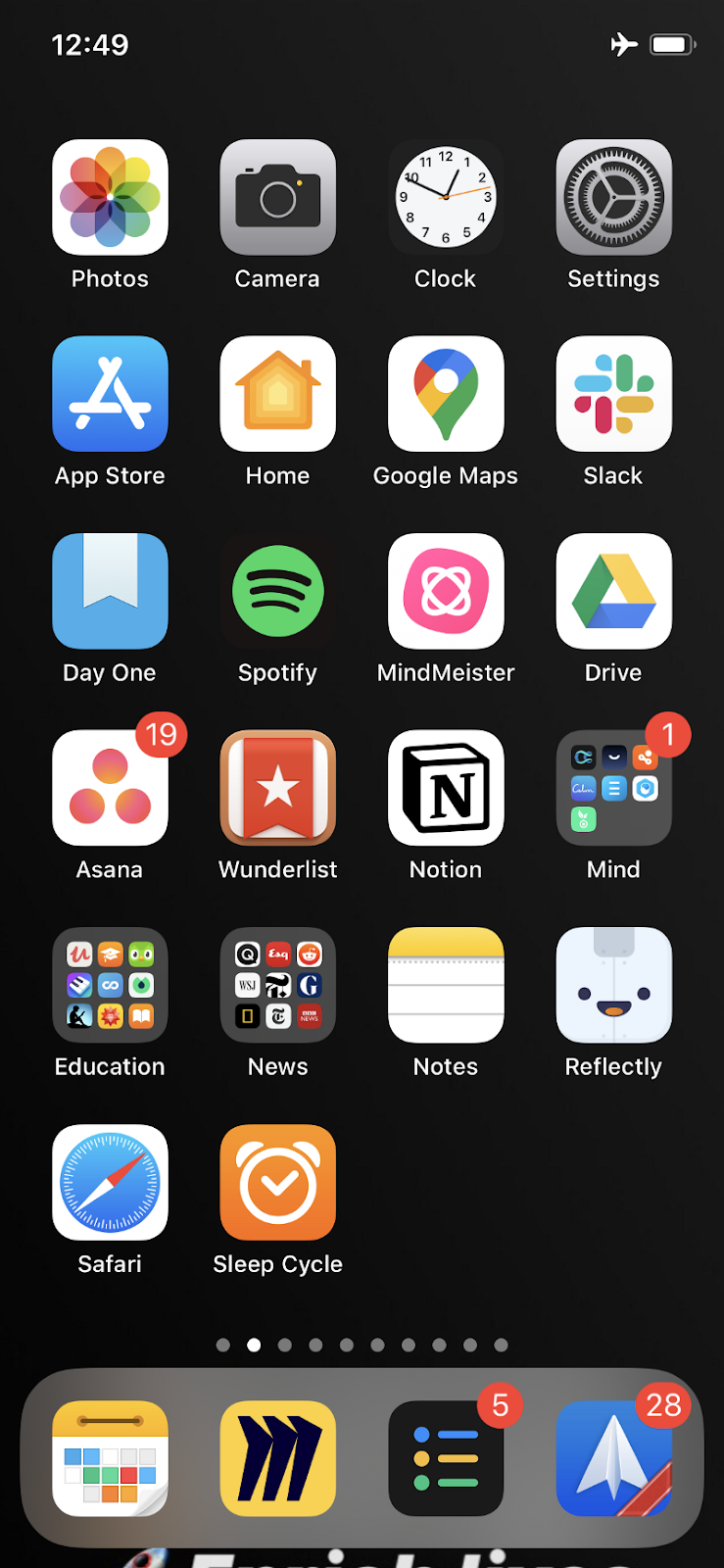
- remove all social media apps from the home screen
- replace them with Calendars, Email, MindMapping apps, Learning, Fitness
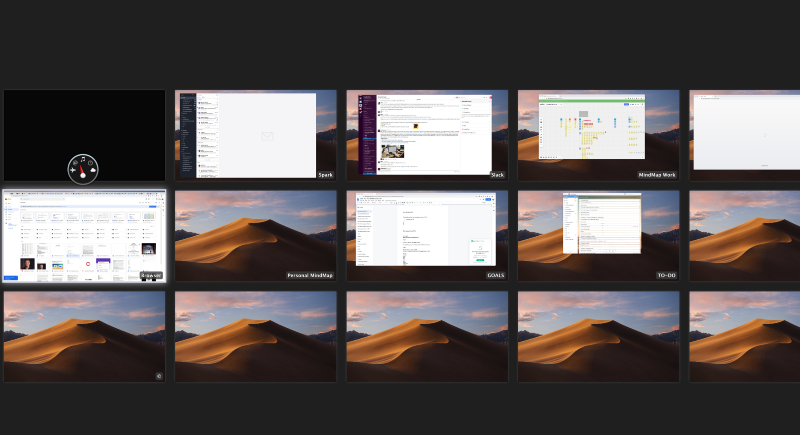
On my DeskTop I use various hotkeys to switch between full screen modes. Each screen is dedicated to one app that I currently want to work in. For example, I’m writing this article right here in Medium, and that’s the only screen I have open right now.
7. Train your brain
That’s pretty self-explanatory. I love learning, and it’s crucial to learn every single day.
- memorize things
- reflect on what you have learned daily
- teach others (apparently, that’s the most effective ways to learn yourself)
- read philosophical books
- learn how to play piano
- learn new languages
- learn new skills (I’m improving my negotiations skills now, after that I want to go through a sales course)
8. Set black&white mode on your phone
This will reduce the amount of dopamine created by your brain. Once your phone turns black and white, your brain will no longer enjoy Instagram and TikTok that much, and you’ll have less desire to pick up your phone.
The main goal here is to maximize the cognitive abilities of our brains. In many ways, we have to relearn how to focus, work with no interruptions and get into the flow. We all know that feeling when we are so consumed by our work time just seems to stop.
I’ve started the implementation of all these techniques this week and I’ll be sharing with you the progress. I’d be happy to hear what works for you, your feedback and thoughts on the topic.
P.S.
Inserting this passage that a friend of mine has sent me, and it appears to be highly relevant here:
“We were keeping our eye on 1984. When the year came and the prophecy didn’t, thoughtful Americans sang softly in praise of themselves. The roots of liberal democracy had held. Wherever else the terror had happened, we, at least, had not been visited by Orwellian nightmares.
But we had forgotten that alongside Orwell’s dark vision, there was another — slightly older, slightly less well known, equally chilling: Aldous Huxley’s Brave New World. Contrary to common belief even among the educated, Huxley and Orwell did not prophesy the same thing. Orwell warns that we will be overcome by an externally imposed oppression. But in Huxley’s vision, no Big Brother is required to deprive people of their autonomy, maturity and history. As he saw it, people will come to love their oppression, to adore the technologies that undo their capacities to think.
What Orwell feared were those who would ban books. What Huxley feared was that there would be no reason to ban a book, for there would be no one who wanted to read one. Orwell feared those who would deprive us of information. Huxley feared those who would give us so much that we would be reduced to passivity and egoism. Orwell feared that the truth would be concealed from us. Huxley feared the truth would be drowned in a sea of irrelevance. Orwell feared we would become a captive culture. Huxley feared we would become a trivial culture, preoccupied with some equivalent of the feelies, the orgy porgy, and the centrifugal bumblepuppy. As Huxley remarked in Brave New World Revisited, the civil libertarians and rationalists who are ever on the alert to oppose tyranny “failed to take into account man’s almost infinite appetite for distractions.” In 1984, Orwell added, people are controlled by inflicting pain. In Brave New World, they are controlled by inflicting pleasure. In short, Orwell feared that what we fear will ruin us. Huxley feared that what we desire will ruin us.
This book is about the possibility that Huxley, not Orwell, was right.” ― Neil Postman, Amusing Ourselves to Death: Public Discourse in the Age of Show Business
Digital Hygiene — a must for smart people was originally published in denzhadanov on Medium, where people are continuing the conversation by highlighting and responding to this story.
Comments
Nothing yet. Say the first thing.
Sign in to join the conversation.