
Hello, Denyse here, and welcome to We Are Mimosa, where we write about women’s leadership, strategy, and purpose - and the women building something hopeful and meaningful with all three.
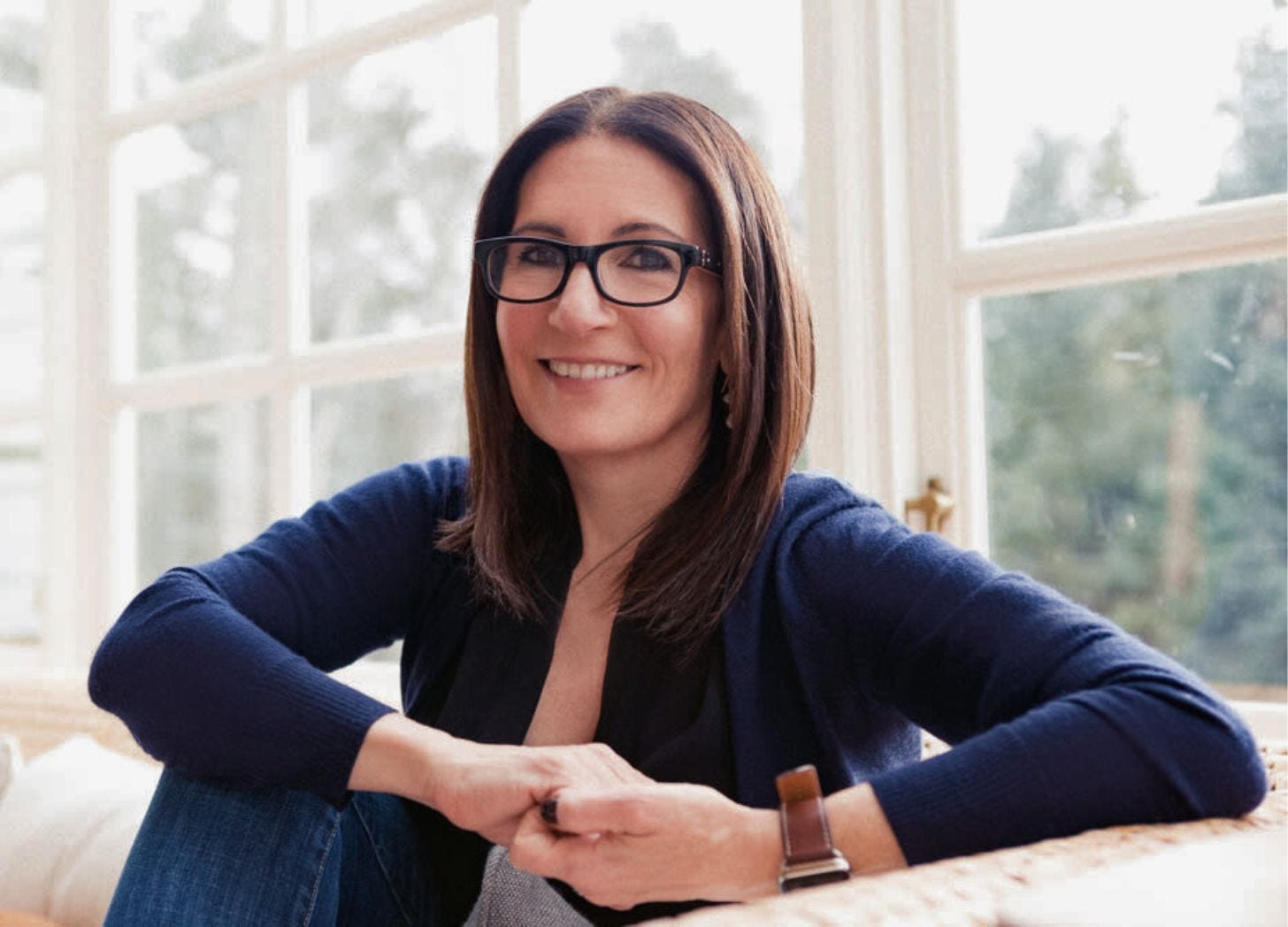
For years, I bought Bobbi Brown products. I bought them because I believed I was buying from Bobbi. A woman who understood skin. A makeup artist who saw women as they actually were and made products for the faces we actually have - not the faces the industry wished we had. I felt seen by the brand. I trusted it. And I never once thought to ask who actually owned it.
The answer, for most of the brand’s life, was the Estée Lauder Companies. Bobbi sold her company to them in the mid-1990s, stayed on for over two decades as chief creative officer, and eventually left - or, as she has put it with characteristic honesty, was shown the door. The brand kept her name. The corporation kept the profits. And millions of women like me kept buying, believing we were supporting what Bobbi had built.
I suspect most women didn’t know. The brand traded on her name, her story, her philosophy of natural beauty. The invisible architecture of women’s commerce works like this: women create, corporations acquire, and the connection between maker and buyer is severed without the customer ever knowing.
This matters because of who Bobbi Brown is and what she has done since. It also matters - and I’ll come back to this - because of who the Lauder family is and where their money goes. But first: Bobbi’s story. Because it is one of the best founder stories I’ve come across, and it answers almost every question a woman starting something new could think to ask.
Bobbi Brown didn’t set out to build a beauty empire. She set out to make a lipstick she actually wanted to wear.
She was a working makeup artist in New York, newly married, pregnant with her first child, living in the suburbs of New Jersey. One day on a magazine shoot, she wandered into a pharmacy and got talking to the chemist behind the counter. She told him she’d never found a lipstick that was the right colour, the right texture, not greasy, not dry, didn’t smell bad. He said he could make one for her. They went back and forth - too greasy, too dry - until they got it right.
Then she realised that the colour of her lips wasn’t the colour of everyone else’s lips. So she made ten shades. She started selling them from her house. Her husband, then in law school, would run to the post office to ship them. Her sister-in-law came over after teaching to do the books. A friend who was a beauty editor at Glamour asked what she was working on, then wrote about it. “Why would you want to write about this?” Bobbi asked. Now she knows that’s called PR.
She met a woman at a party who turned out to be the cosmetics buyer at Bergdorf Goodman. She pitched her on the spot - though she didn’t know the word “pitch” at the time. They launched ten lipsticks on a counter at Bergdorf in February 1991. They thought they’d sell a hundred in the first month. They sold a hundred on the first day.
She didn’t know what a brand was. She didn’t know what marketing was. She barely knew what PR was. She had never heard the term “founder” or “indie beauty company.” She just saw a product she loved and had the instinct that other women would love it too.
For anyone listening who has an idea and is waiting for the right moment, the right funding, the right strategy - Bobbi Brown started with a chemist in a pharmacy and a kitchen table.
Four and a half years after launching at Bergdorf, Bobby Brown Cosmetics was the number one brand in the store, beating Estée Lauder. Leonard Lauder - the son of Estée, then running the company - invited Bobbi and her husband to dinner at his apartment. There were Picassos on the walls and Dubuffets in the hallway. But the conversation felt like family.
Leonard said he knew what Bobbi loved and what she didn’t. He knew she wanted to be a great mother and wife. He knew she was the most incredibly creative person. What if they partnered, and his company handled everything she didn’t want to do - the HR, the distribution, the logistics - while she did what she was born to do?
The price was right. The deal got done. There was just one thing: a 25-year non-compete clause. Bobbi counted on her fingers. She’d be in her sixties. “I’m not going to want to work when I’m 60,” she thought. “So who cares?”
For many years, it was golden. She had complete autonomy - a word she learned when she signed the contract, though she didn’t know what it meant at the time. Leonard was an extraordinary mentor. She could walk into his office, shut the door, and talk through anything. He never looked down at her or dismissed her. They disagreed sometimes. But it was always a conversation.
And then, as she says, it wasn’t.
New leadership came in. The culture shifted. Consultants arrived that she hadn’t asked for. Senior people were hired to her brand without her being consulted. When the annual review identified the bottom 5% of products for discontinuation, almost all of them were makeup for women of colour. Bobbi refused. “I’m not discontinuing it,” she said. “Go get me more customers.”
For years, she had the power to say things like that. And then she didn’t.
She describes sitting in meetings with men in suits who, as she puts it, didn’t have an effing clue. “Just because I don’t speak the language you speak, you don’t know more than I do. You don’t know what women want. I do.” They didn’t listen. They talked louder.
One day she walked into the office expecting to finally see candidates for a role she’d been trying to fill. Instead, the head of legal cancelled her work contract. They offered her a new position: be the face of the brand, but get out of the day-to-day. She would be available to answer questions, but not at liberty to say if she didn’t like something.
Gagged.
“You’re firing me,” she said.
“No, we’re not firing you. We have a new position for you.”
“I don’t have to do anything anymore. You just fired me.”
She walked out. In the elevator going down, she felt elation. By the time she got home, the elation had turned to something else entirely. “Someone took the rug from under me and then someone cut my legs off and my arms off.” Anger. Sadness. A sense of failure. And then, slowly: “So what? Now what?”
She had four and a half years left on the non-compete. She couldn’t work in beauty at all. She describes it as handcuffs. She wore a chain around her neck with a charm engraved with the date her non-compete expired - the date she would be free.
She took two days off. Friends came over with tequila. Then she started making phone calls.
She didn’t go to a therapist. She hired a life coach, because she didn’t need to talk about her mother - she needed an action plan. He asked her what was bothering her. She walked around her house photographing everything that irritated her. He came back with solutions: here’s the number, call them, they’ll fix the couch. For the things that couldn’t be fixed - the loss, the identity crisis, the grief of having your name on a building you’re no longer allowed to enter - he helped her reframe. There was a down couch, beaten up by years of her children jumping on it, that drove her crazy. He asked how she’d felt when the kids were in the house. “Wonderful.” She started looking at the couch differently. They eventually got rid of it. But it didn’t bother her as much in the meantime.
She started a wellness brand. She built a hotel with her husband. She did a MasterClass - the first ever for a makeup artist. She flew to India to keynote the country’s first makeup show. And slowly, she realised how much she missed being in the beauty world. Not the corporate beauty world. The actual world of putting product on skin and watching someone look better and feel it.
Her brother - who had been her first makeup muse when she was nine years old, who had tried to make it as a makeup artist in New York in the 1980s, who had come home and built a creative life as a chef and decorator - died of HIV in 2015. “That was my big lightning bolt moment to give myself the okay to pivot. Because life’s too short.”
She started working with a chemist again, secretly, during the non-compete. She developed a product - a tinted balm that was skincare and makeup in one, the kind of thing that makes you look instantly better on a Zoom call when you haven’t coloured your hair in months and the world has fallen apart. She called it Miracle Balm.
She had the product. She had the formulas. She didn’t have a name. She was driving to the Hamptons with her husband, complaining about the deadline, head down checking Google Maps because he can’t bear to be five minutes late. She looked up and saw a road sign. Jones Road. “Jones Road Beauty,” she blurted out. Her husband said: “I like it.” It was available.
She launched on the day her non-compete expired - a Monday in October 2020, one week before the presidential election, in the middle of a global pandemic. Everyone told her to wait. She launched anyway. Because she could. Because for the first time in twenty-five years, she had her freedom back. That was the only reason she needed.
Jones Road Beauty did $160 million in revenue last year. It has roughly 40 to 50 employees. It has taken no outside investment. It is entirely self-funded and profitable.
Bobbi’s husband is chairman of the board. Her second son - who started as a strength and conditioning coach, taught himself digital marketing, and turned out to be brilliant at growth and strategy - is the CEO. His wife is head of brand. “I don’t know if I work for him or he works for me,” Bobbi says. “That’s a whole other story.”
The company runs on stock packaging to keep costs down. It is DTC-first. It has one retail partner globally: Liberty in London, because the data showed that British women wanted Jones Road and the demand was too high to ignore. There are about twelve freestanding stores, mostly in locations chosen by instinct before the company hired a head of retail and started using data. The first store happened because her husband, a developer, had a small empty space in a building he owned and asked if she wanted it.
There is no plan to enter traditional department store retail in the US. There is no plan to take outside investment. There is no plan to sell, though Bobbi does say it would depend on who was asking and what the terms were. “I’m not looking to sell the company to go home and go on holiday. I know what it’s like to not be in charge. And starting Jones Road has allowed me to be in charge again.”
She has a pointed observation for the founder culture that celebrates fundraising over fundamentals: “People brag about their Series A, B, C, and D. That’s great, but you’re great at raising money. How are you at making money?”
Across multiple interviews - on The Two Percent with Anu Duggal, on Masters of Scale, on Dr. Mary Claire Haver’s Unpaused, on Begin Again with Davina McCall — Bobbi is consistent about what she’s learned. Not because she’s repeating a script, but because the lessons are genuinely earned:
Just start. Don’t wait for the perfect plan, the perfect funding, the perfect moment. Make the thing. See if people want it. See if you want to keep making it.
Slowdowns are not failures. “Every time there’s a bit of a slowdown, people freak out. No, no, no. This is really good. Pause. Breathe. See what’s working. Stop doing what isn’t.”
Trust your gut. Bobbi wasn’t a great student. She didn’t have business school credentials. What she had was an instinct for what women wanted and the willingness to act on it before she could explain it in a boardroom.
It’s not easy. That’s the myth she wants to dispel. “People think the second act is easy because it looks easy. It’s not easy.” She’s 68, on a gruelling book tour, and she cancelled her workout this morning because she couldn’t get up. “And that’s okay. So what if you cancel? So what?”
Being over 60 is not a disadvantage. She started Jones Road at 63. It’s on track to be as big as the original billion-dollar brand, in a shorter timeframe. She plans to be some kind of founder at 70. Possibly 80. “Not 90. Not yet.”
You don’t move past things. You move around them. The losses - the brand, the brother, the corporate betrayal - are still there. She doesn’t pretend they aren’t. She finds a way forward that doesn’t require pretending.
And perhaps most importantly, for any woman reading this who has been told she doesn’t speak the right language, doesn’t have the right credentials, doesn’t fit the room: “Just because I don’t speak the language you speak, you don’t know more than I do. You don’t know what women want. I do.”
There is a reason I started this piece with the question I never thought to ask. It connects to something this publication has been examining all month.
When I bought Bobbi Brown products, I thought I was supporting a woman who saw me. I was actually funding a corporation. The Estée Lauder Companies is a family business in its own way - and the family includes Ronald Lauder, who has known Donald Trump for over sixty years. Lauder donated $100,000 to the Trump Victory fundraising committee in 2016. When Trump’s mental fitness was questioned, Lauder called him “a man of incredible insight and intelligence.” And in a detail that reads like satire, it was Lauder who first suggested to Trump that the United States should buy Greenland - a suggestion that has since evolved from a passing conversation into a foreign policy position involving the threat of military force. (Lauder has acquired commercial holdings in the territory).
I’m not suggesting that every woman who ever bought a Bobbi Brown lipstick was funding Lauder’s Greenland acquisition. But I am saying that the invisible architecture of who owns what matters. When women buy from brands they believe are woman-led, they deserve to know where the money goes. When a brand trades on a woman’s name, her story, her credibility - while the woman herself has been pushed out and gagged - something is structurally wrong with how this industry works.
This is part of a wider pattern this publication has been examining in recent pieces - how power operates behind the language of women’s empowerment, and what happens when the men in the room don’t listen to the women whose names are on the door. Bobbi’s experience at Estée Lauder - expertise overridden, her authority eroded, the moment when she couldn’t get anyone to listen - will be familiar to any woman who has watched her own judgment dismissed by men who talked louder and knew less.
Jones Road exists because Bobbi took back her autonomy. That’s not just a business story. It’s a political act.
Davina McCall asked Bobbi Brown what she wanted her legacy to be. Her answer was immediate:
“People tell me all the time what I’ve meant to them. They say: she made me feel good about who I am and she gave me permission to be myself and to go for it.”
Then she paused and added: “So I’ve done that already. Now I’ve got to figure out what’s next.”
This is what purpose looks like when it is alive. It grows. It adapts. It generates new thinking. It doesn’t repeat the same script for six years. It starts again at 63 with a product in a jar and the belief that women will recognise something made for them.
They did.
Until next time,
Denyse
Friday’s digest connects current events to leadership research - the warmer, shorter end-of-week read. The companion publication, A Global Hinge Moment, continues to examine the geopolitical dimensions of purpose-led leadership.
Bobbi Brown’s memoir, Still Bobbi, is available now. Jones Road Beauty is at jonesroadbeauty.com. The Two Percent podcast by Female Founders Fund - dedicated to the fact that less than 2% of venture capital funding goes to female-founded companies - is available wherever you listen, including YouTube.
No posts
Comments
Nothing yet. Say the first thing.
Sign in to join the conversation.