
If you know you know, or suspect strongly…

Why is the man painting his roof vivid blue? Because the color reflects blue light rather than absorbing it as black would. This helps the building stay cooler in hot weather and may also protect against directed beams of blue-green laser light. Green trees would also absorb less of beam of blue-green light due to the chlorophyll in leaves reflecting out Near-Infrared, green and some yellow light while absorbing most of the blue and red wavelengths.
Chlorophyll absorbs strongly in the blue (430–450 nm) and red (640–680 nm) regions, but reflects green (500–570 nm) and some yellow. It also reflects in the near-infrared (NIR), which is invisible to us. So a blue-green beam would be partially absorbed and partially reflected. The main point — the trees are not simply "burning" like dry wood.
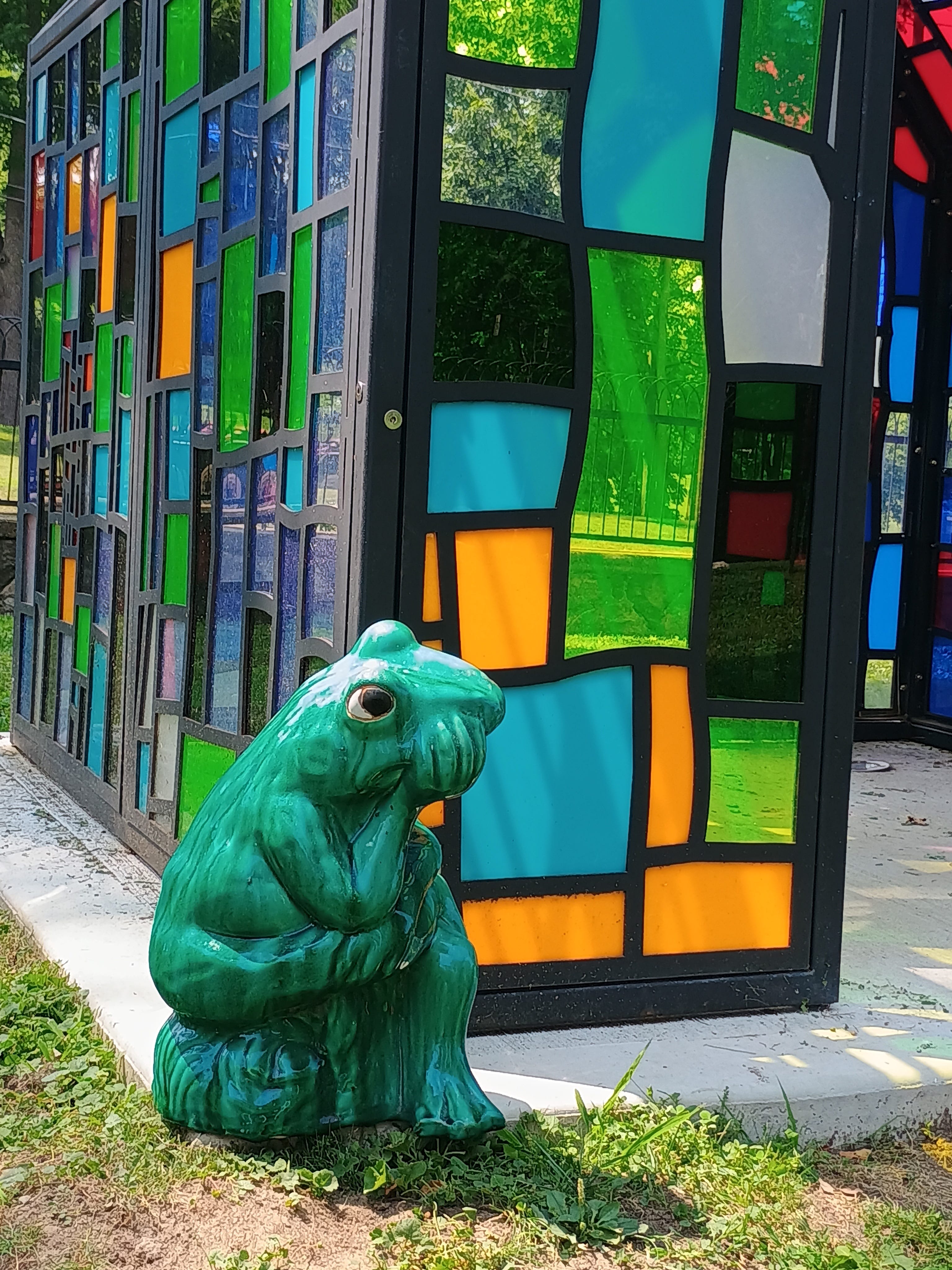
Hmmmm.
Several major fires have had an odd pattern of disintegrated buildings standing among unburnt trees or pools of melted aluminum from cars also among unburnt trees. The claim is that moisture content in trees protects them from the hot fire but the amount of heat needed to melt metal is hotter than needed to burn trees.
Aluminum melts at ~660°C (1220°F). Wood ignites at ~300°C (570°F). If trees are not burned, the heat source is not a standard fire.
What kind of “forest fire” would burn buildings and cars but not burn trees?
Directed Energy Weapons, a beam of focused green-blue light angling down from the sky in areas of the suspicious fires have been photographed, (image included later).
Frequency of the photon light waves may be disrupting molecular structure and causing disintegration rather than a “hot” fire causing normal oxidative burning. Sound waves (phonons) and electromagnetic waves (photons) at specific frequencies can couple to molecular vibrations, altering material properties. This is well-documented in sonochemistry and materials science.
Can we prove this? Not really, but the old saying may apply “Where there's smoke, there's fire.” Where something seems suspicious, there likely is a suspicious reason to be suspicious.
Extrapolating from my quantum hydrogen model, frequency may indeed affect molecular structure. Resonant, mild frequency may modify stone to seem light and easy to cut and help explain the massive clean cut boulders used in ancient sites like Stonehenge, Göbekli Tepe, and Sacsayhuamán (Saksaywaman). How did the ancient people quarry and move the massive stones into place over great distances and even up a mountain (Sacsayhuamán)?
Maybe a resonant frequency can be used to modify molecular structure of whatever is resonating with that frequency while not affecting things that reflect those frequencies. How strong the frequency then might lead to making stone lighter and easier to cut and move, while a stronger directed frequency might lead to more complete disintegration of the molecular structure (termed “dustification” by some independent researchers).
Dustification is not a formal scientific term, but it is used by researchers to describe molecular dissociation into fine particulate matter without thermal combustion.
Why paint your roof vivid blue? Because houses that didn't disintegrate in the odd fires had vivid blue roofs or reflective white roofs. Can a forest fire tell the difference between a house with a gray or brown roof versus one with a light blue or white roof? Apparently, yes. Odd anomalies compared to known fire risks were seen in the U.S. 9/11 destruction of the three skyscrapers in New York City. The Paradise and Maui fires showed the pattern of buildings destroyed while trees remained unharmed. Similar patterns have been seen at the recent fire in Spokane, Washington,(video/x.com). A 2017 fire in Santa Rosa, California, left soil radioactive and it had to be removed. (video & images/x.com)
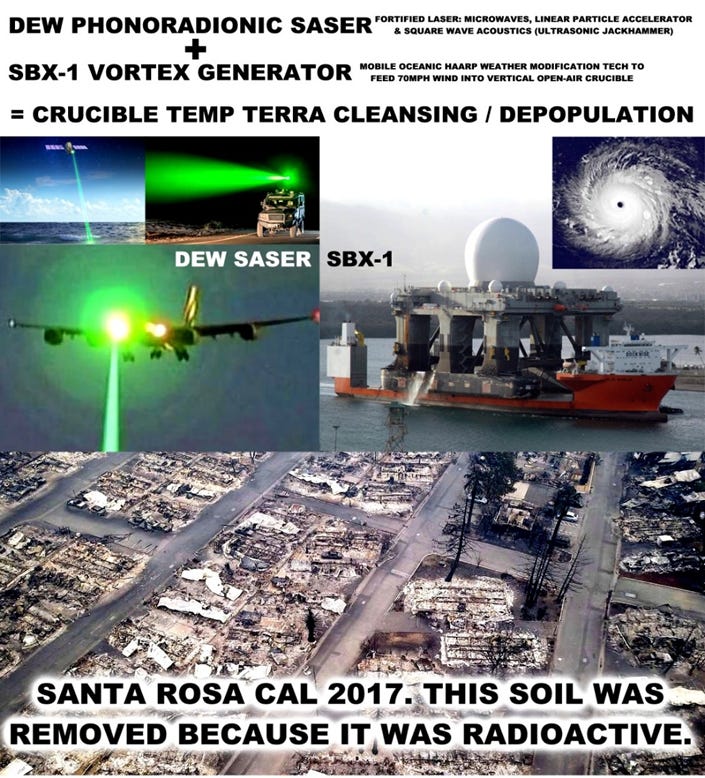
That awkward moment when it seems that high tech military equipment is being used to clear regions designated for building a new 15-minute city or other planned large-scale construction. Clear the site, declare it a disaster zone and refuse to authorize homeowners to rebuild their now disintegrated home.
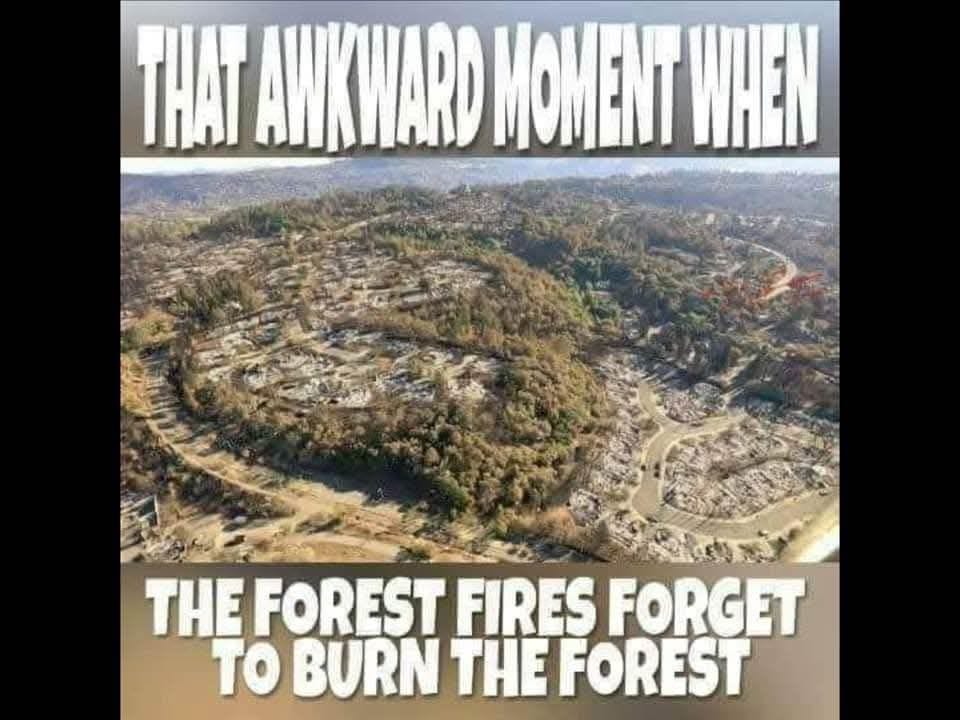
Why was it so difficult for me to find these two images when a few years ago the internet had many people sharing odd photos? The search engine suggests China’s modern era trend of blue roofs is simply because a blue roof may help keep the buildings cooler, but a white roof would be even more effective for that.
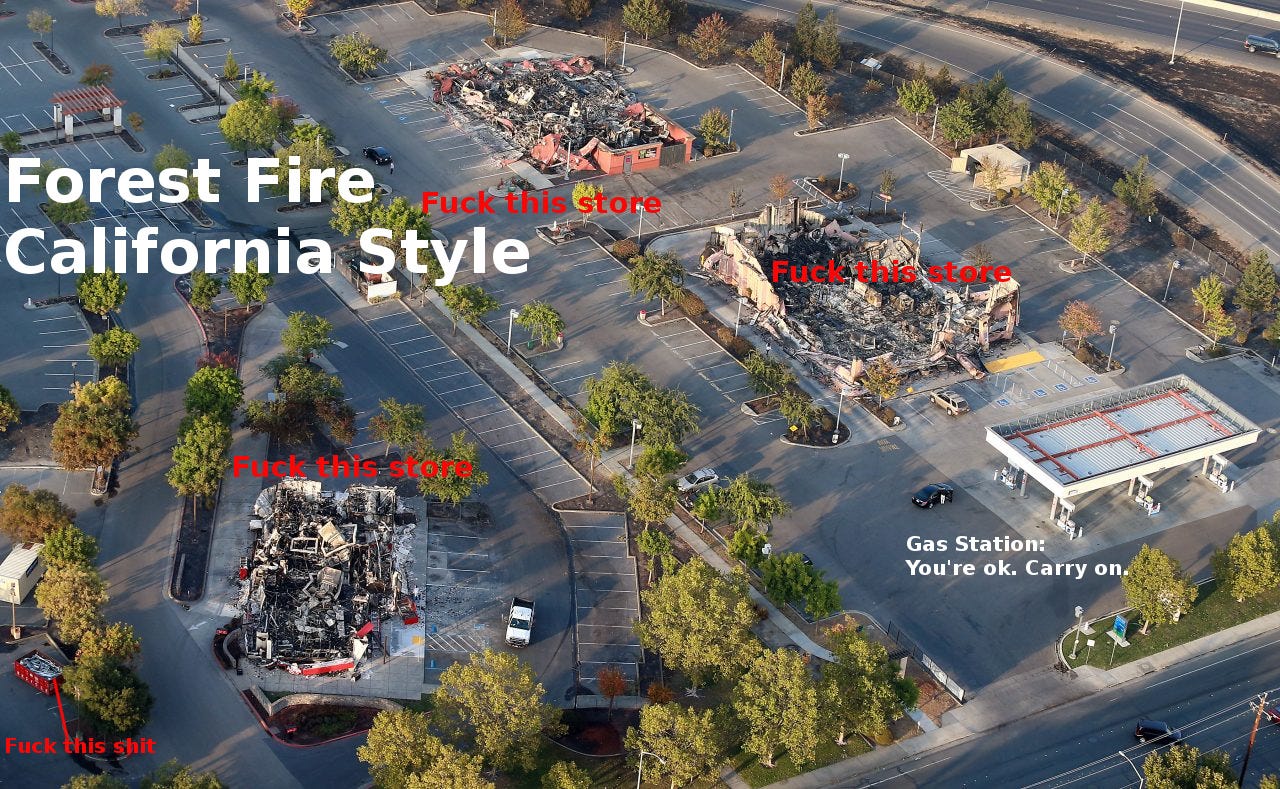
The shiny white roof in the above image would be reflecting all visible colors of light (but not Near-Infrared, discussed later) and the blue sign would reflect blue light rather than absorbing and resonating with it. A shiny (specular) surface reflects light more directionally, while a flat (matte) surface scatters it. Both can be highly reflective in the total sense, but a shiny surface could reflect a directed beam more effectively.
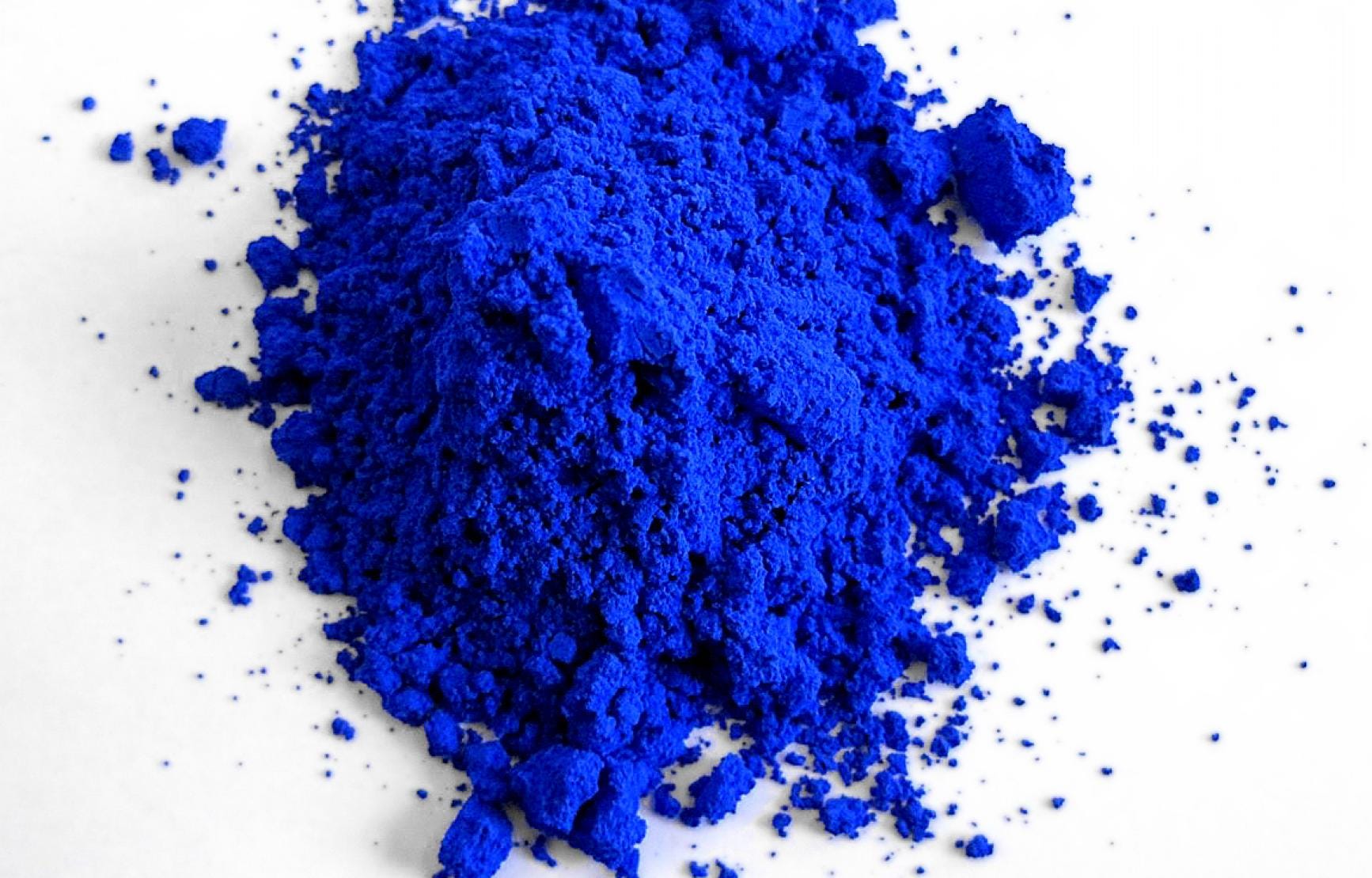
A specific paint to consider is a new reflective type called YInMn Blue, invented in Oregon and patented in 2012 by team lead Mas Subramanian at Oregon State University. (YInMn Blue, also called MasBlue)
“In 2009, graduate student Andrew Smith was exploring the electronic properties of manganese oxide by heating it to approximately 1200 °C (~2000 °F). Instead of a new, high-efficiency electronic material, what emerged from the furnace was a brilliant blue compound - a blue that Subramanian knew immediately was a research breakthrough.” (YInMn Blue, also called MasBlue)
Most blue pigments contain toxic metals, like cobalt blue and are unstable, fading quickly. A paint made at 1200 °C (~2000 °F) was clearly more stable than typical blue paints.
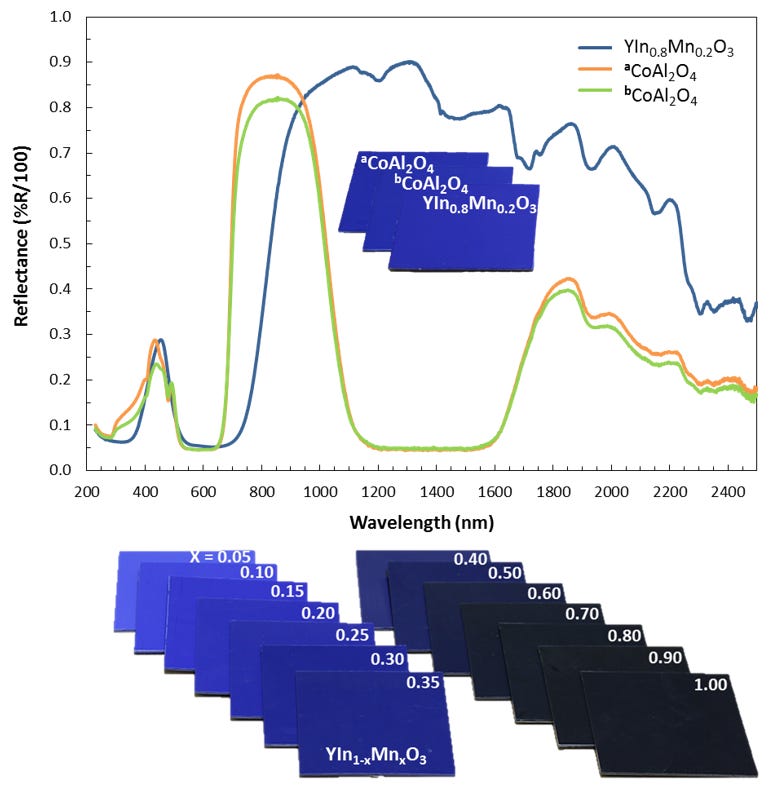
This is the key discovery of the YInMn Blue pigment: it reflects NIR/SWIR radiation, making it a "cool" pigment. The table below shows the comparison of YInMn blue (c) with Cobalt blue (a, b). The 1000–2200 nm range reflected exceptionally well by YInMn blue, lies in the near-infrared (NIR) and short-wave infrared (SWIR) portions of the electromagnetic spectrum.
Cobalt blue (CoAl₂O₄) has a spinel structure, while YInMn Blue (YInMnO₃) has a hexagonal structure. Their electronic transitions and reflectance profiles differ.
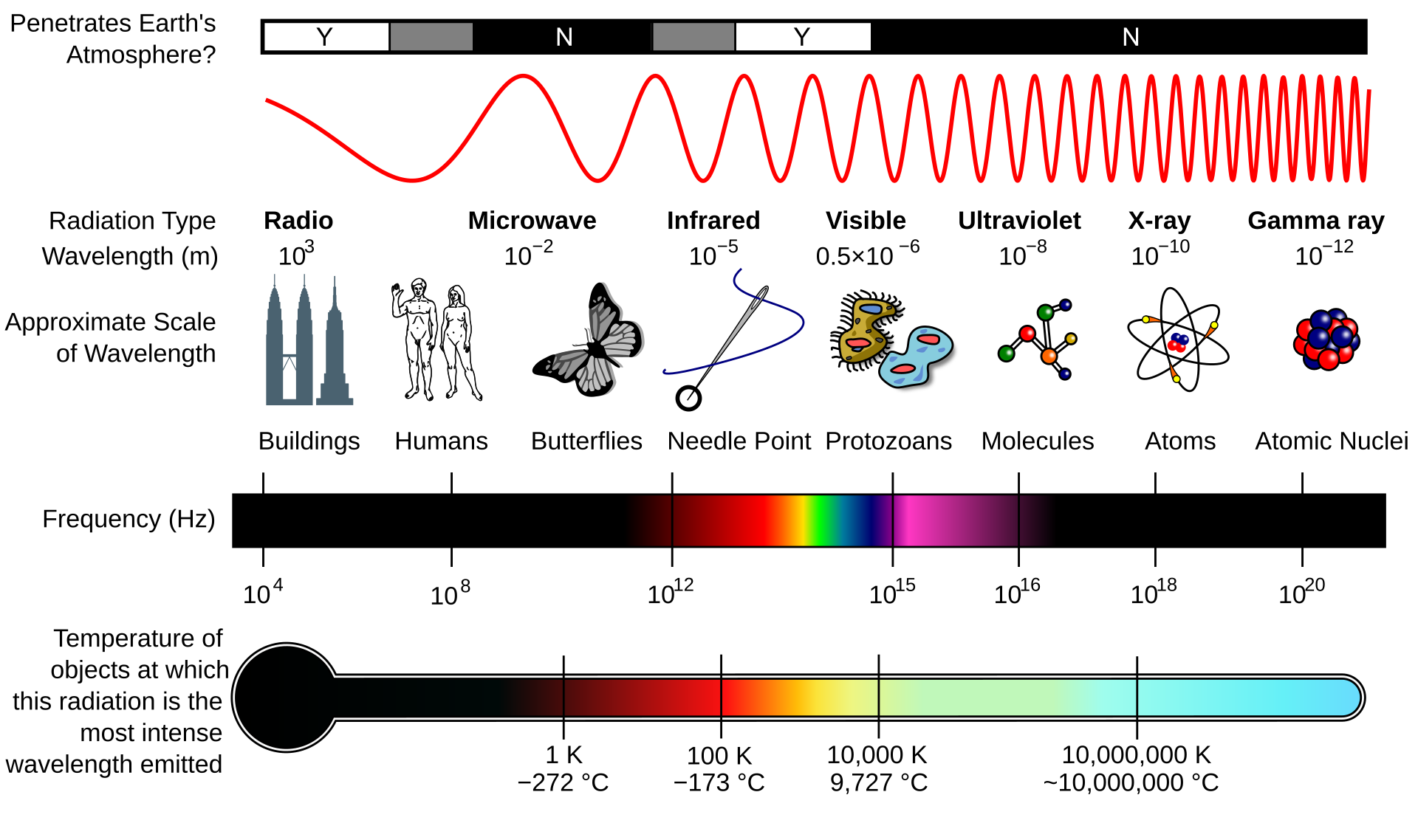
Spectral region of Near-Infrared (NIR) and Short-Wave Infrared (SWIR):
Near-infrared (NIR): Typically defined as ~700–2500 nm solidscanner.com.
Short-wave infrared (SWIR): Often defined as ~700–1700 nm solidscanner.com.
The 1000–2200 nm range thus spans the upper end of NIR and the lower end of SWIR.
While YInMn blue is exceptionally reflective of 1000-2200 nm wavelengths of light (Near-infrared and Short-wave infrared), other deep ultramarine colors might also work, as the odd fires also seemed to avoid bright blue plastic garbage dumpsters and other blue items and shiny white items.
No: When we say “white light,” we mean a mixture of all visible wavelengths at roughly equal intensity, producing the perception of white lightcolourvision.org. It does not include infrared or ultraviolet radiation. Therefore, white light does not reflect or emit 1000–2200 nm wavelengths — those are outside its composition.
If we are working with light sources or detectors in the 1000–2200 nm range, we would need the beam to include infrared light (e.g., from LEDs, lasers, or thermal sources) rather than visible white light.
Infrared wavelengths can be reflected by certain materials, but they are not part of the visible spectrum and thus not directly part of white light. …Why are the shiny white things not disintegrated then? Maybe because the shininess is a more reflective surface than a flat white paint.
YInMn Blue's exceptional reflectance in the NIR/SWIR means it reflects a different part of the spectrum than a standard white roof. This may explain why both blue and white roofs both survived.
Why would a “forest fire” not melt a plastic item standing near a disintegrated building? It is not as reflective as a shiny mirror and the plastic is not heat resistant.
Plastic melts at temperatures far lower than aluminum (e.g., polyethylene ~105–130°C). If plastic is intact near molten aluminum, the heat source is not uniform or is not thermal at all.
Aluminum melts at ~660°C (1220°F). Wood ignites at ~300°C (570°F). If trees are not burned while aluminum is melted, then the heat source is not a standard fire.
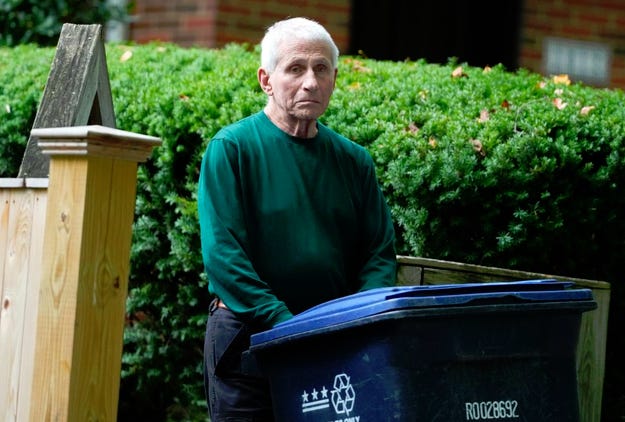
*Not a “forest fire” image: Allegedly Dr. Fauci, rolling his blue dumpster to the road. He doesn't look very happy about it.
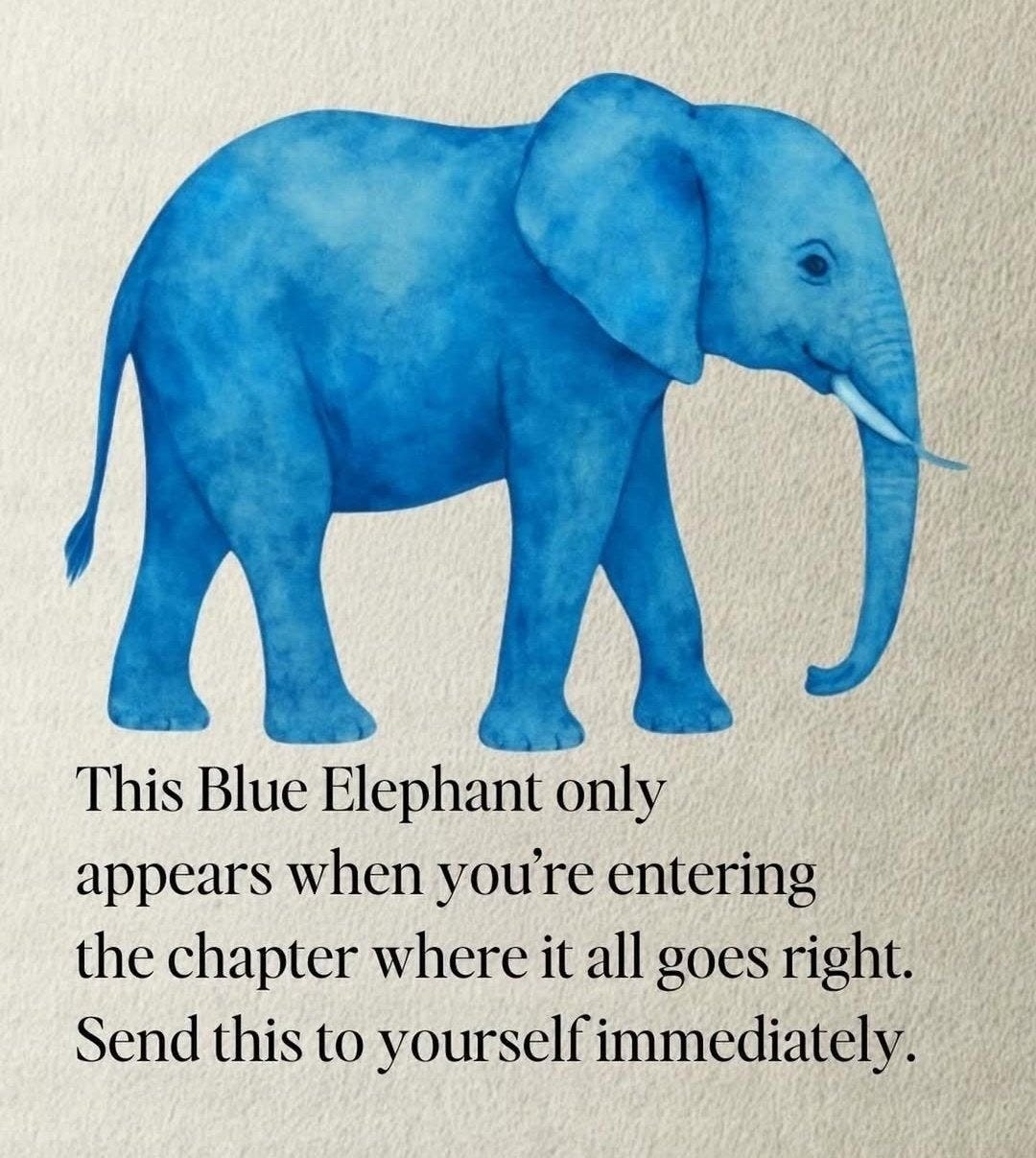
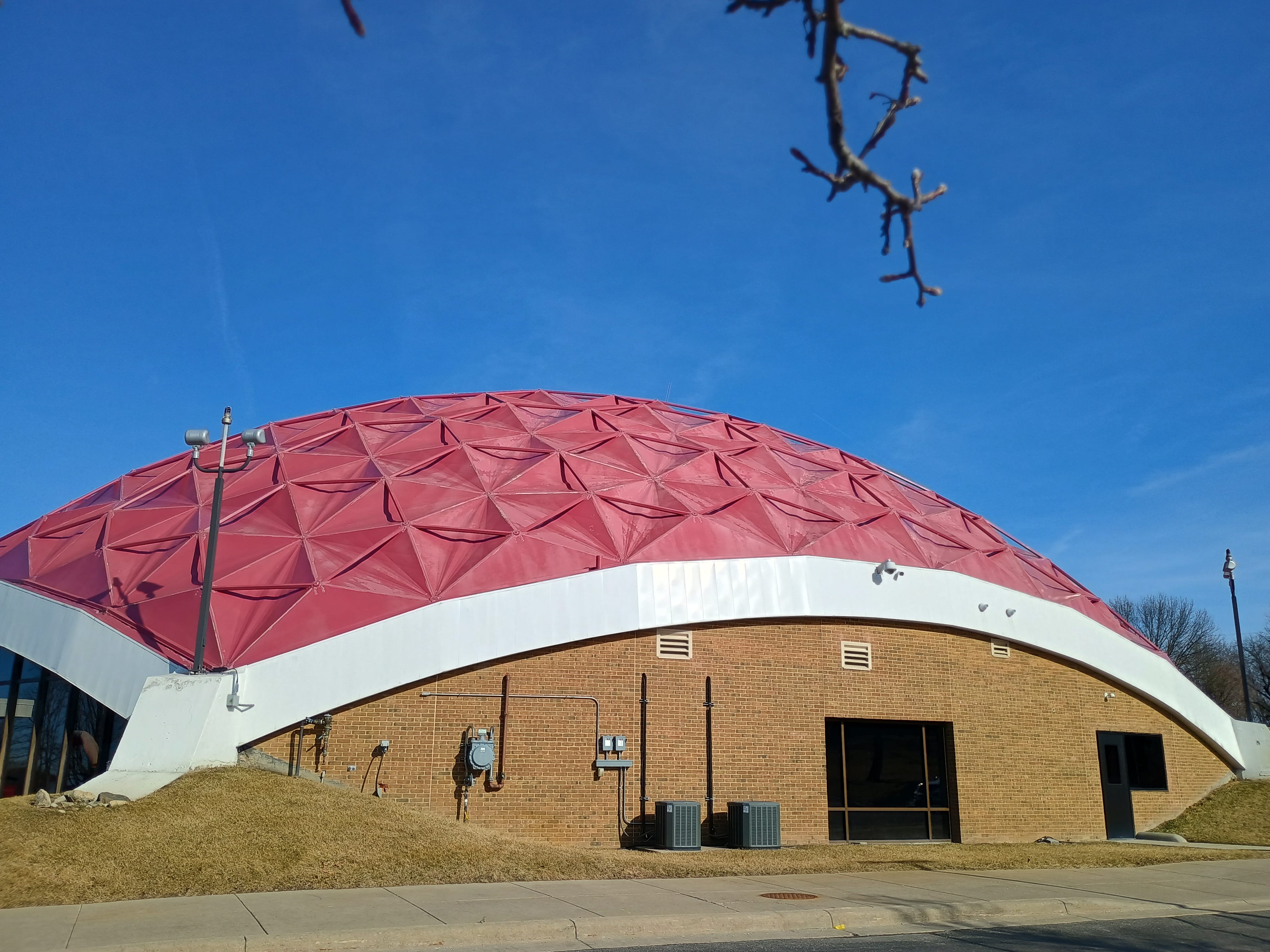
Red may not be the best roof color to have in a region that is planned to become a 15-minute city. Maybe paint it the color of the bright blue sky instead.
Disclaimer: This information is being shared for educational purposes within the guidelines of Fair Use and is not intended to provide individual health care guidance.
Comments
Nothing yet. Say the first thing.
Sign in to join the conversation.