
Human migration isn’t only a hot topic in the West, it’s a phenomenon that, for good and ill, countries all over the world are reckoning with. As a migrant myself, living 8,000 miles from my global point of origin, and having dealt with the various immigration systems of various countries for most of my adult life, I have a perspective. Whether it’s a good or interesting one, I’ll leave to readers.
I don’t get a lot of writing done in the summer months. As a series for my paid subscribers, I’m offering four, pre-scheduled essays, each of which looks at a place I had the privilege to visit last year, and each of which explores how these places are balancing changing demographics, changing economies, and the preservation of national identity.
There’ll also just be some fun travel stories. Hope you enjoy!
Japan is dying. Quite literally.
In the Land of the Rising Sun, about ⅓ of the population is over the age of 65, and not replacing itself. 700,000 babies are born there each year, which isn’t nearly enough to offset the 1.6 million people who are passing away.
Schools are closing for a lack of students. Towns are emptying. There’s no one to care for the elderly, and no one to fill the jobs necessary to care for the economy. The country is in a spiral, and has been for decades. They know it too.
Desperate for a solution, Japanese policymakers began considering a UN report published in 2000 on something called “Replacement Migration.” The idea was: if not enough babies are being born to staff the country’s future, perhaps a replacement population could be imported from abroad.
If this sounds like a right wing fever dream, it kind of should, though not quite yet. Replacement migration wasn’t initially a cultural concept, it was an economic and structural one. There are countries with huge populations, poor economies, and a saturation of able-bodied workers ready to knuckle down on the cheap. Why not move some of them to where they were really needed?
Japan tried this, eventually ratcheting up its immigrant contingent to about 3% of the overall population. That’s minuscule by western standards, but to a country famed both for its ethnic homogeneity and its fear of cultural dilution from without, it was a very big deal.
It also didn’t go well.
In the other installments of my Migration Diaries series, I offer a neat, personal anecdote about culture or immigration to tie my political observations to experiential ones. That won’t be the case here. Nothing happened to me during my stay in Japan that related directly to these subjects. Nothing at all.
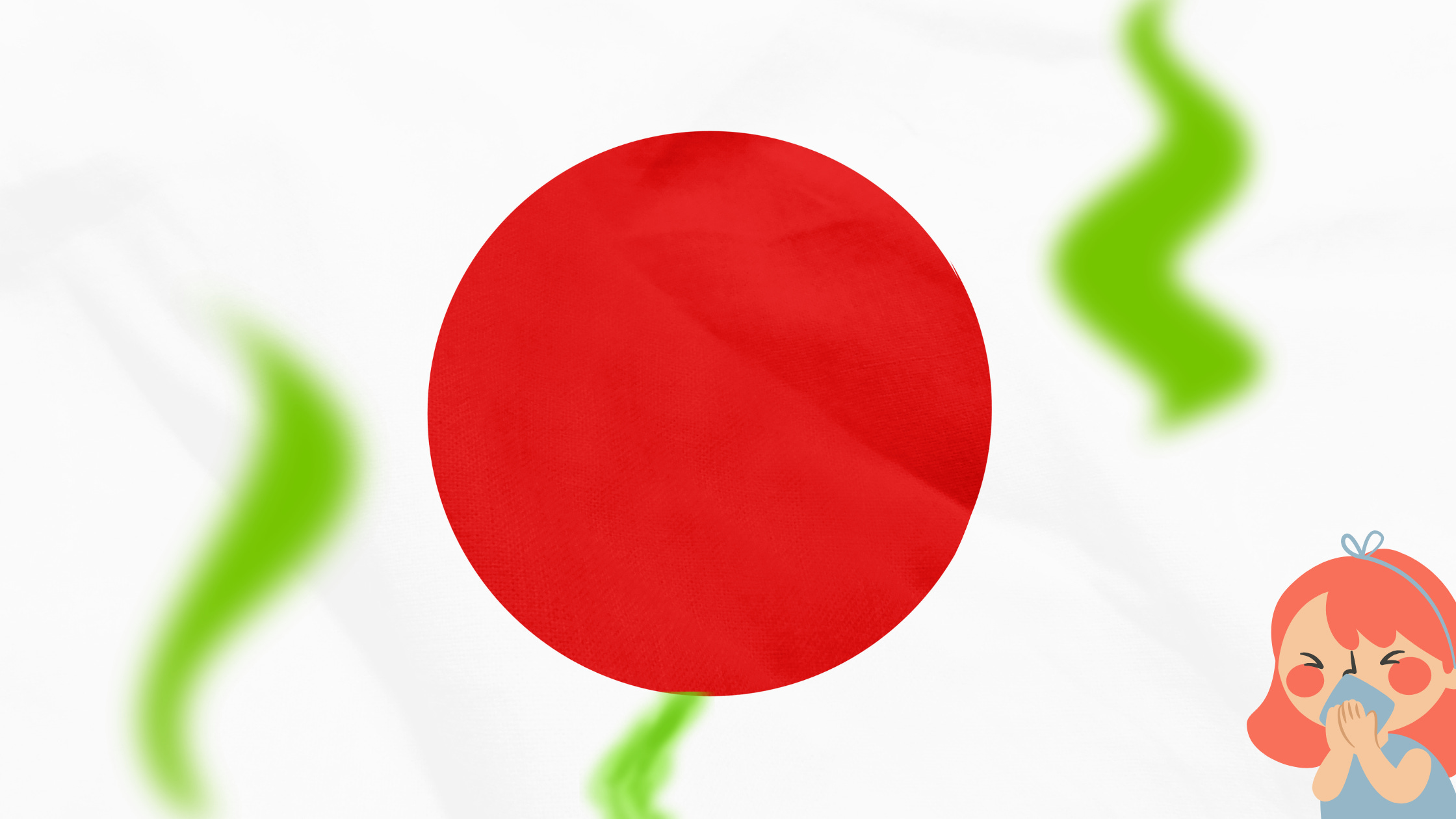
I witnessed no tourists or migrant workers misbehaving. I was not mistreated for being an outsider. Probably the closest I came to anything like that was being stuck in a train car with a Chinese tourist who opened a packet of stanky, dehydrated fish. But the stench was readily outweighed by the beauty of the journey itself.
This is not to say we had smooth sailing though, but the reason for our rough seas wasn’t people. It was an artificial intelligence, and a virus.

Japan was our final stop before arriving home, after a long, five week journey during which we effectively circumnavigated the globe. My wife doesn’t like travel surprises, and I’m kind of autistic with planning, so I had mapped out every detail of this adventure, down to which way we should turn after leaving from which exit of which train station, and how many steps we were from which hotel lobby.
All of the relevant information - flights, hotels, trains, directions, event tickets, passes, tips - existed on a shared document, and my success rate so far had been close to 100%. I fucking nailed it, you guys. I’d dragged a wife and two kids through six countries and hadn’t missed an interchange.
Everything went to shit when we got to Tokyo.
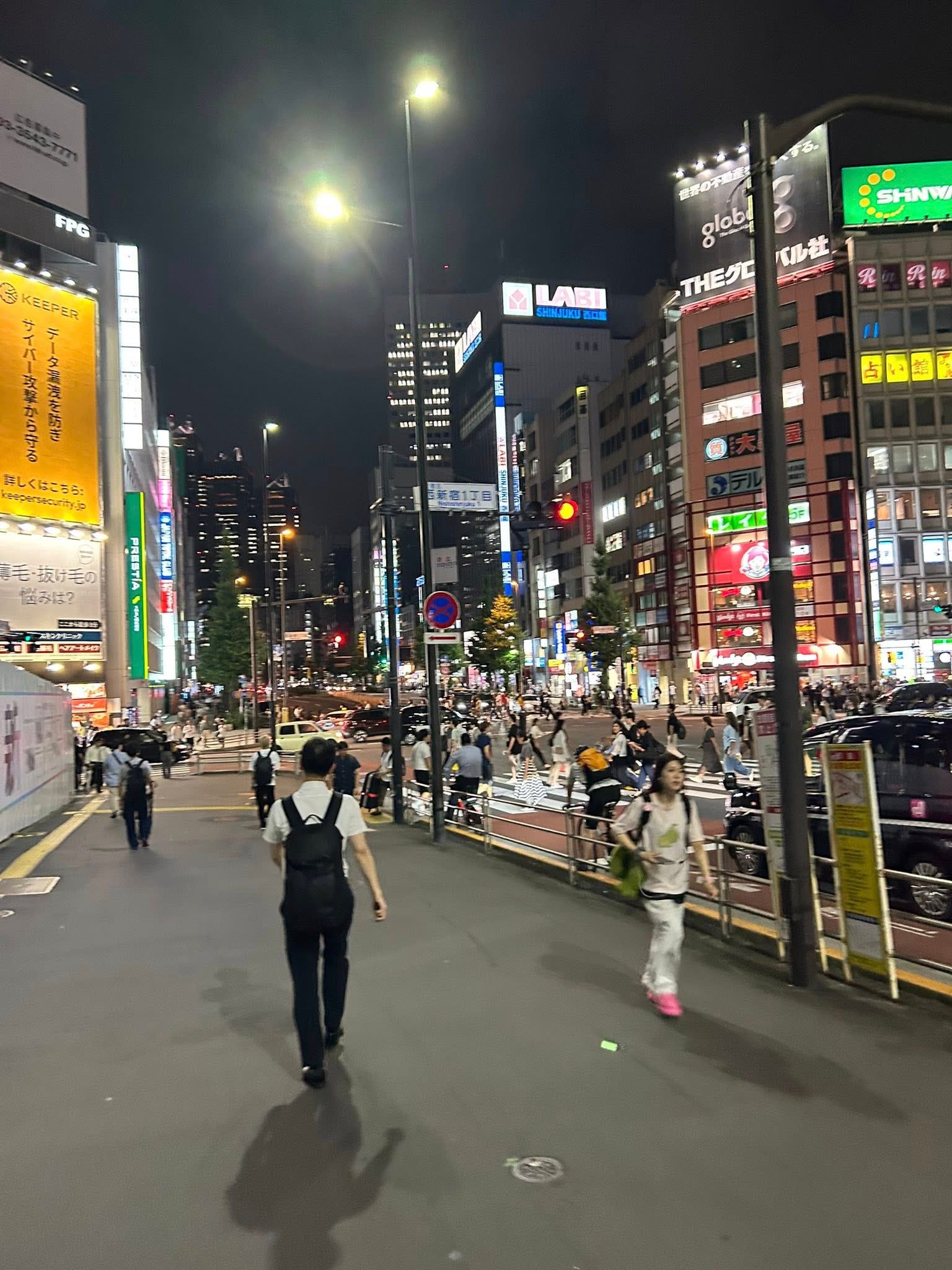
I don’t know if this is a known phenomenon, or whether it’s still an issue, but Twitter’s LLM, Grok - which had not steered me wrong this entire trip - was revealed to have taken a giant, steaming shit in my lap the moment we arrived in the world’s most populous city.
I had directions to train stations that didn’t exist, via train lines that didn’t exist. I had train passes that didn’t correspond to the trains I needed to ride. I had plans to visit museums for which I did not have tickets, because I had been told I did not need to pre-buy them. I spent an hour walking my family around a Tokyo neighborhood in which our hotel was not located, because my map links sent me to a completely different section of town.
It’s true what they say of Tokyo, and of Japan in general: everything works. Everything is functional. What everything is not is intuitive.
Tokyo Metro stations are almost incomprehensibly big. They’re sprawling, labyrinthine tunnel systems - more cities than stations. I don’t read Japanese, and while English translations are present, they are not always obviously displayed, and their meaning is not always clear. Ending up on the wrong side of one of these stations can mean being several kilometers from where your train platform actually is, and it can mean taking an exit that deposits you several kilometers from the street you actually need to be on.
The entrances too can be tricky to locate. One that we needed, and that took us a very long time to find, was down a barely-marked escalator, inside what looked like the lobby of an innocuous business. I spent a lot of time wandering the streets with my nose in my phone like it was a compass.
Even the ticket machines, even when translated, are unfriendly to the uninitiated. There are so many different passes you can buy that cover so many different routes and rides, it’s dizzying.
On top of all this, I promptly fell ill the moment we landed at Narita International Airport.
Located on human chromosome 16 is a gene called ABCC11. When functional, ABCC11 produces an orange-ish, sticky coating to the outer ear, and also a protein that travels to the apocrine glands under the arms, and on which bacteria like to feed. These bacteria have an odor, and where a lot of them are present - usually when sweat is being produced - they stink. Put simply, ABCC11 is the genetic culprit of both earwax and body odor (BO).
East Asians - most of them, anyway - possess an inactive variant of ABCC11. They do not produce the transporter protein that causes their pits to stank, and rather than earwax, they produce a dry, flaky substance in its place.
Put very simply, Asian people do not smell bad. Even in the humid, summer months, and even when packed into crowded subway cars.
For the longest time after moving to Thailand, I couldn’t figure this out. How was it possible that these people didn’t smell bad? What kind of magical hygiene were they practicing? How were they going around in sweltering heat, in long sleeves, bent over outdoor hot plates and steaming pots of rice and not smelling like a locker room? Turns out, it’s effortless for them.
This all adds up to two things:
The experience of being around East Asians as a westerner is wonderful.
The experience of being around westerners for East Asians is…awful.
You know how in mystery movies, there’s always a scene where a dead body is found, and the seasoned detective doesn’t react to the smell, but the person who isn’t used to it is gagging and retching and puking? That’s what being around white people is like for East Asians.
They are not used to the perfume of sweaty pits. They have no tolerances for it, and no resistances. Even if you’re having a mostly good day - you showered, you put on deodorant, you kept to the aircon - you still smell like a corpse to them. Having to sit next to you on a train or bus is, for them, what it’s like when you have to sit next to a homeless person, or walk by a dumpster.
I said that I didn’t have any negative racial/ethnic/migration-related experiences when I was in Japan, and that’s true.
I didn’t have them. I created them.
The Japanese are faultlessly polite. They despise confrontation and commotion, and that would include giving you a hard time for smelling to them like you were cycled through hot garbage water before washing up on their shores.
Everyone has a touch of main character syndrome, I think. In the West, on guilty days, we tend to imagine loud, smelly, misbehaving visitors as a scourge inflicted on us. In Japan, we are the loud, smelly scourge.
Soon, we’ll have to go below the paywall, because Dave’s about to get…supremacist. Just not white supremacist.
Almost everything you do, the Japanese do better. It’s a fact of life, and the sooner you accept it after arrival there, the more fun you’ll have. The more you’ll experience Japan for the marvel it truly is, and the less you’ll nitpick over things like the doors being low and the beds being short.
In baseline terms, the Japanese are smarter than you. They’re healthier than you, they’re cleaner than you, and they’re better mannered than you. This is true, by the way, irrespective of who you are. Whoever that is, they win. They have you beat.
They built one of the most advanced civilizations on earth and they did it on a jagged, volatile pile of rocks in the Pacific Ocean that shakes constantly, is besieged by ruinous tsunamis, and that regularly explodes in scorching clouds and showers of hot missiles and lava.
The Japanese people spent centuries with a culture in which getting your head chopped off was something that could just happen to you, and wasn’t even really considered that bad. A culture in which there was no higher honor than dedicating your entire existence to becoming not good, not great, but perfect at the task before you, and in which painfully killing yourself was preferable to making an error or social faux pas.
The last time there was any serious question of a foreign army invading the Japanese homeland, the concern was that every Japanese man, woman, child, and bedridden nonagenarian would rise to take up arms and fight to the literal, bitter death before surrendering so much as an inch. It takes a pretty fucking hardcore group of people to make their enemies regard dropping two atomic bombs on them the gentler solution for persuading them to stop fighting.
Exactly how long did we think this group of people was going to continue regarding blundering, stinky, sweaty foreigners like David Dennison a tolerable presence in their lands?
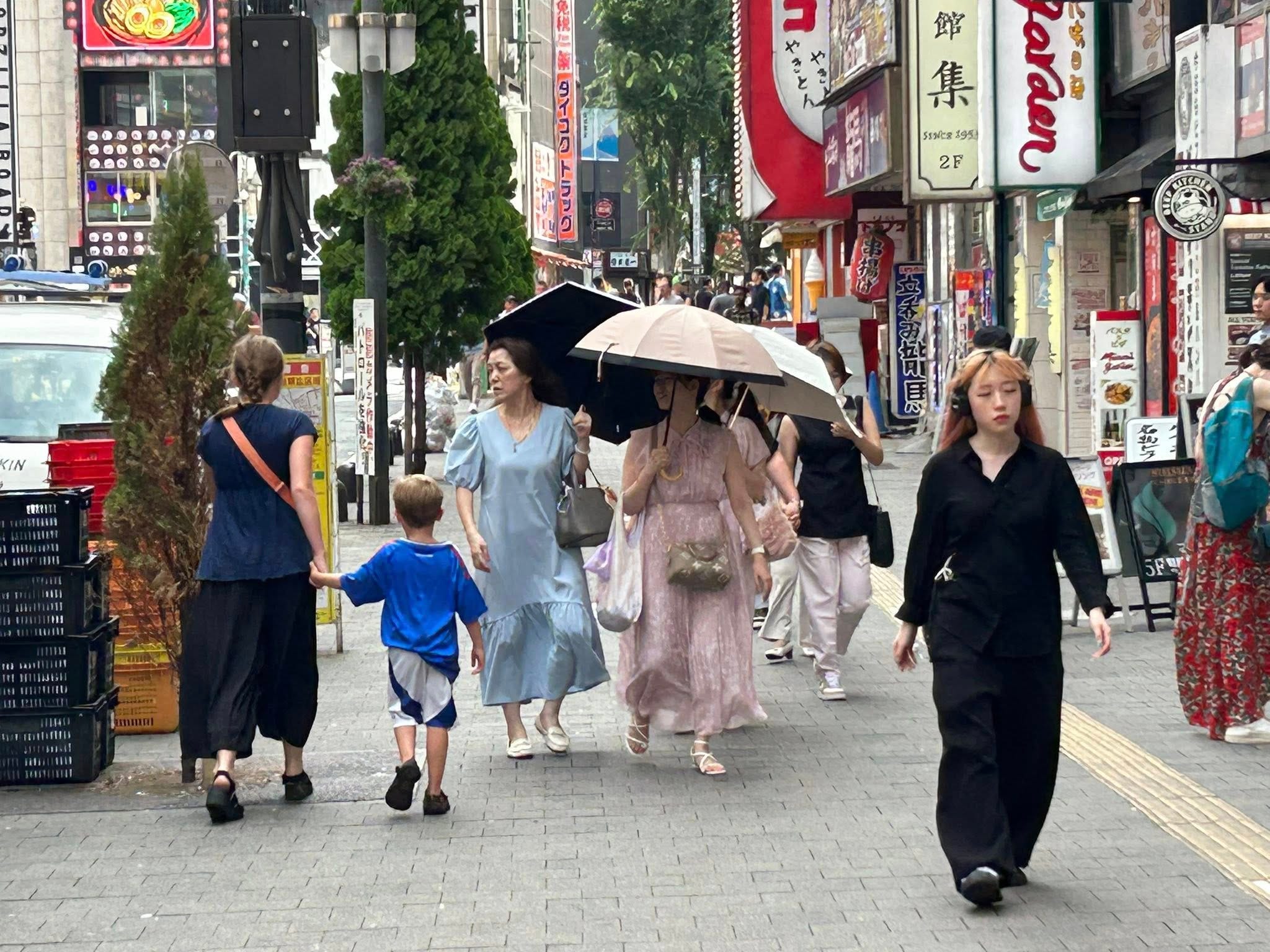
The Japanese preference for order and stability extends (or extended, until recently) to their politics. Japanese decision-makers may have decided that “replacement migration” was necessary to attempt, but once attempted, the response from the people was clear: attempt something else.
Comments
Nothing yet. Say the first thing.
Sign in to join the conversation.