

This is a long and admittedly kind of rambling intro, so if you want to skip down a couple sections, go right ahead.
Every year in my drama class, I teach kids about Romeo & Juliet. They read the full play over in the English department so I don’t make them swallow the whole pill, but we look at some of the text and standard production conventions.
Best of all, I treat them to a frothing diatribe lecture about how, the poetry aside, Romeo & Juliet is a terrible play, with a terrible message (“If your parents don’t like your plainly unsuitable bf/gf that you just met, you might consider killing yourself!”) and that basically everyone on earth completely misunderstands the text in a way its author surely didn’t. Romeo & Juliet is not a love story. It’s a story about how children are stupid and need to listen to the adults in their life lest they end up dead.
I’ve aired this grievance before, and it’s really neither here nor there…
I only bring up R&J because a fun piece of vocabulary trivia I use to open the unit involves my asking the students what they think “wherefore” means. As in, “Wherefore art thou Romeo?”
Obvious, standard response: “It means ‘where’!” Which of course, it does not. It means ‘why?’ Presumably, most of you reading this know that, but most 7-9th graders do not.
Juliet isn’t physically looking for Romeo when she wonders this. Were she, she would easily find him spying on her from the bushes and watching her get changed and fantasizing about her eyes being removed from her head and also about becoming an article of her clothing so that he can touch her skin like a dirty pervert.
Anyway, Juliet is just upset that he has to be Romeo Montague–a sworn enemy to her household–and not like, Ted Mitchum, accountant.
The wherefore/where/why misunderstanding is a simple and inconsequential one over terms. It’s mostly just fun for students to think about, an opportunity to grow their lexicon, and it makes for a useful springboard into talking about forbidden love youthful infatuation–which is a key theme throughout the play.
Misunderstandings over terms are sometimes highly consequential though. Dangerous, even.
In 1956, speaking before western diplomats at the Polish embassy in Moscow, Soviet Premier Nikita Krushchev said “Мы вас похороним” (My vas pokhoronim), which literally translates to “We will bury you.” Understandably alarmed, the diplomats present reported back to their respective governments that Krushchev meant to escalate nuclear tensions.
In fact though, Krushchev was likely paraphrasing Marx, who wrote in The Communist Manifesto, “What the bourgeoisie therefore produces, above all, are its own grave-diggers.” He meant that capitalism directly leads to the formation of a proletariat which will ultimately overthrow it. Thus, it sows the seeds of its own destruction. Krushchev’s meaning was (probably…) more along the lines of, “We’ll be present at your funeral because we’ll outlive you.” A bit dark, maybe, and certainly wrong, but not cause to go to DEFCON 2.
Just on a personal level, I find it annoying in the extreme that so much of our politics features these kinds of term disagreements. How are we supposed to get anything done when nobody has the same interpretation of what we’re even talking about? Especially in an election year, you’d think this stuff would be a high priority. It often feels like the opposite is true though, and it’s really not a mystery why: for any number of reasons, it might be in my interest to misrepresent you, myself, or what one or the other of us wants.
That’s fine for the political class. They can play their games, and keep their secrets.
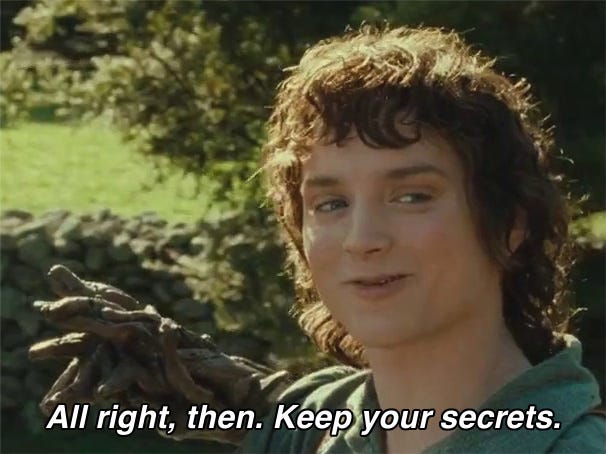
Me writing Substack articles isn’t going to magically turn candidates for high office into honest, forthright people. For us though, stuck way up here in the nosebleeds, this shouldn’t be tolerable. And it doesn’t need to be.
So if you are a commentator, let alone running for office, and you are in any way interested in receiving my vote, money, support, endorsement, or even just protection against the mean words I might say about you, here are some things I need to know.
I need to know what you mean.
Let’s start with the biggie. This election cycle has featured the unprecedented primary successes of self-identified “socialist” candidates against more establishment Democrats. It’s interesting. Maybe a little worrying, depending on your persuasions. Except what does “socialist” mean? What does it mean to the people claiming it as a moniker? Gulags and guard towers? Or just making Medicaid more generous?
I came across an interesting infographic recently, courtesy of the Cato Institute:
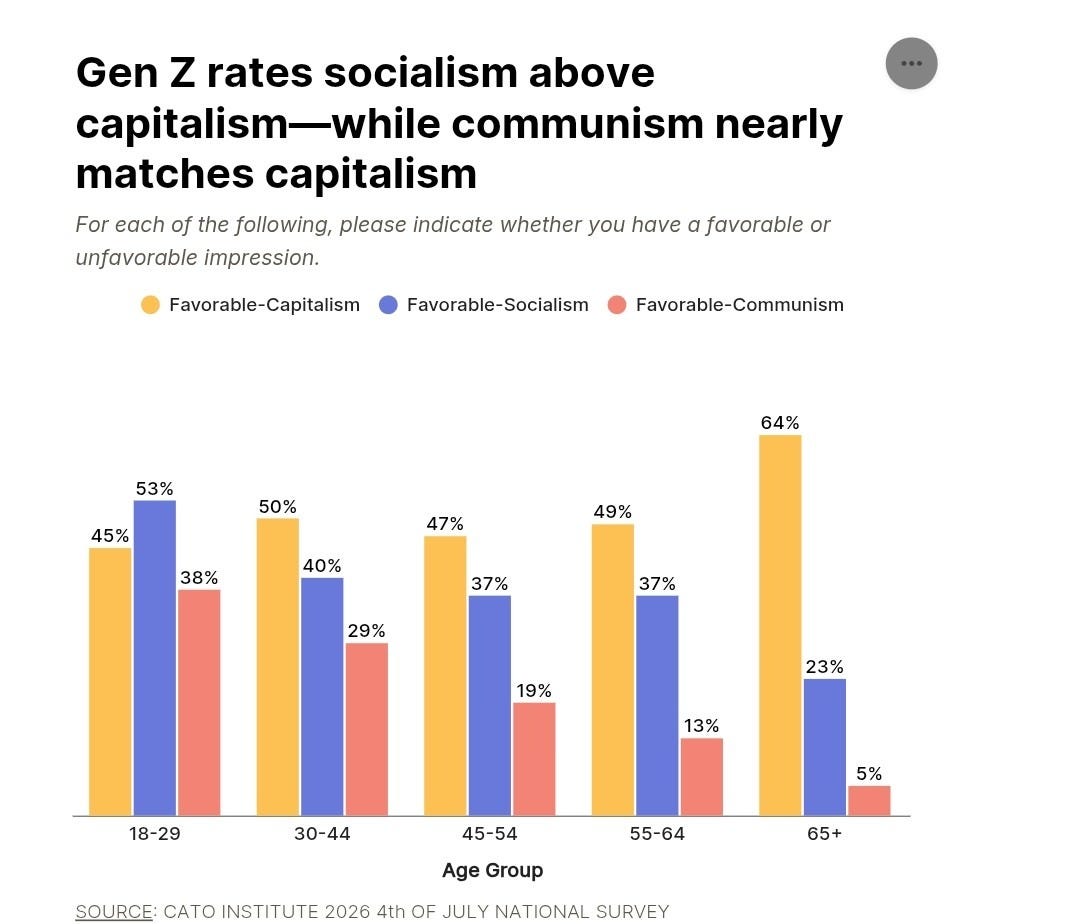
Notice anything strange there? Or if not strange, at least noteworthy?
For every demographic surveyed, the hierarchy of system preferences goes: Capitalism, Socialism, then Communism, in descending order of popularity. Except in the case of the supposedly pinko Gen Z, where Socialism nabs the top spot over Capitalism, which still beats out Communism.
So much of the discourse surrounding this leftward drift of Democratic voters comes packaged with the implication that anyone voting for a “socialist” must be a beret-clad, commie murderer who wants to report you to the appropriate commissar so they can watch you dragged into the street and shot.
Which, maybe… History has indeed seen its share of “socialists” who have been like that, and done that. But then what explains the Cato chart? Why does Capitalism beat Communism but not Socialism?
I spent a fair bit of time in Bernieland during the 2016 and 2020 election seasons, and I didn’t actually meet anybody who expressed a wish to see me shot. Mostly, they were people who thought the USA should take perhaps a few leaves out of Norway’s book and try to do a better job of guaranteeing healthcare to the middle class.
So that’s a pretty important distinction, hey? There’s an awfully wide gulf between “wants you shot” and “wants you insured by tax expenditures.” Which is it?
I actually think the answer is both, or that it depends on the candidate. But we really need to be clear on this, and we need to be clear on a candidate-by-candidate basis. Zohran Mamdani gets talked about like he’s the Leninist antichrist–and some people who work for him have parroted familiar communist principles about the means of production and ending private property.
But Wall Street was, last I checked, still a place where people went to work, and still located in New York City. And how communist is it really possible for things to feel in Times Square?

Another word that has lost meaning for lack of an agreed-upon definition is “genocide.” Gaza and Israeli national security is a can of worms I’d like to leave closed for now, so we can focus exclusively on the terminology. Is what Israel has done in Gaza a “genocide?” It depends what you mean.
The word “genocide” is a relatively new one. It’s only been around since 1944, when a Polish Jew named Raphael Lemkin coined it in a book called Axis Rule in Occupied Europe. Lemkin had been interested in the mass destruction of peoples since before WWII, and considered the definition of his term to be very broad, encompassing cultural, linguistic, even artistic annihilation, besides simply loss of life.
After the war, he went to work on drafting the UN Convention on the Prevention and Punishment of the Crime of Genocide, and the definition became a bit narrower and more physical. According to Article II of said Convention, a “genocide” has been committed against a group when any one of the following acts has been perpetrated:
Killing members of the group;
Causing serious bodily or mental harm to members of the group;
Deliberately inflicting on the group conditions of life calculated to bring about its physical destruction in whole or in part;
Imposing measures intended to prevent births within the group;
Forcibly transferring children of the group to another group.
This was 1948, so it would be foolish to regard this framework as having been developed in a vacuum, or independent of the horrors that had just been inflicted by the Nazis. Still, “Causing serious bodily or mental harm to members of a group,” (emphasis mine) is so loose a standard, it’s virtually impossible to commit any violent act upon anyone without meeting it. And remember, only one standard needs to be met for the Convention’s definition to apply.
Defenders of Israel will generally wave off accusations of “genocide” by pointing to the absence of the clearest Nazi signals: no cattle cars, no death camps, a noncombatant casualty rate closer to the war’s aerial bombardments than to the Holocaust. By that standard–a generally predominant one in the public imagination–Gaza looks like an ordinary, albeit gruesome and lopsided conflict.
But per the Convention’s definition, let’s examine the case against Israel. South Africa’s application to the International Court of Justice expressly charges the Jewish State with the first four of five markers of genocide–they have not accused Israel of transferring Palestinian children to any other group. And facially, Israel simply is guilty of these things: the first two would be covered by any aggressive air campaign, the “in part” used in the wording of the third standard extends it to effectively anything, and since all 36 of Gaza’s hospitals have been hit with direct, targeted strikes, Standard #4 could be said to apply too.
You’ll note that Israel’s justifications for their actions are not considered mitigating. Bombing a natal care facility doesn’t become not genocide by virtue of human shields or weapon stockpiles on the premises.
We must also note here that the first three standards of which Israel is charged also apply to Hamas’s actions on October 7th, and before. And while I’m not sure Hamas can be said to have tried to prevent births (I could be wrong) the youngest hostage captured was a 9-month-old. Approximately 30 children were taken altogether, so without really any question or controversy, Hamas is guilty of the same number of crimes as Israel, if not on the same scale.
I said we were leaving that can of worms shut, and we are. The whole situation makes me want to crawl into a hole and implode. I’ve thought Benjamin Netanyahu was a monster since before most of the kids complaining about him today left diapers. And I have never met a serious observer of this conflict who regards the حَرَكَةُ الْمُقَاوَمَةِ الْإِسْلَامِيَّةِ (HAMAS) as anything other than the force for devastation and wanton murder that they are and have always been. But use of the term “genocide” has taken on profound political implications within the United States, so ironing out proper vs. improper usage matters.
For many on the left, reluctance to call Israel’s Gaza campaign a “genocide” is a marker of sympathy to the act of genocide. And for those against the term’s use, it represents a blood libel against Israeli Jews reminiscent of that on which the Holocaust was predicated.
Which is to say, one side thinks the other side are functionally Nazis, while the other side thinks that side are…functionally Nazis.
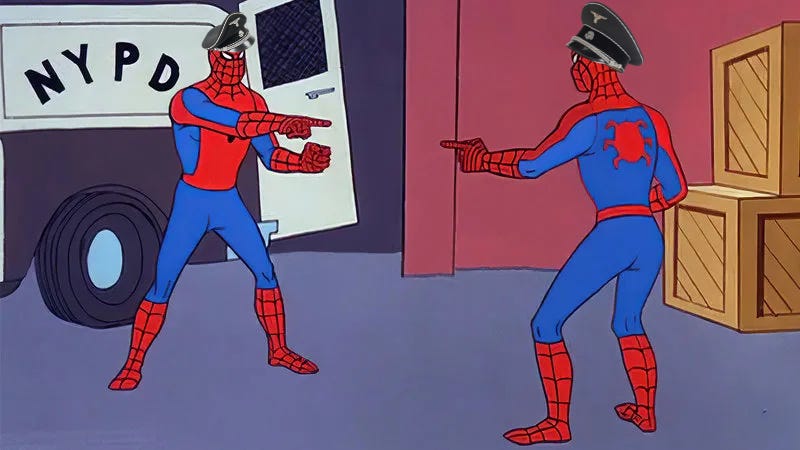
Godwin’s Law. For the win. Always and forever.
In my turbo-lib days, I was actually sympathetic to the idea of “defunding the police.” But that’s because I had a very specific, very narrow idea in my mind of what it meant.
Did I want to call 9-1-1 only to have nobody pick up? No. Did I want to be left to fend off cattle rustlers, brigands, and bandits all by my lonesome? Also no.
You should see me handle a pistol sometime. I’m fine with a long gun, but put anything with a short barrel in my hands and you’ll understand where the term “couldn’t hit the broad side of a barn” comes from. I have no fine motor control at all. My hands shake even when I’m not doing anything, I never tried to become a doctor even though I wanted to because I knew I’d kill my first patient in a surgical rotation, and I can’t even draw stick figures.
But I digress…
I’ve always liked cops, and never wanted them to go away. I thought “defunding” the police would actually be a good thing for them. I understood the bid as an effort to refocus public spending priorities to take the more social work-y business off their plate.
I no longer really think this, by the way. In fact, I just wrote a long piece arguing that we need to bring back asylums and get much tougher generally on low-level disorder. But when I first heard the idea—”defund the police”—it struck me as a good one.
Of course, not everyone who says “defund the police” means what I meant. Some of them mean, “we literally shouldn’t have police.” 9-1-1 would presumably still be there for fires and medical emergencies, but in the event a crime was reported, all that would happen is basically (details are vague) the dispatching of a team of community volunteers to rush over and give the perpetrators hugs and bread.
I am against that. I do not think it would work. I think most criminals are not Jean Valjeans-in-waiting
I’m exaggerating a little because I’m dick, but honestly, not by much.
Adjacent to the defund the police movement is the prison abolition movement. That one’s exactly what it sounds like. And just a few weeks ago, a police and prison abolitionist (maybe…she deleted a lot of her post history) named Darializa Avila Chevalier won the Democratic primary for the NY 13th congressional district.
Prison abolitionists are a weird bunch, because despite holding an amazingly fringe position, they seem to have decided that they shouldn’t really have to explain themselves, or how any of their ideas would work. Here’s a now-infamous cartoon by prison abolition activist Mariame Kaba.
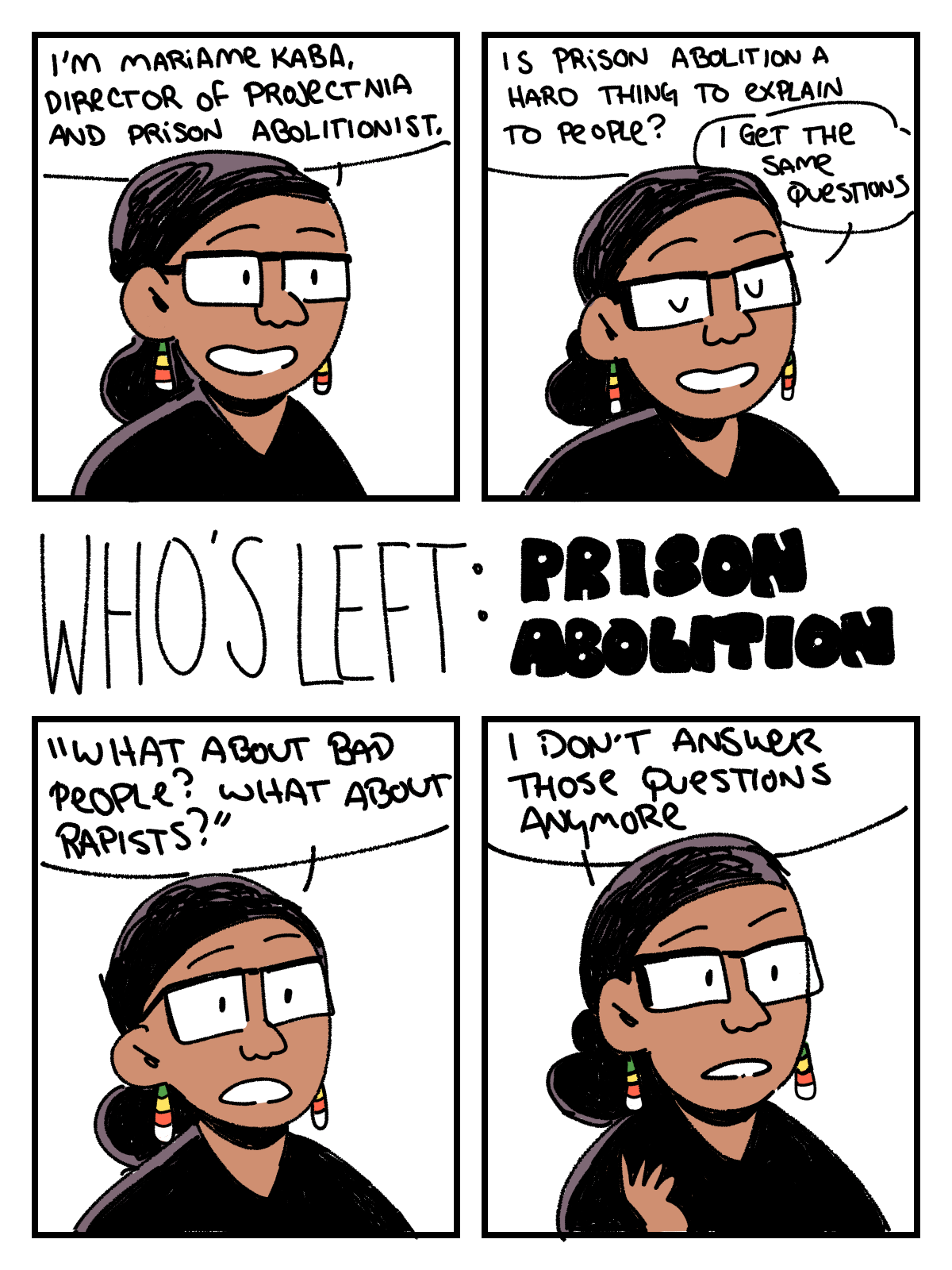
Imagine that I wanted to abolish ambulances, and somebody asked me what would happen in the event a person had a heart attack or got in a car wreck, and I said, “I don’t answer those questions,” or “It depends,” or, “Well, people die of heart attacks even with ambulances.” You might conclude that I just wasn’t a very serious person. And you would be right.
Last one.
“Abolish ICE” has come up a lot this cycle. Google Gemini estimates that around 30-40 Democrats or DSA types running for office in 2026 have “Abolish ICE” as part of their platform. Some use intentionally softer language like “defund” or “dismantle and replace,” which is at least clear. But this is another case of, “I need to know what you mean.”
ICE isn’t a particularly old agency. The idea of a United States without it is not completely ridiculous. Prior to 2003, immigration enforcement was handled by the Immigration and Naturalization Services (INS). If candidates think that ICE is too flawed, too corrupted, or too beholden to Donald Trump, those are valid positions to hold. I tend to think that ICE’s problems are exaggerated by the media and solvable through better leadership, but reasonable people can disagree here.
It matters a great deal though whether these candidates mean that they want a better agency handling ICE’s business or that they want ICE’s business not to be handled at all. “Open borders” is not a popular policy preference in the United States–last I looked, it was about 9% of Americans that didn’t want any border enforcement. But it’s out there. People who feel that way exist.
And it was well demonstrated during the Biden administration that all it takes is a handful of open borders adherents applying pressure in the right places to dramatically change the demographic landscape of the United States. In my experience, Democratic voters don’t have a good intuitive sense of how out of step Joe Biden was with his predecessors on border enforcement. The lightest Biden year saw three or four times the number of illegal crossings as the heaviest Obama year.
So I ask again: what do you mean? What do you actually want?
There’s no reason at all to think voters would support a return to the Biden paradigm–rejection of that was a big part of what got Trump reelected. So is this just blue meat for the base? Do you just want to do what Pete Hegseth did with the “Department of War” and change some signage and letterhead? Or do you want to open the borders? Do you want to put 29,000 mostly middle class federal employees out of a job?
I hope we can at least agree that these are not small questions. I really need to know whether you think Washington D.C. should look more like Oslo or more like Pyongyang. If we’re going to keep fighting over Israel, it might at some point be useful to set some parameters for what the fuck we’re talking about. And since crime and immigration are the hottest of hot button issues, I’d like just a morsel of clarity on what the blue team thinks (the party platform sheds little light).
Does anyone else care about this? Am I the only person who thinks it’s a problem that nobody’s even on the same page about what we’re talking about most of the time?
OG DSA darling Alexandria Ocasio Cortez went recently viral for a comment she made about Wisconsin gubernatorial candidate Francesca Hong’s history of hardcore, wokie tweets. Per AOC, “Woke 1 was crazy.”
Huh. That’s interesting. Woke 1? Crazy? Is that a disavowal? A repudiation? Does it mean a Woke 2 is coming? What will be in Woke 2? Will it be better? Worse? These are kind of important distinctions, no?
To this, rising GOP star Brandon Gill made the following response:
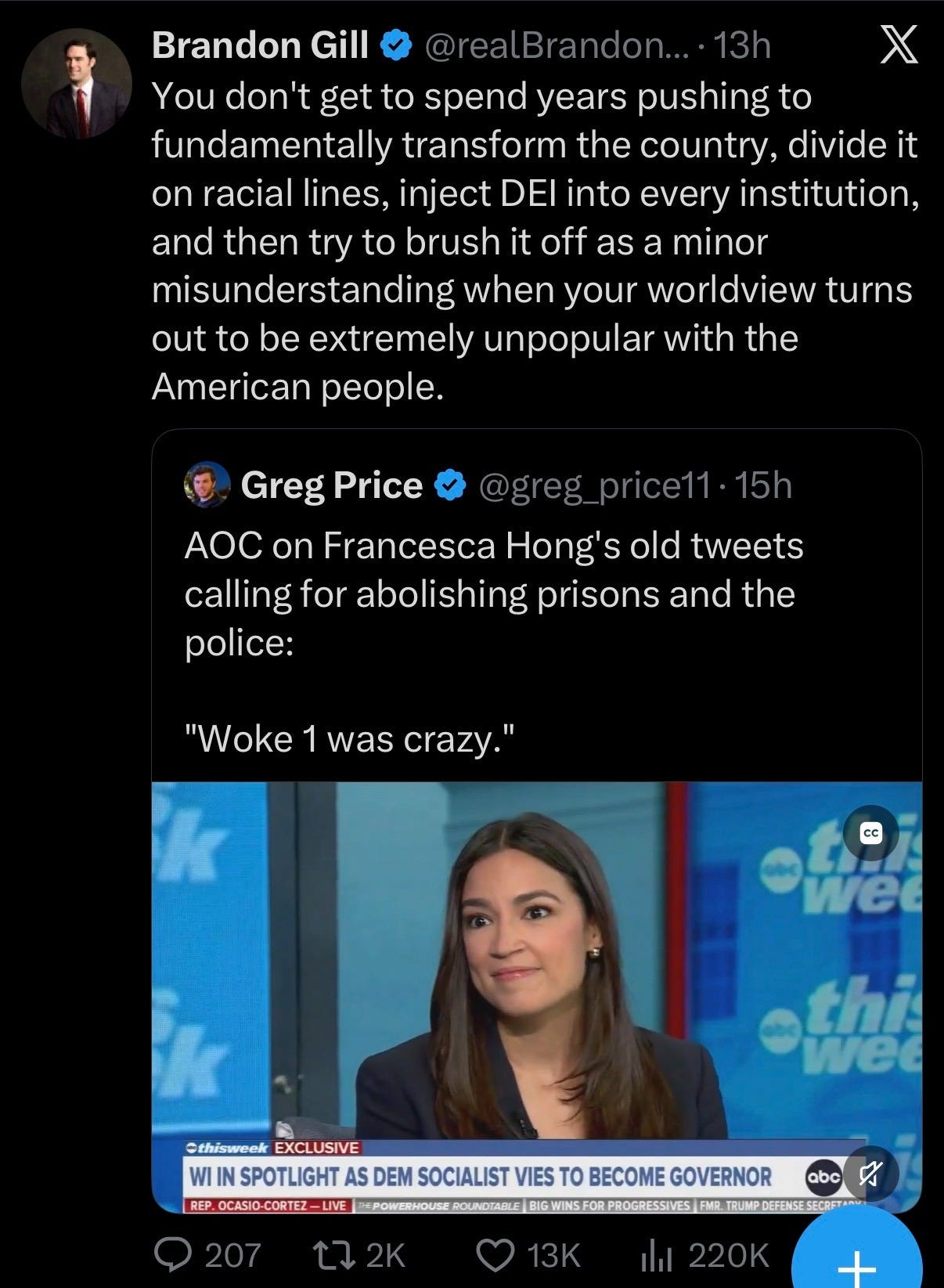
I get Gill’s sentiment. I’ve argued many times that wokery represents a generational problem for the Democrats. Every dopey tweet about “harmful” statues or pregnant men or culturally appropriative burritos hangs like an albatross around the neck of anyone who posted it. That applies to a lot of people!
But Gill is wrong here. You actually do get to push that stuff for years and then reverse course. It happens all the time in politics. Sometimes, people change tack because they’ve honestly changed their minds, and sometimes, they’re just reading the winds. Which is why, for the millionth time now, it matters what they are actually talking about!
I need to know what you mean!
Comments
Nothing yet. Say the first thing.
Sign in to join the conversation.