
I’ve spent years watching the mind up close… not as a theory, not as a philosophy, but as a living system that reveals itself most clearly when someone is trying to change and can’t quite understand why it isn’t happening yet.
What fascinates me is not the ambition. Desire is easy. People want many things. What interests me is the precise moment where intention meets an internal ceiling. Where movement slows, loops reappear, and the same patterns quietly resume, as if nothing new was ever introduced.
Change is rarely blocked where people think it is.
It’s identity lag.
Every outcome has a corresponding internal configuration: a way of perceiving risk, relating to time, holding responsibility, and interpreting one’s own capacity. When someone reaches for a new result, they are quite literally asking their nervous system, their subconscious, and their self-image to reorganise around a different centre of gravity.
And that reorganisation is not neutral.
The subconscious does not evaluate goals based on how desirable they are. It evaluates them based on coherence. On whether the identity required to sustain that reality feels recognisable, safe, and internally consistent with everything learned so far.
This is why people can understand exactly what needs to change and still not change it.
Because the part of them that entertains that behaviour is not persuaded by logic, it is persuaded by familiarity.
What often gets labelled as self-sabotage is, more accurately, self-maintenance. An older internal structure continuing to do what it was designed to do: preserve stability, protect attachment, avoid rupture. Even when that structure has outlived its usefulness. Even when it now limits range instead of ensuring safety.
No one resists expansion for no reason.
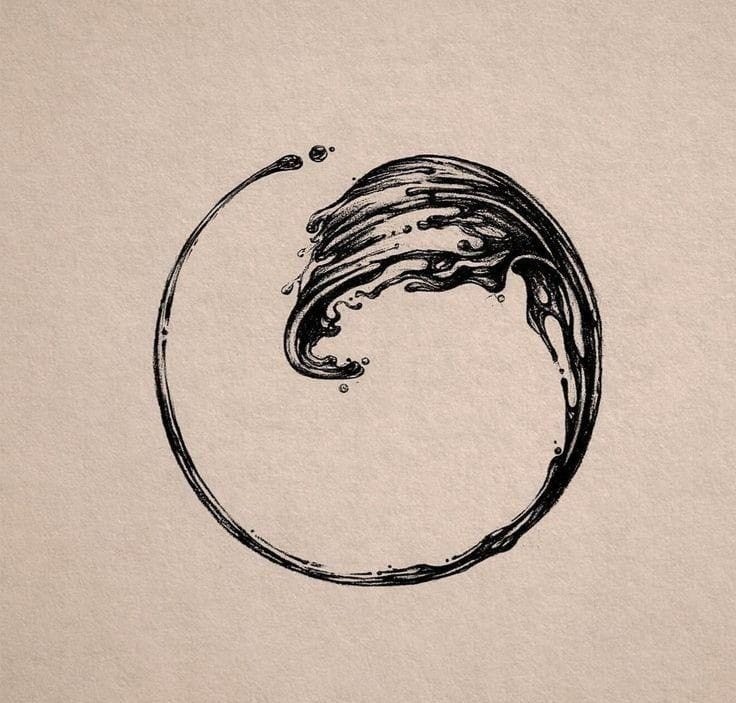
This is where most approaches to “growth” miss the mark. They try to install new behaviours on top of identities that were shaped under entirely different conditions - different risks, different rules, different consequences. The result is friction. Exhaustion. The sense of pushing only to get to the same outcome over and over again.
Real shifts come from releasing internal agreements that were never consciously chosen in the first place.
Old patterns
Old coping mechanisms
Old ways of making sense of the world that once kept you intact and now keep you contained.
The work is not about becoming someone else.
Quite the opposite - about subtracting what no longer belongs - until what remains can finally move freely.
When a behaviour refuses to change, it’s usually because it is still performing a function. Meeting a need. Maintaining a balance the system doesn’t yet know how to recreate another way.
Force doesn’t resolve that.
Awareness does.
Intentions are internal signals… declarations that initiate a quiet restructuring process beneath conscious awareness. And that process deserves precision, patience, and respect for the intelligence of the system involved.
I’m not interested in surface transformation or motivational architecture.
I’m interested in the moment when an old pattern no longer makes sense to repeat - when the internal logic that once sustained it dissolves, and a different way of being becomes the most natural option available.
That is where reality actually changes.
Not intellectually.
But in a way that lands in the nervous system - where the body can finally hold it.
Deni x
No posts
Comments
Nothing yet. Say the first thing.
Sign in to join the conversation.