
Among my friends are more than a few who had no use for the Michigan United Conservation Clubs (MUCC). They regarded it as an organization reflexively opposed to wilderness, biological diversity, and old growth protection and biased toward ORVs blasting through forests and hunting anything that moves. They also resented that each Department of Natural Resources director seemed to need the MUCC seal of approval before being appointed.
When MUCC announced its disbanding a couple of weeks ago, some of my friends may have been rejoicing. I wasn’t. Despite differences I had with MUCC, I saw it as a necessary and at times highly influential lobby for much good.
Its end means that we’ll never see that influence again, and in a time of rollbacks we don’t need further dwindling of the voices of conservation.
You can make an argument that MUCC was doomed by the dramatic decline in the number of Michigan hunters. Perhaps it should have reinvented itself to cater to the generations of outdoor enthusiasts who bike, hike and canoe without hunting or fishing. We’ll never know.
Once upon a time, from the mid-1970s to the early 1990s, MUCC was a force to behold in public policy. Under controversial director Tom Washington, the organization was a key factor in the enactment of the bottle bill (alias beverage container deposit), creation of what became the Natural Resources Trust Fund, wetlands protection and more.
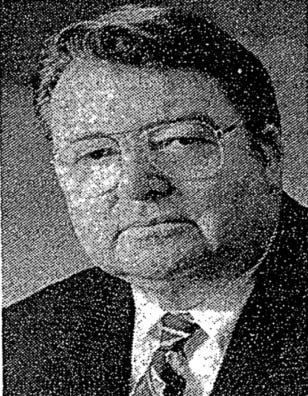
Tom Washington
Washington was not well-liked by the Legislature. But, more importantly, he was feared. MUCC had enough clout at the grassroots and statewide level to make legislators tremble.
His relations with environmental groups weren’t warm and fuzzy. Green groups thought he took credit for the results of their work. He thought the green groups were sentimentalist anti-hunters who had less influence on passing laws than they realized.
(The growing disconnect between the hunting/fishing community and the environmental community in recent years is regrettable. As outdoor writer Ted Williams said, “When sportsmen and greenies work together…they become an unstoppable political juggernaut.” It is not pure coincidence that Michigan made the most environmental progress when the two factions cooperated. When Minnesota sporting groups and environmental groups collaborated in 2008, they won voter approval of the Clean Water, Land and Legacy Amendment to the state constitution, raising the sales tax 3/8 of a cent to raise hundreds of millions of dollars annually for habitat protection, contaminated runoff control and more.)
It’s important to remember why MUCC was born in the first place. The intrusion of politics into natural resources infuriated conservationists. Remembering the plunder of the state’s forests, fish and wildlife, abetted by politicians, in the last decades of the 19th and the first decades of the 20th, they supported a system in which the state Conservation Commission, not the governor, appointed the director of the department of conservation. The legislature approved that, then spent years trying to give the power back to the governor.
Spurred by one of these attacks, on November 9, 1937, representatives of 35 clubs met to draft and approve a constitution to create a new organization, MUCC. Whenever politicians sought to abolish the conservation commission or give the governor direct appointment power, MUCC would organize a fierce counterattack. The system MUCC supported persisted for 60 years and generally worked well. Governor John Engler wiped it out.
A generation has never seen how an apolitical conservation agency worked, and doesn’t understand why it’s important. Politics from the outside is to be expected, but politics that runs the conservation agency from inside is a prescription for a short-term high and a long-term hangover of resource degradation.
It is taken for granted now that every new governor will reorganize natural resources programs, making it reflect her or his preferences. Are we really better off for it? Has Michigan’s environment significantly improved since Engler’s move?
I don’t hunt and rarely fish. I don’t particularly like hunting, but I respect that it is part of our traditions and that if scientifically managed it plays a major role in sound natural resources management. Defending it is not a crime. MUCC defended it well.
One less loud citizen voice for conservation is not a good thing, and until recent years, MUCC was one. I’m sorry to see it go.
No posts
Comments
Nothing yet. Say the first thing.
Sign in to join the conversation.