
Notes on Virginia
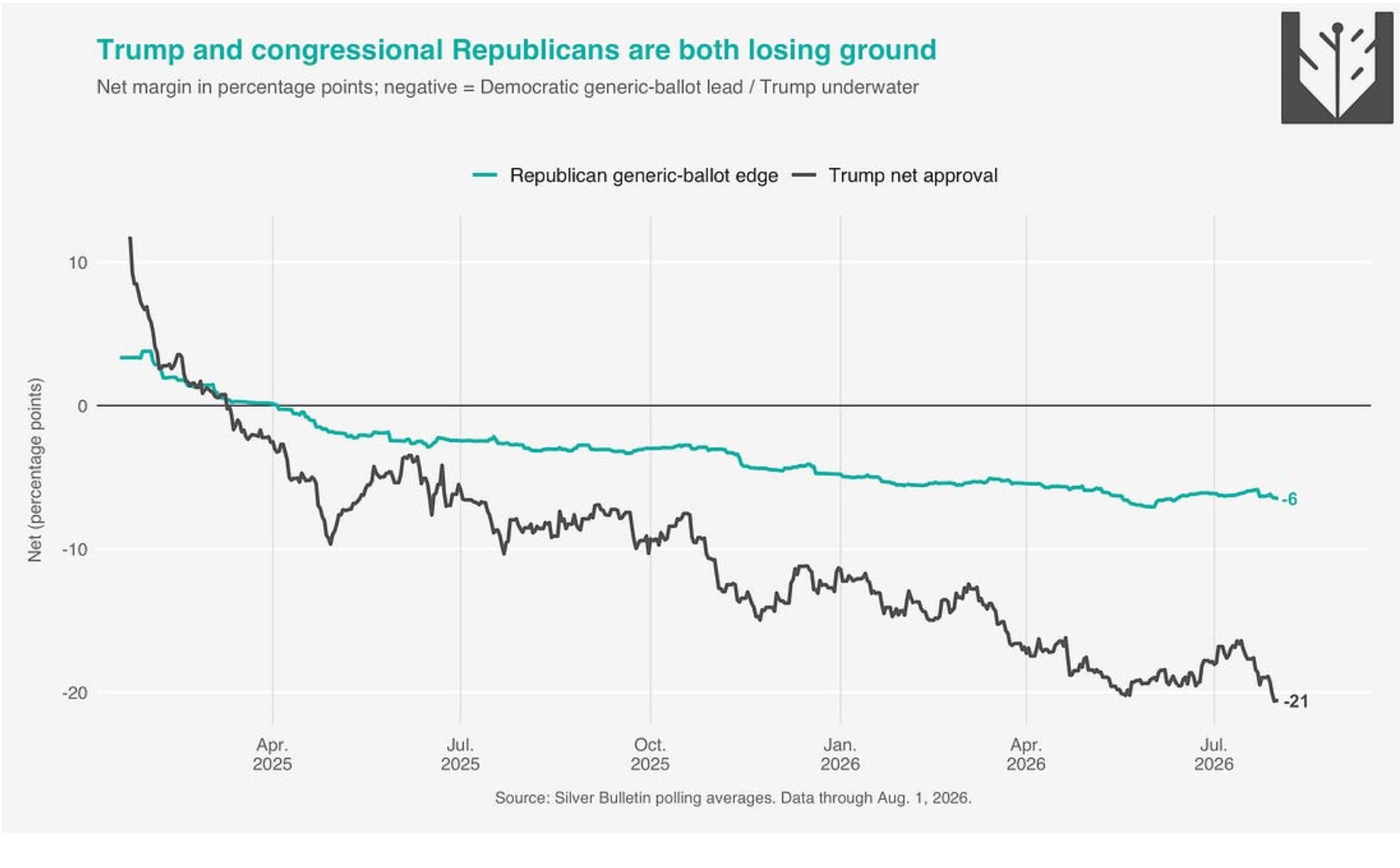
In Virginia, the ballot is now set for November. Republicans chose a relative unknown to face Senator Mark Warner this fall. Incumbent Democrat Don Beyer easily defeated a challenge to his renomination in the 8th Congressional district. Strong candidates were chosen by Democrats to face incumbent Republicans, including Tom Perriello in the 5th, Elaine Luria in the 2nd, Beth Macy in the 7th, and Shannon Taylor in the 1st. Given the political mood reflected in the chart at the end of this post, these races will be highly competitive and will likely determine control of the U.S. House next January.
While attention centered on the Democratic Senate primary in Michigan, equally significant developments occurred elsewhere—particularly in Kansas and Missouri. Those results underscore how state constitutions and state courts have become central battlegrounds in American politics.
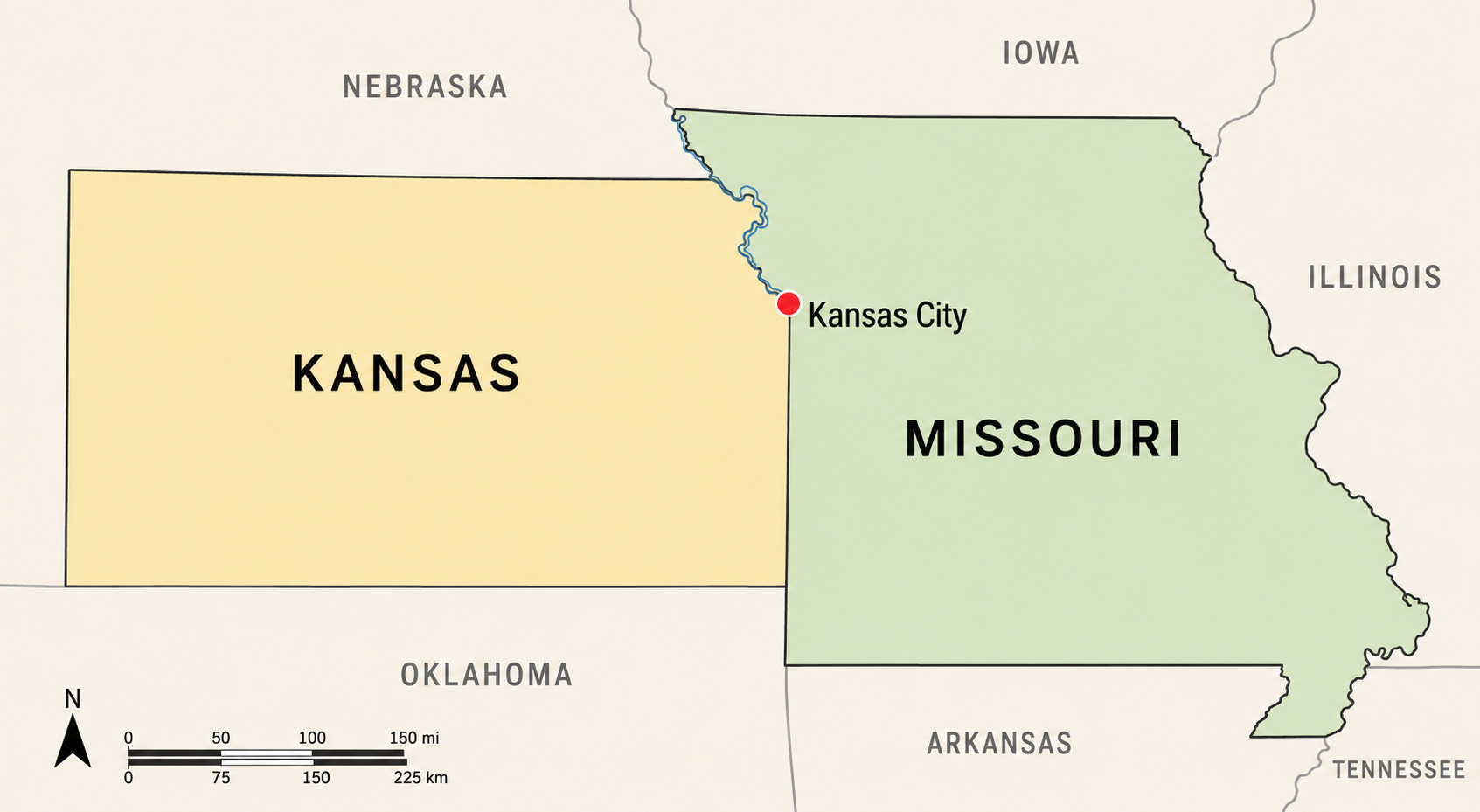
What’s With Kansas City?
The citizens of Kansas City went to the polls yesterday---in two states. I constantly must remind myself which Kansas City is actually in Kansas. The larger city—home to the Chiefs, Royals, jazz, and legendary barbecue—is in Missouri. Its smaller namesake across the state line is in Kansas. They share a metropolitan area but are distinct cities, and I will diplomatically decline to say which is the better place to live. On Tuesday, they had one thing in common—they voted.
In the state of Kansas, voters soundly rejected a constitutional amendment that would have replaced the state’s merit-based system for selecting state Supreme Court justices with direct popular elections. Under the current system, a bipartisan commission recommends three finalists, the governor appoints one, and justices later stand in retention elections. Variations of this “Missouri Plan” are used in thirteen other states.
For decades, Republican legislators have sought to dismantle the system, largely because they disagree with several landmark decisions of the court, including the 2019 holding that the state constitution protects abortion rights. Earlier, following deep education cuts under Governor Sam Brownback, the Court ruled that legislative funding failed to satisfy the state’s constitutional requirement to provide an adequate education, and forced lawmakers to increase school spending. That decision was especially irritating to republican leadership because it helped elect Democrat Laura Kelly as governor. Her opponent and the state’s current attorney general, Kris Kobach, has tried to transform the Supreme Court ever since.
Rulings like these made the state Court a prime political target. Tuesday’s vote confirms that Kansas voters prefer judicial independence over a politicized supreme court.
In many states, Supreme Court justices are selected directly by the public in statewide elections. These elections will occur in 32 states this fall, including Montana, Michigan, Wisconsin, and North Carolina. Since state courts decide most cases in our nation, the composition of these courts is increasingly significant. Virginia is an outlier in how it choses Supreme Court judges. Neither the public nor Governors have any direct role; it is the legislature’s responsibility.
Missouri
Kansas City, Missouri also voted on Tuesday, and both the city and the state dealt a political blow to conservative republicans in rejecting efforts to make citizen sponsored amendments to the state constitution more difficult. Republicans retain broad legislative majorities in the “show me” state, which have been further enhanced by partisan redistricting. But this has not stopped the voting public from asserting its power by directly putting measures on the ballot, which is their right under the state’s Constitution. Missourians have repeatedly used the initiative process to enact what the legislature would not—expanding Medicaid, legalizing marijuana and sports betting, establishing a constitutional right to abortion, and raising the minimum wage.
Republican lawmakers have spent years trying to curb the power of the citizen initiative. On Tuesday, voters rejected their latest effort. These voters will face yet another challenge in November, as conservative legislators have placed a measure on the ballot to repeal the citizen led initiative from 2024 that established a constitutional right to reproductive freedom.
Virginia Amendments the Fall
Citizen ballot initiatives are permitted in 26 states, and a variety of proposals will appear on ballots this fall. Virginia differs sharply from these states. Citizens cannot place constitutional amendments on the ballot in the Commonwealth. Instead, amendments must pass both houses of the General Assembly in two successive sessions separated by an election before voters have the final say. This fall’s ballot includes three significant amendments. One would establish the right of reproductive freedom. The second would repeal the 2006 constitutional ban on same-sex marriage, language rendered unenforceable by the U.S. Supreme Court’s 2015 decision recognizing that right nationwide. The third amendment would automatically restore voting rights to people with felony convictions who have completed their sentences.
States Matter
We spend enormous energy watching Washington, but democracy is just as often shaped in Topeka, Jefferson City, Richmond, and hundreds of other state capitals. State constitutions still matter. They determine how judges are selected, how citizens can change their laws, and which fundamental rights are protected. The results from Kansas and Missouri are reminders that, even in an era of deep polarization, voters in the states continue to insist on having the final say over the rules that govern them. And we will have that chance once again this November.
THE CHART THAT CONCERNS REPUBLICANS AND EMBOLDENS DEMOCRATS
Comments
Nothing yet. Say the first thing.
Sign in to join the conversation.