
👋 Hello to 3,468 climate buddies 🌳
Delphi Zero explores the interplay of climate, energy, and security 🌳🔋🛡️
📧 If you are opening this essay in your email inbox, I recommend clicking on the title of this piece to enjoy the full-length version in the browser.
Open any newspaper this week and you’ll see a similar picture. A deadly heat wave, rendered as a slightly sweaty postcard.

Then scroll down to the numbers. Since June 21, Europe has logged more than 1,300 excess deaths. France alone counted around 1,000 additional deaths in a span of days, with more than 1,400 dying on the hottest day, against a normal baseline of roughly 900 to 1,000. Paris morgues ran out of space.
A mass-casualty event behind closed apartment doors.
I’ve worked in and around climate for years, and I’ll be honest: I didn’t really understand the mechanism. I knew heat was dangerous but I couldn’t have told you how a heat wave actually kills a person.
If someone who reads climate research all day doesn’t have a gut sense of it, I suspect most people don’t either.
Let’s find out together.
By Art Lapinsch
You are always running at around 37°C, and you are always producing heat. Your cells burn fuel every second of every day, and the waste product is warmth. Even sitting still, reading this, you’re throwing off roughly the heat of a 100-watt bulb.
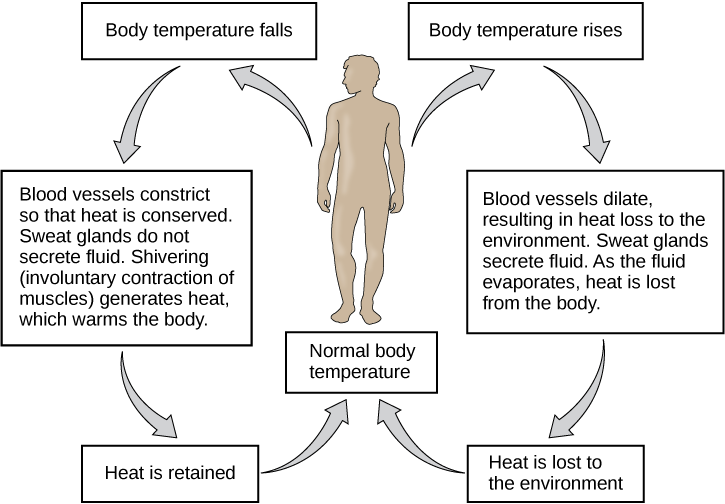
That heat has to go somewhere. If it doesn’t, your core temperature climbs and things start breaking. Just think how you feel at at 38°C, 39°C, or (if you’ve ever experienced that) at >40°C.
Under normal conditions, getting rid of it is easy. The air around you is cooler than you are, so heat flows out of your skin and into the world, the same way a hot coffee cools over time. Your body fine-tunes this constantly, widening the blood vessels near your skin to dump more heat, like a radiator opening up.
The trouble starts when the air gets close to your own temperature. Once the air is around 35°C, the simple “hot thing cools in cool surroundings” method stops working. At that point, your body has exactly one more tool left: sweat.
Sweating cools you because evaporation carries heat away. Liquid water turning into vapor on your skin pulls energy out of you. It’s genuinely clever, and it’s your last line of defense.
But it only works as long as it’s not too humid.
This is the single most important idea: Sweat only cools you if it evaporates.
And evaporation depends on how much moisture the air can still absorb. Dry air is thirsty and soaks up your sweat. Humid air is already saturated, so your sweat just sits there, beading and dripping, doing nothing. You’re soaked, you feel awful, and your core temperature keeps rising anyway.
This is why a 40°C day in dry Arizona is survivable in a way that a 35°C day in a humid, swampy city may not be. The thermometer (Celsius/Fahrenheit/…Kelvin - if you’re a temp hipster) only tells you half the story. The other half is the water in the air, and the two together decide whether your body can cool of or if you’re on death’s door.
Scientists fold both numbers into a single value called the wet-bulb temperature. The name is wonderfully literal. Wrap a wet cloth around a thermometer and blow air over it. The water evaporates, cooling the bulb, and the reading drops, exactly the way sweat cools your skin. In bone-dry air, lots of evaporation, the wet-bulb reading is much lower than the real temperature. In saturated air, no evaporation, the wet-bulb temperature climbs to meet the real one.
So wet-bulb temperature is, in effect, the temperature your body experiences after its cooling trick has been used up. It’s the number that actually matters for staying alive.
For years the headline figure was a wet-bulb temperature of 35°C, the point at which a healthy person at rest, naked, in shade, with unlimited water, theoretically can’t shed heat at all. The body becomes a sealed system, core temperature climbs, and fatal hyperthermia follows within about six hours. A genuinely frightening threshold.
Except it’s worse. That 35°C figure was a theoretical ceiling from a thermodynamics model, not a measurement of actual humans. When researchers at Penn State put real people in heat chambers, they found the true danger threshold is meaningfully lower, closer to a wet-bulb temperature of 31°C, even for young, healthy subjects.
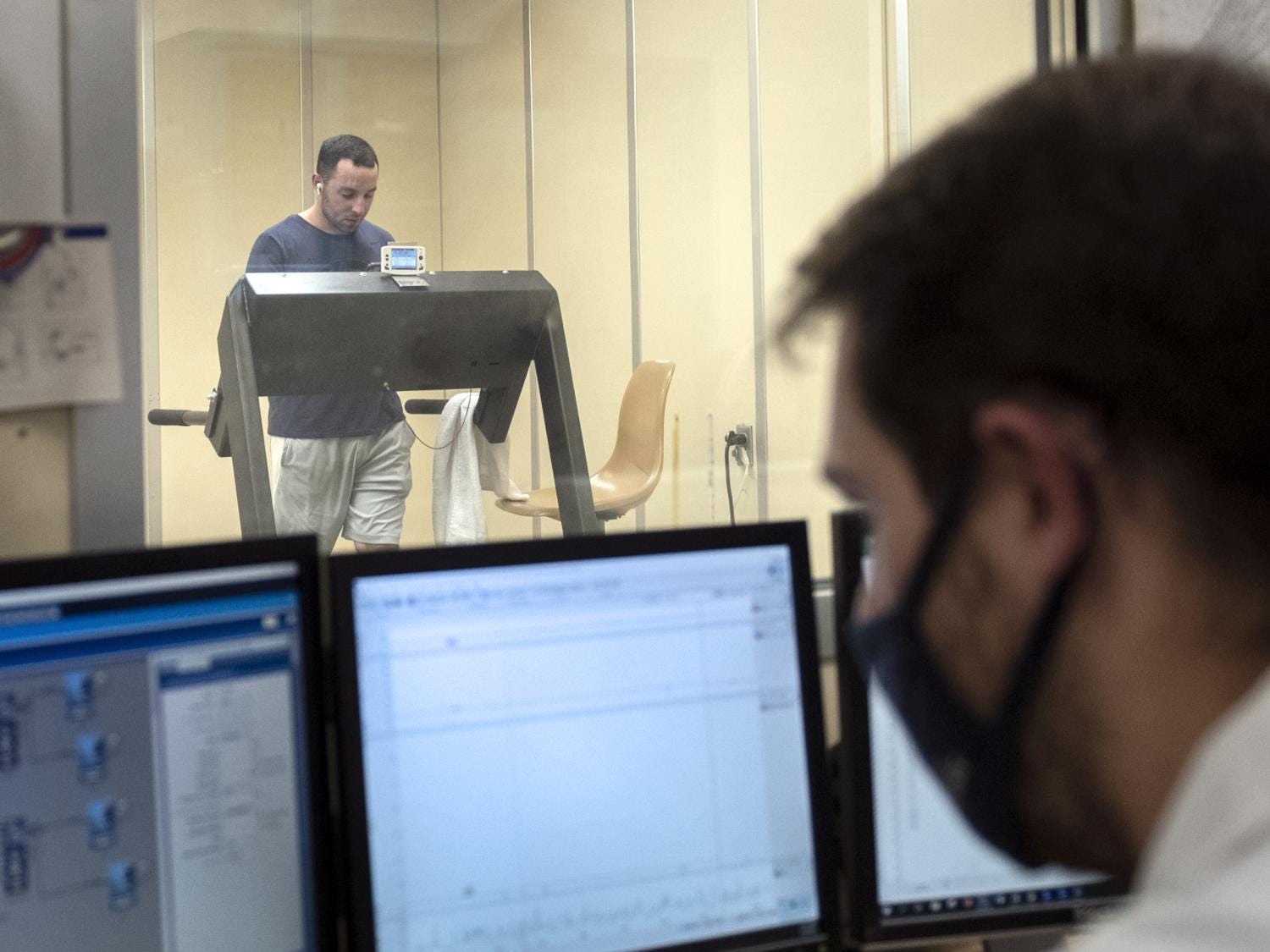
For older people it’s lower still. And a 2026 analysis found that several recent, deadly heat events killed people at wet-bulb levels below the textbook 35°C number. The deaths happening across Europe right now (and in the American North-East soon) are occurring well under the limit that used to be treated as the edge of survivability.
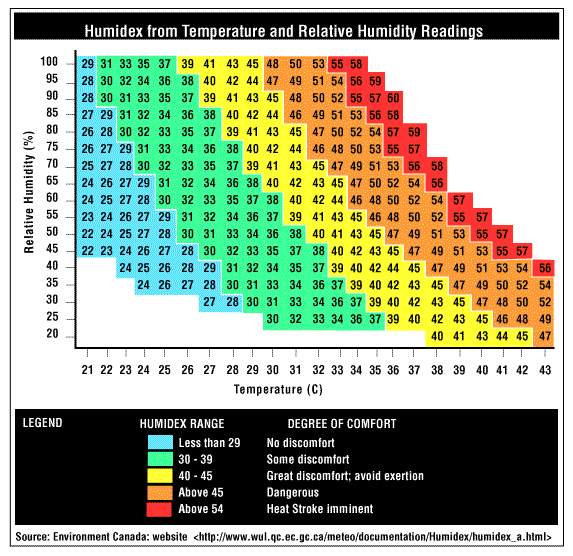
Let’s discuss this illustration.
Think of the air as a sponge. Dry air is a bone-dry sponge: press it against your wet skin and it pulls the moisture straight off, which is exactly what cools you. Humid air is a sponge that's already soaked. You can press it down all you like, but there's nowhere for the water to go, so your sweat just sits on your skin doing nothing. Your body is still making sweat, still trying to save you, but it's wringing water against a sponge that can't hold another drop.
Hence, dangerous heat isn't a single temperature, it's a sliding line that humidity drags downward. In dry air, around 20% humidity, you don't hit genuinely dangerous conditions until the temperature climbs past roughly 40°C. But crank the humidity up to 80% and that same danger line arrives at just 31°C. Same threshold, nearly ten degrees earlier, purely because the sponge is already wet. Thirty-one degrees does not sound scary. It sounds like a nice day at the beach. And that is exactly the trap: on a humid coast or in a muggy city, the number on the thermometer stays reassuringly low right up until your body can no longer cool itself.
Here’s the part that trips everyone up. Thirty-one degrees is well below your body’s 37°C. If your skin is cooler than your core, why isn’t that fine?
Because your body isn’t trying to keep your skin below body temperature. It’s trying to continuously dump heat, every second, forever, because your cells never stop producing it. And heat only flows one way: from hot to cold. Your 37°C core pushes heat out to your cooler skin, and your skin pushes it out to the cooler world. Every step needs a gap to flow across.
Shrink that gap and the flow chokes. When the air around you sits near your skin temperature and the humidity has already shut down sweating, your core is left trying to shove 100 watts of heat through almost no gradient at all, into surroundings that offer no escape. The heat has nowhere to go. So your core does the only thing physics allows: it climbs. It keeps climbing until the gap is wide enough to force the heat out again, but by then your core is at 40°C and you’re in heatstroke. There is no safe equilibrium left to reach.
That’s why the danger line sits so far below body temperature. You don’t need your skin to reach 37°C to be in trouble. You just need it close enough that the gap can no longer carry your own body heat away. A few degrees of margin sounds like plenty. It isn’t, because that thin margin is the only thing exporting every watt you generate.
(One clarification, since these get mixed up: the wet-bulb temperature is not the dew point. The dew point tells you when water will condense out of the air. The wet-bulb tells you the coldest your skin can get by sweating. It’s the second number that decides whether you survive.)
Your sweat has stopped working and your core temperature is climbing.
Start with the fluid. You’ve been sweating hard for hours, so you lose water faster than you can replace it, and your blood volume drops. What’s left flows thicker through the vessels. Now your heart has a problem. It’s being asked to do two competing jobs at once: pump blood out to the skin to shed heat, and keep pressure up for the rest of the body. With less fluid in the system, it can’t fully do both, so it races. And a heart beating that fast, under-filled, in someone whose arteries are already narrowed, is a heart doing more work on less oxygen. That’s the exact recipe for a heart attack. It’s why so many heat deaths are recorded as cardiac events.
Then the core climbs past roughly 40°C, and you cross into heatstroke. Your proteins, the molecular machines that run every cell, begin to denature, unfolding and seizing up the way an egg white turns solid and opaque the instant it hits a hot pan. It’s the same process in the egg and in you, and like the egg, it doesn’t reverse. You cannot un-cook a person.
From there it becomes a loop that feeds itself. The lining of your gut goes leaky and lets bacteria slip into the bloodstream. Your body answers with a whole-body inflammatory response, which makes vessels leak and blood clot where it shouldn’t, so you’re clotting and bleeding at the same time. Starved of proper blood flow, organs begin to fail, and each failure stokes the inflammation that drives the next. One thing turning the next in a circle. Once it’s spinning, it runs on its own, and without aggressive, fast cooling it runs to the end. This is why heatstroke is an emergency measured in minutes, not hours.
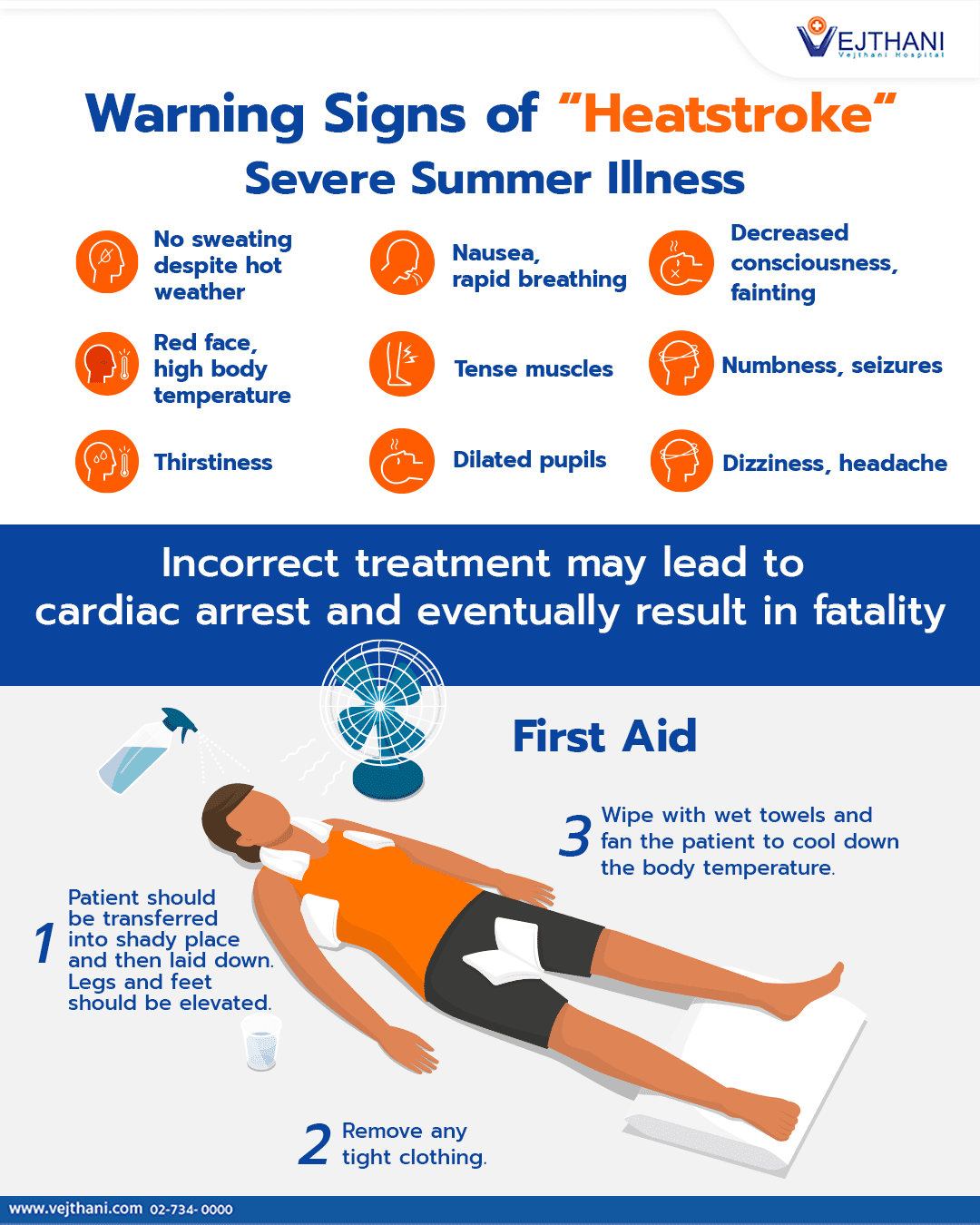
The people most at risk are the ones whose hearts, kidneys, and brains had the least margin to begin with. Heat rarely invents a new way to kill you. It finds the weakest link and pushes on until it breaks.
Now throw out the fountain photo, because it has nothing to do with who’s in the morgue.
In France’s preliminary data from this heat wave, about 85% of the registered deaths were people aged 65 and over, and deaths at home jumped by roughly 40%, concentrated heavily in the Paris region. The defining image of a heat wave death isn’t a tourist or a kid in a sprinkler. It’s an elderly person, alone, in a closed-up apartment, often with the windows shut against a heat that’s already inside.
This is the part that genuinely unsettled me, because it’s so ordinary. Everyone reading this knows someone in that apartment. A parent/grandparent, a widowed neighbor, the quiet person down the hall.
Why are older people so much more vulnerable? Several reasons stack on top of each other. The body’s thirst signal weakens with age, so they don’t feel the dehydration coming. The sweat response gets less efficient. Many take common medications, for blood pressure, heart conditions, or mental health, that blunt the body’s ability to regulate temperature or to sweat at all. And many live alone, so there’s no one to notice the early confusion, no one to bring water, no one to call for help when they can no longer call for themselves.
There’s also a cruel detail in the French numbers: this heat wave broke records for nighttime lows, not just daytime highs. That matters more than it sounds. The body recovers from heat at night. A cool night is a reset. When the night never drops below the high 20s, there’s no reset, and fatigued bodies that survived the day don’t survive the accumulation. It’s a one-two punch over and over again.
Air conditioning is, bluntly, the single most effective thing humans have ever invented for not dying in heat.
Studies tracking American states before and after AC spread found it cut the risk of dying on an extremely hot day by about three-quarters. It is, very literally, life-saving technology.
And Europe largely doesn’t have it. Roughly 6% of German households have AC. Compare that to ~ 90% in the United States and in Japan, both of which also have aging populations and yet far lower per-capita heat death rates. Europe pairs the rich world’s lowest AC coverage with its highest heat-death rate. The two facts are not a coincidence.
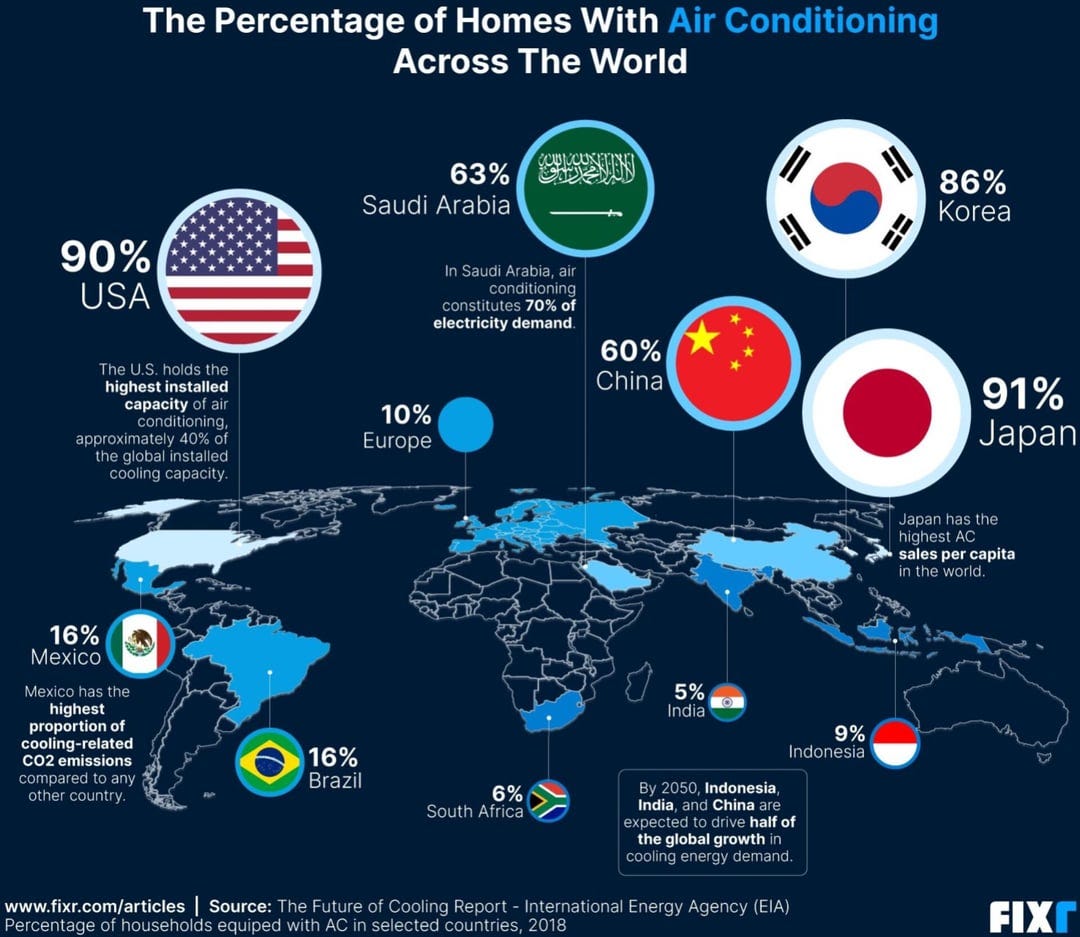
Why so low? Partly history: Europe’s climate was mild for so long that cooling was genuinely unnecessary, and that assumption is baked into everything. Partly cost, with high electricity prices making AC feel like a luxury. Partly culture, a real strain of “we don’t do that here” energy-conservation pride. And partly, intriguingly, the buildings themselves. In places like Germany and Austria, you often can’t just bolt a condenser unit to the outside of a building, because altering the facade of a protected or regulated structure isn’t allowed. The wall is, in a sense, more legally protected than the person behind it.
The shift is happening, fast, the way these things do after a body count. After the catastrophic 2003 heat wave, Italian household AC went from somewhere around 10–15% to roughly 56% by 2024, and shops across France this week literally sold out of units. But a retrofit measured in decades is no help to someone in a sealed apartment during the heat wave that’s happening now. A brutal timing problem.
This deserves its own deeper treatment, the regulation, the grid implications, the equity questions - but that’s for a future post.
A heat wave is one of those events where the conventional wisdom is riddled with small, dangerous errors. Here are the ones worth fixing.
“It’s just hot. People are being dramatic.” Heat is, in many years, the deadliest weather hazard there is, outpacing hurricanes and floods. It just kills slowly, indoors, and off-camera, so it never looks like a catastrophe.
“The thermometer tells you how dangerous it is.” Only half. Humidity decides whether your sweat works, and the overnight low decides whether your body gets to recover. A muggy night that never cools can be more dangerous than a hotter, drier afternoon. Watch the humidity and the nights, not just the peak.
“Healthy young adults are basically fine.” Mostly, at rest. But exertion erases the safety margin shockingly fast. In Poland this week, two cyclists, aged 30 and 71, died during a bike marathon in nearly 40°C heat. The 30-year-old was not frail. Add physical effort to extreme heat and the danger threshold drops to meet you.
“Just point a fan at yourself.” Intuitive, and partly wrong. A fan cools you by helping sweat evaporate, fine when the air is cooler than your skin. But once the air is hotter than you are, a fan is just convection-blasting hot air across your body, like a fan oven, and it can actually accelerate dehydration while you feel like you’re doing something helpful. Above roughly body temperature, a fan can stop being a friend.
“Drink as much water as you possibly can.” Hydration matters enormously, but pure water taken to excess has its own failure mode. Flooding your system with plain water while sweating out salt can dangerously dilute your blood sodium, a condition called hyponatremia that is life-threatening. The body needs electrolytes, not just volume. Salt with the water.
“A cold beer cools you down.” Alcohol dehydrates you and impairs the judgment that keeps you out of trouble, including the trouble of cooling off in unsupervised water. France saw a sharp rise in drownings during this heat wave, including a 21-year-old footballer. Heat doesn’t only kill through hyperthermia. It kills through the things heat tempts people into doing.
“This is just a freak event.” The World Weather Attribution group found this heat would have been virtually impossible 50 years ago and is now around 200 times more likely than it was 20 years ago. Europe is the fastest-warming continent on Earth. The freak is becoming the baseline.
Let me bring this back to where it started, with the two photographs.
After everything, the body, the wet-bulb numbers, the missing air conditioners, here’s what stays with me. The intervention that saves the most lives in a heat wave is not high-tech. It’s somebody checking on the person in the closed-up apartment. Calling, knocking on the door, whatever. Making sure they’re drinking water, that the windows are open to the night air, that they’re not quietly slipping into the confusion that comes before collapse.
The 2003 European heat wave, which killed tens of thousands, triggered exactly this kind of civic awakening. People started thinking about their elderly neighbors, the ones who live alone, the ones nobody would notice for days.As one French official put it this week, we’ve perhaps forgotten that it could happen again, and that it could be even worse.
If you’ve got an elderly relative or neighbor, this is your reminder to check on them this week. It is, measurably, one of the most effective things you can do.
Stay cool out there. Look out for each other.
Art ✌️
I hope you learned a thing or two. I certainly did. If you found this useful, consider sharing it with a friend.
Next Time: the infrastructure side of this. What the heat does to the rails, the roads, and the grid.
Comments
Nothing yet. Say the first thing.
Sign in to join the conversation.