
Anthropic shipped something this week called ‘Show’.
Ask Claude a question and it generates interactive visuals inline. A compound interest curve you can manipulate. A diagram that shifts as you dig deeper. When the conversation changes, the visual changes. Or it disappears.
I’ve been using it to learn the difference between MCPs and CLIs. Instead of a wall of text explaining how they connect, I get an interactive diagram, the flow of requests, the rendering layer, components I can explore at my own pace. The kind of thing that would have taken me five tabs and a YouTube video now resolves in one conversation, visually.
That last part is worth sitting with.
The more interesting story is what’s underneath. Open Chrome DevTools while using Claude and you’ll notice the UI renders through an iframe. This connects to a piece Anthropic published on MCP Apps, extending servers with interactive user interfaces. They’ve been working on this since at least November 2025. Show is the first public surface of it.
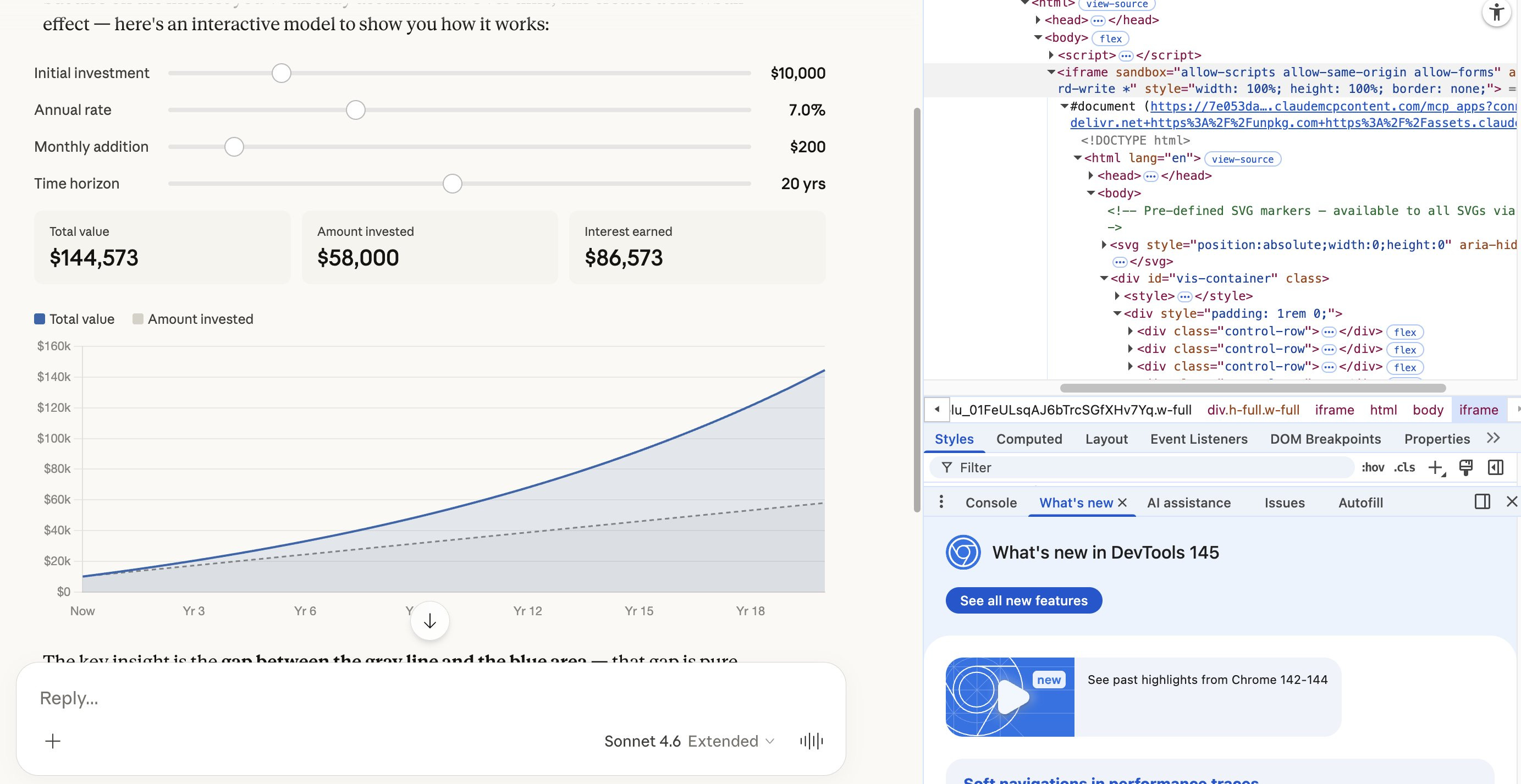
What they’ve built isn’t just a feature. It’s a model for how interfaces could work in an agentic world. Ephemeral by design, not by accident.
When I open DoorDash, I’m met with swimlane after swimlane. “Trending near you,” “Under 30 minutes,” “Top rated,” cuisine filters, price tiers, a home screen pulling from my order history. It works. But it’s doing a lot of work to approximate what I actually want.
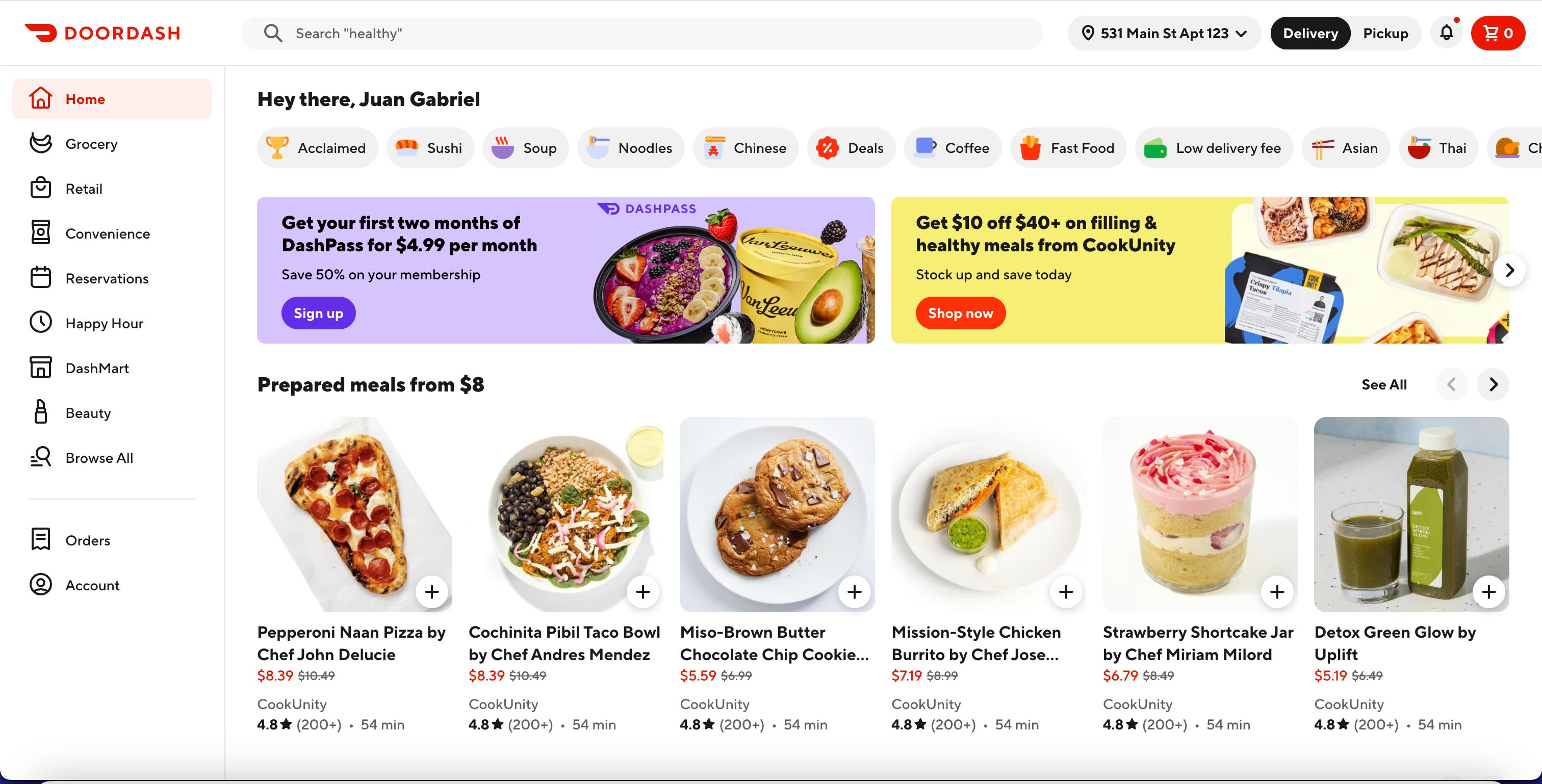
When I tell an agent “Indian food, fast, under $20,” I expect a few cards. Delivery time and price as the headline. No swimlanes, no filters, no guessing.
Same with Amazon. When I search for laundry detergent, I get a page of hundreds of options. I sort by rating, scan for my machine type, filter by scent. The platform gives me every tool to find it myself because it can’t know what I need ahead of time. When I tell an agent I have a front-loader, want fragrance-free, and have a $20 cap, it doesn’t need all of that. Three products. The specs that matter to me as the headline. Done.
Today’s interfaces use scale and sorting to approximate personalization. Ephemeral UI renders personalization directly.
The industry is starting to call this Generative UI. Three approaches are emerging, less like competing camps and more like different tools in the same drawer. Here's how to think about which one fits what you're building:
Controlled. The agent picks from a predefined component catalog. Vercel’s json-render works this way. The agent fills in the form (”show these three detergent options, fragrance-free filter applied, price as headline”), your app reads it and renders the card. You define the vocabulary. The agent can’t go outside it.
Best for : any surface where a wrong layout has real consequences. A checkout confirmation. A flight booking. A bank balance. Anywhere a misplaced number or an unexpected button is genuinely bad.
Declarative. The agent describes what to show through a schema, and your app renders it using your own design system. Google’s A2UI, open standard as of December 2025, takes this approach. More expressive than Controlled because the agent can describe structure and relationships, not just component names. Your rendering layer stays in control of how it looks.
Best for: content that’s dynamic but needs to stay on-brand. Think of a weekly metrics digest: the agent pulls your numbers from wherever they live and surfaces what matters. Your dashboard renders it exactly how your team expects it to look, same design system, same grid, different data every time.
Open-ended. The agent generates and runs full UI components directly. That’s where MCP Apps is heading. The iframe you see in Claude’s DevTools is the runtime, sandboxed so generated code can’t touch the rest of the page. The agent doesn’t describe the UI. It builds it.
Best for: early exploration, when neither you nor the user knows the shape of what they need yet. Competitive research where you’re not sure what you’re looking for. Planning something for the first time. The agent builds views on the fly because no predefined catalog could have anticipated what you’d need to find.
Two things if you’re interested in where this is going:
First, I’m looking for shipped products doing ephemeral UI well. Not a demo. A product where UI appears for you, contextually, serves its purpose, and gets out of the way. I haven’t seen many yet. Tell me who I’m missing.
Second, go play with Vercel’s json-render or Google’s A2UI. Both are open. Pick one, build something small. The gap between reading about generative UI and actually building something in it is larger than you’d expect. Close that gap.
The web wasn’t built for this. The next one will be.
Who’s making ephemeral UI work right now? Drop it in the comments.
Comments
Nothing yet. Say the first thing.
Sign in to join the conversation.