
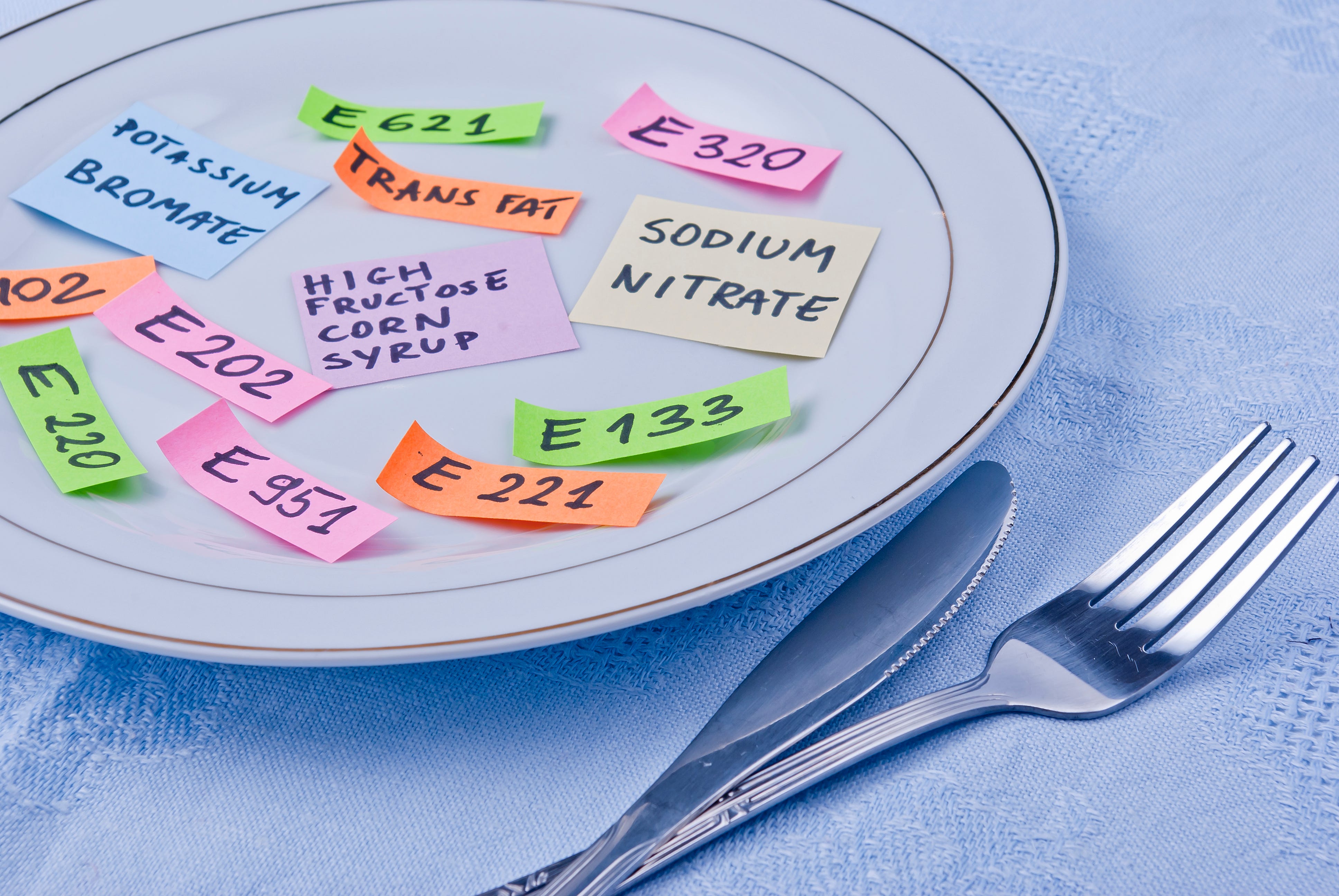
In Part 1 we discussed what ultra processed foods (UPFs) are, examined startling facts about how much of them we eat today, what ‘mouthfeel and ‘bliss points’ are, whether food addiction is real, why we’re primed to eat UPFs, what ‘dynamic contrast’ is and how our taste buds are enticed to want more processed foods.
Click the button below to access Part 1 if you’d like to read it:
Neuroscientists & Junk Food - Pt 1 of 2
Food that is very refined breaks down in your mouth very quickly and doesn’t give your brain a chance to fully register that you’ve eaten it.
So you keep on eating and consume many more calories than if the food took time to chew and your brain had a chance to catch up and say ‘enough!’
It takes about 20 minutes for the hypothalamus to register satiation and you can eat a lot of refined food in that time. (18)
In addition:
‘ … Evidence currently suggests that chewing may decrease self-reported hunger and food intake, possibly through alterations in gut hormone responses related to satiety.’ (19)
So, not chewing impacts gut hormone response to registering ‘fullness.’

All three of the above are necessary for health, just not in the form or in the quantities supplied in UPFs.
Humans have a long and important relationship with salt, sugar, and fat, which dates back to the origin of our species.
Salt is essential for fluid balance, sugar provides the energy for physical and mental activity, while fats of various types make up most of the mass of the brain.
Over time, however, we discovered the seemingly magical properties of these three ingredients to transform smelly, stale, and near tasteless foods into sweet, savoury, and delightfully flavourful so-called nutrition. (7)
As Moss states:
‘ … By the mid 1900s, this trio of salt, sugar and fat took on a new psycho-sensory dimension when the processed food industry discovered that these ingredients could be formulated to produce a state of satiety, pleasure, and hedonia in those who consumed them.’ (7)
As mentioned above, Moskowitz, termed this the ‘bliss point’ or the point where the levels of saltiness, sweetness, and richness were perceived by the consumer as just right.
‘When the processed food industry added a crunchy mouth feel to their bliss point formulations, a whole new generation of ‘craveable’ foods was created.’ (20)
• Fat is beloved by humans because of its important functions in the body and brain.
After all, 60% of the dry weight of the brain is composed of fat. (21)
In addition, flavour molecules disperse optimally in our mouths when combined with fat molecules, versus with water molecules.
This supports good ‘mouthfeel.' (17)
However, the fats used in UPFs are damaged fats, like trans fats, because healthy fats go rancid. And people won’t eat bad tasting foods.
Food scientists have also changed the shape of fat globules to improve how products feel in the mouth.
Keep in mind, sugar and fat don’t exist together in nature naturally – besides in breast milk.
And, a ratio of 1:2 in favour of fat over carbohydrate seems to make food irresistible. (8)
• We use the words ‘table salt’ and ‘sodium’ interchangeably, but they don’t mean the same thing.
Table salt is also known by its chemical name, sodium chloride, which is a crystal-like compound that is abundant in nature. Sodium is a mineral, and one of the chemical elements found in salt.
Sodium is an essential nutrient and is needed by the body in relatively small amounts, as long as we don’t sweat profusely, when we need more.
Sodium is used to maintain a balance of body fluids and keep our muscles and nerves running smoothly.
So, it’s natural that we will enjoy salty foods - we’re primed to gravitate to nutrients that are essential. (22)
What have UPFs manufacturers done to salt?
They’ve ground salt finer, which helps the flavour hit our taste buds faster.
• Similarly with sweet tasting foods.
We’re primed to eat sweet foods as they provide a quick burst of glucose, which our cells need to produce energy.
But too much isn’t good for us, and natural foods that are sweet, also contain fibre which slows down the release of glucose. (23)
We lose our natural satiation cues because there’s no water or fibre in these UPFs.
Our brain, via our hypothalamus doesn’t get the message ‘you’re full, so stop eating.’ (24)
Past experiences of eating enjoyable food naturally drive future eating choices.
Your brain is expert at remembering past experiences that elicited the ‘dopamine’ effect because it remembers the enjoyed experience and pushes you to recreate it. (25, 26)
The anticipation of eating the food again also increases salivation, which sets the stage perfectly for saliva to move food around your mouth quickly.
The feelings of satisfaction and enjoyment experienced when eating these stimulating foods produce extremely powerful memories that tempt you to create another dopamine ‘hit.’
Moss also states that:
‘Addiction is also deeply enmeshed with memory, and the memories we create for food are typically stronger and longer lasting than any other substance. Childhood memories of food can wield an uncanny power over our eating habits for the rest of our lives.’ (8)
Apart from stores bursting with UPFs, manufacturers of such have found other ways to keep them in our lives.
Vending machines are prevalent in various settings, such as stations, supermarkets, cinemas, shopping malls, hospitals, workplaces and educational institutions.
They offer a variety of snacks and beverages in a convenient and accessible way.
The vending market is now valued at $16.07 billion, is rapidly growing and is forecasted to expand further to $26 billion by 2030.
Although we know that they mostly offer UPFs, which don’t go off and don’t need refrigeration. The proportion of unhealthy foods range from 85% to 100%, and those of unhealthy beverages from 49% to 80%. (27)
And when are people more prone to fall for these foods?
When they’re travelling and hungry, possibly stressed, and when they’re out and about, and convince themselves they should enjoy a treat.
And of course in educational settings children will eat what their friends eat.
But what about ‘speed of access?’ How does that impact addiction potential?
The rest of the article is for paid subscribers.
Comments
Nothing yet. Say the first thing.
Sign in to join the conversation.