
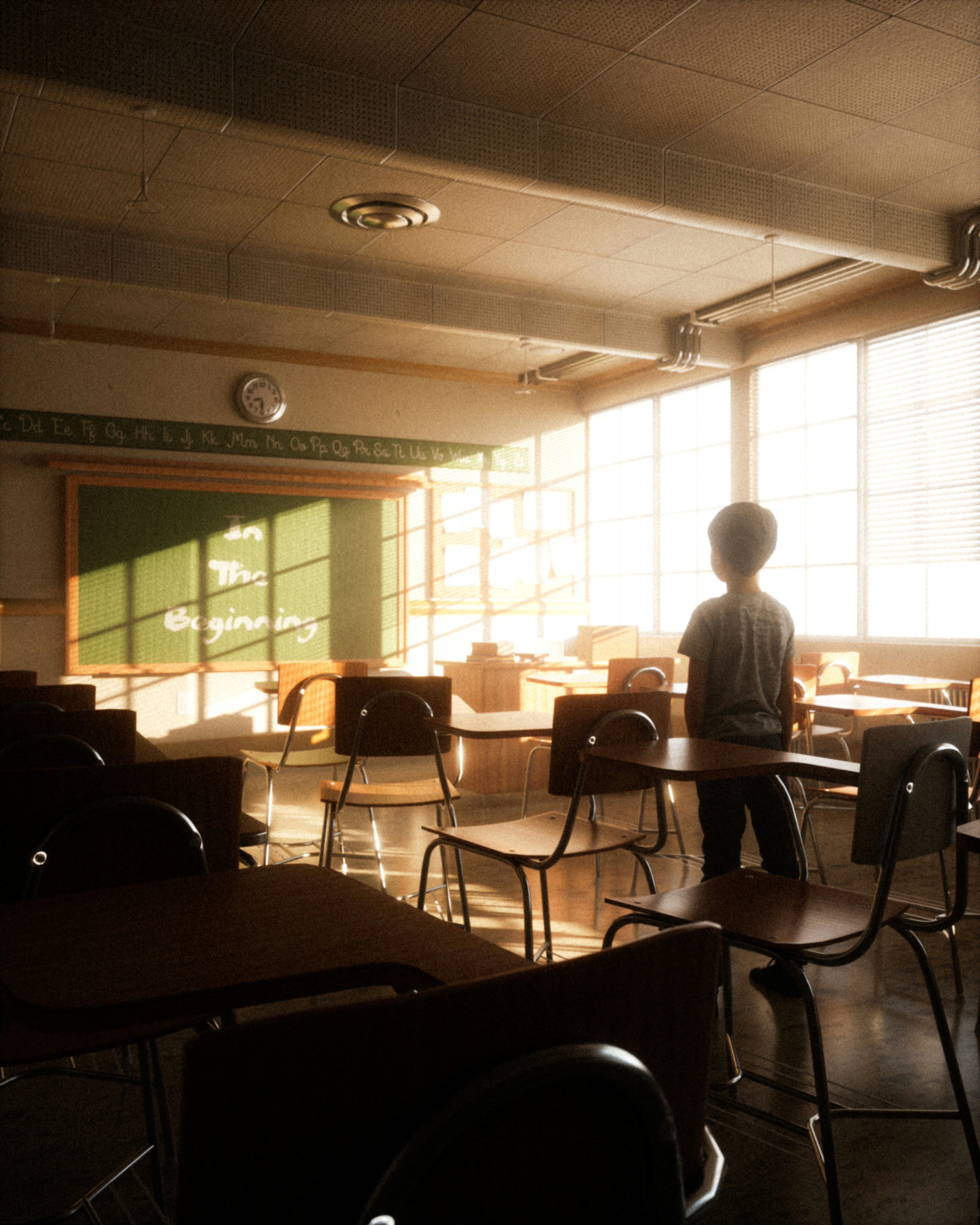
President Trump’s war on immigrants has escalated dramatically in his second term, with increased violence against immigrants and record numbers of immigrants booked into detention in both June and July of 2026. The immediacy of the danger to immigrants in America cannot be understated at this moment, and the individuals and families dealing with those imminent threats on a daily basis have to be on high alert at home, work, and even at school.
The targeting of immigrants for arrests at schools in particular, a new development in Trump’s second term, has the effect of making immigrants feel unwelcome and unsafe at America’s public schools – sending the message that taking a child to school on any given day could end up being a fatal encounter. The physical presence of ICE agents on school campuses alone is chilling, even before the violence these agents have inflicted is considered. ICE’s presence on school campuses is meant to make immigrants feel unsafe there.
Over 40 years ago, the Supreme Court considered a case concerning the important intersection of immigration and education in Plyler v. Doe. In Plyler, the plaintiffs challenged a Texas statute that withheld funds from school districts allowing undocumented children to attend their public schools, allowing districts to exclude these children from enrollment. The Supreme Court ultimately found the statute unconstitutional, ruling Texas could not exclude undocumented children from its public schools or charge those students tuition that other students would not have to pay. Upon review, the Plyler decision’s foundational nature becomes clear – aside from finding that Texas could not exclude undocumented children from public schools, Justice Brennan’s opinion for the majority conclusively rebuts many common arguments against differential treatment for immigrants, legal or not.
Given how thoroughly it debunked the state’s arguments in favor of denying public education to undocumented children, it is no wonder that the Heritage Foundation has seized the moment and is targeting the Plyler decision for reversal. Since 2025, the following states have attempted to challenge Plyler, thankfully with no success to date:
Idaho: Introduced HB382, which would have required schools to collect and report the immigration status of each enrolled student, the bill would later die.
Indiana: Introduced HB1394, which would grant public schools the right to deny enrollment to undocumented students. The bill failed to get out of committee
New Jersey: Introduced A5233, which would require tuition from undocumented students in 2025. Though it failed to pass in the 2024-2025 legislative session, the bill was carried over as A323 in 2026.
Ohio: legislators introduced HB42, which would require schools to collect and report the immigration status of their students. data collection. Introduced in 2025, the bill has yet to move.
Oklahoma: the state Board of Education voted to change an administrative rule to require parents to prove citizenship to enroll their children in public schools. The rule change failed in the state legislature.
Tennessee: In 2025, Tennessee legislators introduced companion bills SB0836 and HB0793 which required parents to show proof of citizenship to enroll their children in public schools and allowed schools to charge tuition to undocumented students. After massive protests, these bills stalled and did not pass. In 2026, similar bills HB1711 and SB2108 were introduced but also failed to pass.
Texas: HB371, allowing schools to charge tuition to undocumented students and HB5371, requiring proof of citizenship for enrollment, both died in committee.
While recently revisiting the Plyler decision, it was hard not to see how the court logically, effectively, and conclusively disproves the objections to immigration that under gird the challenge to the law, many of which continue to be recycled to this day. Perhaps the primary argument made by the plaintiffs in Plyler is that educating undocumented children is one of the many ways that undocumented persons are a drain on the economy. Here’s what the Plyler decision says:
“There is no evidence in the record suggesting that illegal entrants impose any significant burden on the State’s economy. To the contrary, the available evidence suggests that illegal aliens underutilize public services, while contributing their labor to the local economy and tax money to the state fisc. 458 F. Supp. at 578; 501 F. Supp. at 570-571.” (Plyler at 228).
Nearly 40 years later, Rice’s Baker Institute confirmed this fact with a report estimating undocumented immigrants provided a net benefit of $420.9 million, or that for every dollar of assistance spent on undocumented immigrants, the state of Texas received $1.21 in fiscal benefits. Further, the study estimated that the economic impact of the deportation of all undocumented workers in the state would result in a loss of $171.9 billion dollars to the GSP. A January 2026 report estimated that delivering public education to undocumented children has generated a $633 Billion return on investment.
It logically follows that the plaintiffs in Plyler would also claim that the drain on resources meant the state was less able to provide a quality education to its students. The Plyler decision dismantles this argument:
“ …the record in no way supports the claim that exclusion of undocumented children is likely to improve the overall quality of education in the State. As the District Court in No. 801934 noted, the State failed to offer any credible supporting evidence that a proportionately small diminution of the funds spent on each child [which might result from devoting some state funds to the education of the excluded group] will have a grave impact on the quality of education.” (Plyler at 229).
As with the economic argument, recent studies have only reinforced this finding from the Plyler court. In 2012, the Deferred Action for Childhood Arrivals Act passed, allowing for people who came to the United States as children to attend college. A 2024 study of the law’s impact showed that it led to improved educational attainment and academic performance for undocumented children while also having positive spillover effects, with the U.S. born classmates of DACA students showing improved outcomes.
We now have over 40 years of conclusive evidence that disprove assertions made by the plaintiffs in Plyler, namely that undocumented students don’t drain the state’s resources or that they reduce the quality of education received by other students. There are undoubtedly more challenges to the Plyler decision to come in the future, given the centrality of immigration to any political debate in 2026. Those wishing to overturn Plyler would be wise to heed this passage from Brown v. Board of Education on the importance of education for all:
“Today education is perhaps the most important function of state and local governments. Compulsory school attendance laws and the great expenditures for education both demonstrate our recognition of the importance of education to our democratic society. It is required in the performance of our most basic public responsibilities, even service in the armed forces. It is the very foundation of good citizenship. Today it is a principal instrument in awakening the child to cultural values, in preparing him for later professional training, and in helping him to adjust normally to his environment. These days, it is doubtful that any child may reasonably be expected to succeed in life if he is denied the opportunity of an education. Such an opportunity, where the state has undertaken to provide it, is a right which must be made available to all on equal terms.”
Comments
Nothing yet. Say the first thing.
Sign in to join the conversation.