
Author’s Note:
I want to start by recognizing that my posting has been sporadic for months now, and I’ve struggled to maintain any semblance of consistency in this space. The truth is, I’ve been navigating a fairly turbulent mental and emotional season, and this particular essay is a direct reflection of that state.
It felt right to share it; I’m hoping this is the piece that reminds me why I share my writing in the first place. It’s therapy—the cheapest you can find. If you’re reading this and find yourself floating through the void as I’ve been—uncertain of how, or even if, you’ll make it through—let this be your sign to keep going.
—Jon ♾️
Lately, I’ve been watching the end of my world on a slow-motion loop.
A bit dramatic, but true. I am in the middle of what feels like the end of something that for years felt certain. This end doesn’t come with explosions or betrayal. There is no monologue meant to serve as a last-second buzzer-beater attempt meant to save me from this ice-storm of platonic politeness.
For the first time, I’m realizing just how powerless I am, how powerless I’ve made myself. It’s as if I’ve been buried alive and am clawing desperately for air, only to feel the end getting closer with each breath. The very thing I felt defined my life for half a decade has eroded beyond the point of my saving it on my own. It’s as if I said “I can fix this,” and the Universe has responded with a thundering NO.
For so long now, I’ve seen each era of my life through the lens of someone I was dating. They have served as anchors—my north stars. And I’ve screwed it all up. Each and every time. Currently, I’m stuck in a twisted game of deja vu. Except this time, I’m not the twenty-two-year-old, too inexperienced to know better, but the thirty-two-year-old who still can’t seem to get it together.
You can’t deprive a garden of nourishment—attention, understanding, self-sacrifice, communication—and expect anything to blossom. I’ve known this, and yet here I am, eyes plastered to the fast-approaching end and the solemn emptiness I know comes after. I’m not proud of who I am, and no matter how hard I try now, I can’t fix what I’ve broken.
When someone’s love for you finally fades, or at least morphs into something different—something tame and unassuming—going back is almost impossible. The chasm that forms is too daunting a space to close. As I stare across that abyss into the eyes of someone who once saw me as the center of their universe, the warning bells have evolved into full-blown alarms.
The realization that I blew it, and that the consequences are no longer in some far-off future, is slowly eating away at me. I am living them. From “everything” to a “burden.” What a fall.
But the truth is, the loss of love is only the beginning. Everything is collapsing around me, and I’ve been too buried in comfort and pleasure to recognize the extent of the damage I’ve done.
I’ll be left alone soon. I can feel it. I can lean into self-pity and sink deeper into the void, or I can use whatever time I have left to finally apply the lessons I’ve learned.
Do I walk the lonely, “selfish” path, or do I find the purpose in radical self-sacrifice? How many times do I have to reset myself before the changes finally stick— before I can keep from losing the things that actually matter to me?
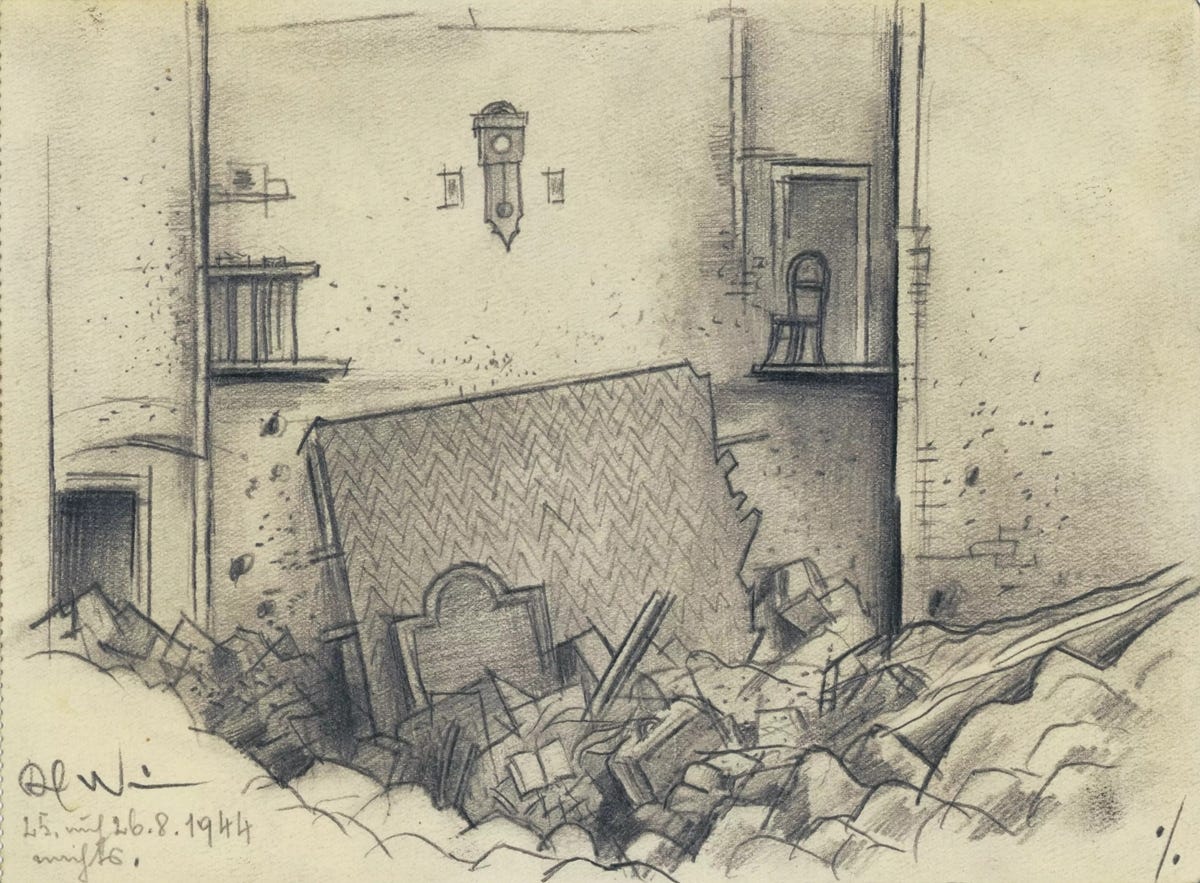
When you stop being everything to someone, sometimes you are forced to acknowledge that you haven’t been anything to yourself for a long time. I am standing in a house I built over the last five years, and I am realizing it is a ruin.
In my twenties, I mistook the struggle for purpose. Back then, the objective was binary: weather the storm or sink. I remember the struggle years—making $20 last for weeks, fighting for a foothold in a career, chasing any kind of stability. The fire was external. It forced me to move. It forged me into something that felt genuine and earned.
Eventually, I checked those boxes. I finally found the stability that had been elusive for so long. The career. The home. The girl. The first year of this season was probably the happiest of my life. But nothing I’d accomplished was meant to stay as it was. I was given the opportunity to make something special out of what I had, but I didn’t. I stopped tending the garden, and the result was desolation.
Getting everything I’d wanted before I was truly ready to care for it led to a slow, imperceptible descent into a void. Without the external fire, I didn’t become the grateful person I assumed I would. Instead, this lack of pressure made me weak and purpose-blind. I kicked my feet up as if the race had been won. I was wrong.
And to be clear, I leaned into this weakness. Nobody forced me down this path. But this chase for comfort is killing me—and so I return to a question that sounds counterintuitive, but that I can’t shake: Do I have to be selfish to survive this?
There is a common narrative within the self-growth space that looks like a retreat—a siloed, transformative isolation where you “disappear” for six months (or longer) so you can mold yourself. But there is another path—that of the martyr. The idea that purpose is found when we lose ourselves in the needs of others, in causes, in self-sacrifice.
I am wrestling with both. I fear that when I should’ve been locked into my own growth, I was wrapped up in the needs of others, and when I should’ve been giving of myself, I was huddled in self-centered fear.
Isaiah Rashad said it with a bluntness I think about often: “If you don’t ever get yourself straight, who the fuck is you gon’ help, mane?”
If I am a spiritual and emotional husk, I have nothing to sacrifice. If I am lost, I can’t lead. It’s not about narcissism or sainthood—it’s about the courage required to cut the rope, face the loneliness of my own creation, and finally become the man that can lead, who can love, who can and is willing to sacrifice.
“Those who take lightly promises they make to those they love are people who find little lasting satisfaction in life.” — The Well of Ascension
I have let so many people down in my life. Maybe I’m internalizing way too much responsibility, ignoring timing and external circumstances. I mean, how self-important can one be to remain in a space like this, thinking my failure is the only thing others think about when they think of our shared time together?
Still, I can’t help it. I’ve taken lightly the promises I’ve made to those I’ve loved. Took their patience for granted. Is it any coincidence that I have no positive self-image? You can lie to anyone you want, but you cannot lie to yourself. You know if you’ve given all you can give. And I’ve fallen short.
The “selfish” path—or radical monk mode—is that just toxic isolation masquerading as self-care? Or is it the only way to cut off the distractions and finally conquer my pattern of repetition? A version of this isolation is how I got here in the first place. Many of my choices were made in the spirit of walking alone, but without the discipline to make it count—or the emotional intelligence to keep my most precious relationships nourished.
The selfless path, however, is also calling my name. To find meaning by helping others. Can I learn to love myself through the act of giving what I don’t think I have?
All I hear is: Be better than this. But how?
My choices (the true cause of my despair) have been downstream of an upbringing that taught me the wrong lessons. But no matter what I’ve been through, no matter the lack of guidance, I am responsible. I have made the bed, and I have to live with the consequences.
But just as I made the choices that got me here, I can make the choices that salvage whatever time I have left on this Earth—even if things move slower than I’d like.
So much of what I’ve held in this comfort zone is on the horizon of ending.
I valued the preservation of the life I’d created five years ago. After so much time and struggle, I finally felt solid ground beneath my feet, so I stayed in the same spot for way too long. I held onto comfort as if it were the most valuable thing in the world, while time chipped away at its foundation. I am now holding a withered husk because I’m terrified of the “after.” The loneliness right around the corner is like a masked killer stalking me. Every step I take, more languid than the last, as he closes the space between us. If he catches up, do I have what it takes to win the fight?
Truth be told, as I am right now, I doubt it. But my doubt doesn’t really matter. I’ve decided I can’t continue to live like this. My conviction feels stronger than my fear for the first time in years. Maybe screwing things up for the umpteenth time has finally snapped something in me. To fix something so in ruins, is has to hurt—especially when you’re the culprit.
You don’t get to neglect your well-being and expect a painless remedy. If it didn’t hurt, would the change even last?
I used to think the worst place to be was in the abyss. But the abyss isn’t meant to break me. It’s a tomb—the burial site for the person I’ve allowed myself to become. This is where the cowardly self is finally laid to rest. And then I begin the treacherous climb out, leaving behind a version of myself that can’t get me to where I need to go.
I love the world of ideas and philosophy. I can get lost for hours within the safety of abstract theories and idyllic conversations; it’s the very reason I started this Substack. I needed a place to let my thoughts breathe.
But for people like me—those trapped in our minds—even philosophy can become a form of numbing. Life can’t be lived solely in the abstract—at least not the life I want to live. Eventually, the thinking has to stop, and choices must be made. The answer isn’t found in more rumination; it’s found in taking the power of choice seriously.
It lies in the micro-choices of a given day: what I watch, what I say, how I think. I’m learning that growth is a messy blend. Helping others is the only thing that pulls me out of my own head, but I can’t do that if my only goal is to remain comfortable.
For the relationship I feel is withering away, I have to admit that the spark won’t reignite until both sides want it to. At some point, the other side gets tired of doing the work alone. I may be forgiven, but it’s not likely I’ll be accepted back with open arms. These are my consequences, and I have to accept that.
The urge to numb myself—to escape what so often feels like a personal hell—is a constant, thrumming weight. But I’m resisting, by finally trying—and I mean, really trying—to look my patterns in the eye.
Real healing can’t be done within the fog of a sedated spirit. It requires the clarity that can only be had when the high wears off.
It hurts right now. But that’s okay. I’ve spent enough time cowering, chasing the cheap pleasures that kept me from registering the depth of my own pain. I’m tired of watching as things collapse around me, too numb or scared to do anything about it. It’s time to stop running and start building a life that I actually want to live in.
From the collapse, I begin.

Enjoying the essays? Consider becoming a paid subscriber to support more thoughtful, in-depth work like this.
Or leave a one-time tip—every little bit helps
Your support, whether monetary or simply sharing this essay, means the world to me.
Thanks for sticking around until the end! This post is free, so feel free to share it.
No posts
Comments
Nothing yet. Say the first thing.
Sign in to join the conversation.