
October is nearly behind us, but before you go trick or treating, let’s look at three news stories that are worth your time.
As always, your comments, likes and suggestions are very welcome.
The so-called ‘Gen Z protests’ are taking hold on different continents. Nepal, Madagascar, Kenya and Peru are among the countries where the youth are demonstrating against corruption and economic inequality.
Though the exact causes vary from location to location, the main thread is anger with the “broken social contract”, as CNN explains. The movements are decentralised, born online and then brought to the streets, and their frustrations stem from financial despair rather than political ideology.
In Morocco, the hefty costs of building football stadiums for the Africa Cup of Nations and FIFA World Cup have put into focus the lack of spending on public services.
For weeks, scores of young Moroccans marched in major cities, calling for reforms to education and healthcare. As tensions escalated, there were clashes with riot police and more than 1,500 protesters are said to face prosecution.
Unlike other places, the Morocco uprising seems to have deflated for now. On 10 October, the king opened the national parliament with a message to consider “the living conditions of citizens”. The prime minister also reiterated that dialogue is the best approach.
Much will depend on whether these promises are actually implemented. According to the Institute for Security Studies, keeping up momentum will be challenging for Morocco’s Gen Z because the civil society structures and unions are weak.
But Moroccan leaders cannot ignore the issue forever - soaring unemployment rates coupled with stagnating wages mean community disharmony is inevitable.
Nicolas Sarkozy will be remembered for several reasons, including becoming the first head of state in European Union history to get locked up.
On 21 October, Sarkozy arrived at a Paris prison to start his five-year sentence. The former French president was accused of conspiring to obtain election funds from Libyan dictator Muammar Gaddafi. Sarkozy continues to deny the charges.
It has yet to be determined if Sarkozy can say farewell to his high-security cell in a few months rather than years. Under French law, judges have an eight week period in which to respond to his lawyers’ appeal.
CBC News of Canada has produced an excellent video explainer on Sarkozy’s fall from grace.
Saudi Arabia is overhauling its image. From daring infrastructure projects to sporting tournaments, the Gulf kingdom wants the world to know it’s ready for (non-oil) business. But the inaugural Riyadh Comedy Festival proved that reputation management is a long-term effort.
The festival, which ran from 26 September to 9 October, pulled in a raft of comedians. Kevin Hart, Dave Chapelle, Bill Burr, Zarna Garg, Jimmy Carr, Jack Whitehall and Russell Peters, to name a few, were flown over.
A BBC News report said there was strong turnout and the audiences were surprised to hear racy jokes. Even so, digs at the Saudi government or comments on Islam were strictly prohibited.
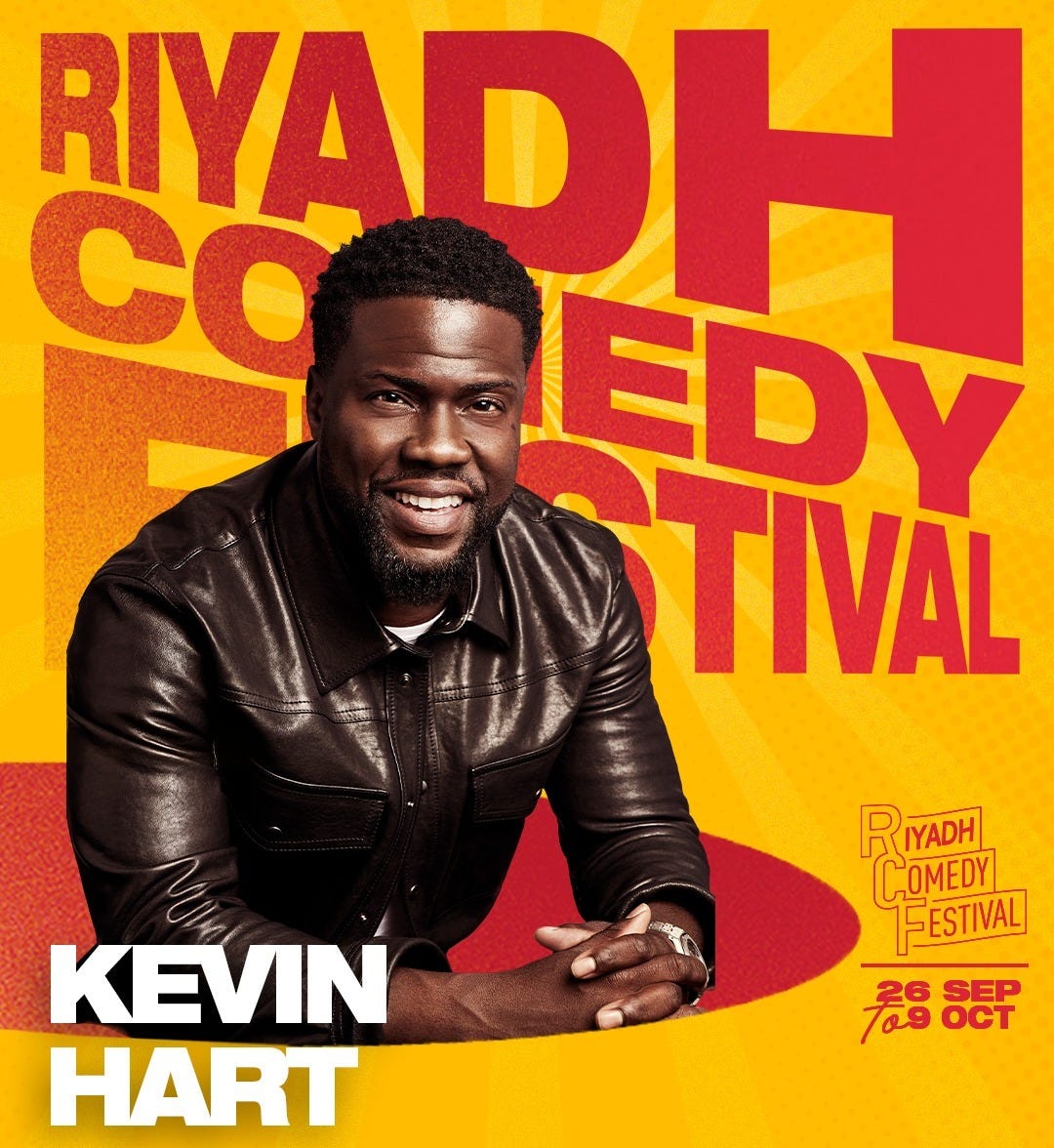
The backlash from Western media and many fans, however, was loud. Human Rights Watch said the event was used by the state “to deflect attention from its brutal repression of free speech”. Elsewhere, on Reddit, posters criticised the comedians who censored themselves for ‘blood money’.
Crisis communications swiftly followed. Omid Djalili penned an op-ed for the Guardian, defending his decision to perform at the festival. “Going to Saudi Arabia is…about sharing laughter and a chance for cultural exchange as a force for social transformation,” he wrote.
During an appearance on Jimmy Kimmel, Aziz Ansari said “you kind of have to make a choice of whether you’re going to isolate or engage”.
Trevor Noah did not attend the festival but was asked to weigh in. He offered a nuanced view on the matter, delving into the White House’s own discomfort with comedy sketches.
Take care and stay curious! Thanks for reading, Sara x
No posts
Comments
Nothing yet. Say the first thing.
Sign in to join the conversation.