
When my Saturday pans out particularly well, I spend a sweet hour or two browsing anything from Architectural Digest to House & Garden. I browse until something catches my eye, partly for the thrills, but mostly for my own education.
I learn best from focus: one designer, one expert voice with the archive and knowledge to back it up. Pinterest is fine for mood boards, but it’s all association, no analysis. If you don’t dig deeper, you end up seeing the same few images bouncing around the internet. It trains the eye to see interiors as compositions and doesn’t go beyond that. For actual understanding, I need design publications or Substack writers who can explain why something works (Patricia Rodi does this beautifully).
The question is always the same: how does a house become a home? Or more precisely, how do you make a home that can be lived in, adjusted without breaking, and respects the people inside it?
If you haven't noticed yet, I'm obsessed with places and spaces. I keep circling back to the idea of genius loci, the spirit of a place. I remember books and films best when the setting feels like a character—Call Me By Your Name, obviously; my favourite photographers specialise in capturing a sense of place (Stefan Gifthaller is the OG); I'm constantly thinking about how to make our flat feel more functional and more like us.
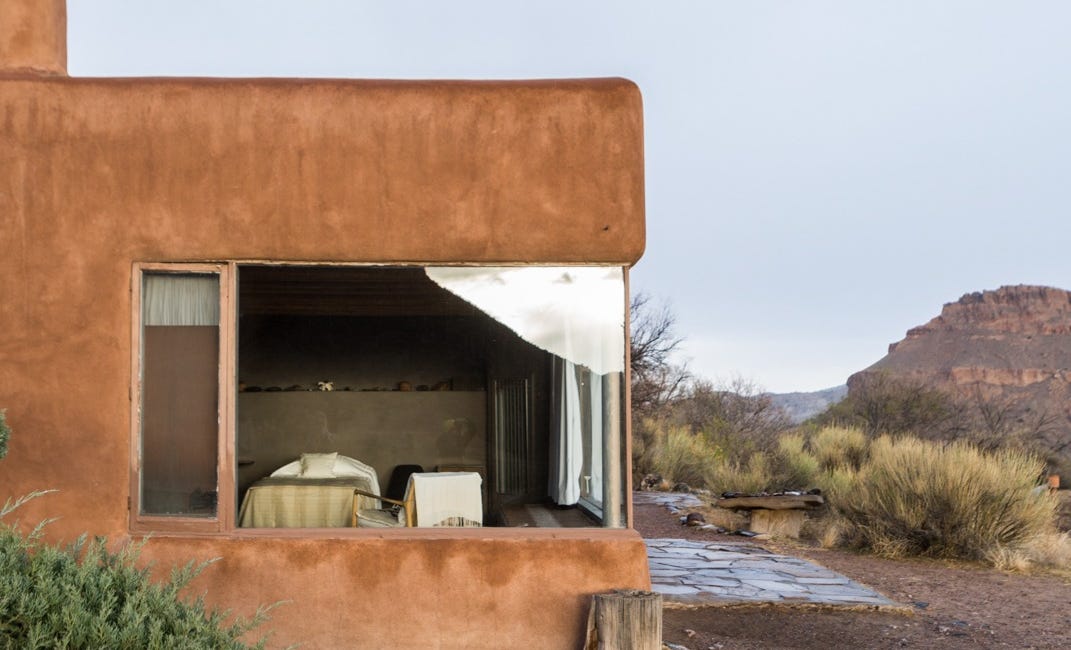
My post about Georgia O’Keeffe’s home—which I see, at its core, as a piece about how a home can carry the personality of its inhabitant—has been my most read so far. I know it’s partly because so many people love her, but I like to think it’s also because it’s about a home so full of character it feels almost conscious. I think about this place a lot, particularly about how O’Keeffe kept adjusting it to herself, and how the point was to never stop changing it.
Georgia O'Keeffe's New Mexico home was her largest work of art
·
Jan 15
Last November, as the days closed in and my hunger for all-consuming stories returned, I pressed play on a new series. What started as a casual watch quickly turned into a binge; by January, we were deep into season four of Better Call Saul.
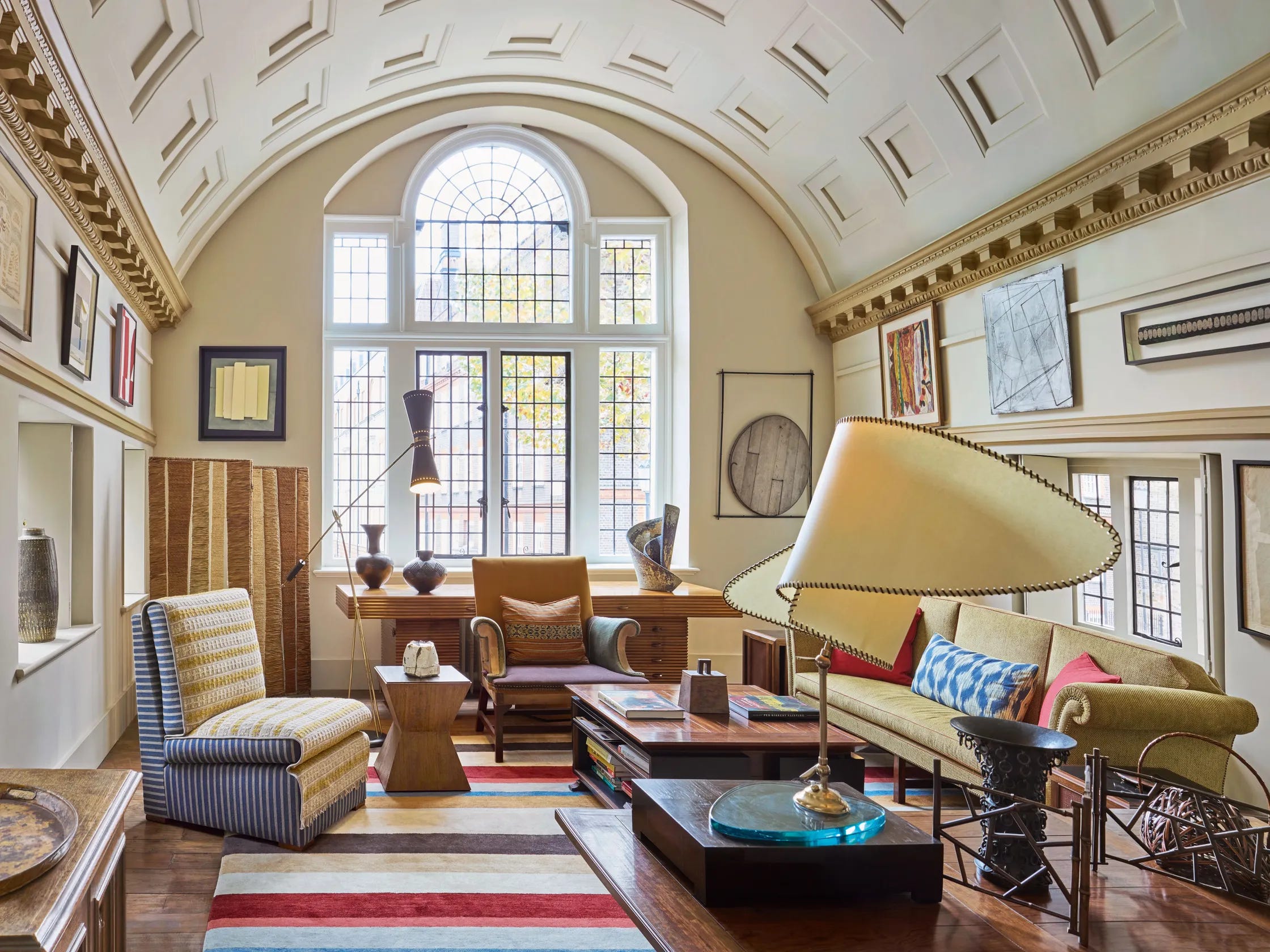
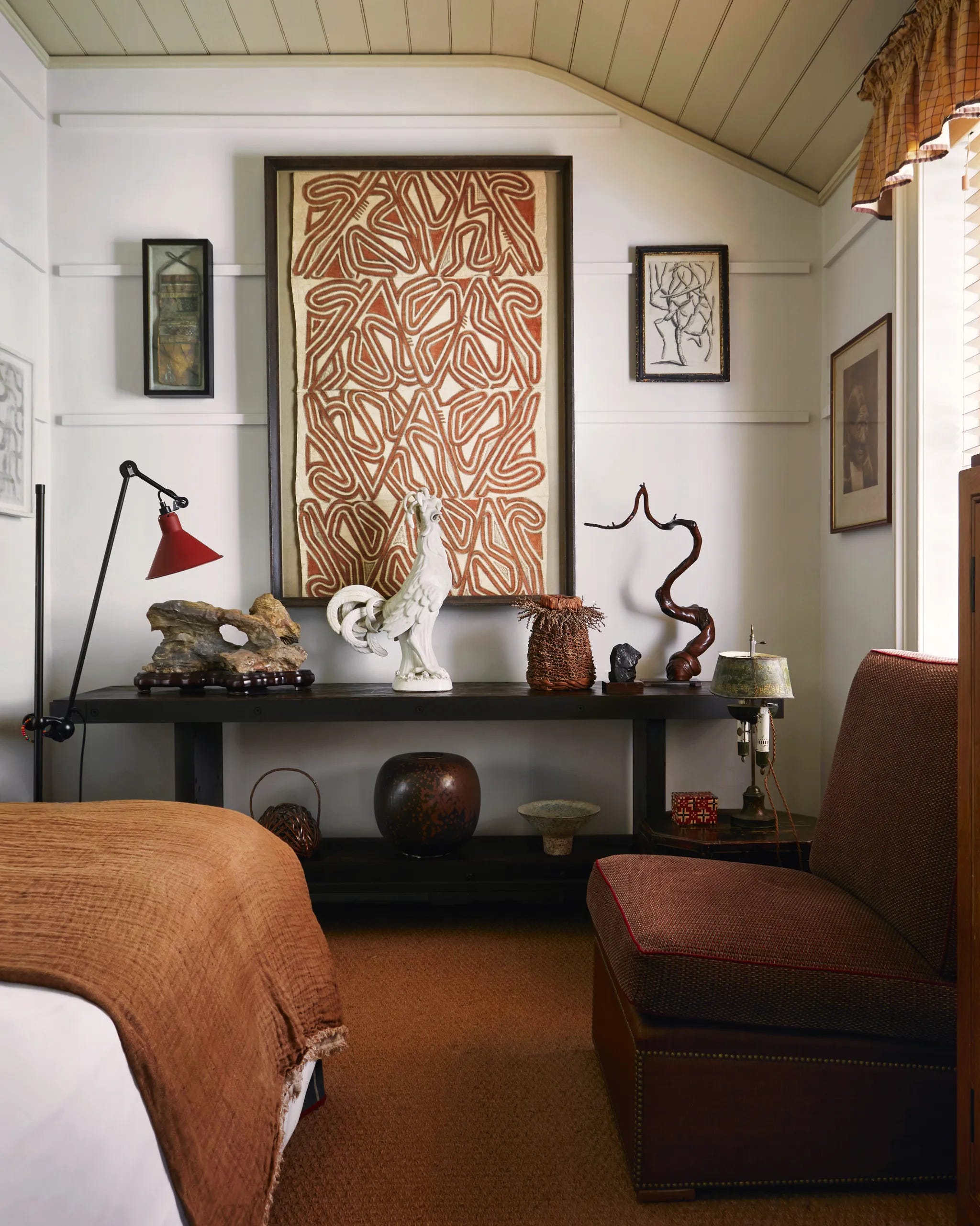
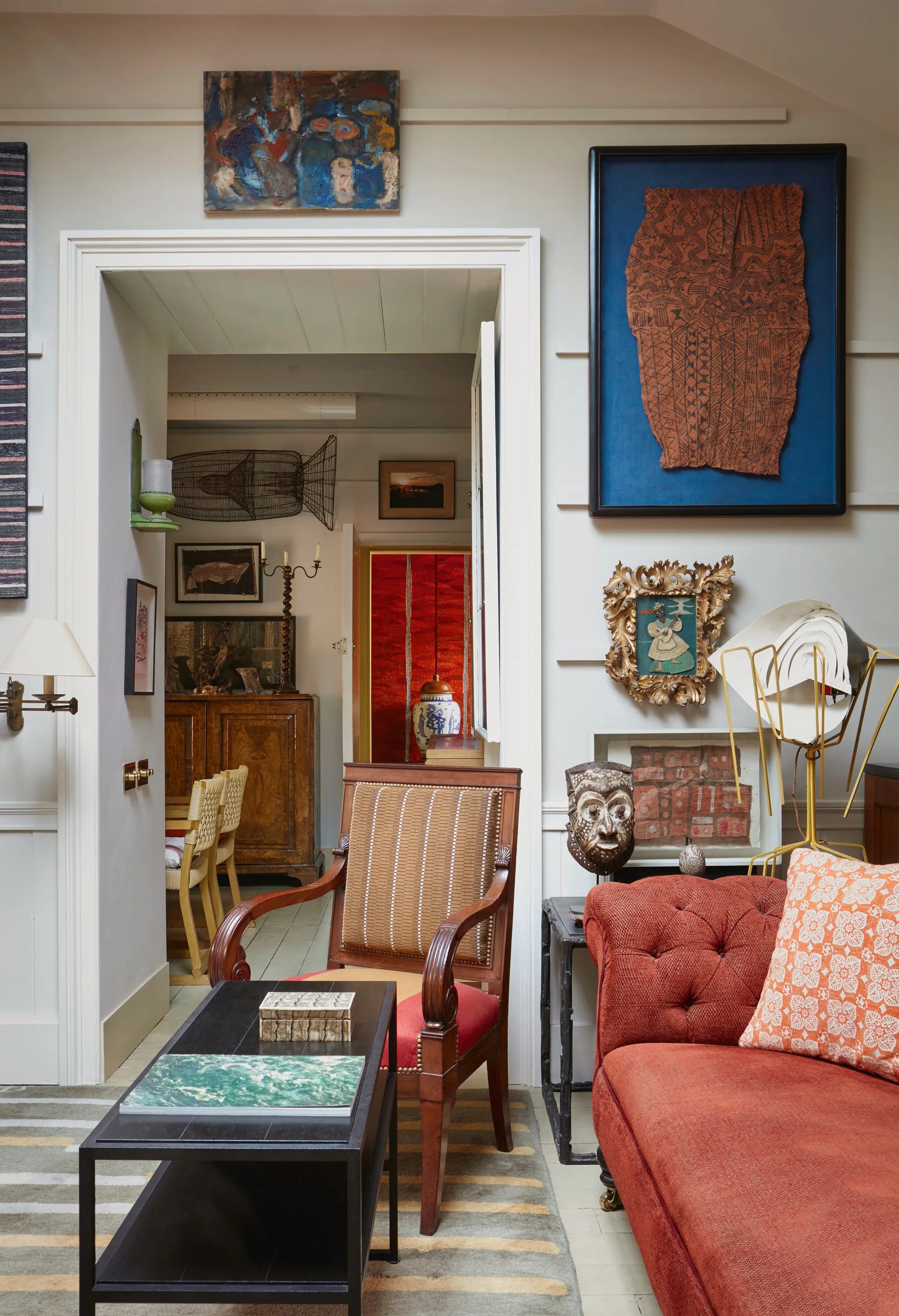
Last Saturday, I studied Chester Jones's designs on the House & Garden website and found his article on the failings of modernism that made me circle back to the question of how you make a space your own. For those who'd like to put a name to the interiors, the first photo and the photo below are of Jones's design projects. He's on his own mission to "humanise the interiors through mixing harmony and disparity, practicality and perversity." He has a classic hand but is no minimalist; he sees eclecticism, with its less formulaic approach to design, as a way to accommodate the evolving nature of home. Jones's work is built on a belief I share: that art, sculpture, and cherished objects make a house feel like home, whether old or new, as long as they carry meaning for the resident.
In the article, Jones gives a compelling example that I see as a story about the clash between a house understood as a finished object and a house as a process, open, adaptable, and accumulating.
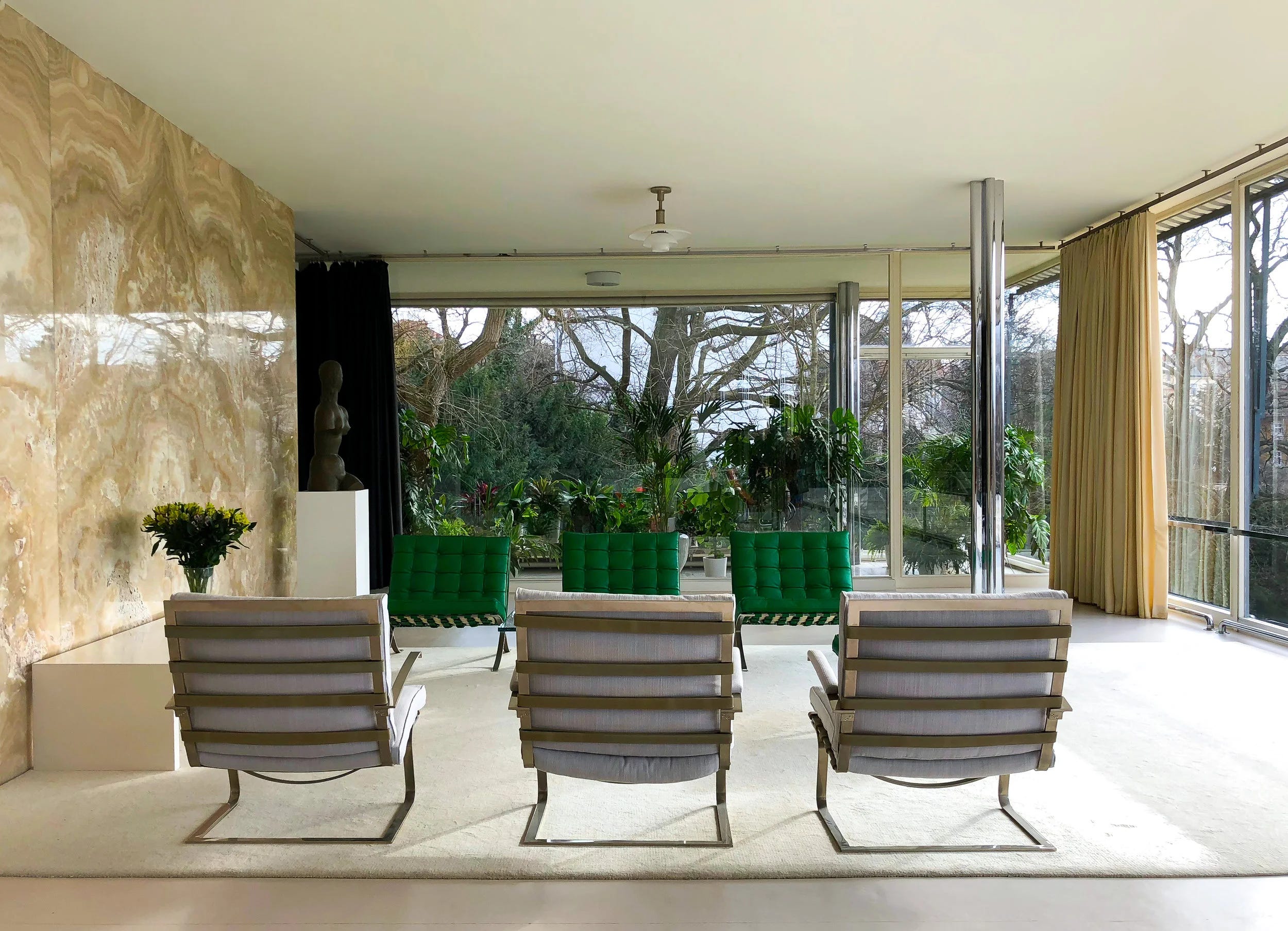
It goes like this: in 1928, architect Mies van der Rohe, who would become the last director of Bauhaus before the Nazis closed the school, designed Villa Tugendhat, a modernist open-plan house that gained international acclaim lasting to this day. We all know the dazzling photos of airy modernist villas, some of us are guilty of posting them (me), and yet we rarely give any thought to what it actually meant to live there. Turns out, many of them, including Villa Tugendhat, became something of a headache for the families who moved in:
The hubris of many great modern architects inclined them to ignore this [the balance between creative independence and sympathy for a client’s temperament]. Consider Fritz and Grete Tugendhat commissioning Mies van der Rohe c1928 to design a new villa for them near Brno in what is now the Czech Republic. Grete was an avowed modernist and a collector of contemporary art, and apparently the owner of two Van Goghs. However, due to Mies’s planning and walling details, she ended up with a house in which hanging paintings of any sort became an impossibility. As a consequence, there are none at all in any of the principal rooms. Fritz expressed a wish to use some of his existing furniture in the villa, but was outmanoeuvred by the architect, so none appeared. History applauds Van der Rohe’s achievement, while the family’s responses are undocumented. Years later, however, a colleague of mine who knew the architect well noted that his own Chicago apartment was filled with great lumpy pieces of comfortable upholstery, and a traditional sideboard on which personal mementos were prominent.
Research suggests there were some smaller paintings in the bedrooms, but the point stands: Grete's Van Goghs had nowhere to go in the main living spaces of her own home.
The many sins of modernism in its ideological form aside, the biggest was delivering a house as a finished project, almost a shrine. Books and articles have been written about it, many of which will put you to sleep easily if you struggle with insomnia, but Rem Koolhaas, author of the now iconic Delirious New York, got it sharp. He argued that modernism’s failure lies in its reductionist, top-down approach, which prioritised abstract ideals of functionality and rationality over the emotional and symbolic needs of people. That spilled into modern architecture as well.
We like to think we’ve learned from modernism’s mistakes, but scroll through Instagram and you’ll see the same impulse: homes styled to perfection, every surface clear, nothing out of place. It’s Villa Tugendhat for the algorithm, beautiful to photograph, impossible to inhabit. The medium has changed but the error is the same: confusing visual purity with livability.
It is often the case that the more pure the ideology, the more holes appear in its fabric. Rigidity and oversimplification are not the most durable materials after all. O’Keeffe, with her infallible instinct for what’s simple and beautiful, did the opposite. She treated her house as a living organism and bent every piece of furniture she owned to her own needs, whether designed by a modernist master or made by a local artisan. She had the very same Mies van der Rohe Barcelona table, and the moment it turned out to be too low for the adobe seating she’d built for the room, she had its legs recast. It honestly feels like karma coming back for Mies, who, as it turns out, couldn’t live the way he built.
I've never been much of a fan of his, but it was the first time I learned he designed houses that left no room for the people who lived there, and it didn't exactly make his approach more compelling. Years after Villa Tugendhat, he designed the Farnsworth House in Illinois the same way, and once again, despite it becoming a blueprint for many other modern houses, its owner, Dr. Farnsworth, described it as "almost unlivable." If you dig deeper, Le Corbusier is responsible for the same. His 1931 Villa Savoye was also declared unlivable by its inhabitants and looks generally sad and unwelcoming from the inside, despite a design aimed at letting nature pour in.
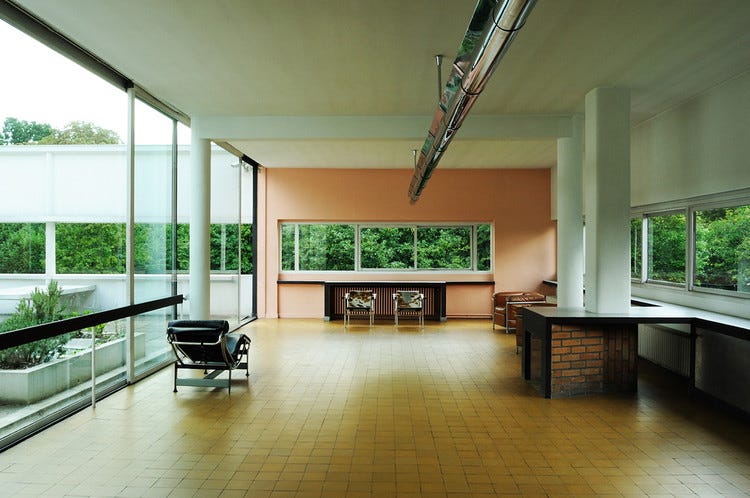
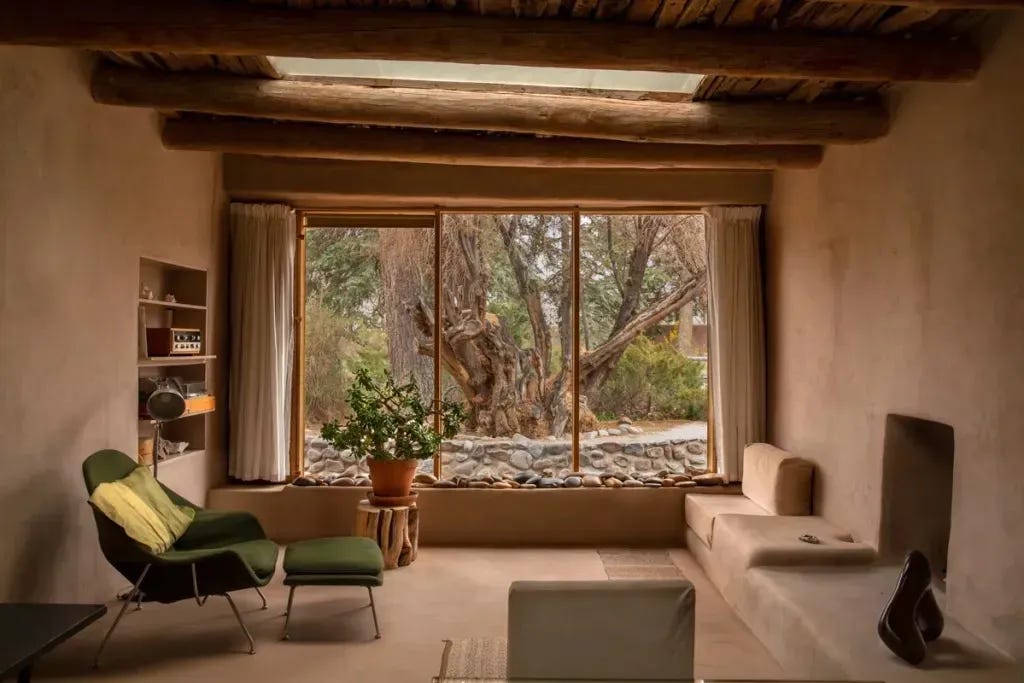
The world we live in is obsessed with control and definite answers, but the irony is that the homes we most respond to are the ones that resist both—like O'Keeffe's adobe, or a place designed by someone who understands that personality isn't a design choice but something that accumulates over time as the people inside change.
In the article, Chester Jones quotes the writer Stewart Brand’s dictum that “you don’t finish a building, you start it”. A house can’t be finished before the life begins. Jones writes:
Behind every practical need in a home there is an even greater emotional one, the place to which we may retreat. This should be a sanctuary of resource and reflection, a place where we can empathise with the people who are most dear to us. We live in an increasingly complex world, marked by contending theories and conflicting opinions, from which we need occasional respite and a measure of independence. We feel it is in the client’s interest that the implications of these should be explored with them. It is through access to their heritage, their intellectual inclinations, their curiosity, that empathy is established and more personal options be developed.
Because I feel like being mean to Mies, I'll recount what Chester Jones does when there's a need to hang art on the wall. He was introduced to this method by his friend, the great British painter Patrick Heron who, on being bequeathed the St Ives studio of Ben Nicholson, discovered this to be a wonderfully flexible way of displaying an art collection. It involves fitting walls with horizontal battens on which you hang a revolving display of paintings, framed textiles, drawings, whatever you like. The frames have screws on the back that hook into the grooves on the battens, allowing for easy changes. You can then enliven the space by adding, editing, and periodically rearranging the collection. This sounds like a poem to my ears, and if you don't believe me, you have to trust Georgia O'Keeffe, who changed the art on her walls all the time.
Before I finish, I want to share a couple of articles from fellow Substackers that get at this same question. If you care about how spaces evolve with the people in them, you'll love these:
Lucy Williams on the perils of too perfect rooms:
[…] the conundrum of this [guest] room got me thinking about rooms that are almost too perfect. I know that sounds like an oxymoron but bare with me. My two favourite rooms in the house (our interconnecting sitting rooms) are the opposite of this. I can throw anything at them and it sticks. I could change the colour of the sofa, the fabric on the ottoman, the art, the rugs and the rest of the room would, for the most part, still work. I love rooms like this. Rooms that never quite feel full or finished and can take plenty of tinkering.
Lauren Sands on letting homes evolve with their residents:
Here's what I'm starting to realise: maybe our homes aren't meant to be a perfect mirror of who we are right now. Maybe they're more like journals—capturing pieces of us at different points in time—layers of our experiences, our values, and the people we love, all woven together into something that's still unfolding.
And finally, Patricia Rodi on the same point Chester Jones made. She also has a great series called Home Cooler Than Your Friends.
For me, every project is about creating interiors that belong to the people who live in them, not to a feed or a trend cycle. Each space is tailored, layered, and, importantly, allowed to evolve. It’s about celebrating imperfection, embracing contradictions, and acknowledging that beauty comes from how a home is used, loved, and lived in, not from its visual performance online.
When a home is designed this way, it carries life. It carries memory. It carries care. It is not a backdrop, but a repository for the everyday, messy, beautiful reality of living. And that is what drives everything I do as an interior designer - a commitment to spaces that feel like they belong, not spaces that simply perform.
I hope you enjoyed this! If you did, any interaction helps—likes, shares, and recommendations are all very much appreciated. And however you're reading, I'm really glad you're here!!
Dee x
Comments
Nothing yet. Say the first thing.
Sign in to join the conversation.