
Every time something new about African wildlife premieres, we watch it with reverent attention from start to finish, and so we did with the recent Werner Herzog’s documentary, Ghost Elephants. It follows the search for a mysterious, elusive herd living deep in the forests of the Angolan highlands, long believed to be a myth. As it usually happens with Herzog, it turned out to be less about the animals and more about human obsession, and the many indigenous characters along the way sent me straight back to South Africa, my first time on the continent last year. Before that trip I’d read the usual warnings about it being a life-changing experience, and naturally sceptical, I was half-expecting to be unmoved. But there is a raw, elemental thrill of being alive out in the wild that no amount of internal narrative can argue you out of. And the smell of savannah—pleasantly bushy, somewhere between heated wooden Finnish sauna boards and a hint of herbal rooibos—never really lets you go.
Ever since we came back, African culture, art, perspective, zebras, and checking the weather in various parts of Africa out of idle curiosity have become part of my days. What strikes me most, though, is how predictably sealed I am inside a Western cultural bubble, cut off from the vast majority of cultures that exist in the world. Europe will always be my cultural bedrock, but I make a point of stepping outside that bubble when something catches my eye. Below is one such outcome: a round-up of artists from across Africa, for anyone whose world could do with expanding.
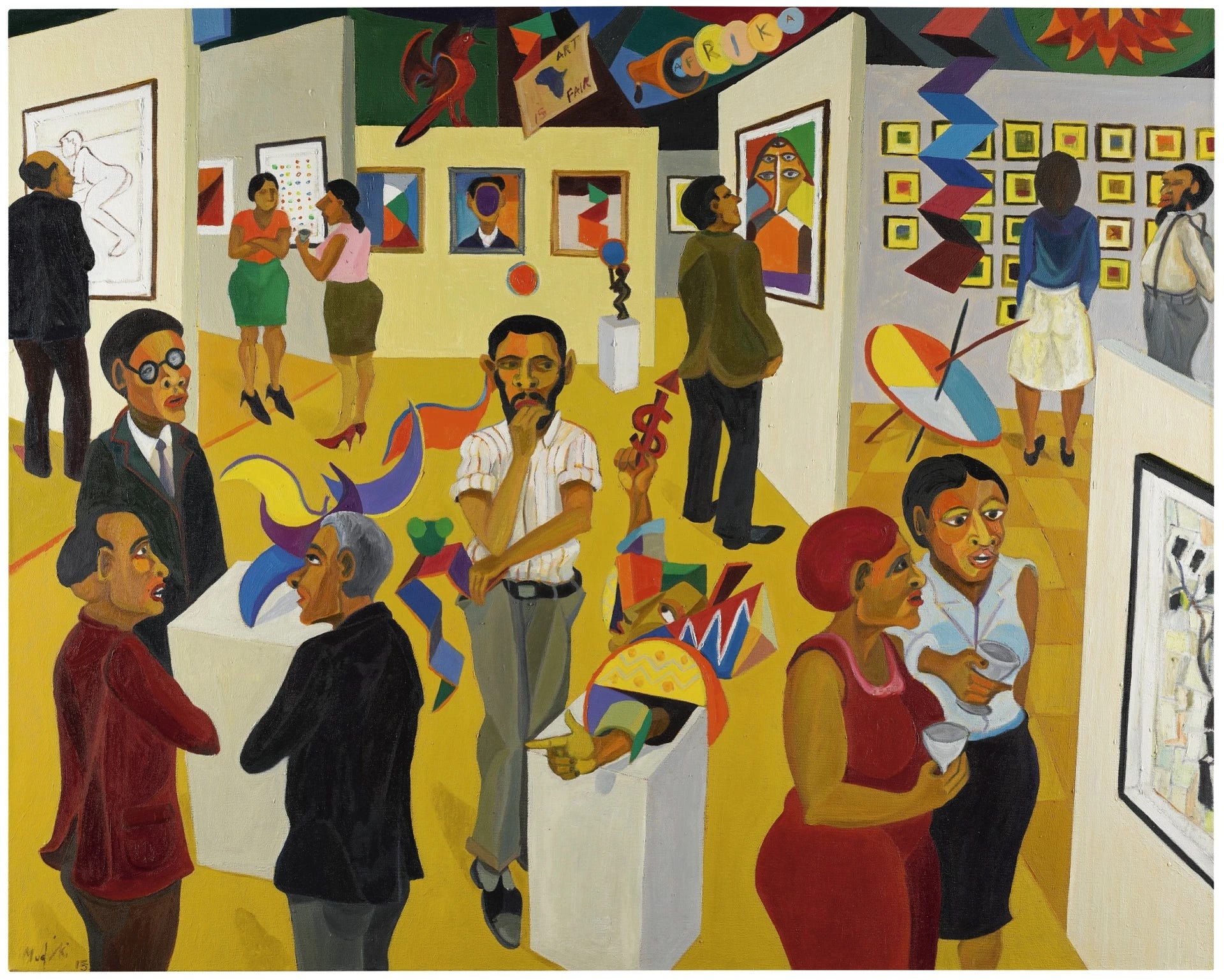
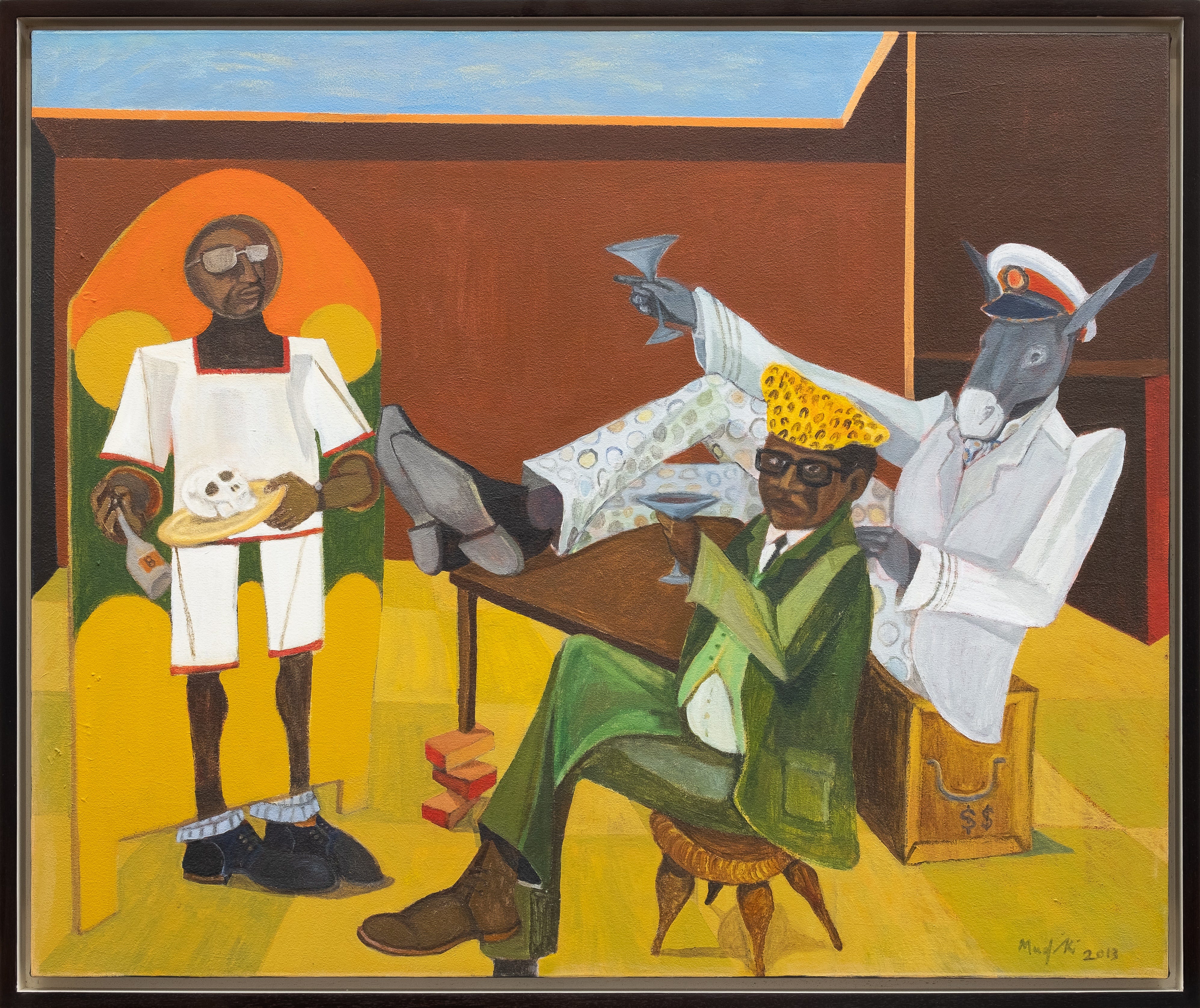
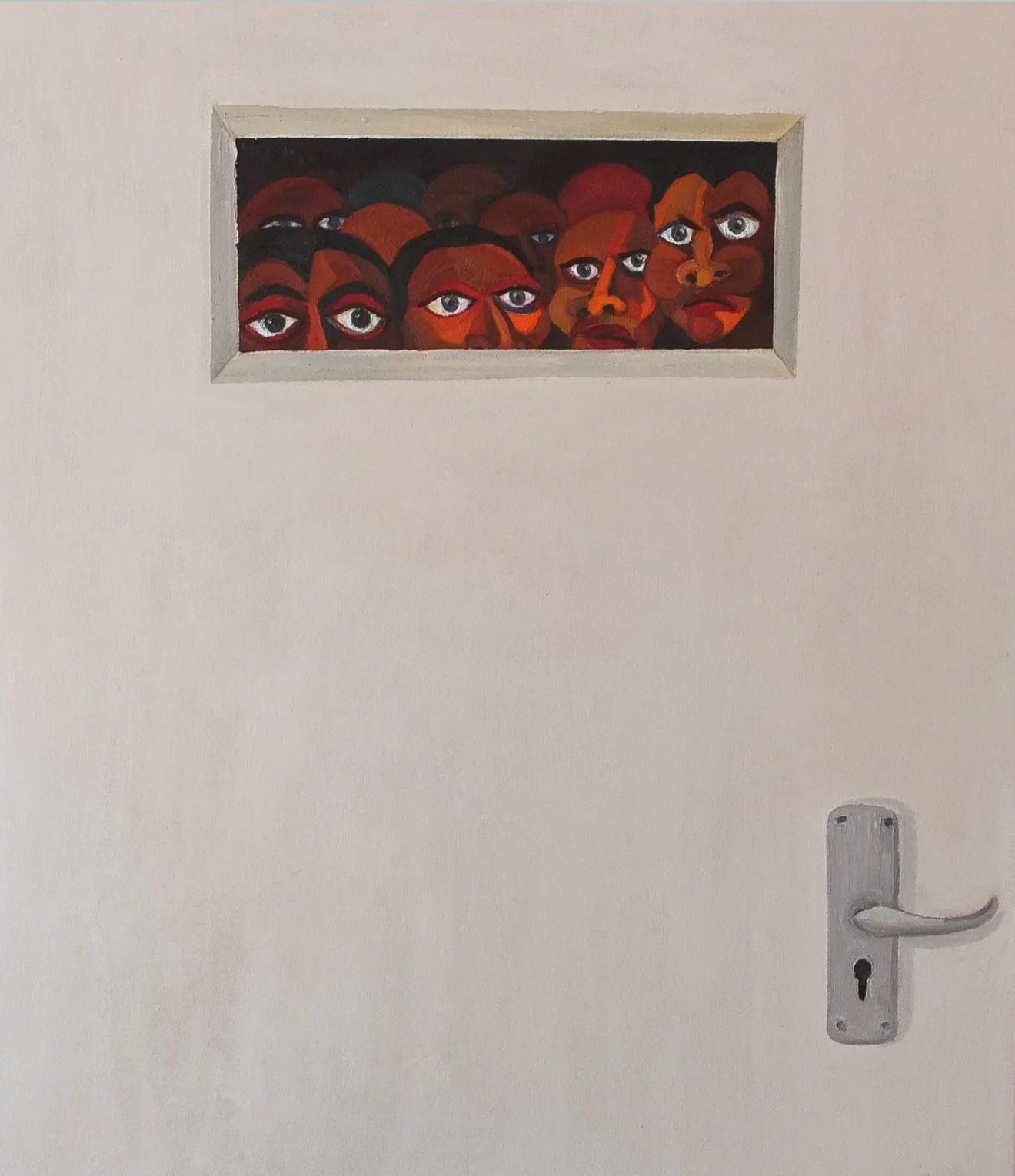
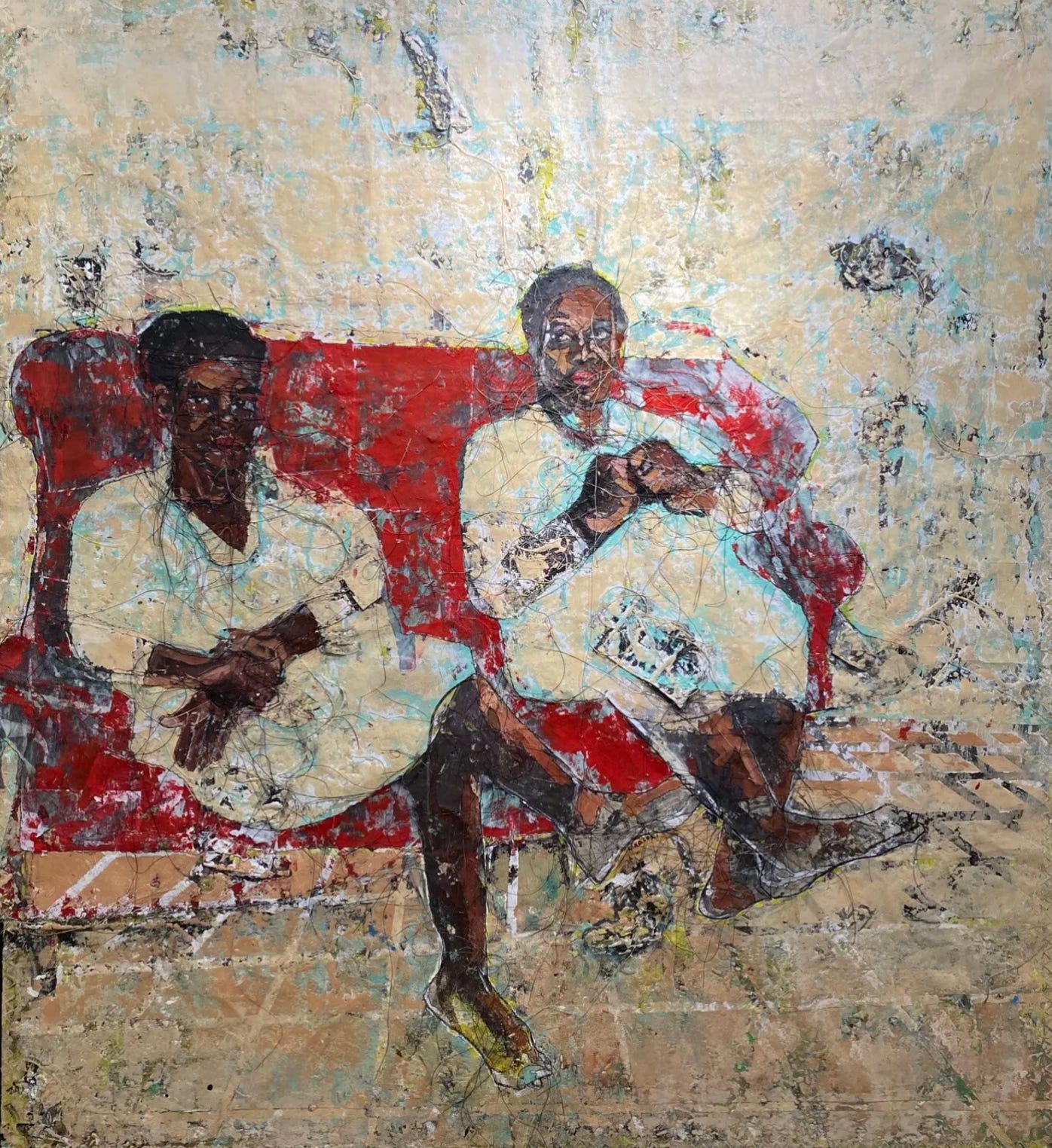
A Zimbabwean artist based in Cape Town, Mudariki is known for modernist figurative paintings dense with social commentary on life across the continent. He has shown extensively in South Africa, Germany, London, and Zimbabwe, and trained under established Zimbabwean artists Allen Kupeta, Helen Lieros, and Greg Shaw.
I have a soft spot for contemporary figurative painting—one of my favourite artists is Kerry James Marshall, and we started our own collection with a work by Korean painter Hyangmok Baik that hangs in our living room—so it's hardly a surprise that Mudariki stopped me in my tracks. There's something gripping about his canvases, and the colour palette is difficult to walk away from.
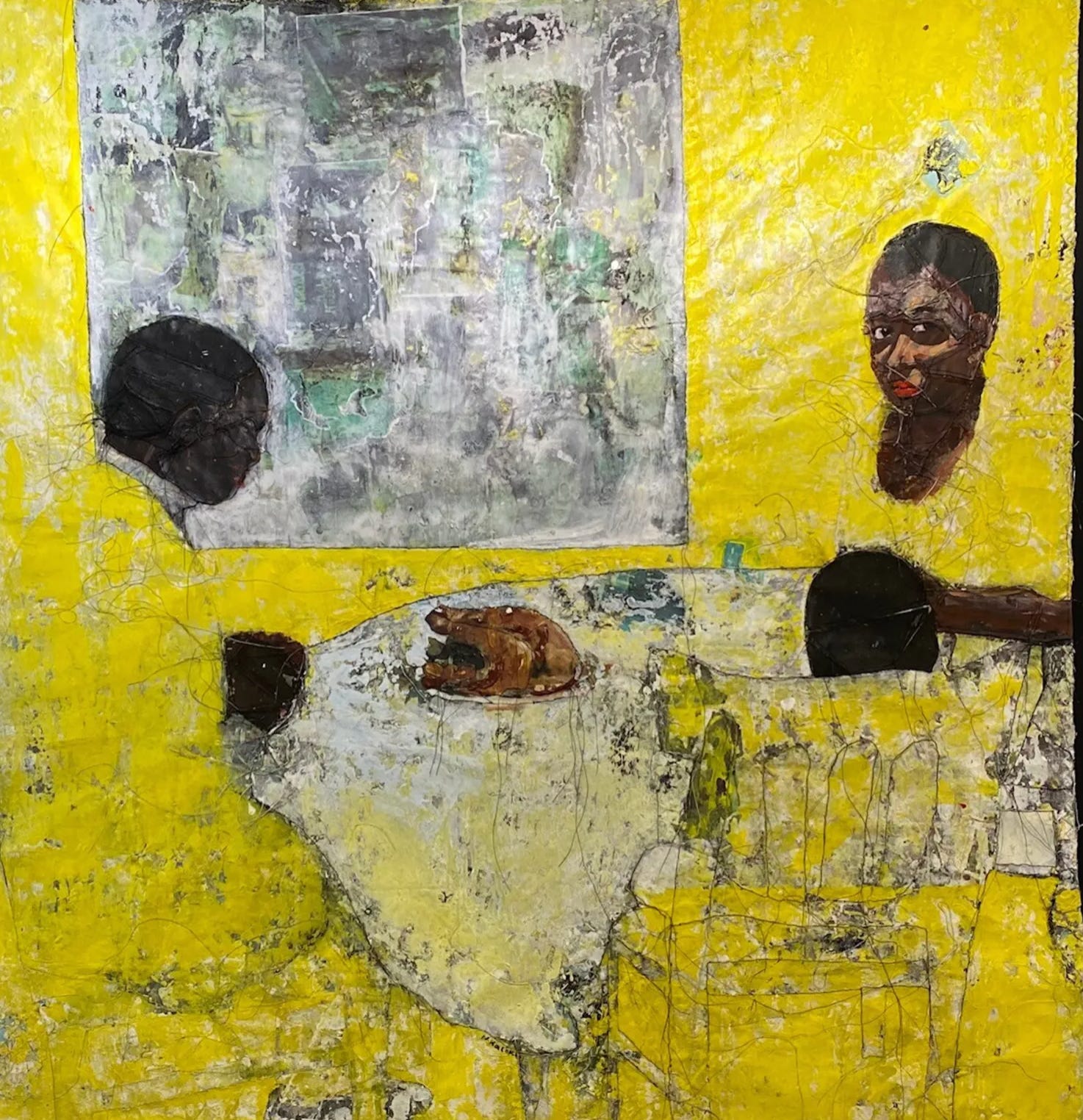
Kenyan-born Kaloki Nyamai draws on stories of the Kamba community passed down by his grandmother, using them to explore how intertwined history and identity are, and how that inheritance shapes people living in post-colonial Kenya today. His work sits within a longer lineage of storytelling—tales carried from one generation to the next, producing an understanding of history as complex, plural, and contradictory. Paint is laid on heavily, left to crack and scar as it dries, while additional layers of ripped canvas pasted onto the surface build a rich palimpsest of colour and texture. Against the flat, one-dimensional identities that colonialism imposed and left behind, Nyamai's surfaces assert something more layered and alive.
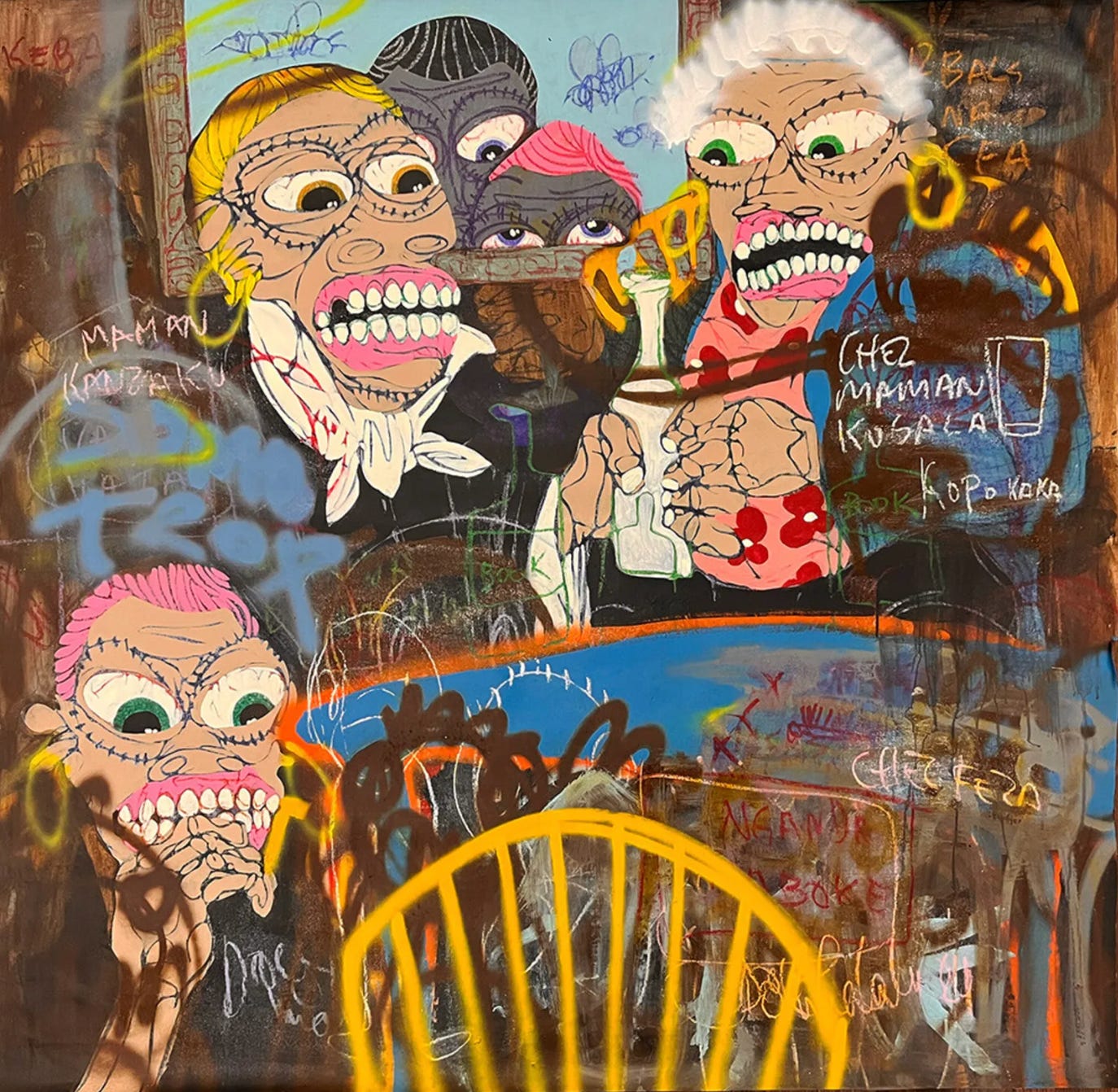
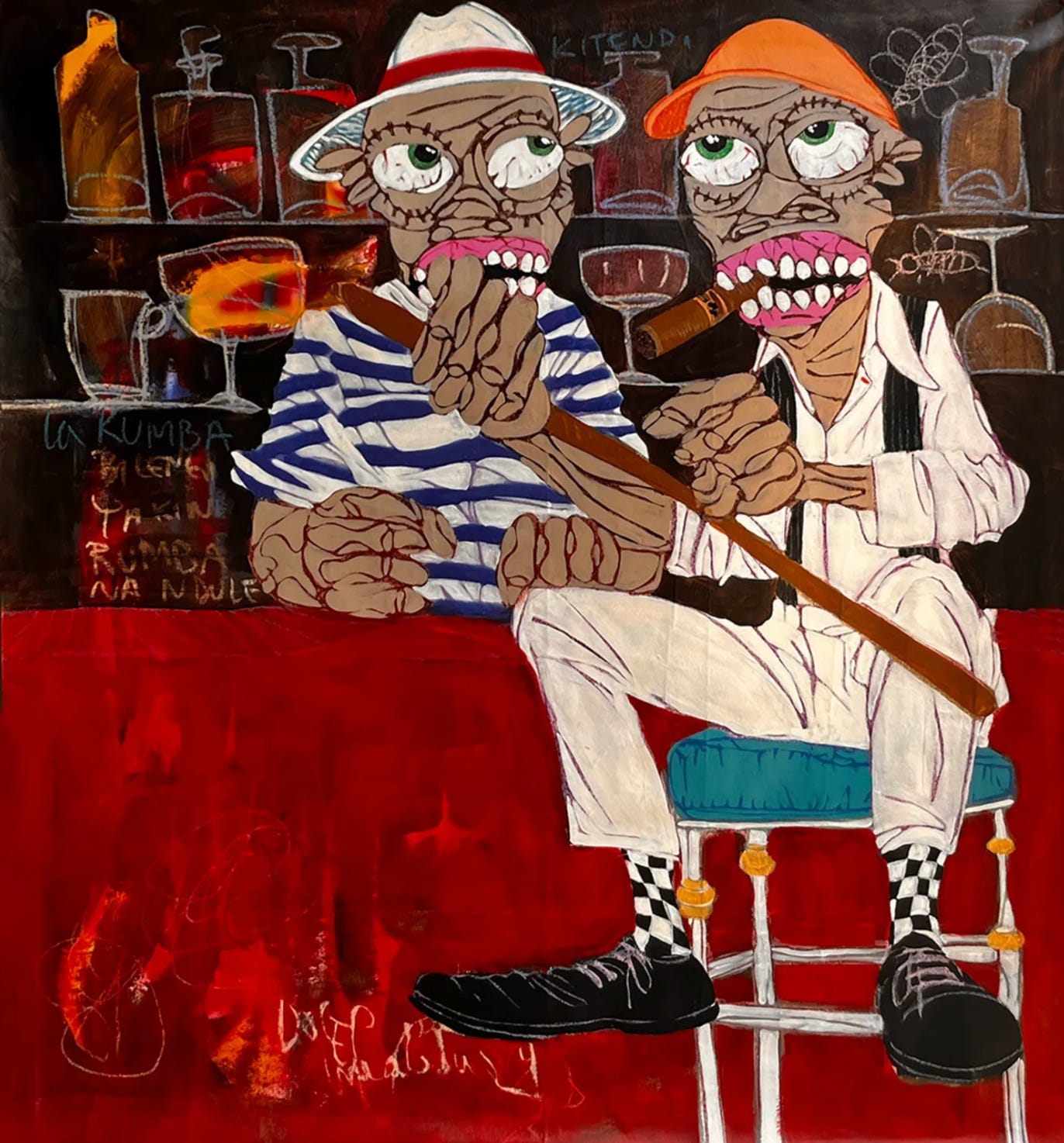
Self-taught Congolese artist Dolet Malalu's unique and provocative style of urban art draws from what he sees in the streets of Kinshasa, embodying the spirit of La Sape—the Société des Ambianceurs et des Personnes Élégantes, or Society of Ambiance-Makers and Elegant People, a name I will be adopting immediately (the linked article is worth your time).
Working in acrylic with pastels and spray paint on canvas, his work highlights Congolese culture in a register unlike any other contemporary artist from the country. Symbols recur throughout, among them bees, denoting life and birth. Highly imaginative and deeply rooted in tradition at the same time. Also funny.
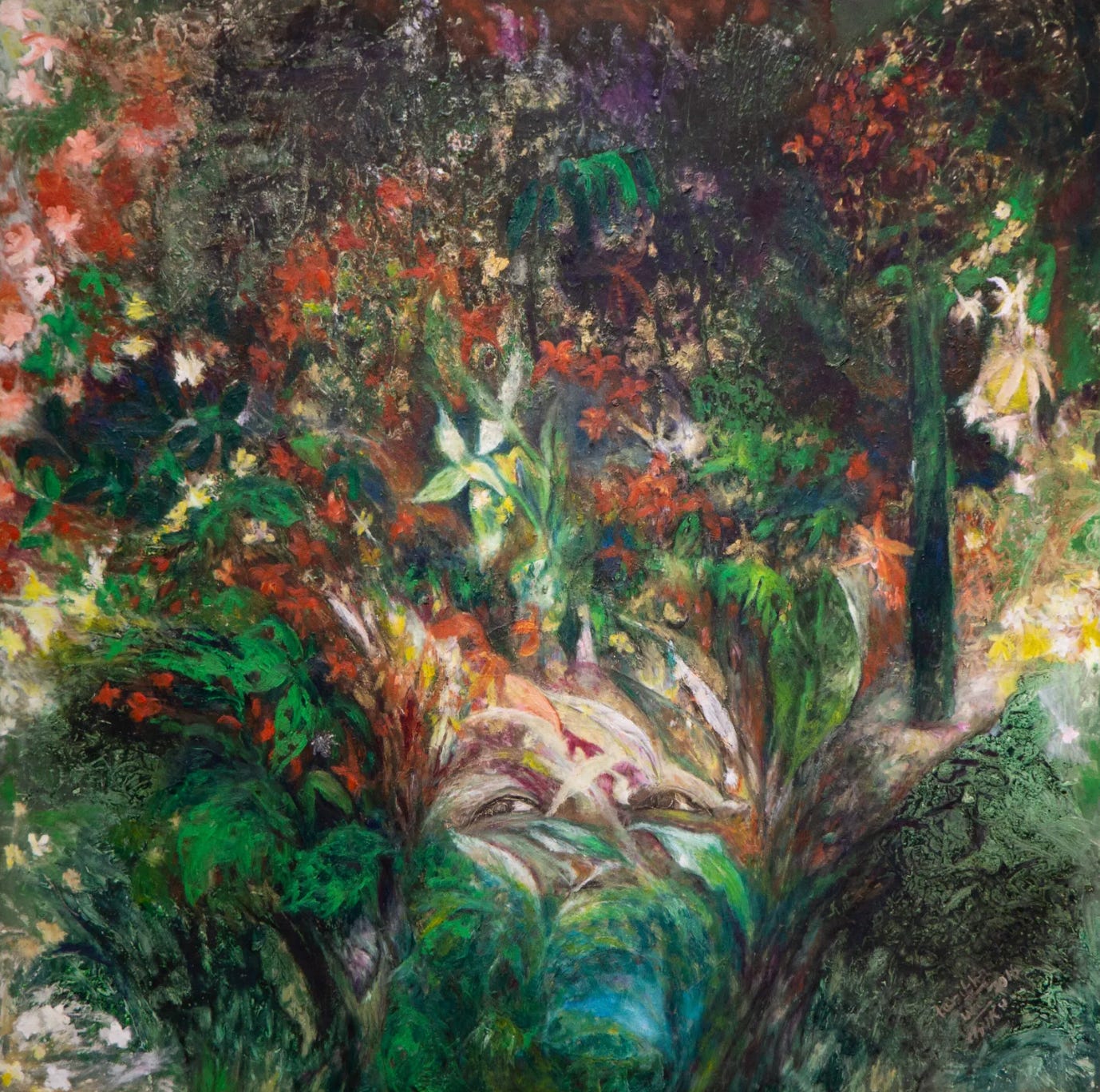
Born in the year of Kenyan independence, Tabitha Wa Thuku was among the very few women of her generation to become an artist—self-taught, no less. Over three decades she has developed a painterly language entirely her own: brooding, earthy, ranging from muted browns to deep reds, woven through with East African motifs—animals, landscapes, the textures of the land. Beyond her art, she is committed to mentoring emerging artists and supporting cultural development in rural communities.
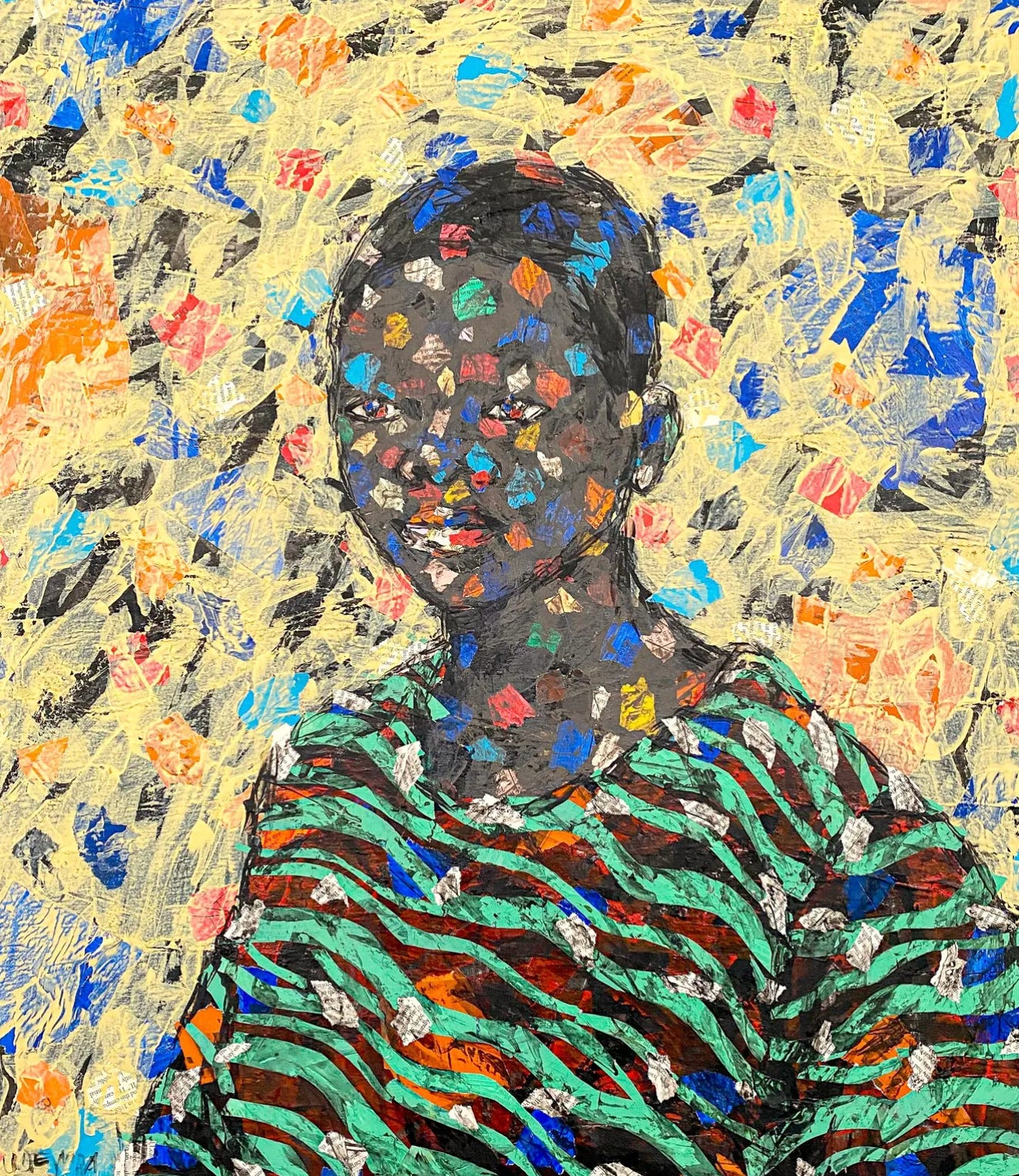
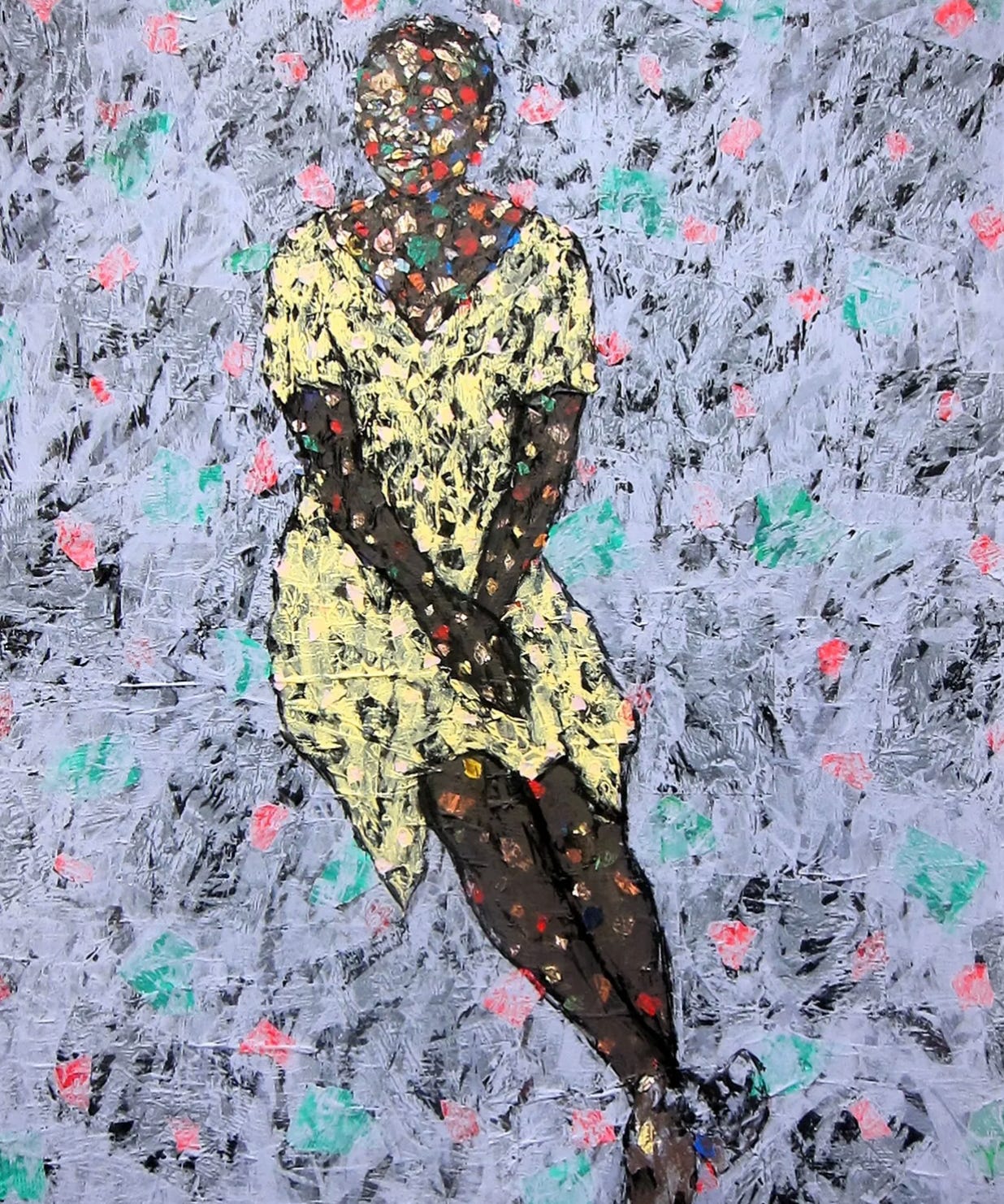
Growing up in Enugu, eastern Nigeria, Udemba’s first encounter with art was watching his father—a London-trained forensic photographer—manually colouring portraits and social photographs with acrylic paint and brush, before colour photography arrived in Nigeria. Those early moments became the catalyst for formal study at the University of Lagos.
His technique is equally distinctive: each canvas is first layered with newsprint for texture, then built up not with brushes but with cut pieces of recycled plastic—thin strips to outline figures, larger pieces used like a palette knife to lay down bands of transparent colour.
As an artist of colour living in the diaspora, I explore identity, otherness, systemic biases and epistemic colonialism—juxtaposing history and the contemporary, appropriating materials and forms to connect past with present.
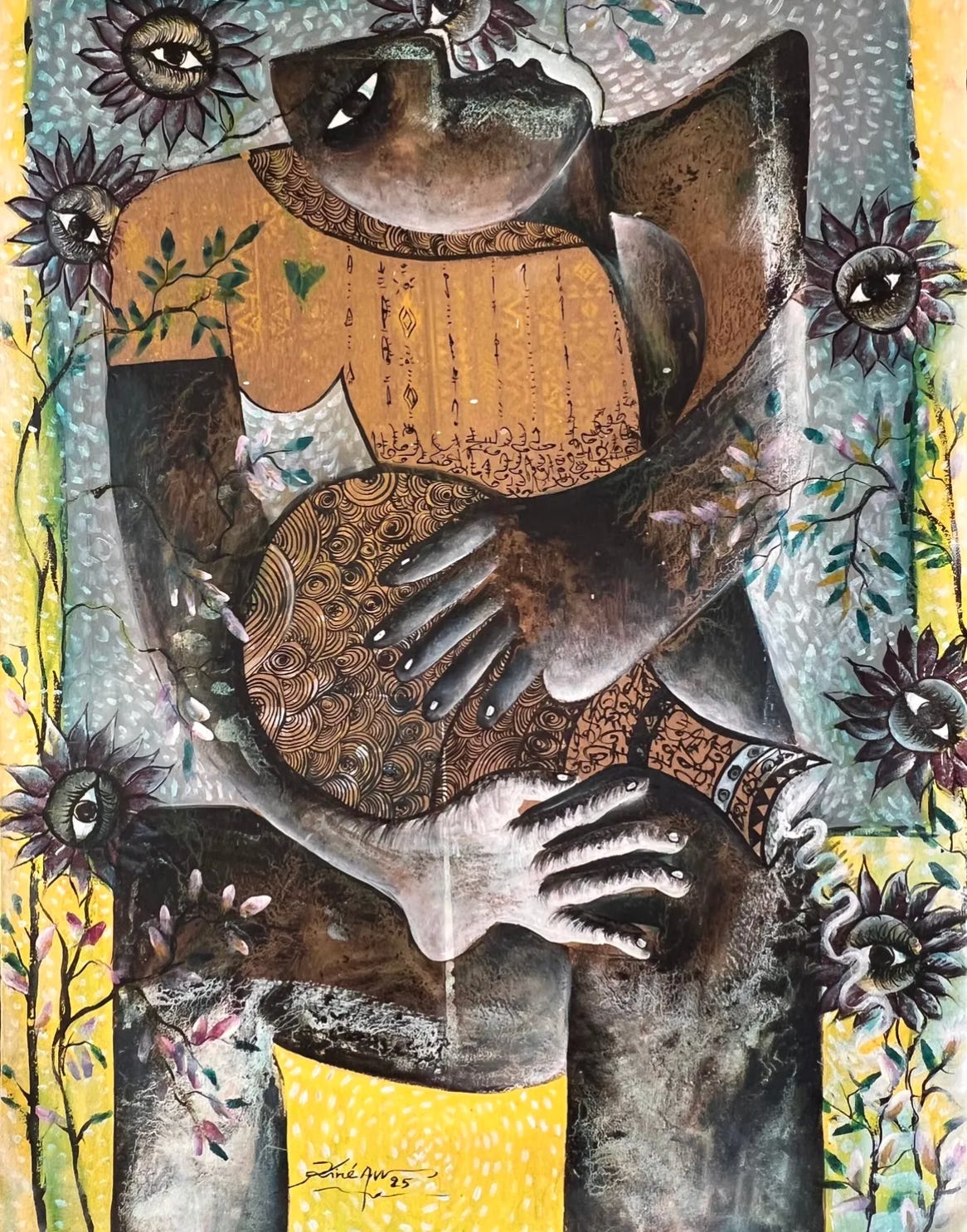
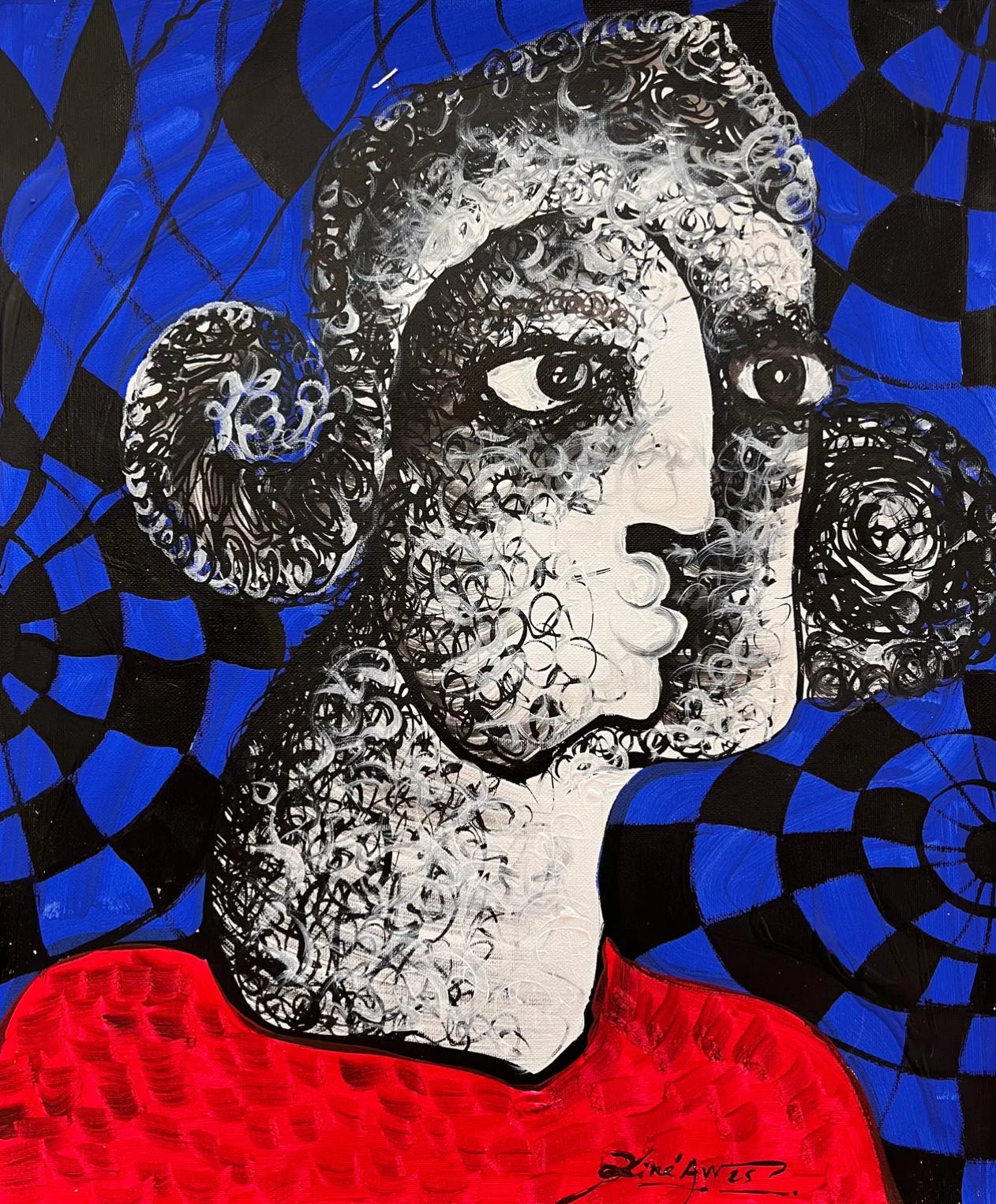
Born in Dakar in 1977, Kiné Aw spent part of her childhood in Kinshasa, where the city’s artistic energy left a mark that never faded. She graduated from the École Nationale des Beaux-Arts in Dakar in 2006 and now works from her studio in the Village des Arts.
Women are at the centre of her work: their beauty, their inner lives and their roles within society. She builds a visual language out of curved lines, African mythology, ancient Egyptian symbolism, and the formal influences of Surrealism and Cubism. The result is otherworldly, sometimes mystical.
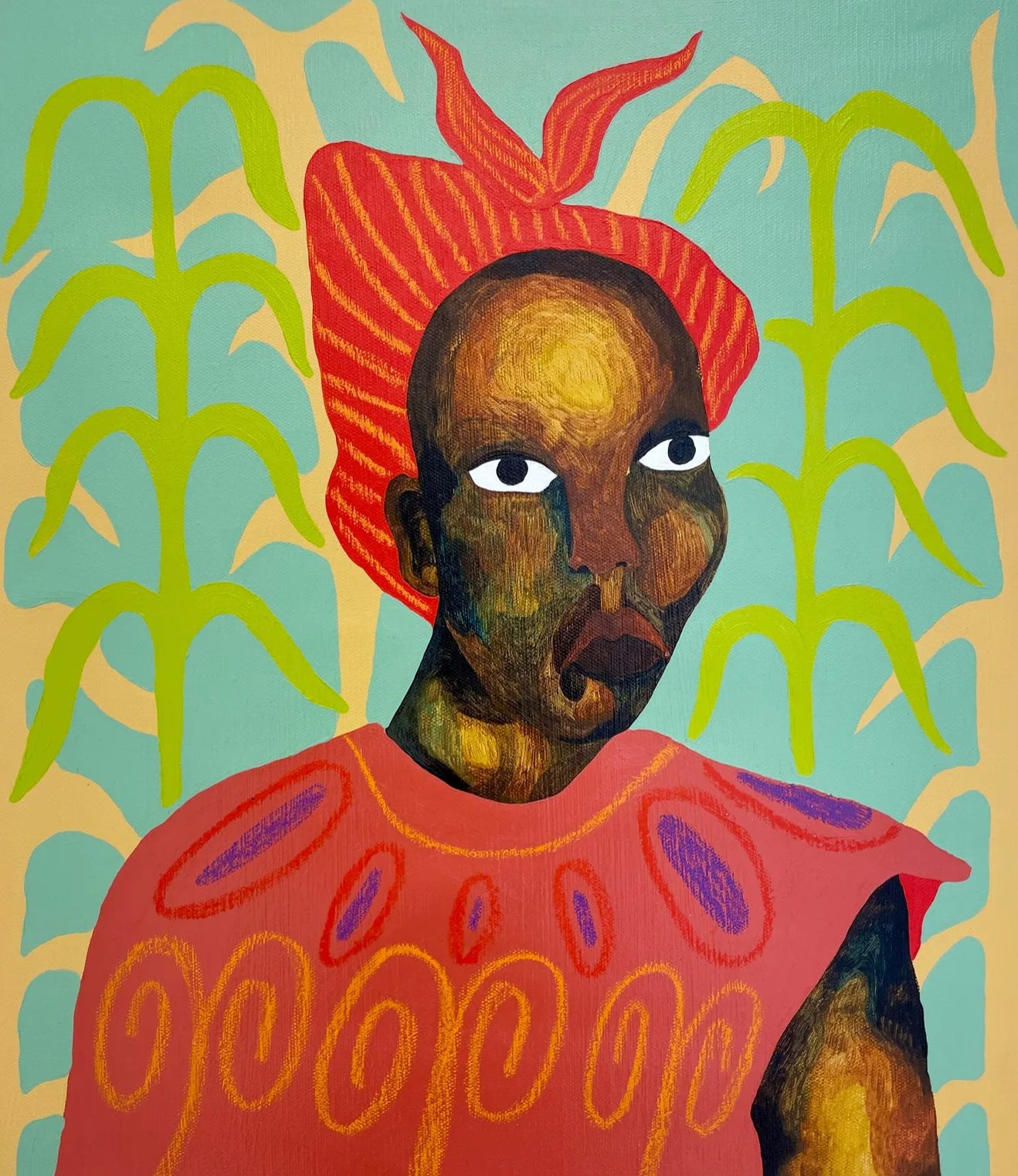
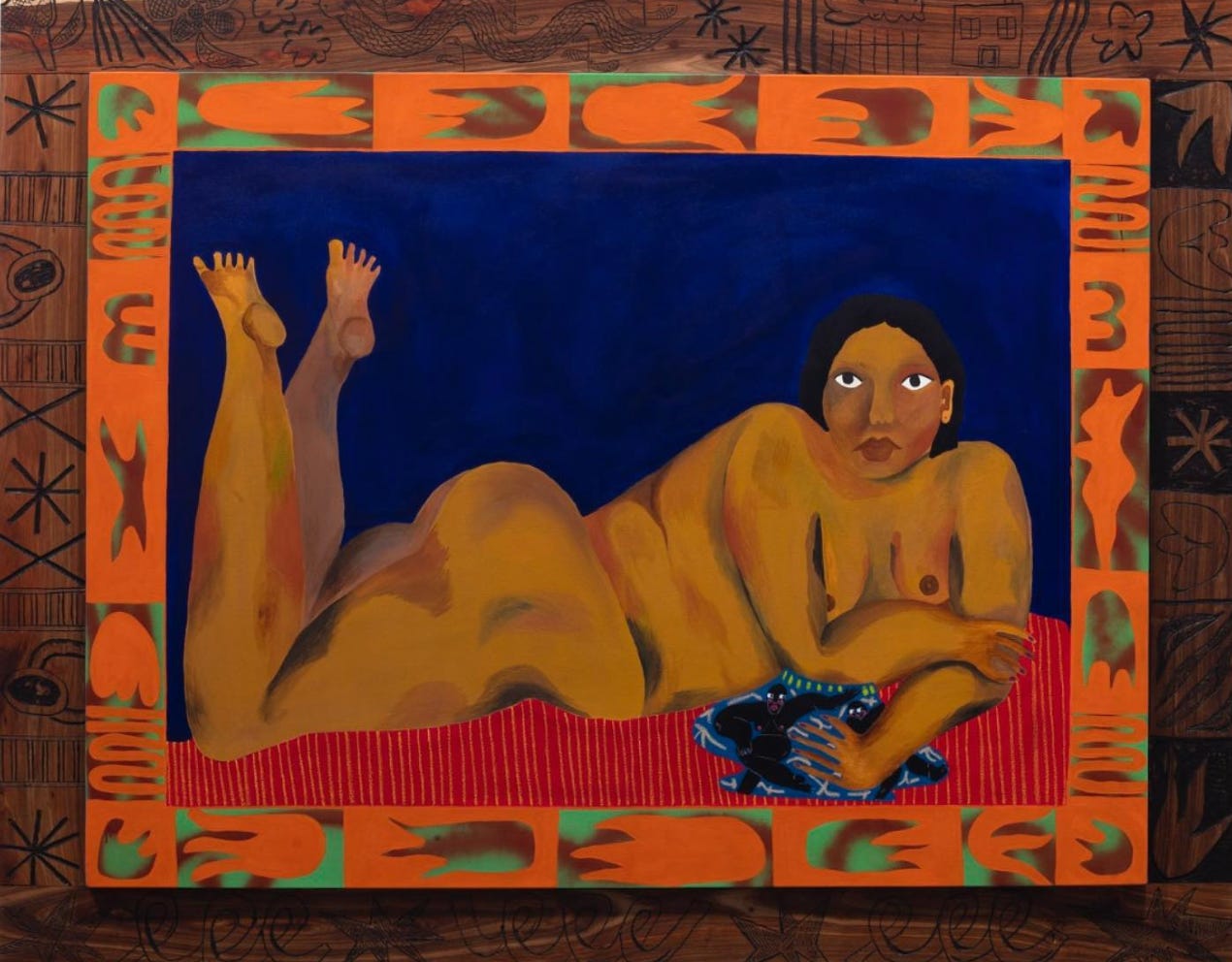
Born in 2000 in Johannesburg, Boemo Diale grew up moving between the racial and socio-political worlds of Rustenburg and the city's suburbs. Her work sits in the space between: rural and urban, cultural inheritance and personal autonomy, symbolism and lived reality. The result is a dreamlike visual narration rooted in identity, generational trauma, spirituality, and desire. She’s cool, her Instagram is worth checking out.
Dee
x
If you enjoyed reading and you want to show support for my work:
Comments and likes truly make my day (thank you!!)
Share this post with someone you think might be inspired by it
Consider upgrading to a paid subscription
Comments
Nothing yet. Say the first thing.
Sign in to join the conversation.