
The strength of a body of work is shaped not only by what we make, but also by what we abandon.
I’ve heard some version of that throughout my years working as an interior designer. It always stayed in my mind, particularly in my own work: design, writing, collections, exhibition space design, lectures, teaching - everything I do really.
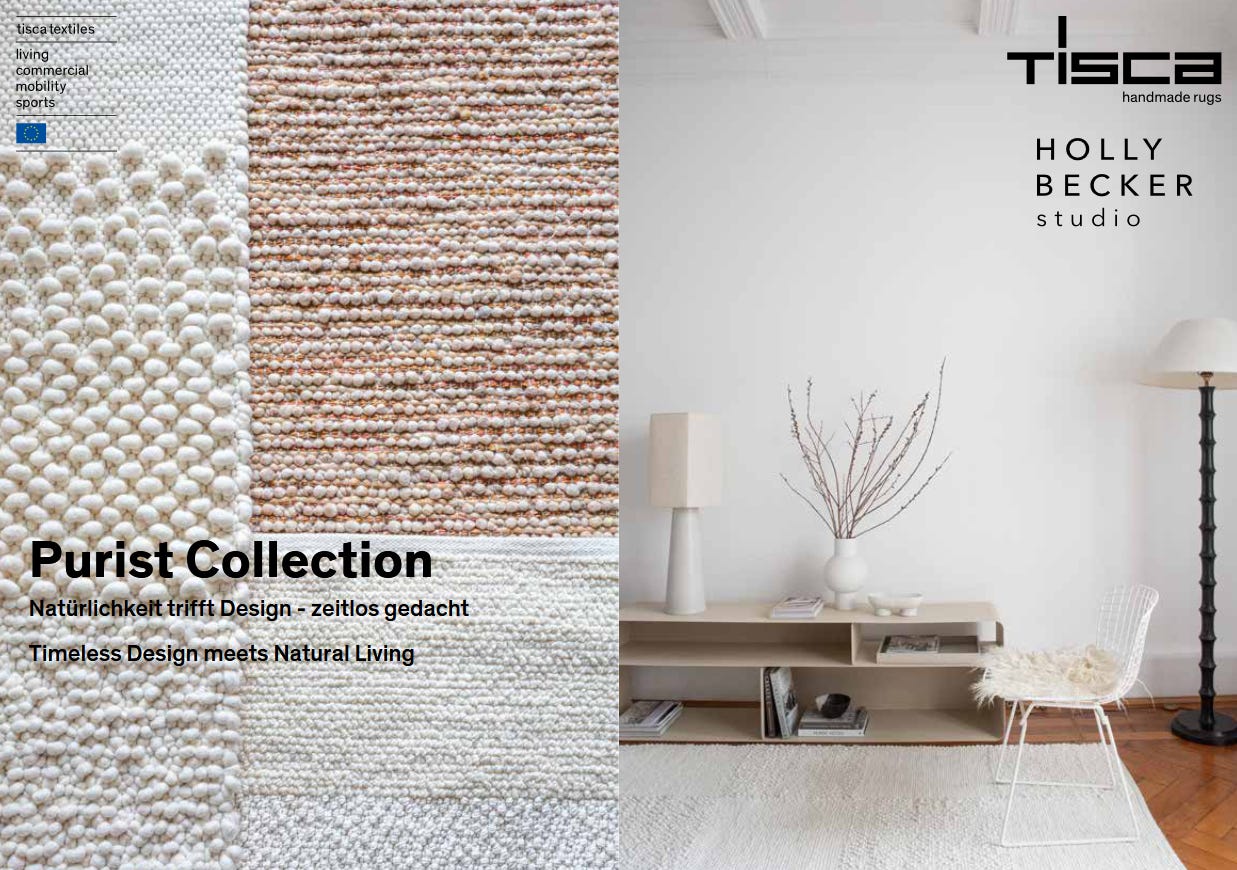
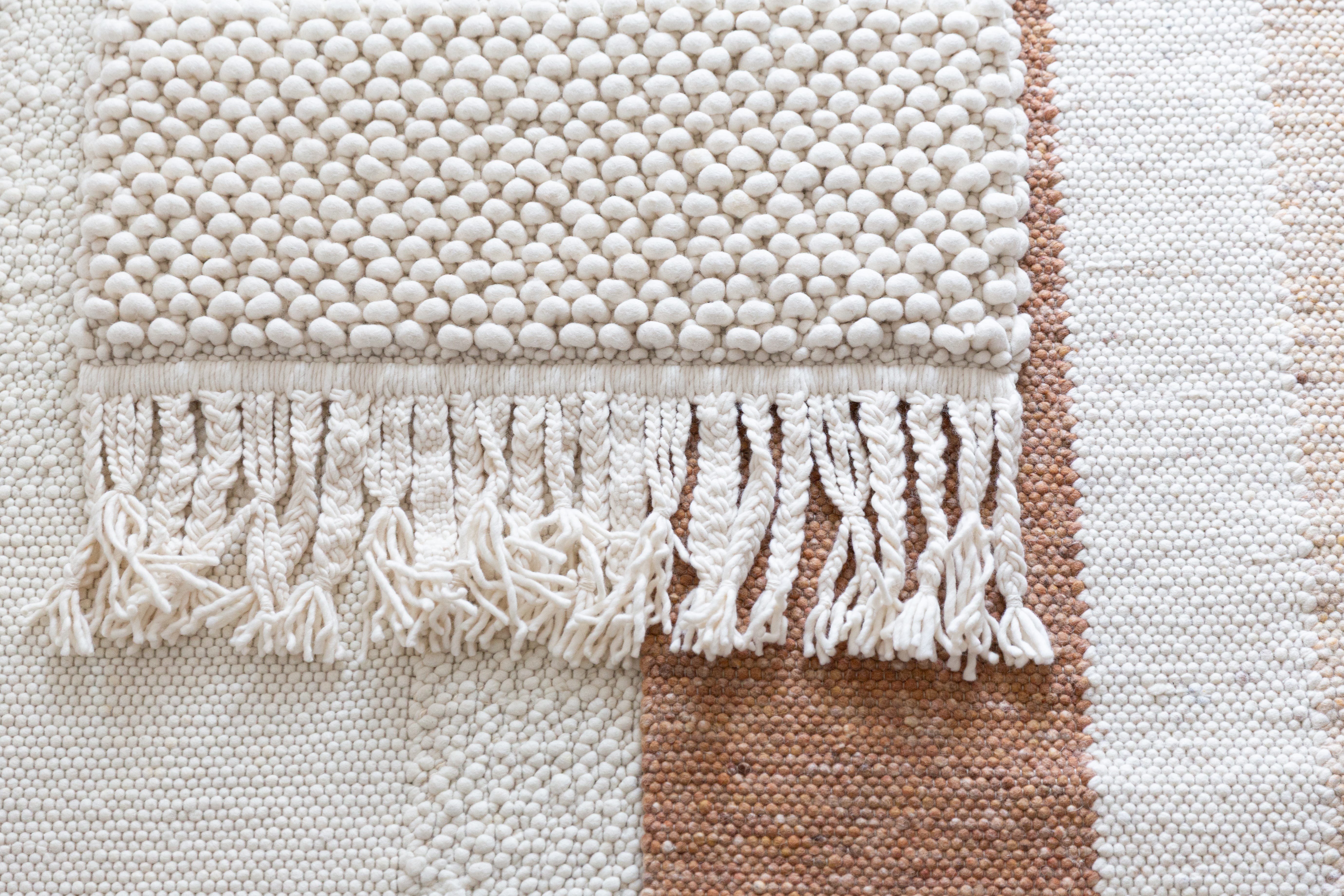
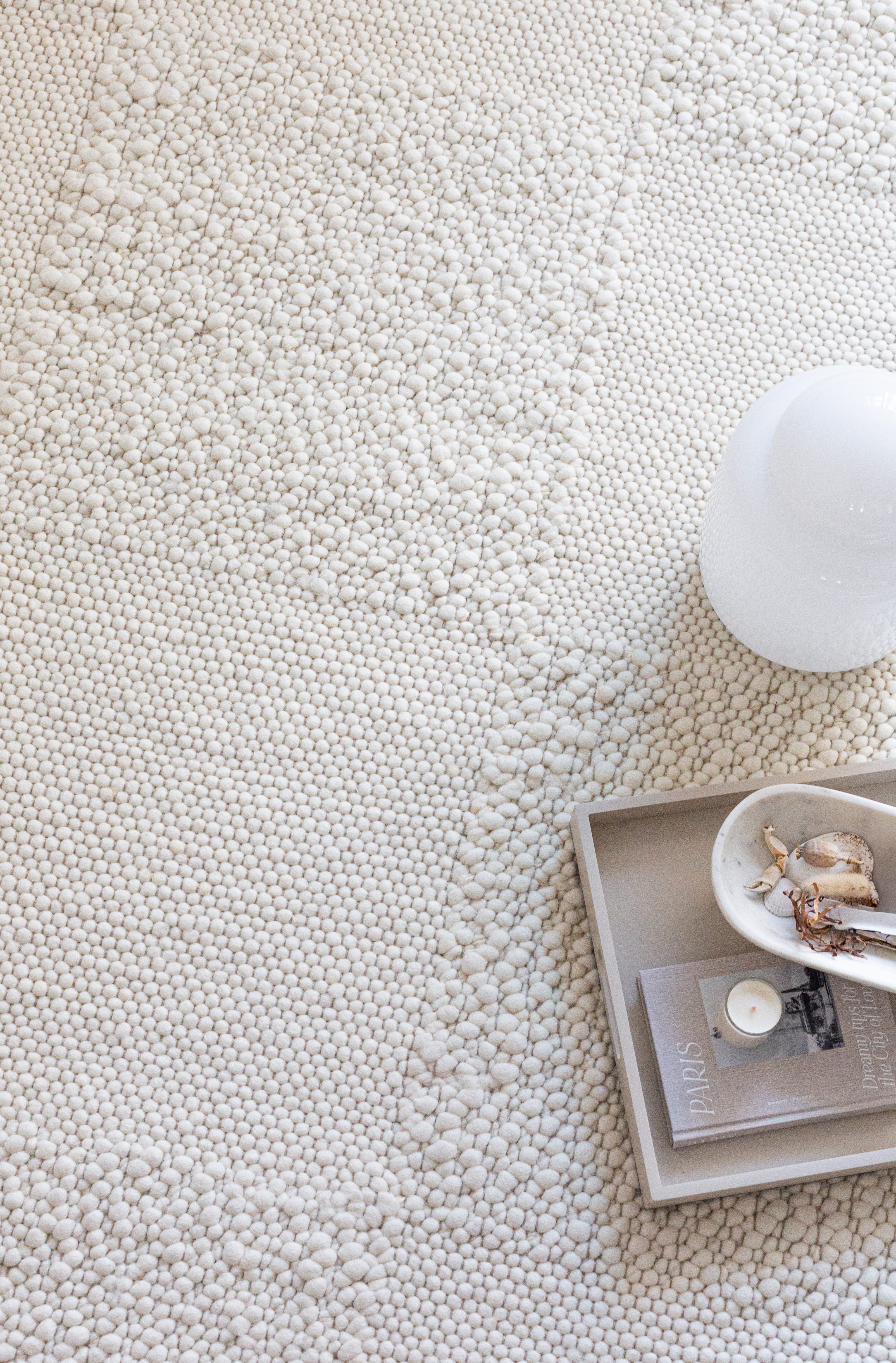
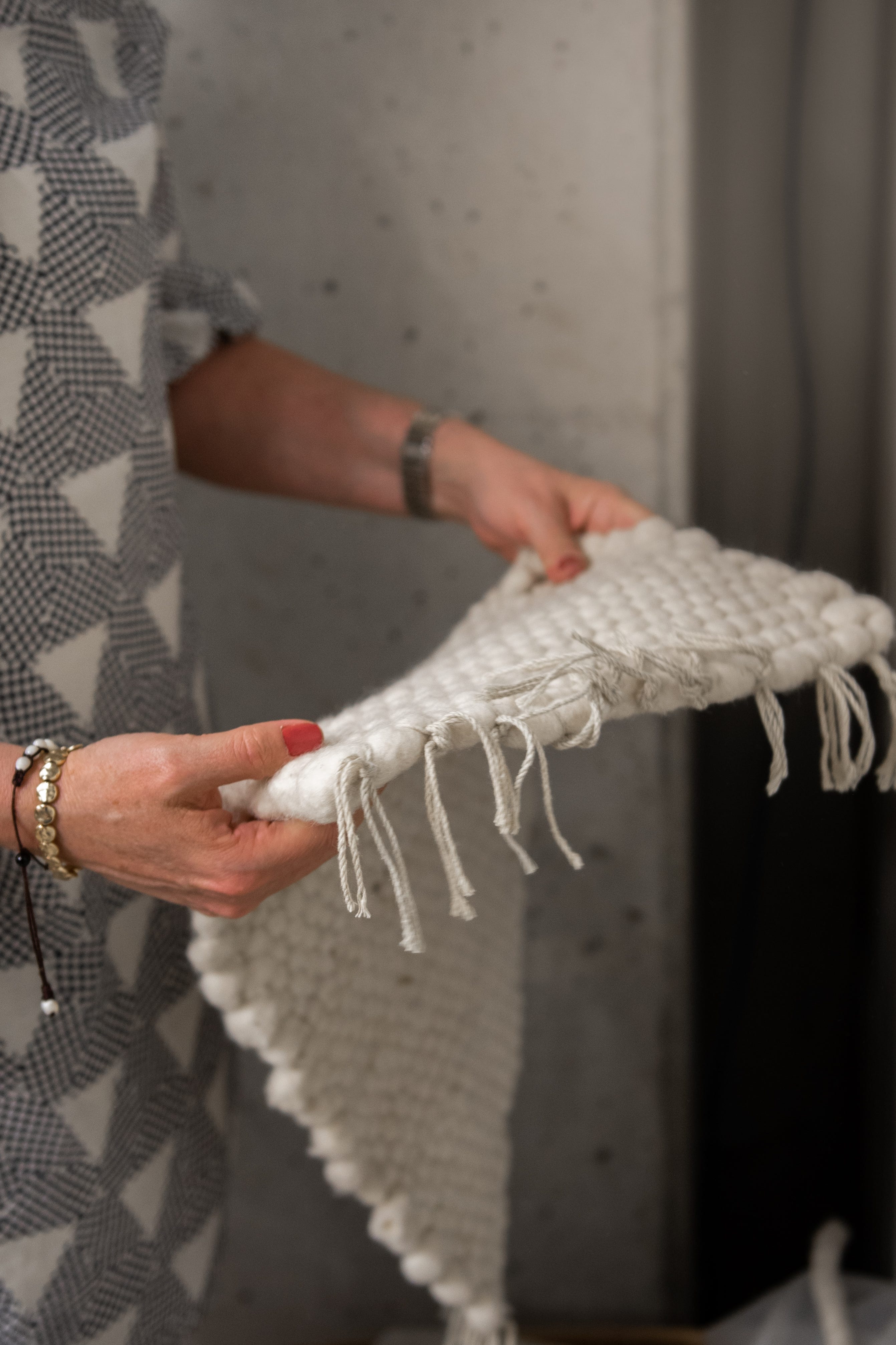
But now, as Purist - my new rug collection with Tisca - is set to launch next week at Formex in Stockholm, this feels very personal. I’ve been thinking about what makes a collection strong and enduring. How can it connect to the designer personally while also connecting to those whom we hope will fall in love with it?
I’ve been thinking about the many rugs I sketched and painted on watercolor paper that didn’t make it into the final collection. I think around thirty or so were sketched and abandoned. Not because they were ugly or wrong, but they didn’t belong… They weren’t ready for this debut but there was more than that. Some, due to technical constraints, couldn’t be woven. It’s hard to know when to stop when we’re putting together a collection, isn’t it? It’s hard to stop with a lot of things - a collection of photos, a room design, even something simpler - a Substack post. I see a lot of writers who don’t know how to end a piece, so it just goes on and on and on and on. Points are made, and lost, and made again. They’re exhaustive to read. They could have easily been fifteen essays. But the writer didn’t know when to stop.
Then you read Seth Godin’s blog. What a lesson in restraint. He knows when to stop - his posts are brilliant. Same with his many bestselling books.
While all of my thoughts were circling about collections and restraint, I came across something that stopped my unraveling.
A video with surface pattern designer Bonnie Christine, who said:
“The strength of you as a designer is your ability to curate. And curation means only pulling the best, and being willing to leave out something that you’re not happy with or you don’t feel is ready, in order to make that curated final collection as strong as it possibly can be.”
“Being willing to leave out something.” That’s sometimes the hardest part, isn’t it? Most creative people have a million ideas. We have endless colors to experiment with, motifs to make, patterns to develop, shapes to create, and materials that we yearn to incorporate. We should experiment and experience all of them.
But when we’re preparing to release a complete collection, what makes the final cut? What will make the collection cohesive, desirable, relatable, and commercially viable without weakening its point of view? When is enough truly enough?
The hard part - which can take years of experience and a complete setting aside of the ego - is knowing which ideas belong together, which should be left out, and which might need to be shelved for another time - or abandoned completely.
We have to loosen our attachment to some ideas. And that’s hard, since we remember the hours spent developing the idea, the excitement we felt while working on it, or that wonderful rush of certainty when we thought, Yeah, this is gonna work.
The thing is, when an idea doesn’t fit, some of us remain loyal to it anyway, but it dilutes the body of work. Leaving it out feels wasteful or even personal, it’s like rejecting it means rejecting a bit of ourselves. But editing is not rejection. It’s discernment. And discernment is one of the most important skills a creative person who is developing a professional body of work can develop.
We often think taste is revealed by what someone chooses: a typeface, sofa pattern, photograph, a certain light fixture, tiles, color palette, or the way objects are arranged on a shelf. But that’s only a very small part of it.
Taste is also revealed through THE EDIT - everything someone had the opportunity to include and decided not to.
They made clear cuts. They made final edits.
You can feel this immediately when you enter a room… There may be twenty lovely objects available to place in a space, but the room won’t look better or complete when all twenty are included. Often, too many beautiful objects in one space dilute the overall view.
Sometimes a gorgeous handmade bowl needs to sit alone on the table, or a mineral-paint wall with it’s beautiful brush strokes, is more powerful without anything on it at all. It could be that the wonky art you picked up at the flea market is too loud next to those quiet shelves, especially if the vibe you’re looking to create is wabi sabi.
The same is true of a product collection, design portfolio, that book you’re styling and photographing, a mood board, or even an Instagram carousel. One weak element can dilute the entire thing, or change the overall interpretation of it.
In photography, we say, “Your portfolio is only as strong as its weakest image.” I’ve always found that slightly brutal to say to my students, but there is a lot of truth in it. When I was a Creative Director and Editor-At-Large for HOLLY magazine here in Germany, I was tested with every issue and each decision, to pick the strongest topic, article, photo, feature… I wanted each issue to be cohesive and beautiful because these days, those who bother to buy print mags are paying for a point of view. They can get imperfection and disjointed materials for free online - in print, they want the best of the best. They want a gatekeeper with a vision.
The photograph you include because you’re emotionally attached to it may be the very one that weakens the entire story because it interrupts the rhythm. It may not be a technically “bad” image, but it just doesn’t belong with the others.
For designers, making that cut is a strength. It’s always worth asking, Should all of these things be here or do I need to rethink this? Especially since we’re living in a time when we feel constantly pushed to create: more content, courses, launches, newsletters, Instagram Reels, Substack posts. More, more, more.
That pressure makes restraint feel almost irresponsible, or even unwelcome. If we made it, we need to post it! If we photographed it, we should use it somewhere, right? If we developed twelve designs, shouldn’t the final collection contain all twelve? Most of the time, no.
Quantity proves that we have worked, yes. And that can be impressive to a degree. But curation, the edit, shows we understand what should be seen publicly, and why.
A mature creative eye is not based on only effort our output. I’d rather enjoy one powerful 90 minute film than to watch a 180 minute film that drags on and one, revealing too much, so that in the end I’m burnt out and feel uninspired. While people do respect effort, effort and quantity alone doesn’t make the work stronger. Sometimes you can clearly see that if someone had slowed down and allowed the idea more time to develop, the outcome would have been better. If they had just done the research, studied their choices, created a real story or theme, dug deeper, the work would reveal something that would make it stand out much stronger.
Not every good idea belongs in the final work. The editing we hide is a hard part of the work because the audience never sees it: everything that was removed. They have no idea how many possibilities existed before the final room came together, the collection was completed, or the final image was selected. They only experience the result. And that is exactly the point. They see the curated collection - the one where the final cuts were made and only the strongest work remains on display.
One thing I always try to remember when I’m working is that an idea can be good and still not work for that particular project. A business idea can be great and still not be the right one at this moment. You can own a beautiful object and still need to store it away for a while because adding it to the room would be too much.
I have an entire prop room in my apartment dedicated to beautiful objects - art, ceramics, glass, lighting, textiles, rugs, all of it. I could open a shop tomorrow from this room alone. My props get sold but they also end up with clients or friends, and they rotate in and out of my photographs, along with my home and work. I don’t have to display everything in my house from that room at once in order to appreciate or value my hundreds of props. They are organized in the prop room. Some things can wait until the right moment or when the right project arrives. That’s the beauty of storage and being lucky enough to even have a dedicated prop room.
Creative people sometimes try to make one project hold every part of who they are in this very moment in time. Everything that they like, are into, experimenting with, interested in. They want it to prove something: their skill, range, intelligence, relevance, depth, or even their talent. But a strong body of work shouldn’t say everything. It should say something. That’s all. It needs to say one thing clearly enough that it feels cohesive and tells a story someone else can feel. It also needs to give the viewer some space to try to interpret it. Poetry, a good film, music, an art exhibition, the best ones don’t tell us every single detail. They leave room for us, the viewer, to imagine what was left out, the gaps are just as important as the story that’s been told.
There will be other spaces, collections, and more opportunities to create. I tell myself this a lot. The thing that you remove today may become the beginning of something entirely new, and perhaps even more spectacular, if you include it in something else tomorrow. And if it never does, it still served a purpose right? I mean, it helped you create a cohesive collection that made sense to your audience and by leaving it out, you were able to see what the work wanted to evolve into.
To curate well, we have to first learn from the examples of those who are known for their eye and exceptional curation and examine it. Make our own case studies on them, like we do in college - I must have done a million case studies in school and I always learned the most from them. But after some time, when we’ve studied those around us who have an exceptional talent at curation and editing, when we feel we have trained enough to know better know for ourselves, we have to trust our own response to something before anyone else has given us their input - which can feel both liberating and frightening. It’s much easier to keep adding, adjusting, and asking for opinions than it is to stand back and say, “No, that’s enough. This belongs. That doesn’t. I’m done here!”
This is where a recognizable point of view begins - when you know what stays and what goes without someone else coaching you along. It doesn’t begin from you trying to cram in everything people might like -or even everything that you like. And it’s always okay to ask a more experienced professional for their critique before you go public with a body of work. I have a friend in London who always gives me a final critique on some of my bigger design projects before I move them out into the world. And when I do collections, the brand that I’m designing for gives me that final go ahead, or tells me the adjustments that I could consider. Same goes for my books and magazine, podcasts, those types of things. I am a gatekeeper with gatekeepers in that sense. But some of my projects - writing this article for instance, designing someone’s home or a commercial space, creating my courses and all of the content in those, this 100% comes from only me without anyone giving me the green flag. How does my point of view become so clear in these cases?
I believe that point of view always becomes clearer when we’re almost surgically precise about what feels true and honest to the collection or space or anything we’re building or creating. And your point of view becomes visible through repetition - the more you create over years, but also through refusal - the things you leave out, that never see the light of day.
Point of view, your curation, reveals itself through the colors you return to and the ones you leave out, the stories you choose to tell and those keep to yourself, the projects that you share with the world and the ones that you enjoy privately as part of your creative life. For instance, I don’t publicly share some of my collections, the pages of my diary, every corner of my home, or the many collages and mood boards that I make purely for fun. I use all of these things to build my skill and sharpen my eye - and to simply play or relax - not to put forward as a body of actual work.
Not everything has to be made public. In fact, 80% of my work remains private and hidden, existing only for me and my family to see. It doesn’t have to become content or prove anything to anyone in order to have value. Look at how many famous artists live and die, and later bodies of work were found in drawers, attics, and boxes that were exceptional and amazing - yet the artist never made any of it public while alive. Why is that? It could be that all that work was simply done for them to enjoy, hone in on their craft, improve, or maybe just as studies and experiments.
Another thing I want to say is this: Curation is not being a perfectionist. Perfectionism seems to turn a lot of us off - we see it on people’s Instagram feeds and think, What’s going on with that lady in the black and white house with everything always matching! She may not be a perfectionist at all - she may simply be curating a good feed - you most likely don’t see the entire house with all the untidy closets and hidden spaces filled with props (like my room) or the messes. You only see the curation. She takes her Instagram and her business there seriously, so you’re seeing the curation.
Curation isn’t the same as being a perfectionist - curation helps us finish because we understand that the work is complete. We can leave it, release it, and move forward. Perfectionism is when we are never satisfied and have a hard time releasing anything at all, and when we do, it usually took a lot of time and created a lot of stress behind the scenes.
Restraint is present in so much of the best work designers put forward. You wouldn’t believe the vault of unseen work hidden inside drawers, closets and cupboards in creative studios around the world. I’ve been to hundreds of spaces, I’ve seen the work that never saw the light of light and likely never will. And that’s okay, precious even. Those artists and designers had enough courage and confidence to not have to show it all to the world, but to keep some for themselves.
So the next time you’re creating something - a course, collection of pottery, a new room, website, whatever it may be… please pause during the process and ask yourself whether you’re overdoing it - are you, maxxing out?
What’s the strongest part of this?
What’s watering it down or competing with my overall goal here?
What could I remove to make the vision clearer?
Am I including something because it really belongs, or am I just attached to the work I put into it?
Is my ego pushing me to show it all because I want to prove how efficient or hardworking I am?
Can I make the final cuts, walk away, and release the work?
After asking these questions, step away for a little while to find the answers deep inside of you. Make coffee, go for a short walk, or even sleep on it. Look again later with fresh eyes. Usually, what needs to go is the thing we’ve been trying our hardest to include. Or the thing that no one is responding to. Or the thing that we question ourselves.
And yes, I know that can sting. But it can also bring an enormous sense of relief because the work finally feels pure and has room to breathe. It’s done. You can move on and create something else.
The strength of a designer is not measured by how much we can produce or how many ideas we can fit into a collection - or a room. It’s really found in our ability to recognize what’s key, protect it, and have the courage to leave certain things out.
Sometimes the most confident creative decision isn’t adding more.
It’s subtracting, and knowing what to leave out. It’s also knowing when to stop, when to let go, and when to be confident enough to release the work into the world and saying, “This is good enough.”
Love,
Holly
Comments
Nothing yet. Say the first thing.
Sign in to join the conversation.