
Every client I work with is different.
They have different jobs and live in different states. They range from Zoomers to Boomers. They were given different messages about money through their childhoods and have navigated different financial challenges.
But there is one phrase I find myself saying to nearly everyone at some point during The Good Bones Edit:
“That makes sense.”
“I was tired after a long day at work and ordered take out”? That makes sense.
“I’m not sure if the economy is very stable and want to keep more cash in my emergency fund”? That makes sense.
“I need a vacation for my mental health even though I know I haven’t saved for it.” That makes sense.
We are humans before we are “rational” economic actors.
By naming the tensions between our financial goals and our very human needs we can begin to see that some of the ways we spend money are related to the macro and microsystems we find ourselves in.
When I was paying off $60,000 of student loan debt back in 2018, a Trader Joe’s fortuitously opened right next to my office, making my lunches cheap and making it incredibly convenient to pick up groceries for dinner. My environment enabled me to make healthier, more cost-effective decisions for my life and my budget.
Since becoming an entrepreneur, I have had ample time to cook delicious homemade meals for myself on weekdays. That wasn’t always possible when I was working a time consuming 9-5. I could lament how much I spent on takeout during those days, but that wouldn’t be very fair to my former, harried self.
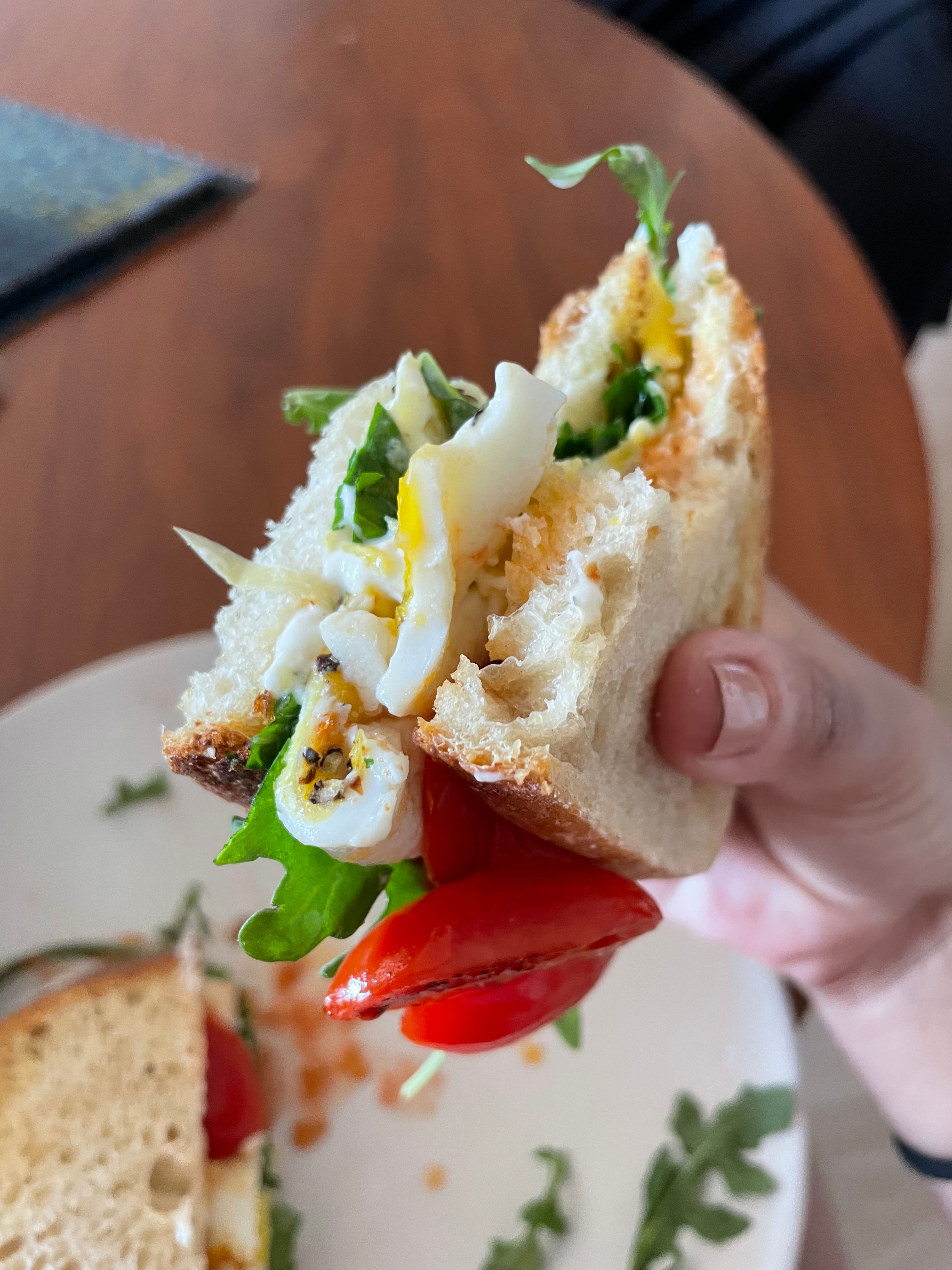
If you’re finding that you are struggling in any area of your financial life, name the reasons it’s been a struggle.
Maybe you’re ordering a lot of take out but you’re managing a health condition that makes it hard to cook for yourself.
Maybe you feel like you’re spending a lot on exercise classes, but you know that it’s the only way you know to get yourself to workout.
Maybe you spend a lot of money to live alone, but you value having your own space enough to make the rent worth it.
This can seem like you’re making excuses, but it’s really about understanding the environment of your microeconomy and consciously noting the tradeoffs you’re making.
It’s when these decisions are more opaque to us that we can get sucked into spirals of self-judgment, delusion and inaction.
We don’t have to stay in those spirals. It’s much chiller on the other side (though getting to the other side requires going through the gauntlet of facing your numbers and competing priorities). None of this is easy, but it feels much better, in my experience, to acknowledge your current financial conditions and the choices you’re making and understand what you’ll need to do to accommodate the life that feels the best to you.
“Does homeowners insurance fail if your house never burns down?
Or umbrella liability coverage if you never get sued? I own term life insurance and genuinely hope the insurance company never pays a death benefit. Because if they don't, that means I'm still alive!” - Cody Garrett, CFP®“A client had a pattern of not sharing money problems, first with his parents and then with his fiancé. His money story included an experience from childhood when his younger brother had cancer, and he realized how much money his parents needed to spend on treatment. He decided in that moment to be as financially independent as possible. When Emily brought this to his attention during a session, he froze for a moment, then she could see his eyes darting back and forth as he realized the mismatch. His original emotional knowing was probably something like, “If my parents give me money my brother will have less, and he could die.” Unfortunately, his brother had died about a year after the diagnosis. So years later, this man realized that his need to be independent made no sense anymore. As he and Emily processed the realization, the new information was saved. At their next session two weeks later, he had already changed his behavior by sharing a financial concern with his fiancé.” - The Moment the Brain Says “Oh That’s Not True Anymore” | Financial Therapy Insights by Rick Kahler
“In my clinic and in our research programs, the single most consistent obstacle to change isn’t willpower. It’s the story people tell themselves about why they can’t change, which is again, usually some version of there’s something wrong with me. That story is exhausting to carry, and it distracts and deflects energy away from focusing it toward that which actually drives habit change. You can’t get genuinely interested in learning how your mind works when you’re too busy blaming yourself for how your mind works. Which, of course, keeps you from then learning how to work with your mind.” - It’s Not You, It’s Them | Inside the Curious Mind | Jud Brewer, M.D., Ph.D.
Please enjoy my first (extremely reluctant) Instagram yap. I am delightfully booked through June but am still accepting clients for July and August (and maybe a bit of September) before I head out on maternity leave. Even if now doesn’t feel like exactly the right time to get started with financial coaching, I’d love to meet you for a free 30-minute session while my time wealth is AMPLE, pre-baby.
Comments
Nothing yet. Say the first thing.
Sign in to join the conversation.