
Note: I rarely do this, but I also posted this article to my other Substack, Called For Adventure. That means about 35% of you will get it twice in your inbox. Sorry about that. I felt this was too applicable for our work here to not share it with you today.
This weekend, thousands of us will sit in theaters to watch Christopher Nolan’s The Odyssey, a modern retelling of one of the oldest surviving works of Western literature.
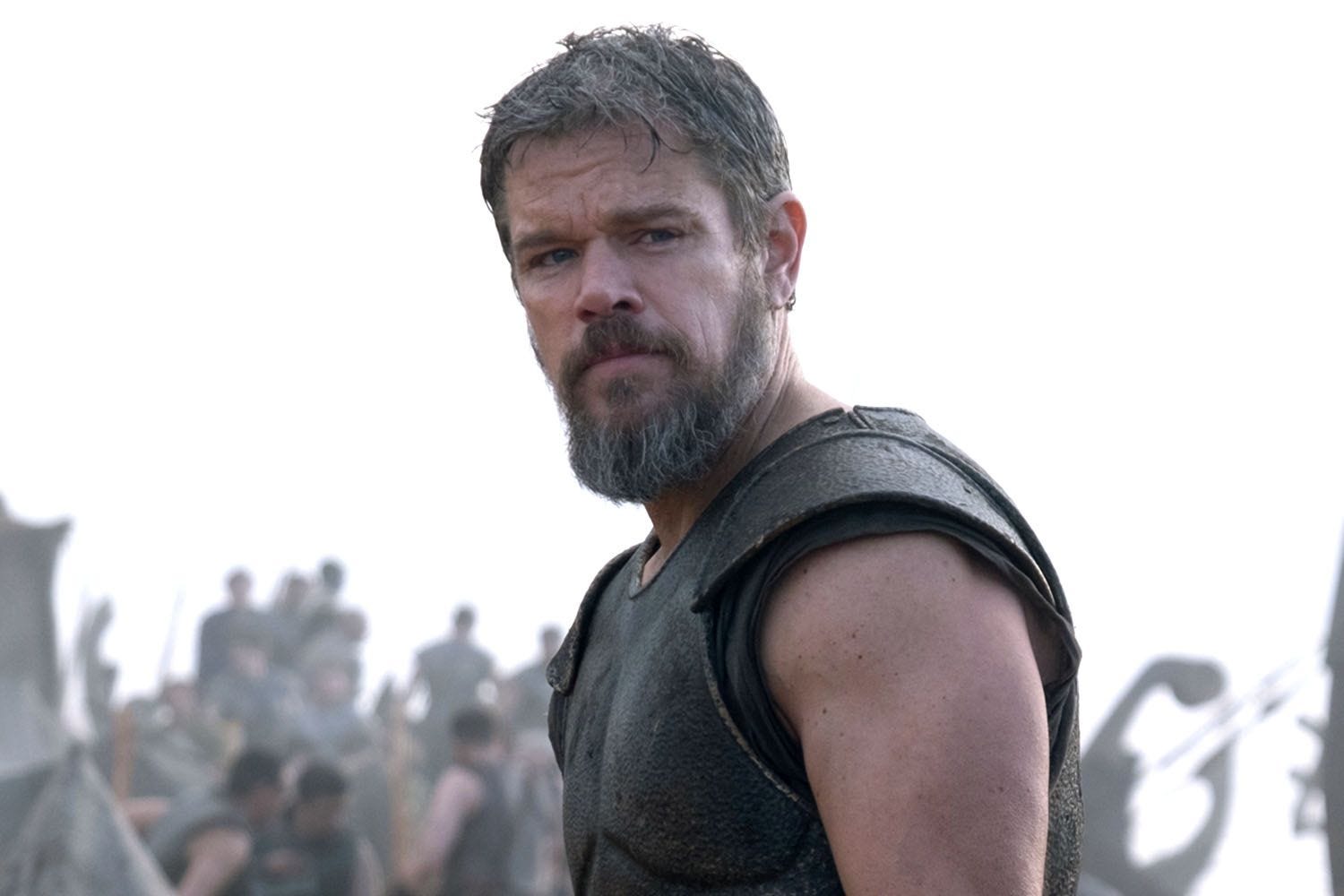
Disclaimer: I plan to see The Odyssey, but haven’t yet. I am sure there will be spoilers below because… you know… the movie is new, but the book’s been around for a minute or two.
The story is nearly three thousand years old. It contains gods, monsters, witches, Sirens, giants, and a one-eyed Cyclops. Its hero, Odysseus, spends ten years wandering the seas as he attempts to return home after the Trojan War.
We have no historical evidence that Odysseus blinded a Cyclops, resisted the songs of the Sirens, or received personal assistance from the goddess Athena. Troy was a real place, and the poem may preserve distant memories of conflicts from the Late Bronze Age. But the world of The Odyssey is the world of myth, not documented history.
And yet, for nearly three thousand years, human beings have continued telling this story.
Why?
Because a story does not have to be historically accurate to tell the truth.
In ordinary conversation, we use the word myth to mean something false.
“That’s just a myth.”
What we usually mean is: “That didn’t happen.”
But that is a relatively shallow understanding of myth. Ancient myths were not primitive attempts to record history. They were stories that helped communities wrestle with their deepest questions:
Who are we?
Where did we come from?
Why are we here?
Why do people suffer?
What does it mean to live a good life?
What do we owe our families, our communities, and the gods?
What happens when we die?
Facts tell us what happened.
Stories tell us what those facts mean.
The late mythologist Joseph Campbell described myths as “clues to the spiritual potentialities of the human life.” For Campbell, mythology gave people a framework through which they could experience the mystery of existence, understand their place in the universe, organize a society, and navigate the different stages of life.
Campbell identified four primary functions of mythology. The first was mystical: myths awaken us to the wonder and mystery of existence. The second was cosmological: they give us an image of how the universe works and where we belong within it. The third was sociological: they reinforce the values and social order of a community. The fourth was pedagogical: they guide us through the stages and difficulties of a human life.
In other words, myths taught people how to be human.
Odysseus does not remain compelling because we believe every episode of his journey occurred. He remains compelling because we recognize his journey. We know what it is to get lost. We know what it is to long for home. We understand the temptation to abandon the journey, the danger of pride, the pain of loss, and the fear that after years away, the home we remember may no longer exist.
The monsters may be imaginary.
The struggle is not.
One of my favorite quotes is Neil Gaiman’s famous paraphrase of an idea from G. K. Chesterton:
“Fairy tales are more than true: not because they tell us that dragons exist, but because they tell us that dragons can be beaten.” - G.K. Chesterton (sort of)
We sometimes imagine that ancient Greeks lived by myths while modern people live by facts.
We can’t deny that they lived in pre-modern times and we live in postmodernity. We know much more about how the universe technically works than our ancestors. But here’s the thing. We all still need myths to make sense of the world. One thing that we know now that the ancients didn’t is that our brain needs stories to give meaning to data. Our brains actually need myths to give our lives meaning.
In other words, we are no less shaped by foundational stories than the people who gathered to hear the adventures of Odysseus. Our stories simply sound so familiar to us that we rarely recognize their power.
Some of our myths are thousands of years old. They come from our religious traditions and tell us who God is, what human beings are, why the world is broken, and how it might one day be restored.
Others are national myths developed over hundreds of years. They tell us who founded our country, what those founders believed, what makes our nation exceptional, and what role our people are supposed to play in the world. These stories may contain historical people and events while also simplifying, exaggerating, or carefully omitting parts of the past.
Every state, city, school, company, and community has its foundational stories. There is almost always a story explaining how “people like us” came to be.
Not every foundational story is technically a myth in the academic sense. But national, community, and family stories often perform the same mythic function: they explain who we are, where we came from, and how people like us are supposed to live.
Some of our most powerful myths go back only one or two generations.
Your grandfather arrived in this country with nothing and built a life through hard work. Your grandmother kept the family together when everything was falling apart. Your father never missed a day of work. Your mother would give her last dollar to someone in need.
In our family, we don’t quit.
In our family, we help people.
In our family, we keep our problems to ourselves.
In our family, we do whatever it takes to get ahead.
Some of these stories may be historically accurate. Many have probably been polished through years of retelling. Most are a mixture of memory, interpretation, omission, and exaggeration.
But their power does not depend upon their historical accuracy.
Their power comes from the meaning they carry.
Human beings do not build an identity from disconnected facts. We arrange those facts into a story.
That story becomes something like the operating system running beneath our conscious lives. It helps determine what we notice, how we interpret what happens, what we believe is possible, and what we think someone like us is supposed to do next.
If your foundational family story is that “we always take care of our own,” you may become extraordinarily loyal and generous. You may also struggle to establish boundaries or acknowledge destructive behavior within the family.
If your national story teaches that your country is uniquely virtuous, you may feel a meaningful obligation to serve your community. You may also find it difficult to confront the less heroic parts of your nation’s history.
If your religious story tells you that you are loved by God, it may give you courage, belonging, and hope. If it tells you that you are fundamentally corrupt and constantly in danger of punishment, it may fill you with shame and fear.
If your family story is that success belongs to those willing to outwork everyone else, it may help you build a remarkable career. It may also leave you unable to rest, receive love, or know who you are when you are not achieving something.
The same story can carry both gifts and wounds.
That is part of the power of myth. Myths do not merely describe the world.
They tell us who we are.
Some of the myths you inherited may still be serving you well.
Perhaps you come from a family with a long heritage of fighting for justice, caring for the poor, creating healthy communities, or showing up when people need help. That story may continue calling the best out of you.
Other myths may have helped you survive one chapter of your life but are no longer capable of carrying you into the next.
Perhaps the religious story you inherited once gave you safety and belonging, but now leaves you conflicted. Perhaps your national story once inspired you but no longer accounts for what you have learned about history. Perhaps your family taught you to work harder than everyone else, and that story helped you become successful—but now your success feels strangely empty.
This does not necessarily mean the old story was bad. It may have brought you a long way. It may always remain an important part of your identity.
But a story that helped you survive the past may not be the story that helps you create the future.
This is where the real work begins.
The myths operating beneath our lives are difficult to change because they rarely feel like stories. They feel like reality.
Questioning them can feel like betraying your family, your religion, your country, or an earlier version of yourself. Your brain will resist. It would often rather remain inside a familiar story—even a painful one—than enter the uncertainty of an unfinished story.
But you are allowed to step back and examine the myths you inherited.
You can ask:
What story did my family teach me about who we are?
What story did my religion teach me about God and about myself?
What story did my community teach me about success?
What did those stories give me?
What did they cost me?
Which parts remain deeply true?
Which parts no longer fit the person I am becoming?
You do not have to reject your entire history. You do not have to declare your parents wrong, your grandparents foolish, or your younger self naïve.
You can honor the story that brought you here without allowing it to determine where you go next.
You can preserve what is life-giving. You can release what has become destructive. You can choose a new story that is more honest about your past and more faithful to the person you are becoming.
The choice is never between living by myths and living without them. Human beings cannot live without stories that help us interpret our lives.
The choice is whether we will remain trapped inside the stories we inherited or become conscious participants in the stories we are creating.
That may be one reason The Odyssey still speaks to us.
On the surface, it is a story about one man trying to return to the island he left behind. But like all enduring myths, it works on more than one level. Odysseus is not simply searching for a geographical location.
He is trying to discover whether he can return home after everything he has experienced—and whether he is still the same person who left.
That is a question many of us eventually face.
Can I return to the religion, family, community, or identity that formed me?
If I return, will I still belong?
If I have changed, can it still be home?
And if I cannot return in the same way, where will I find home now?
Perhaps the myths that stay with us are not the ones that provide final answers. They are the ones that give us language for the journey.
Odysseus did not have to sail past actual Sirens or battle a literal Cyclops for his story to reveal something true about us. He was lost. He longed for home. He encountered forces that threatened to keep him from becoming the person he needed to become.
And after nearly three thousand years, we still recognize him.
Because his story is familiar.
Because it’s our story.
We all leave home for an adventure. We fight our battles. We lose some and win some. We become people we never imagined we would be.
Our path back home is winding and dangerous, and it always seems to take longer than it should. By the time we finally arrive, we are no longer the people who left. Home may not look the way we remember it, either. The people have changed. The stories have changed. Some of what once made us feel safe is gone.
It can feel as though nothing remains.
Near the end of The Odyssey, Penelope does not immediately accept that the stranger standing before her is really her husband. Twenty years have passed since Odysseus left for war. He looks different. He has suffered, aged, and returned in disguise. Penelope has heard too many stories and resisted too many deceptions to trust this one easily.
So she tests him.
She tells a servant to move their marriage bed outside the bedroom and prepare it for him there.
Odysseus knows this is impossible.
Long before he left Ithaca, an olive tree grew where their bedroom would eventually stand. Odysseus built the room around it. He shaped the living trunk into one of the bedposts and constructed the rest of the bed around it. The bed was not merely sitting inside their home. It was rooted in the earth beneath it.
It could not be moved without cutting it away from its roots.
After everything he has endured—war, monsters, shipwrecks, temptations, losses, and years of wandering—the final proof of his identity is not a scar from battle or a story about his adventures.
It is that he remembers what is rooted.
This is what returning home means for us, too.
The journey changes us. It should. We outgrow beliefs, roles, ambitions, and identities that once defined us. We examine the foundational myths we inherited and discover that some were exaggerated, some were incomplete, and some were never true at all.
When enough of those stories change, we may fear that we have lost ourselves.
But beneath the stories we were told about who we were, something deeper remains: the values that first made us feel alive, the people we love, the questions we cannot stop asking, the longing to create something meaningful, the instinct to help, heal, build, protect, or tell the truth.
The old house we lived in may have crumbled.
But the root of who we are remains.
The journey home is not about returning to the person you were before you left. That person no longer exists. The journey is about discovering what has remained rooted in you through everything you have experienced—and building your next story from the truth of who you have always been and the hard-won wisdom you carried home.
Odysseus traveled across the world, lost nearly everything, and returned home looking like someone else.
Penelope recognized him because he remembered what could not be moved.
May we all find our way back home to ourselves.
Please support me financially when you feel what I do here is valuable.
You have four options:
Buy Me a Coffee (Good for those outside of the USA who can’t use Venmo)
Thank you!

No posts
Comments
Nothing yet. Say the first thing.
Sign in to join the conversation.