
I was 66 and covering the White House in early 2020 when America came face to face with COVID.
I got my first case early, after I covered CPAC (Conservative Political Action Committee). At that time, COVID tests were in short supply and hence hard to get. I met two of the criteria to qualify for a test — I had symptoms and had been in close contact with someone who had COVID, but not a third criterion. I had not been out of the country. So no test.
My wonderful doctor nonetheless prescribed COVID treatments.
I’ve had COVID since 2020. Then Tuesday I tested positive for COVID, after my husband tested positive on Saturday. Wesley hadn’t been feeling well. We had a bunch of tests that were past their due date but nonetheless worked well enough. So I suggested — actually insisted — he take a test. To our surprise, Wesley tested positive. He was shocked. But then COVID gave him a wallop.
At the time, I tested negative. We tried to keep our distance so that I would not get it. But Tuesday, I tested positive as well.
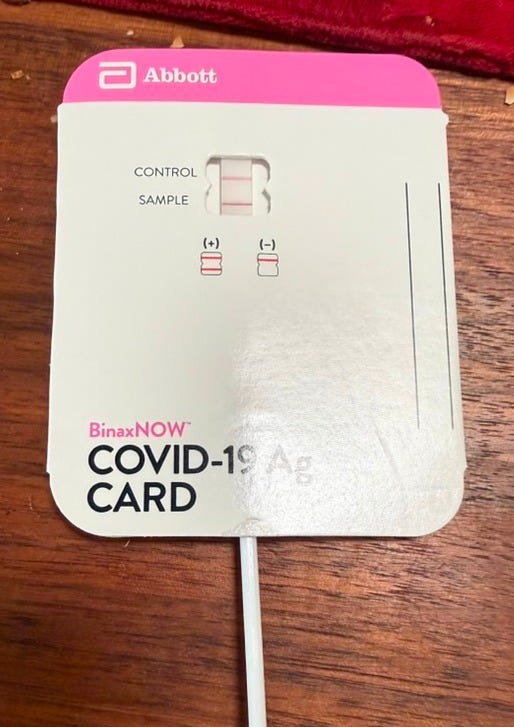
COVID in your 70s is no treat. Like Wesley, I spent three days on my back, barely moving. We arranged to have the dogs walked — a job we did ourselves during previous encounters with COVID.
And from bed, I’ve been reliving the early days of COVID.
In 2020, the White House Correspondents Association set social distancing guidelines for the 49-seat briefing room. Under the COVID regime, the room’s capacity was reduced to 14 seats.
I was surprised to see that in a room with less capacity — which meant a higher chance of being called on — many younger reporters were no-shows. Maybe they lived with someone who was elderly or vulnerable. Maybe some were risk-averse.
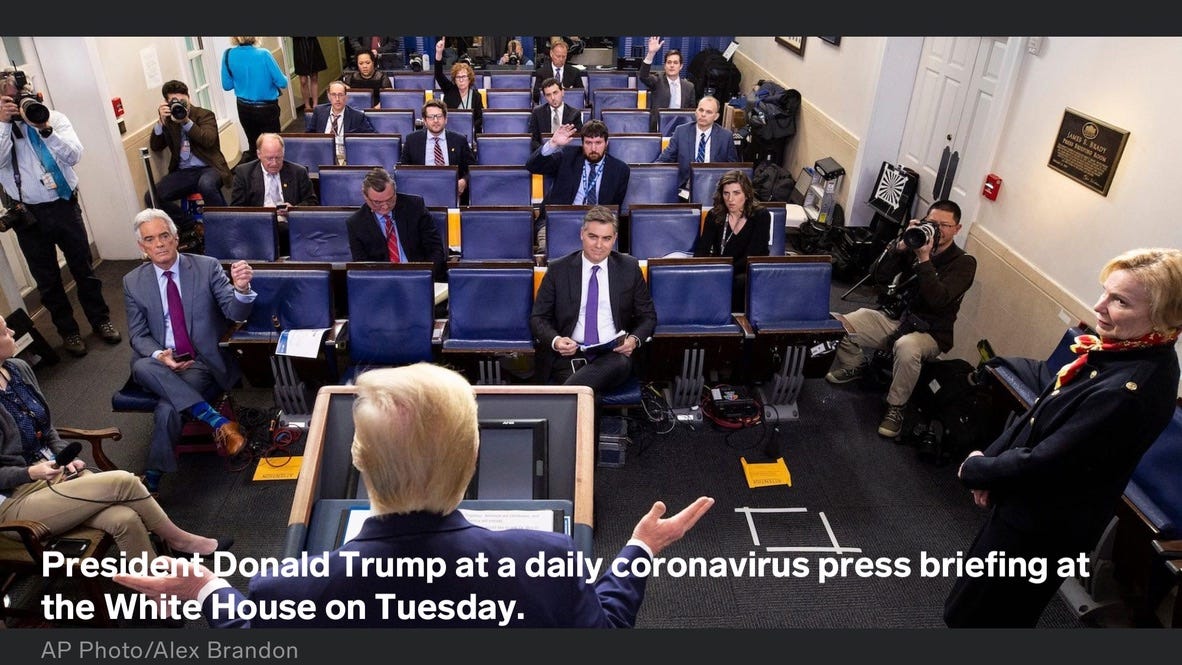
Even though I was over 65 — a category told to social distance — I showed up in the briefing room every chance I got. (You can see me above, sixth row.) After all, this was history.
I had a letter to show authorities that as a journalist I qualified as an essential worker, and was free to move about.
The thing that stood out most to me was the gulf between how the beltway reacted to COVID as opposed to California, my once long-time home.
In Alexandria, Virginia, where I live, after the original “45 days to slow the spread” campaign, restaurants expanded their use of outside tables and delivered food to local homes. They had an entrepreneurial spirit.
In California, many healthy, young residents isolated at home, did not send their children to public school, did not go to the office and thus fostered a culture of isolation.
I didn’t understand what happened to California — the Golden State that lured young Americans with its beaches, its weather and good vibrations. Cities that looked the other way when residents smoked dope, shot up and shoplifted, suddenly became hard-core enforcers that told churches and cafes what they could not do in the name of public safety.
In California, there was a real class divide. Gov. Gavin Newsom famously ate the French Laundry with his well-connected pals even as his office was warning residents not to attend big Thanksgiving get-togethers.
Outside of Sacramento, common sense prevailed. Three well-known epidemiologists, Dr. Jay Bhattacharya of Stanford, Sentra Gupta of Oxford and Martin Kulldorf of Harvard wrote the Great Barrington Declaration that recommended “focused protection” over heavy-handed social distancing, because the other risk from COVID was the toll imposed on children not going to school and workers not being able to work.
It’s Friday morning and I feel much better.
I can’t really tell if COVID is different in your 70s than in your 60s, because — brain fog — I don’t remember everything about having it before.
How did we get it? Last week we had two friends over for dinner and attended two public events ahead of our positive tests — one at an embassy, another a book party. It did not occur to us that the events were risky — in part because we like to tell ourselves that we had had COVID enough that we believed we had developed natural immunity.
And while we both feel like we are returning back to normal, it can’t be good for people in their 70s to get COVID.
That said, studies show that seniors live longer, healthier lives when they are out in the world. I think we’ve made our choice.
Feel free to share your COVID memories, and the decisions you’ve made going forward. And of course, it would be wrong not to subscribe, so….
No posts
Comments
Nothing yet. Say the first thing.
Sign in to join the conversation.