
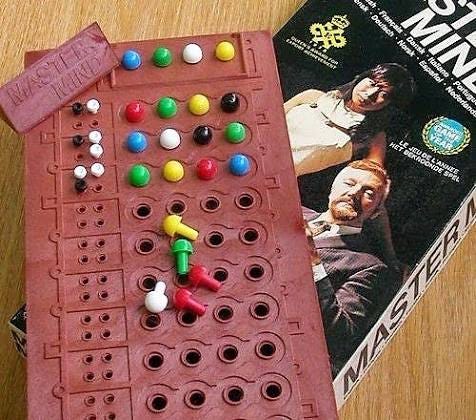
In 1979, in a writing class called “Exposition and Experience” with Sanford Kaye at Harvard Extension School, I wrote the first version of this unpublished essay. In subsequent writing groups, classes, and seminars over the decades, I’ve attempted to resurrect it, always with a sense that something is missing. If only I could find my way in. The story has lingered in my mind. Now, on the fiftieth anniversary of that dramatic bicentennial summer’s events, I’m finally bringing it to light.

The air is so thick and steamy that I can’t sleep. I raise my window as far as it can go and wake up the moths. A dog down the street yips incessantly. I wander downstairs and find Chuck, one of my summer-sublet roommates, at the kitchen table reading a textbook. It is mid-August 1976.
“What are you doing up?” I ask. “It’s three o’clock.”
“Can’t sleep,” he says, shutting the book.
“Yeah, too hot,” I say, lighting up a Newport.
“Hey, guess what? I dropped some mushrooms earlier and got stoned,” Chuck says, enunciating each word carefully, as always. “I’m still speeding really.”
“C’mon, you don’t do drugs. You don’t even smoke.”
“I know, but I felt like it. Jon sold me some psilocybin.” He pauses, as if waiting for a reaction. I can’t fathom Jon, our hippie housemate and the friendly neighborhood drug dealer, selling anything to straight-laced Chuck, a lanky engineering grad and Christian Scientist.
“Really? You took psilocybin?”
“Well,” he goes on, “to tell you the truth, I didn’t really take them. I just bought them as an excuse.”
“I don’t get it,” I say. I’m so tired.
He pops up, suddenly alert. “I bought a length of rope today and tried to hang myself just now. See, I figured if people thought I had taken drugs, it would be OK.”
“You tried to hang yourself?”
“Yeah.” He grins, not in a creepy way, simply matter-of-fact. “But I chickened out. I climbed the tree out front, tied the rope around my neck, and was going to jump but decided not to. I don’t know. I won’t do it now. Probably someday, but not until next summer, maybe.”
He laughs. “Do you want a sandwich?” he asks, heading to the refrigerator.
“No, thanks,” I say. “My God, why do you want to kill yourself?”
“I don’t know. Just felt like it.” He tosses his head, his stringy brown hair falling down over his gold-framed glasses, and laughs again. “It was really just a whim, but it’s passed now. Don’t worry.”
“Listen, this is serious. Have you thought about seeing someone? I could give you my old therapist’s number.”
“No, no. Psychology is a bunch of bullshit, a stupid head game,” he says. He pronounces “stupid” like an Englishman: styoopid.
I have no idea what to say next.
“I’m not sure hanging is the best way, actually,” Chuck says after a silence. He then launches into a litany of the various suicide options and, having thought about them myself, in theory anyway, we posit the pros and cons of pills versus guns, carbon monoxide versus razor blades. What would hurt the most? What would be quick? What would leave the least mess?
What might’ve been a ghoulish conversation in the daylight seems normal in the dark, hot kitchen in the middle of the night. Another youthful debate about life in the abstract, like in my sophomore Marxism class, where we debated capitalism versus socialism or atheism versus monotheism.
After a while, my eyelids grow heavy. I’m due at my waitressing job for the lunch shift later that morning. “I’m gonna go back to bed. You sure you’re OK?”
“Oh, yes!” he says in his oddly formal way. “Don’t worry. I don’t know what got into me.”
“OK, goodnight. See you later.” I go upstairs, place a cool washcloth on my chest, and drift off.
That bicentennial summer, I had just graduated from the University of Michigan with a Bachelor of General Studies, a degree designed for students who couldn’t decide on a major. I’d taken subjects like art history, psychology, music, creative writing; and pass-fail courses like “Physics for Poets” and “Adolescence,” where we sat in a circle and, as we called it then, “rapped.”
I had no plan, so I stayed in Ann Arbor to work as a waitress. I moved into a large house on Church Street with five other new grads I’d never met. I wouldn’t say we were a close-knit bunch, but we got along—rotating a weekly cooking stint; talking about the future; and smoking the occasional joint with Jon and his wispy, macrobiotic girlfriend, Gretchen. I was drifting toward the unknown, hoping for clarity and direction, trusting that someday I’d find my path.
Often, in the evenings, I hung out with Chuck. I never saw him indulge in mind-altering substances yet he didn’t seem to mind that the others did. But he wasn’t all stereotypical nerd. He played competitive Frisbee and basketball and surprised us all with his urban-cool dancing at our July Fourth block party.
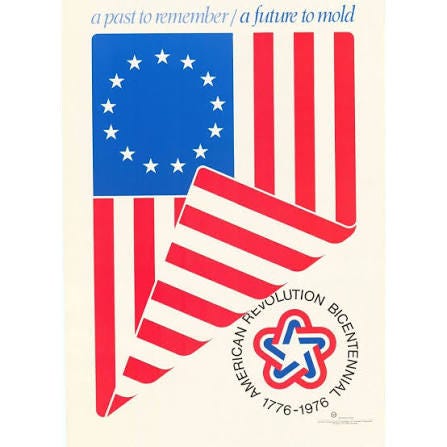
Chuck and I would sprawl across my double bed and play Mastermind, a board game in which one player is the code maker and one the codebreaker. The code maker hides a row of colored pegs on a pegboard behind a plastic shield. Then, the guesser has up to twelve moves to crack the code by arranging the pegs until they match exactly by their order and color. Mastermind requires the ability to assimilate information, notice patterns, apply logic, and test hypotheses. If this, then that. For every question, a clear answer.
We made up complex alternative rules, just to heighten the challenge. We giggled a lot. And when Walker and Christie’s lovemaking or Chris’s out-of-tune guitar playing in the neighboring rooms got too loud, we giggled even more. With Chuck’s math smarts and my analytic acumen, we made good game-playing partners. Our relationship was purely platonic, a welcome change from the usual boy-meets-girl-let’s-do-it 1970s.
Four days after the kitchen encounter, Jon is running around the house after breakfast, slamming drawers and kitchen cabinets. Cherub-faced Jon, dressed as usual in nothing but faded cut-offs, his shiny black ponytail swinging across his bony shoulders.
“Listen to this,” he says, gripping a large plastic bag of pot under his arm. “Chuck just told me he has this friend at the Narcotics Bureau who was tipped off about a big bust today. And, shit, his friend said my name is on the list! Chuck said he was sure the police would be here by this afternoon. So I’ve gotta hide all this shit!”
He is talking so fast I don’t get the whole thing, but that’s not unusual with Jon, who skewed toward the dramatic. As I head out for work, Jon is still frantically calling people, asking if he can drop off some of his stash for a few days.
It’s a busy lunch at the Cottage Inn, an Italian restaurant on the other side of campus. I wait on the notorious “Dimer” that day, an elderly woman who, no matter what she orders, leaves just two dimes as a tip. After my shift, I realize I’d forgotten my house key, so I dig the change out of my apron and call home on the pay phone. I’m about to hang up after five rings when Chuck answers. I tell him I have no key and ask if he’ll be around. He says he’s going out but he’ll leave the door unlocked.
I walk my usual route across the Diag, a wide plaza with a sidewalk that slices through the main campus, past East Quad, and down Hill Street. As I turn the corner onto Church, I see Chuck pedaling toward me on his ten-speed, a blue nylon knapsack strapped to his back.
“Hey, Chuck!” I call. “Did you leave the door open?”
“Yes. No problem,” he shouts, and smiles.
“Thanks! Bye!”
I wave. He waves back.
“Bye!”
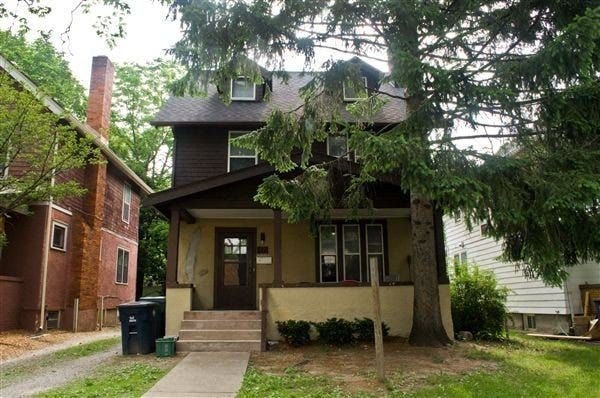
A couple of hours later, I’m alone, soaking my aching feet in a plastic tub, when the doorbell rings. I see two policemen on the porch, peering in. Jesus Christ, Chuck was right. They’re coming to bust Jon, I think as I pad across the living room floor, leaving a trail of damp footprints.
“Excuse me, miss,” one of them says through the screen door, “does Charles Carey live here?”
Why are they asking for Chuck? Then my stomach twists and a rush of heat travels up through my throat and into my head. I know. There is no drug bust. Chuck had warned us the police would come today because he’d done it, he’d gone ahead and killed himself, and he knew they’d come to the house.
“No, he’s not here.” I say, trying to control my voice. “Why?”
I know why, but, then again, why would they ask for him if he was dead? Maybe I’m wrong.
“Can we come in?”
We stand in the front hallway. The younger, taller one says slowly that Chuck was shot and that he died.
I swallow. “He wasn’t shot. He killed himself,” I say, my voice sounding fuzzy and far away.
They look at each other. “It is a suspected suicide, but why do you say that?”
I tell them about the kitchen conversation. I tell them about the length of rope and the tree and Chuck’s seemingly nonchalant attitude about the whole subject. I don’t mention his original story: that he was pretending to be stoned so he’d have an excuse, a rationale for going through with it. Nor do I mention the Narcotics Bureau warning.
The older one shows me a bright-yellow receipt for a weapon found near Chuck’s body. I stare at it. Chuck had purchased a gun just a few hours earlier, around the time I was collecting my two-dime tip.
“Oh my God. Today? How could he have gotten a gun so easily? Don’t you need some kind of license?” Images of Chuck’s body, his bike, the riverside path wash through me.
The policemen take my statement and leave.
I often wonder, and people who know this story often ask me, why I didn’t call the police that night in the kitchen? Or wake up my roommates? Or take Chuck to the emergency room? I strain for answers but I am confident that none of those thoughts crossed my mind at the time. I felt no sense of imminent danger. Chuck’s calm, his laughter had put me at ease.
I trusted him. Maybe I assumed he was like me, like all of us on the ragged edge of adulthood—restless, confused, hopeful; sorting out our preferences, our values, chiseling the shape of our future selves.
The police long gone, I wait, numb, for my housemates to come home. As they arrive, I tell them everything. None of us can even remember what Chuck had been up to that week, or what kind of mood he was in, for those four days after the aborted attempt on the tree branch.
No one cries. We talk about how Chuck, even as he prepared to die, had protected Jon by creating the ruse about an imminent bust, so Jon’s dope wouldn’t be in the house. We realize it doesn’t make any sense that Chuck, the nerd, could even have had a friend at the Narcotics Bureau.
Chuck’s bed is neatly made and his clothes neatly piled. On his desk is a lined yellow pad with a neatly written list of household expenses and a few stacks of dollar bills and coins. Next to each stack is a small piece of paper with each of our names and the exact amount he owed us. My share is $7.75.
In his top dresser drawer, we find another pile of empty envelopes with his parents’ return address, but no letters inside. He must have destroyed them. Folded neatly in half at the bottom of the pile is a single sheet of ivory-colored stationery with a message, handwritten in block letters. It says, “In memory of Chuck Carey, who lost his nerve. August 20, 1976.”
Chuck’s parents arrive the next morning. They don’t stay long and they don’t say much. As his mother loads the last bags into their car, his father approaches me. “Why? Why did Charles do this? Was he on drugs? Is that it?”
I remember Chuck had talked about his conservative father being afraid of the evils of marijuana and other drugs. “No, he never took drugs. I promise.”
Mr. Carey peers into my eyes for a brief second, looks down, then leaves.
The following week, when the sublet ends, I move across town to an apartment with three other women. The remaining roommates move out, scattering across the country, and I never see them again.
In my 1976 diary, just one entry, from August 22, two days after Chuck died:
Avoiding the heavy news of Chuck’s suicide. He had threatened on Monday and bought a gun on Friday and did it. Very bizarre and freaky and upsetting. Talked it all out, thought it all out, and cried it out too. . . . Very sad but I’m back to normal, knowing I had to face all the horror intensely in a compressed period of time—healthiest thing for me, down to forcing myself to imagine the scene and body, because I know it would linger subconsciously otherwise and haunt me and I needed to bring it out front.
I never mention it in my diary again. Reading that entry, I have compassion for my twenty-two-year-old self, who reached optimistically into the future, believing that I’d “talked it all out, thought it all out, and cried it out,” as if that would prevent me from the musing, the wondering, the residual questions of why and whether and what if and if only.
With suicide, we reflect and replay and search for logical conclusions. Maybe there is no linear narrative, no way to ever break the code. Maybe it will always remain a messy, elusive puzzle. And maybe this essay, which I began nearly fifty years ago, will forever elude closure too.
But through it all, always, always, the indelible image—Chuck pedaling past me on his ten-speed bike, waving goodbye on his way to Huron River Drive, a smile on his face and a brand-new gun tucked into his blue nylon knapsack.
September 18, 6:00 pm, Books on the Square, Providence, RI: Author event, “In Conversation with Ethan Gilsdorf,” at Books on the Square, 471 Angell St, Providence. Check out Ethan’s work here.
Coming! On June 9, I recorded an interview with the phenomenal Ronit Plank, of the Let’s Talk Memoir podcast. What an interesting and wide-ranging conversation! I’ll link it here in the fall when it airs. If you don’t know Ronit’s work or her Substack, please check it out.
July 22: My March essay, “From Never to Yes: How and Why I Self-Published My Memoir,” appeared on Andrea Firth’s Brevity Blog Round Up featuring helpful craft essays.
July 2: Featured on Estelle Erasmus’s award-winning podcast, Freelance Writing Direct: “Micro-Memoirs with Maximum Impact: Distilling a Life into Seventy 70-Word Stories.”
Escape Velocity was honored as a Finalist in the 2026 Next Generation Indie Book Awards (Memoirs/Other) category, one of seven books recognized alongside this year’s winner!
June 7: I enjoyed a rich conversation with Alison Cupp Relyea at the Rye Free Reading Room, my hometown. Deep thanks to Alison and everyone who came out! Here’s the online version of Laura Schiller’s feature article, which appeared in the May 22 Rye Record.
May 13: Featured on Jodi Sh. Doff’s new wacky, wonderful series called “Short Attention Span Reader,” where she judges a book by its cover and riffs with the book’s author. So fun! Be sure to subscribe to Jodi’s Substack, “Only the Jodi: Life as a Sober, Aging, Dementia Caregiver.” Good stuff, always.
For more, visit the Media page on my website.
To order Escape Velocity, go to 227 Press, here. For complete info and links, please visit my website.
Hope you’re enjoying my Substack, where I post my musings every Friday. I’m keeping a free subscription option for the foreseeable future, but I’d be grateful if you’d lend your support by subscribing ($7/month or $70/year) and sharing. Much more on my website!
No posts
Comments
Nothing yet. Say the first thing.
Sign in to join the conversation.