

Many exceptionally and profoundly gifted adolescents and young adults need considerable help and support in finding and maintaining friendship and romantic connections. Many highly intelligent adolescents, while craving friendships, often resist activities and opportunities that would increase their chances of finding true friends and soul mates. Additionally, evidence exists that adults may attribute more maturity, wisdom, and even practicality on the part of the highly intelligent adolescent. This is concerning, too, when dating and romance issues are the case, because such parental beliefs an leave the exceptionally gifted teenager emotionally and logistically unsupported by adult guidance.
It is on this final teens and romance topic that all of the variables come into play. I highly recommend the Free Spirit Books website for help in many of these areas. The SENG (Supporting the Social and Emotional Needs of the Gifted) website is a treasure trove of recommendations and ideas, too. This might be affected, too, by youngsters who are searching for answers about non-binary feelings. Parents need to learn more about it and be supportive of their feelings whether you agree with each other or not.
It is important to realize that being unusually gifted does not alter the path to finding soul mates and lovers as much as one would think. Hormones and natural human tendencies affect exceptionally gifted people the same ways that they affect more typical people. We all want to be loved; we all want partners and friends to turn to when we are stressed, hurt, lonely, confused, or excited. Becoming a parent is just as satisfying, maybe even more so, for many exceptionally gifted people. And there is some qualitative research that supports the idea that the most successful geniuses have been people who found soul mates or who married their best friend.
It is not embarrassing or unusual or a waste of intellectual gifts to be a boy-crazy girl or an obsessive boy wondering if any girls like him.
First of all, if the exceptionally gifted young person is shy, introverted, very different in interests, looks, or abilities than most others the same age, it will help if the family can find a comfortable environment and allow the child to stay there for many years. Frequent environmental changes, unless part of an attempt to find a suitable environment for learning and friendship formation, can leave the exceptionally gifted child or adolescent very lonely.
A somewhat unusual but effective example is of a young man who was born with facial deformities. He was exceptionally gifted, came from very attractive parents and family wealth, and was and continued to be, the shortest boy in his class. The youngster made a number of very good male friends over the years, and his parents made the wise decision not to move him to another state when the father got a promotion. In fact, they arranged for the parents and children to do a fair amount of commuting for several years just so their son could maintain the connections that worked well for him. He and they knew that the boy’s friends were truly friends and not choosing him for his wealth or status.
Most elementary school classes are set up with a heterogeneous bell curve configuration, so that exceptionally gifted children are almost always left as the only one like them in their class each year. If the parents have removed the exceptionally or profoundly gifted child from school for academic or social/emotional reasons (such as making a change into a full-time home school situation), their child also experiences a degree of social isolation.
What can be done? First, keep in mind that not all activities appropriate for gifted children are labeled “gifted.” There are many opportunities in most communities that families can tap into in order to facilitate social interactions for their children. Libraries, museums, mentorships, and volunteer opportunities are all wonderful ways to get such adolescents into environments with a spread of ages and backgrounds of people. I’ve found that the ages of the others in such settings matter less because they are all there for the reason that they share an interest.
In schools, it is genuinely necessary for a part of each day, at least, to involve either an adult or other highly gifted individuals of a variety of ages for the exceptionally and profoundly gifted children to interact with and perhaps become friends. Music, acting, coordinating complex projects, sports; any of these things can provide social opportunities that increase the chances the child will connect emotionally with someone.
My own children became involved in making radio and television commercials; and we found that the adults appreciated their talent and behavior enough to treat them as wonderful individuals rather than as odd children.
Romance?
Take them seriously when they want to talk to you about who they like and who likes them. Talks about sex, sexual behaviors and drives, male and female differences, birth control, marriage, safety issues, emotions … all should begin way before adolescence. Some adults are wonderfully comfortable with these topics while others are not. I recommend finding a friend or relative who is comfortable and who will mentor or guide your young person on these subjects if you can’t do it. Good books are available on most of these subjects and can be the impetus for parent-child discussion, too.
How Can I Get My Adolescent to Talk to Me?
Adults need to tap into their own experiences in order to help their exceptionally gifted children cope with the fears, anxieties, joys, and disappointments of personal relationships. How do you get your adolescent to talk to you? Start in the early years and continue throughout their lives. Don’t lecture or make it all about you, though. Just share something to get you started and then ask them a question or two to get them talking about what they think and feel.
Bedtime is when most children open up and want to talk. As children turn into teens, it gets trickier. That’s when I resorted to car trips.
Although it may appear to be a stalling technique, it’s more than that. Move the bedtime a bit earlier to allow for that talking and sharing time. No subject or discussion should be taboo between you so long as you observe safe parent-child boundaries. You can stick to the facts about biology and human emotions without going into detail about your own past, for example. A licensed therapist or a specialist trained in family emotional health may be able to help with this. Browse the books on parenting at the library or online to find other resources. Many towns and communities have classes for parents that are nearby and affordable, too.
Another good talking time is in the car. Turn off any radio, video, or social media for short errand trips so that conversation can flow. Arrange for errands that give each parent one-on-one time with each child. Invite questions often.
School counselors and teachers need to accept the fact that their exceptionally gifted students may benefit more from school day opportunities to mingle and work on fun projects and goals together than on getting their assignments done.
A sensitive adult should observe the interactions and allow for private opportunities for the young people to talk to a caring adult about how to act, how to interpret others’ behaviors, and how not to feel that this awkwardness is unusual or bad.
Extremely gifted youngsters are not used to or comfortable with being inept, after all, and they need a great deal of support and reassurance that their learning curve on relationships is right on track.
Parents who start the sex and relationship talks before adolescence will have an easier time than parents who wait until the teens, but that doesn’t mean it is too late. Have confidence that there is no one who can have a more meaningful conversation with your child than you can. You might start by saying,
“I’m no expert on women, but I have figured out a few things along the way. Did you know that for most smart girls, a guy’s sense of humor and intelligence are more important to her than his looks?”
Young men want to know what women want and what they are like and what the different things they say or do really mean. They need to know that women doubt themselves, too, and that all of us grow and change and make mistakes along the way. Young women need to know that young men are wired differently than they are and may be more easily sexually aroused than the average young woman is.
Any and all of these topics should be discussed positively, making it clear that although males and females have differences, they are all good people who are looking for acceptance, love, security, and fulfillment and purpose in their lives.
Finally, never assume that the exceptionally gifted high school or college student has all the answers or knows how to behave at a party or on a date just because they understand quantum theory or write incredibly sophisticated poetry.
Bring up the issues of respect, safety, abstinence, birth control, substance abuse, and anything else that you may be secretly hoping they will or will not do. If you are not the parent but a professional who works with the adolescent in question, you may ask the parent if you have permission to discuss some of the more intimate topics with their child. Many parents will gladly accept your offer.
Being exceptionally or profoundly gifted makes finding friends, soul mates and lovers somewhat more difficult simply because there are not as many compatible people from which to choose. But the problem is even more difficult if the adults in the adolescent’s life trivialize the importance of such connections to the brilliant young person. Just as other sensitivities increase with intellectual level, perhaps sensitivity to heartache and loneliness are more profound as well. Allowing adolescents to find their own path, develop a sense of personal power, and establish meaningful and rewarding relationships is something that parents and teachers must support and guide.
Gurian, Michael. https://www.michaelgurian.com/
Kerr, Barbara. https://epsy.ku.edu/people/barbara-alane-kerr
Free Spirit Books. See https://www.freespirit.com/
SENG (Supporting the Social and Emotional Needs of the Gifted). See https://www.sengifted.org/
An earlier version of this story was published in Douglas Eby’s Talent Development, another rich trove of information for all things gifted and talented. https://medium.com/@douglaseby
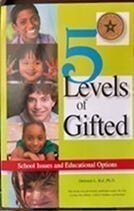
5 Levels of Gifted: School Issues and Educational Options in 2009. This is the original 5 Levels of Gifted book for parents and educators. Moderately Gifted, Highly Gifted, Exceptionally Gifted, and Profoundly Gifted children are the subjects of this book (78 of them) and their early milestones, behaviors, and parent journeys through how to raise and educate these children is a must-read. Parents who read this book can estimate their own children’s eventual IQs surprisingly accurately by the time they are age three to about six years old, before it is effective — or reliable — to have them professionally tested.
Here are links to the 5 Levels of Gifted book on Barnes & Noble: https://www.barnesandnoble.com/w/5-levels-of-gifted-deborah-ruf/1126358834 and Amazon: https://www.amazon.com/Levels-Gifted-School-Educational-Options/dp/0910707987 or directly from the publisher: https://www.giftedunlimitedllc.com/store/p12/5_Levels_of_Gifted.html
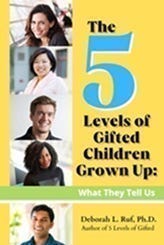
The 5 Levels of Gifted Children Grown Up: What They Tell Us (2023). This is a 20-year longitudinal study follow-up about the original gifted child subjects in 5 Levels of Gifted: School Issues and Educational Options (2005, 2009). In it, Dr. Ruf covers every conceivable topic to ask the 60 of the original study group of 78. She also shows readers how it is that people of the same original promise to succeed have vastly different outcomes. https://www.amazon.com/Levels-Gifted-Children-Grown-Up/dp/B0C9SHFRLH or https://www.barnesandnoble.com/w/the-5-levels-of-gifted-children-grown-up-phd-deborah-l-ruf/1143719859?ean=9798988323709.
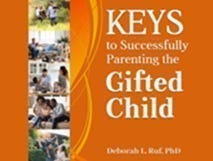
Keys to Successfully Parenting the Gifted Child (2023). Need answers fast on what to do now? This is a short book — 80 pages including pictures — that is a great starter for parents just wanting some answers … fast! The content was originally from a PowerPoint I created for the parents of gifted children presentations around the country. The contents zero in on some of the most important things about raising gifted children that parents want to know. On Amazon, Keys to Successfully Parenting Gifted Children (2022, 2023) Print and ebook. The Nook version is also now on B&N.
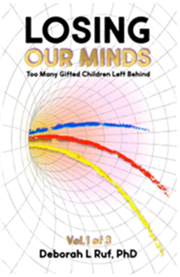
Losing Our Minds: Too Many Gifted Children Left Behind (Oct. 2024). This is the first book in a Trilogy meant especially for educators, parents, adult gifted, and therapists. Questions for discussion are at the end of every chapter. The book provides a detailed analysis of the different levels of giftedness, the concept of “good fit” in educational settings, and the impact of various school environments on gifted children. It also includes personal stories and experiences of gifted children and adults, highlighting the challenges they face in finding appropriate educational and social environments. Available now on both Amazon and B&N. It is not the old purple book from 2005. Also, the Kindle and Nook versions are formatted so readers can click back and forth easily and find their place again. Follow this link: https://www.amazon.com/dp/B0DL3BSC9X or this link: https://www.barnesandnoble.com/w/losing-our-minds-deborah-ruf/1146410968?ean=2940185888872
Environmental, Familial, and Personal Factors That Affect the Self-Actualization of Highly Gifted Adults: Case Studies (D. Ruf, 1998) doctoral dissertation. Free PDF https://dabrowskicenter.org/ruf
Comments
Nothing yet. Say the first thing.
Sign in to join the conversation.