
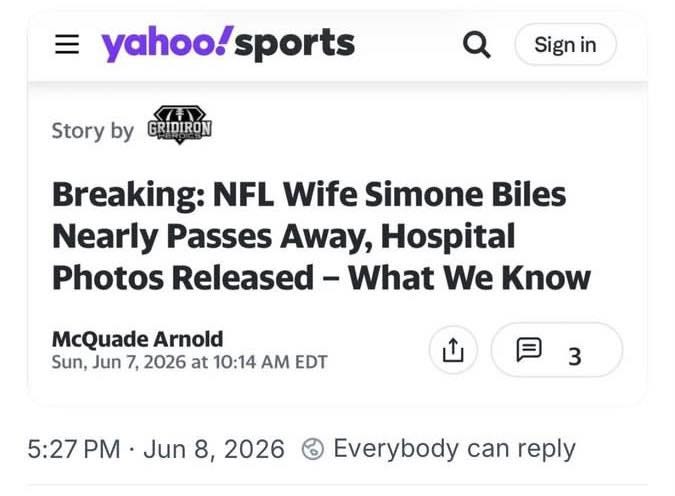
A few days ago, I came across a post on Threads that made me pause. I read the title to my kids, and they had a good laugh at how one of the greatest athletes of her generation, maybe of all time, Simone Biles, could be reduced to an “NFL wife.” My girls asked, “Who is her husband?”
The backlash against the author was swift and loud.
And then the author, McQuade Warnold, did something most people in that situation don’t do. He showed up and owned the mistake. In a three-part thread, he explained that he writes for an NFL website, that the SEO keyword driving the headline was “NFL,” and that he had genuinely never considered how dismissive it would read. He said he had followed Simone Biles for years and had nothing but respect for her. And then he said: “I realize now I should have done better. I apologize.”
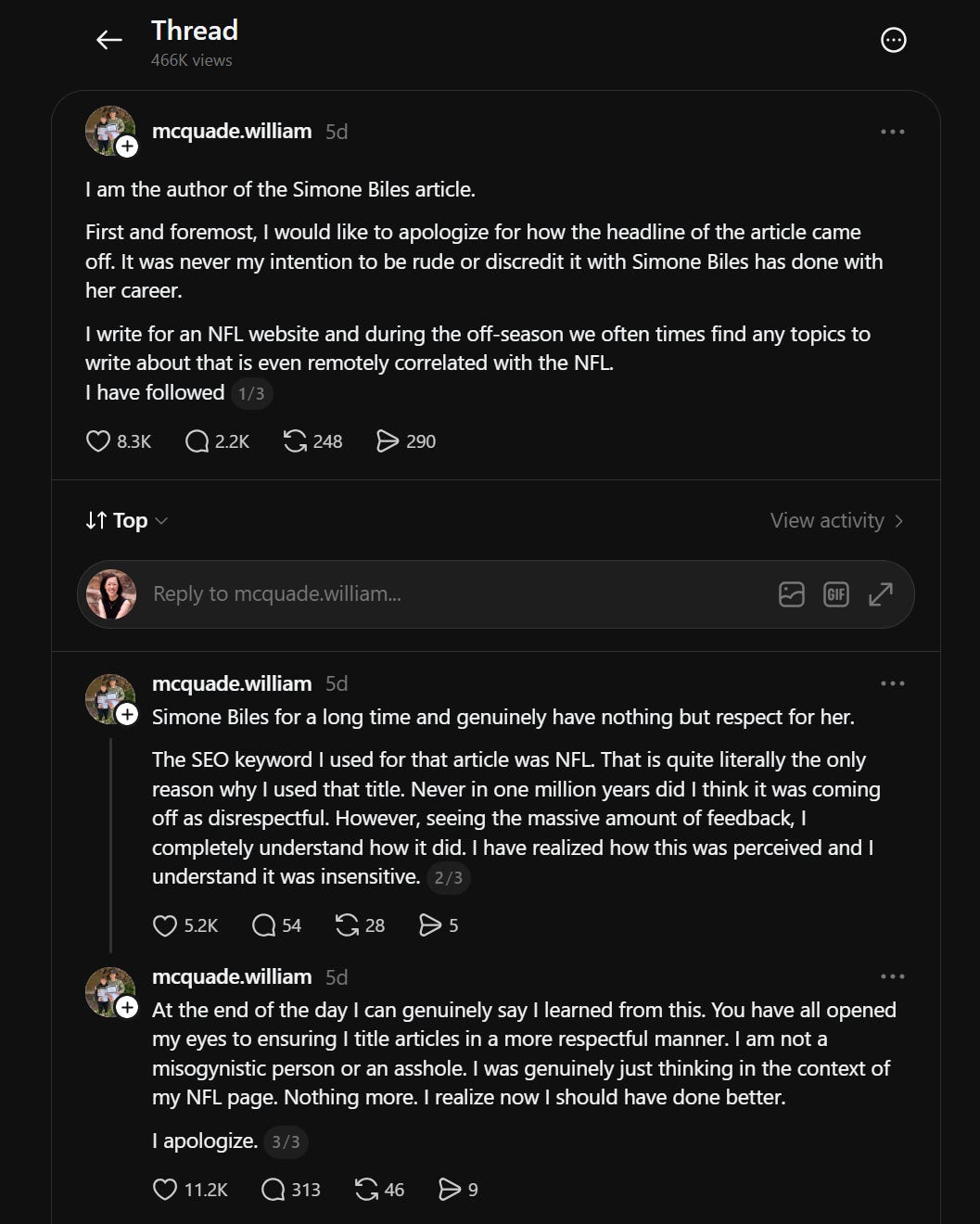
You can read the full coverage here: Straight Arrow News
What happened next surprised me. While many thanked him for his apology, there were an equal number who went after him for it, picking apart the wording, relitigating the offense, cataloguing the harm, explaining exactly why his words were insufficient. The tone of those comments was harsh, designed to make sure he felt the full weight of what he’d done.
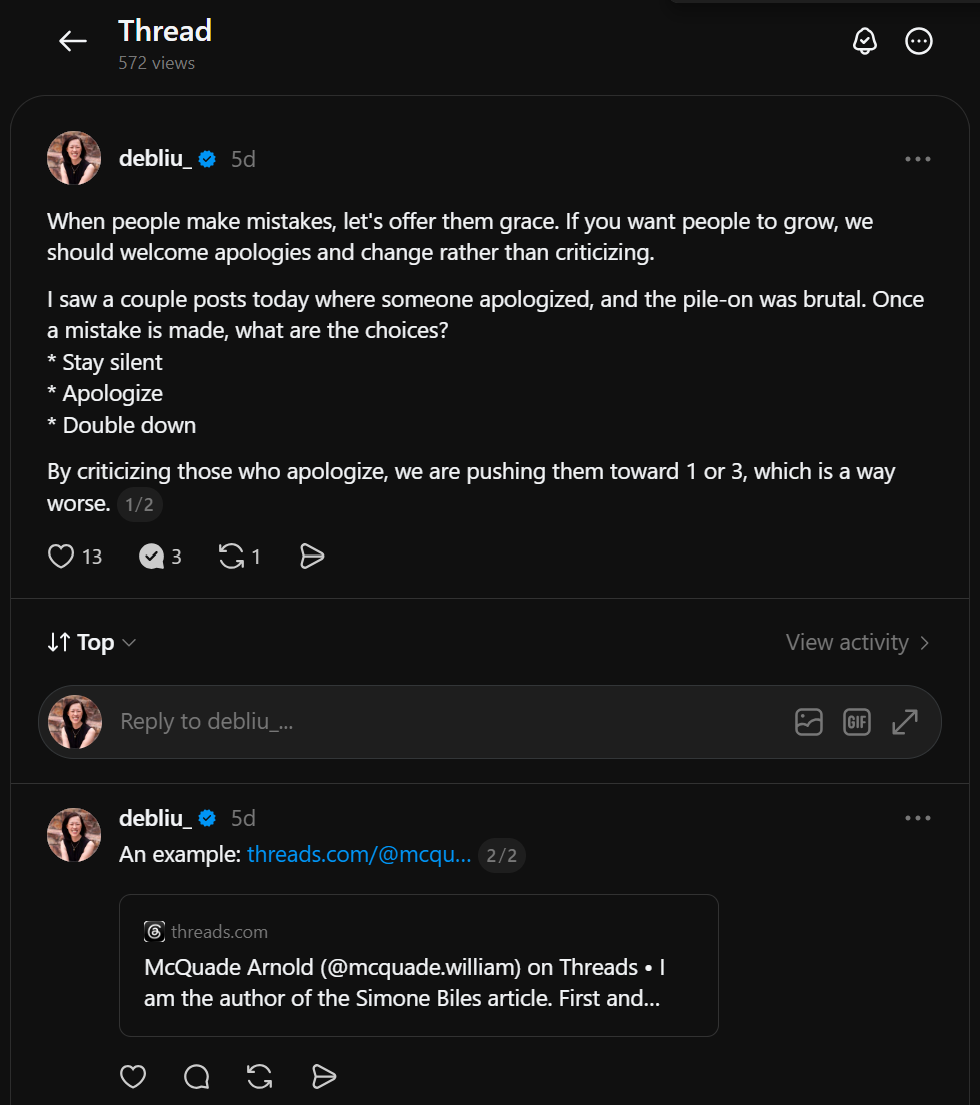
I had a different reaction. I posted my own response on Threads: when someone apologizes and commits to change, that is exactly the moment to offer grace.
The reason is simple. When someone makes a mistake, they have three options: stay silent, apologize, or double down. If we make apologizing the most painful of the three, we shouldn’t be surprised when people choose one of the other two.
I know what it feels like to be on the other side of an accountability that never came.
My father had a persistent cough for years. He saw his doctor repeatedly. Each time, he was told it was something minor: allergies, then asthma, then bronchitis. The cough kept getting worse. Finally, the doctor relented and ordered a chest X-ray, thinking it might be pneumonia. What it showed was stage IV lung cancer that had already spread.
My father was not a smoker. Because of that, his doctor had assumed he was low risk and never seriously investigated. That assumption cost my father his life. He passed away eighteen months after his diagnosis.
I found out he was sick at one of the most vulnerable moments of my own life. I was pregnant with my youngest daughter, Danielle, deep into a difficult pregnancy that had already left me barely functioning. Every day I was growing a new life while watching cancer slowly take my father’s. The two things existed side by side in a way I still struggle to describe. I knew I was bringing a child into a world where my dad would never get to see her grow up.
When my father called to tell my sister and me that he had stage IV cancer, he asked, “Is that out of 10?” He didn’t know what the doctor meant, and the doctor never explained it to him. My sister and I had to tell him over the phone, without being there, that his cancer was likely terminal. When my father asked if his daughters could listen in to hear the results together, the doctor said, “I don’t have time for that.” That avoidance, that lack of empathy, has stuck with us to this day.
I remember calling the doctor afterward, after the diagnosis, after everything. I wanted to understand what had happened. Why years of a worsening cough had been dismissed. Why a non-smoker with stage IV lung cancer had been sent home with allergy advice for so long. His office was dismissive. Maybe he thought he’d followed the right protocols. Maybe he was afraid that acknowledging the mistake would open him up to liability. I will never know. What I do know is that I was furious, and I had nowhere to put it. I was pregnant. We had a dying father to tend to. My sister and I decided not to pursue anything further because we didn’t have the capacity to fight.
All I wanted to hear was: “I’m sorry. I missed something, and I will be more careful going forward.”
That was it. Two sentences. An acknowledgment of what happened and a promise to be more careful in the future.
The silence was its own kind of wound. Not because an apology would have brought my father back. Nothing could have done that. But I wanted the doctor to acknowledge that he made a mistake, and that his mistake cost a life.
I still wonder, more than fourteen years later, whether that doctor thinks about him. I wonder if he became more vigilant. I wonder if he researched lung cancer in non-smokers. I wonder if he ever learned that lung cancer in Asian American men occurs in non-smokers 30 to 40% of the time, 2 to 3 times the overall US rate.
A part of me hopes my father’s case changed something in how he practiced. But I will never know, because he never told us.
My experience is not unusual. Research on why patients and families pursue legal action after medical errors consistently points to the same finding: it is rarely about the money. According to a Lancet study, the four most common reasons people file malpractice claims are:
Wanting to prevent the same thing from happening to someone else
Needing an honest explanation of what went wrong
Seeking compensation for real losses
Wanting accountability
What sits beneath all of them is a breakdown in communication and empathy. Doctors, when faced with a medical error, are often trained to avoid explanation, limit apologies, or say nothing at all. The reason is fear. Saying, “I’m sorry,” feels like an admission of guilt. It feels like opening a door to a lawsuit. So the training, the legal advice, and the institutional pressure all push in the same direction: silence.
Here is the painful irony. The silence almost always makes things worse. Studies show that malpractice payments are consistently higher when an error is not disclosed and an apology is not given. When four Massachusetts hospitals adopted a Communication, Apology, and Resolution program, only about five percent of nearly 1,000 reported safety events resulted in legal claims. Patients who feel heard are far less likely to escalate. The apology doctors fear is often the very thing that would have protected them.
Medical errors are the third-leading cause of death in the United States, accounting for more than 250,000 deaths per year. That is an enormous number of families waiting on an explanation. Most of them are not looking for a settlement. They are looking for someone to look them in the eye and say: here is what happened, this is what went wrong, we are sorry, and here is how we will prevent it from happening again.
We have built a system that makes those words nearly impossible to say. And then we wonder why no one says them.
This is the paradox at the center of accountability, in medicine, in the workplace, and on the internet. We say we want people to own their mistakes but when someone actually does it, publicly and honestly, we treat the apology as an invitation to intensify the attack.
I have thought about this a lot in the context of persuasion. So much of what we do, in our careers and in our relationships, is trying to change people’s minds. We want colleagues to see a problem differently. We want leaders to reconsider a decision. We want the people who caused harm to understand what they did. And yet, when someone finally gets there, when they say “you were right, I was wrong,” the temptation is to say “I told you so.” To make them feel the full weight of how long it took.
That impulse destroys the very thing we were trying to build. If someone changes their mind and we make them regret it, they will not change their mind again. They may double down instead.
Grace is the first thing we should practice in the face of an apology.
Separate the mistake from the person. What someone did and who someone is are not the same thing. The journalist who wrote that headline was not trying to erase Simone Biles. He is not a misogynist. He was careless, following an SEO playbook without thinking through the implications. While that is worth correcting, it does not require destroying him over a mistake.
Welcome the change, not just the apology. An apology without changed behavior is just words. Changed behavior without any acknowledgment that the apology was received doesn’t welcome change. When someone crosses the distance between wrong and right, meet them there. Say: I hear the apology, I see the change, and I appreciate the effort. Let’s move forward.
Let go of being right. This is the hardest one. When we have been hurt, something in us wants the other person to really feel it before we release them. We want the ledger to be balanced. But holding on to the score doesn’t fix what happened. It just keeps us standing at the site of the injury. You can be right and still choose to let the offense go.
Understand that your response shapes the future. When you offer grace publicly, you signal to everyone watching what the norms are. You show that genuine accountability is safe and welcome. Because if people do not feel safe apologizing, they won’t apologize at all. You take away the chance to apologize and grow.
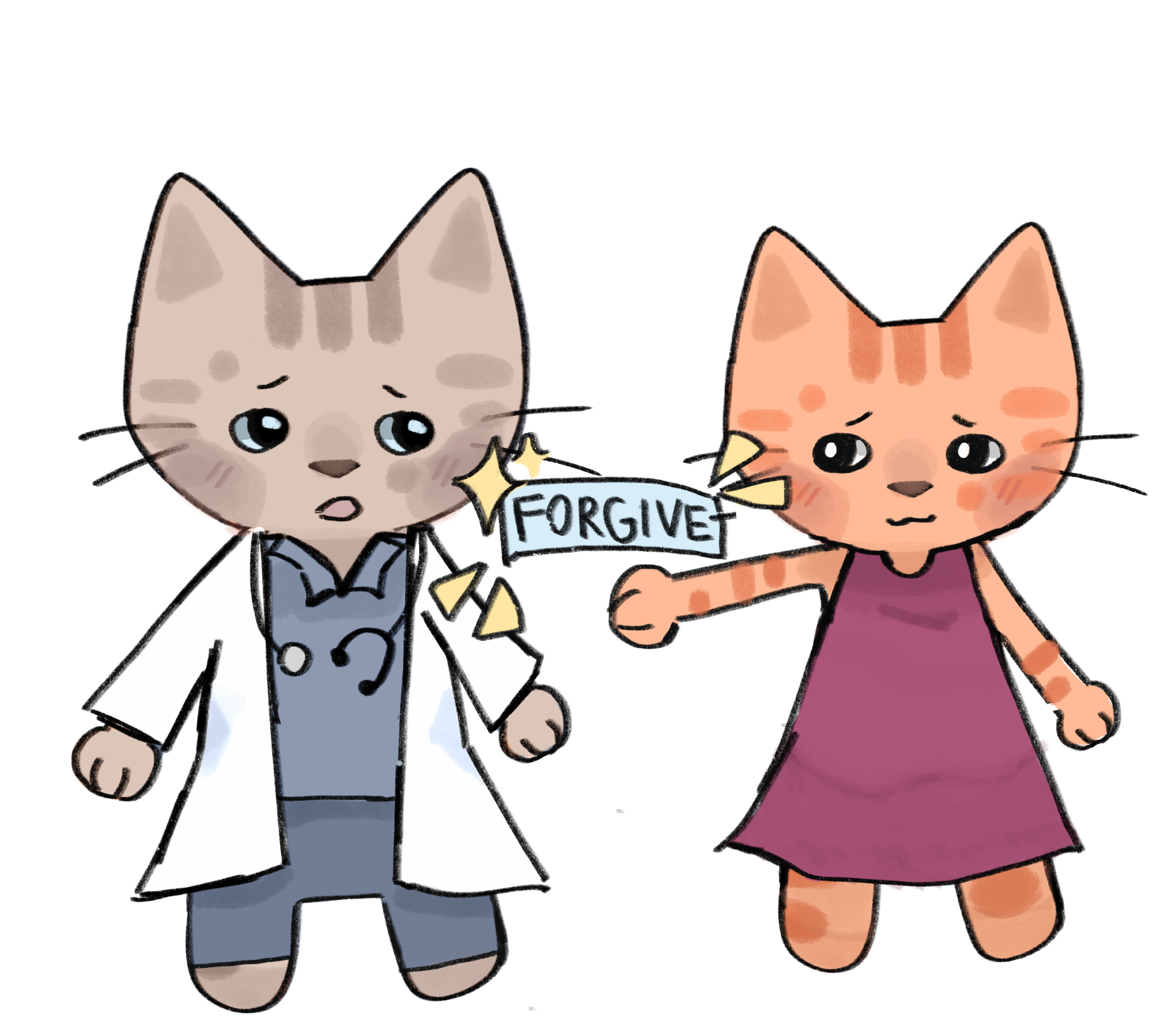
Grace requires setting aside the real hurt that came before the apology. It requires believing that the change matters more than a full accounting of how long it took to get there. That is genuinely difficult. I am not saying the feelings underneath it all aren’t valid.
When I watched that pile-on unfold under a sincere apology, I kept thinking about my father’s doctor. About what it would have meant to hear two simple sentences. About how differently that chapter might have closed. I didn’t need him to be punished. I needed him to see what happened and change for the next patient he saw.
The journalist on Threads made a choice. He didn’t have to publicly apologize, but he put himself out there. The punishing comments that followed may have made him rethink his choice
I would rather live in a world where imperfect people can admit their mistakes and find a welcome for their apology. That is not a world that happens on its own. It is one we build, one response at a time, every time we choose grace over score-keeping.
The next time someone says “I was wrong,” and really means it, let that be enough. Welcome them to the other side. That is how change actually happens.
What is the apology you are still waiting for? And is there one you have been withholding?
No posts
Comments
Nothing yet. Say the first thing.
Sign in to join the conversation.