
Nowadays it is nearly impossible to avoid not only spoilers but the general hot-take chatter that accompanies any buzzy book or film release. Without reading or listening to anything about Christopher Nolan’s recently released The Odyssey, it was nonetheless unavoidable to hear whispers of the ridiculous “woke”, heavy air quotes, “controversy” that surrounded the film. Alongside, ironically, the “is Nolan problematic?” cinephile discourse.
After seeing the film and dipping toes ever so slightly into “the discourse”, it is quite baffling to hear such a critical reception from many corners of the Internet. The question that kept rattling around in my head after watching the movie and thinking it was pretty darn good if not great is: What More Do People Want?
Perhaps my positive reaction — anecdotally, everyone I’ve spoken with in book publishing has unabashedly loved the movie so far — to The Odyssey is because working in a creative industry you become aware of how rare and difficult a big-swing creative project like this is. Yes, the film cost $250 million dollars, but as someone on the Internet pointed out so did the live action version of Moana. A creative professionals reaction to The Odyssey is similar to how we posited that “no one knows what good writing is” a few weeks ago— paradoxically, being a creative professional makes you less harsh than the average viewer because you know the sheer time and energy it takes to produce something decent let alone good.
The conversation around the film also illustrates something fascinating about our current culture— the desperate need for cultural commenters to nitpick. Maybe it has always been this way, there was probably plenty of Titanic hate back in 1997(why didn’t Leo just get on the door!). Ancient Greeks might have been saying Homer was a one-trick hack, who knows. No film or book is perfect.
The reason these loud voices of internet discourse can be so maddening is that they don’t match reality for most everyone’s viewing experience. The Odyssey, a film that is neither sequel nor franchise, has a 97% audience score. The vast majority of people really like it, and with that in mind here are 7 things to appreciate about Christopher Nolan’s take on The Odyssey. Spoilers ahead, although you probably know most of this stuff even if you haven’t read the book and, besides, it’s worth seeing even with spoilers.
“Paradoxically, being a creative professional makes you less harsh than the average viewer because you know the sheer time and energy it takes to produce something decent let alone as good as The Odyssey.”
When we talk about book-to-film adaptations, the first thing that should be remembered is that text is flat and relies on imagination, whereas the magic of a movie is it can actually show you the thing! The Odyssey does a film’s primary job spectacularly. Even if you throw out the narrative side of the equation entirely, it’s hard to deny the movie looks great. The most fun question to ask anyone who has seen the film is “what is your favorite visual moment?” There are many to choose from.
The most impressive examples might be the three phases of Odysseus’ journey that are such good literary stories that most people have a pop culture level of familiarity with them even if they were never assigned The Odyssey in high school.
Let’s start with the Trojan Horse. Before the film you probably pictured this:
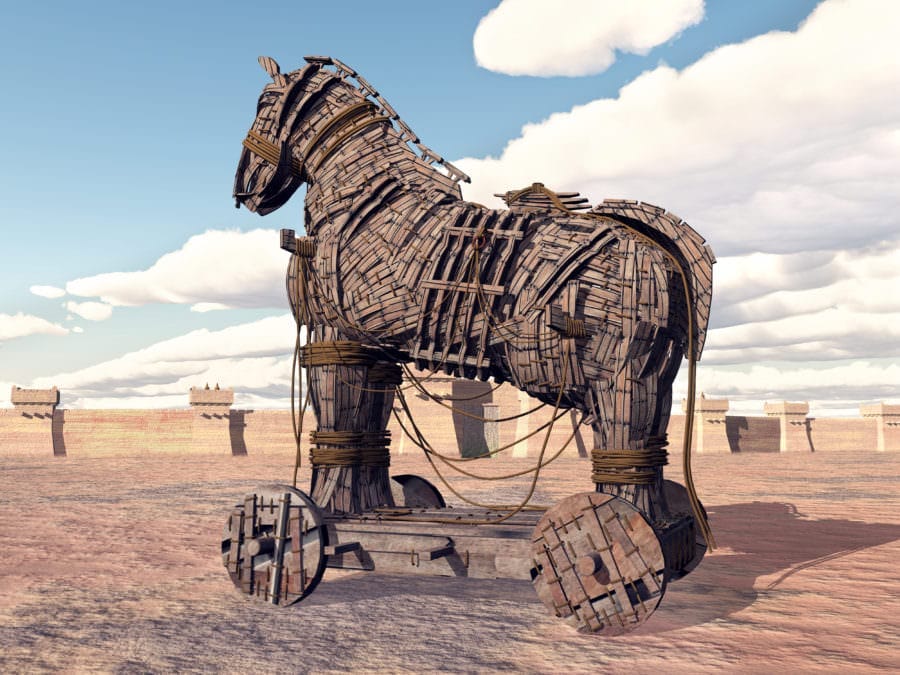
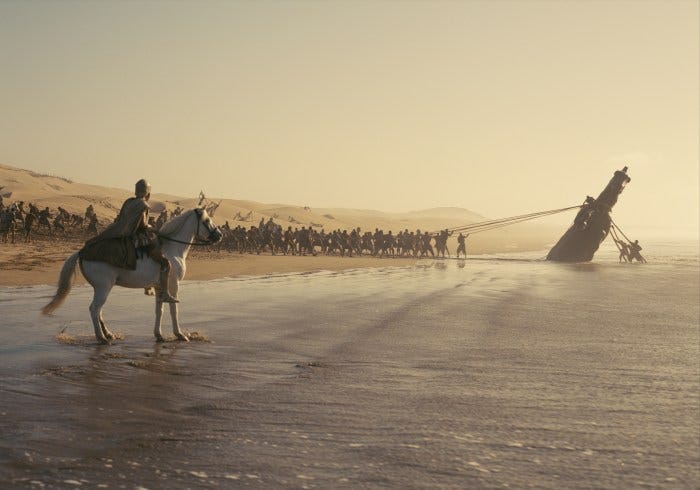
Nolan’s more humble Trojan Horse dares to imagine the obvious: how uncomfortable it would be to stuff a couple dozen men into a metal horse. The claustrophobia and the horror that this shows on screen when the horse becomes submerged in the tides and fills with water, is an indication of what the whole film manages to do visually: it turns myth from fantasy to a tactile reality.
The most challenging visual task is the cyclops, the first truly mythical creature to appear on screen in the film, and something that nearly everyone knows and has an image of even if they’ve never heard of or read The Odyssey. What a reader imagines the cyclops to be is almost always scarier, historically, than what has been rendered on the silver screen, which often comes off as cartoony.
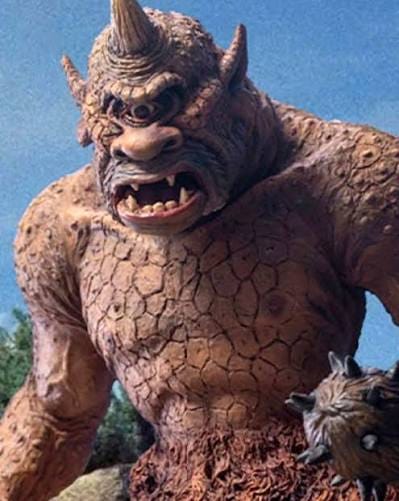
Using a half dozen techniques, including puppetry and full-body prosthetics, the cyclops is genuinely a masterpiece the likes of which we haven’t seen since the original Jurassic Park brought dinosaurs back to life. It feels as if Nolan took one of the defining features of Greek mythology— that gods could walk among people— and took that idea seriously for his aesthetic vision. Extending this sense of tactile “real” nature to the mythological is a daring and impressive artistic choice and feat. The cyclops as a result is legitimately unnerving.1
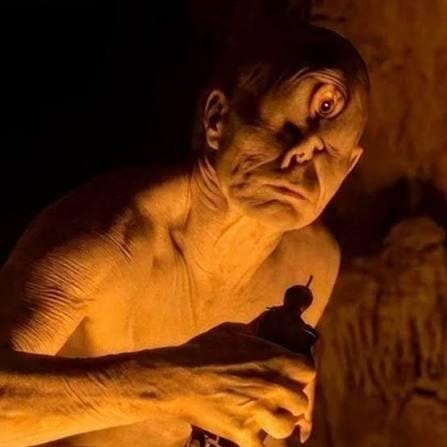
While the Trojan Horse and Cyclops are parts of the story that must be shown, in the final piece of pop culture familiarity Nolan showed clever restraint in not showing us the sirens. We only see these notoriously sexy half-human, half-bird creatures — that have become largely become blended with mermaids visually at this point— shrouded heavily by mist and in the distance. Instead, the film leans on the psychological idea of the sirens. It is a subtle choice and proves that Nolan isn’t just a great technician rendering myths realistically but is making all the visual choices intentionally to tell his version of the story as effectively as possible.
A lot of stuff happens in The Odyssey. It is a nearly 3,000-year-old poem. Part of my personal weariness and low expectations was not just how the visuals would play in a CGI-plagued world but how Nolan could possibly fit this epic story into the tight space of a film. The pacing is largely excellent, with some clever techniques to balance the flashbacks between what’s happening at home and the real juice of the story of Odysseus’ journey. Nolan uses the novelist’s technique of often encasing a flashback as a story being told by a present-day character, for instance we see a good part of the Trojan War when it is related by a solider that fought alongside Odysseus. The pace is expertly mapped out, and it wrangles the often-circuitous conventions of ancient storytelling into a thoroughly modern form without losing the essentials. Writers should take note of this technique: flashbacks are often used as a lazy structural cheat code but encasing them in one character telling another about the past is a good literary way of making flashbacks feel artful and more natural.
“Nolan uses the novelist’s technique of often encasing a flashback as a story being told by a present-day character.”
One of the highest compliments you can give the film is that it encourages reading or re-reading of the book. With such a lush visual language and a simple-to-follow story, the film gets the big stuff right. With the basic story and images in mind it encourages the literary inclined among us to revisit the text for the depth and poetry that only a book can provide.
One of the film’s biggest and most notable literary detractors has been Emily Wilson, whose new translation of the The Odyssey was a huge success and downright literary event back in 2017. Wilson has a host of criticisms of the film, but mostly they boil down to that it lacks the complexity of the original, or, to let her do the talking: “every second is jam-packed with incident, lights and noise, and nothing is ever at a human scale.”
With respect, what Wilson might miss, being too close to her subject, is that a film’s simplicity and a book’s complexity can work hand in shield. The shortcuts required to make a three-hour epic movie are not wholly betraying the text at every turn but showing how durable Homer’s story is after several hundred years. The Odyssey shows that the incident that Homer cooked up still grips our imagination and connects humanity through a common thread back to ancient times.
Wilson’s reaction feels a bit academic and like looking a gift horse in the mouth—although given her expertise, maybe she has a good natural instinct to inspect horses closely. Sales of various editions of the book have doubled and tripled over the last two weeks, selling tens of thousands of copies. The movie is a huge win for the power of literature.2
“One of the highest compliments you can give the film is that it encourages reading or re-reading of the book. With such a lush visual language and a simple-to-follow story, the film gets the big stuff right. With the basic story and images in mind it encourages the literary inclined among us to revisit the text for the depth and poetry that only a book can provide.”
I didn’t see The Odessey in IMAX. Chances are, given there are only around fifty 70mm IMAX theatres on the entire planet, that you didn’t see The Odessey in IMAX either. By now you may have heard that because the film itself is so large they had to shoot this epic movie 3 minutes at a time. A crazy technical challenge when you’re filming massive vistas in real places with hundreds of extras. But as a friend of mine pointed out, and has been reported elsewhere, the film size also means that an IMAX film can’t be longer than three hours.
Rejoice! Even if you didn’t get to see The Odessey in its intended grandeur, the format is a benefit to us all. It’s no secret the runtime of auteur-made movies has been creeping up and, frankly, non-auteur films that have no business being several hours long have been creeping up with them. It’s genuinely amazing to get a film this epic in an under three-hour package these days.
It’s also could be a big reason why the story editing is so compelling and why nearly every shot in the film feels intentional and considered—it had to be. There’s no messing around when you are forced into a 3-hour container. Changing the ginormous film canister every time you want to go over three minutes probably makes you rethink the economy of every scene, every line of dialogue and every shot. It is funny that this concept of super constraints came up in another film on the opposite side of the budget spectrum a few weeks ago, the one-location, four-actors film, The Invite.
Writers and editors don’t have as strict budgets, so it’s up to us to impose somewhat arbitrary constraints—pick a page count and stick to it, force yourself to use no flashbacks, make yourself show every character’s point of view in a single scene. Whether you have $0 or $250 million dollars to spend on your next project, remember that arbitrary constraints force creativity, they don’t limit it.
One of the biggest charges against Nolan is his fraught history with writing compelling female characters and his, some would say related, penchant for killing fictional wives. He’s therefore graded on a bit of his own curve. Nonetheless The Odyssey feels like a pleasant surprise in this regard. No doubt there will be a bazillion critics who go back to this well of criticism (it was one of Emily Wilson’s many), but it feels a bit disingenuous. A bit unwilling to give Nolan a little bit of credit for improvement even if The Odyssey is far from a feminist masterpiece.
An epic is a smart choice for Nolan because it is a rather straightforward genre. Complaining about the depth of the characters feels rather silly all around— no character gets much depth! Man or woman or witch. Odysseus gets some depth because Odysseus is the hero. Everyone else gets a few lines. The most significant monologues are given to trans actor Elliot Page — probably the best in the whole film — and Anne Hathaway. Overall, the criticism of Nolan’s sexism feels more of the “if you go looking for it” rather than of the blatant, completely legitimate critiques of his past films. It is the rare instance of The Disease of Comparison working in someone’s favor.3
Although it will probably never be classified as such, this is probably one of the best horror films of the year. For a popcorn blockbuster there is a lot of upsetting stuff happening in this movie. The whole animal sequence with Circe4 is upsettingly disgusting and filled with dread. There’s the aforementioned Cyclops as well as several other scenes where Odysseus and crew are fighting for their lives and not in any kind of fun action movie way. It sure does remind you that you never want to get out on open waters in a wooden boat. For writers it shows how even a literary adaptation can involve heavy doses of genre when called for.
“The Odyssey might be the best anti-war film in years.”
The other big knock on Nolan is that his film’s lack depth or that they are pseudo-intellectual. In picking a centuries-old story, by luck or by intention, he set himself up with a film genre that is not built around nuance. He doesn’t have to explain the space-time continuum or have a novel observation about the moral greyness of building the atomic bomb or try to force a square peg into the round hole of making a superhero movie serious.
The Odyssey is a myth, a type of story traditionally meant to be simple to follow and whose lessons are supposed to be somewhat obvious to the audience. Fittingly, the two major themes of Nolan’s film are obvious but no less effective for it. The first is the golden rule, or “Zeus’s law”: respect your neighbor and treat them how you would like to be treated. The second, relatedly, is that war is horror and the worst possible violation of the golden rule.
The Odyssey might be the best anti-war film in years. As the old saying goes, every war film valorizes war by making it look beautiful. And if you want a 1:1 comparison, go look at how Troy (2004) treats some of the same material: it makes war look sexy and cool as hell.
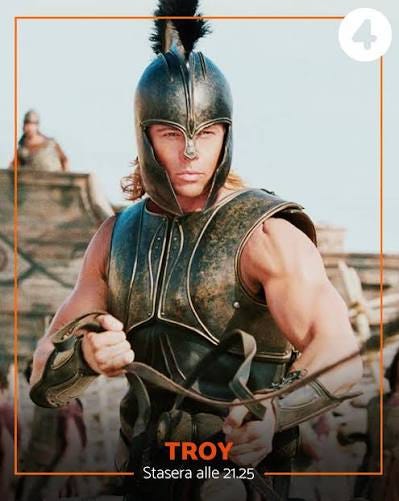
In contrast The Odyssey puts the most glorious fight scenes chronologically first and then we spend the rest of the film watching Odyssus & Co. get mercilessly killed without a fighting chance. (A more real spoiler warning.) For the better part of three hours men get eaten by the cyclops. They get turned into pigs. They are psychologically tortured by Sirens until they die. They get plucked into the sky by an unseen creature. They are caught in a thunderstorm that throws them violently into the sea. And perhaps the most effective anti-war scene: they arrive on an island of giant man soldiers who completely hack them apart, their only option being to flee. Not even the mighty, all-powerful Odysseus can strike even one of these giants down. It was this scene that drove the point home: forsake war because eventually the massacrers always become the massacred.
The Odyssey will no doubt face a sort of Marvelization-of-literature backlash from high-brow film critics because it is a big blockbuster. Yet is the intentional horror of 90% of the film’s story — along with the fact that there is no CGI and that filming took place in several real locations all across the globe — that helps The Odyssey beat the charges that it is just a superhero movie in sandals. The message made so explicit is less about the hero’s journey and Odysseus’ or any other character’s development. It’s a message that is timeless and timely right now: even in “victory” those who inflict the pain of war on others are bound to suffer. It’s why, even if the characters do sometimes lack depth, the film does this mythic story justice.
I did say above, “no film or book is perfect”, no?
Matt Damon is perfect. He’s believable as an old man who could kick your ass. A natural leader who’s smarter than everyone else but also too clever for his own good. Not every actor is exceptional in the film, but even with extraordinary visuals you have to get Odysseus right for this to have worked at all. But Damon notwithstanding, the real casting complaint for this movie shouldn’t have been about race or gender or sexual orientation, but that almost every actor is A+ famous. Some of the performances are great, some are good, some are ok, but what happened to giving great actors and more unknown ones a shot? I happen to be reading As You Wish (fun book) about the making of The Princess Bride for my work: Robin Wright and Cary Elwes — the two faces of the film! — not stars at all when they got their iconic roles. In a film that’s otherwise wonderfully visually transportive, having a face that you see on the cover of People magazine every other minute certainly pulls you out of The Odyssey more than necessary .
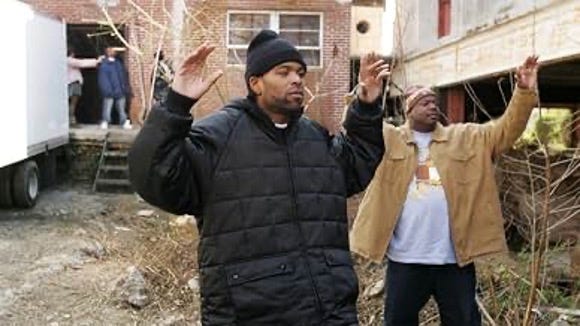
Travis Scott as the bard was the only real casting stumble. Rapper equals the bard, we get it. My main bone to pick is that there are a dozen other better rappers-slash-actors to choose from who could’ve delivered a better performance, Donald Glover, Yasiin Bey (Mos Def), or my pick Method Man. This casting definitely felt the most “the marketing department says this will play well on social media” in the entire movie.
While we’re super nitpicking, the domestic scenes back in Ithica with Tom Holland, Anne Hathaway, and Robert Pattinson (see what I mean about too many famous people?) didn’t have as much juice. Nolan isn’t as good at the talky, political bits and if you want to knock his lack of nuance, this is where you’d home in. He even liberally employs my favorite cliche “kicking the dog” so on the nose that the villains actually kick a very cute dog. Luckily the Ithica storyline is pretty well spread out after the opening of the film. The weakness of the Ithica timeline makes the strongest case that the film’s real meaning is as an anti-war statement not a hero’s journey. Because — sorry for this — the final parts in Ithica don’t bring the character arc of our hero home in a compelling way.
Here’s where Nolan let’s himself down a bit. When Odysseus comes back to Ithica and single-handedly fights about 100 men at the same time. This does become a bit of a Marvel superhero scene, with Tom Holland even playing his faithful sidekick so that Odysseus and Telemachus might as well be Iron Man and Spiderman. It even has some of the levity of a superhero, joke-while-fighting quality with Robert Pattison— the main bad guy— staying out of the fray and shouting “grab the spears!”, “grab the shields!” as the evil suitors attempt to arm themselves against superhuman Odysseus. This final battle scene slightly undercuts the effective message of the whole film— it might have been better if Odysseus avoided so much killing through cleverness, truly learning his lesson. But to be fair to Nolan, Odysseus slaughters nearly every suitor in Homer’s original, so maybe he was just being faithful to the book.
Although real nerds will note that the portrayal owes some debt to Attack on Titan, which of course in circular fashion conceptually owes a debt to Homer’s cyclops.
Overall critics are taking this movie way for granted. Want to see how a classic work of literature is adapted poorly visually and/or narratively, go pop on Netflix’s In the Hand of Dante or Netflix’s Frankenstein. All apologies to the supremely talented Oscar Issac, who stars in both.
You should never strictly want a favorable disease of comparison situation, it means you are atoning for bad mistakes.
Who gets another good monologue, it should be noted for the defense in Nolan’s case.
Comments
Nothing yet. Say the first thing.
Sign in to join the conversation.