
In the past when a politician like Bernie Sanders—or even Donald Trump in 2016 campaign—said “the economy is rigged” by the “billionaire class,” it was an applause line for a subset of Americans. Today that is the reality that transcends party lines and resonates across the nation.
I heard that first-hand Sunday, when I was on C-SPAN’s “Washington Journal” answering questions from viewers for about 45 minutes. What I heard from people calling on the Republican, Democratic and Independent phone lines in that time—as well as in the 30 minutes before I was on—backed up what I hear from many who call my SiriusXM show.
That is this simple truth: People are not happy. In fact, many are angry. And those feelings are born out of a deep sense of frustration. People believe the economic system is rigged against them by the rich and powerful. I even heard that in the message of Republicans who called on C-SPAN to disagree with me on specific issues but they all at some point landed on that point.
We all see the rich literally getting richer in front of us. There is the headline grabbing Trump himself taking two billion in corruption to his buddy Elon Musk becoming the nation’s first trillionaire. When Trump says America is in a “golden age” he means for the wealthy and country club type.
And what do we get? We struggle to make ends meet in this economy that favors the rich and powerful. A recent CBS poll backed that up finding that 75% of Americans say their wages are not keeping up with inflation. I’m one of those 75%.
This is why just 23% of Americans rate the economy as good in a new CNN poll--while a whopping 77% view the economy poorly. Even a recent Fox News poll showed 75% of Americans view the economy negatively. When you are struggling on a day-to-day basis as 75% of us are to pay our bills, you are not going to see the economy in a positive light.
But it’s not just economic struggles. It’s a sense of powerlessness that many feel. When we say the system is rigged we don’t just mean the economy. We mean the political system as well.
I heard that from the C-Span callers and others I speak to. We see Musk and the wealthy from AI to crypto to AIPAC spending tens of millions on campaigns donated by wealthy donors. How can we compete with that? In fact. why would a politician listen to you or I who can offer only a vote compared to the person or PAC that can donate millions to them in this system that the GOP Supreme Court has empowered to legalize corruption to ensure the rich are even more powerful
Polling backs this up. A recent YouGov poll asked people what groups have “a lot” of economic and political power. Number one by far is billionaires with 81% they have a lot of economic power and 75% saying they have a lot of political power. What percentage said “workers” have a lot of political power? A paltry 8 percent.
This primary season has shown us People want elected officials who recognize this reality and going to fight for them and their families. It’s not just progressive versus moderate. But it’s that progressive are the ones offering sweeping transformative policies such as Medicare for all. And getting big money out of politics means giving the power back to the people- a people who feel powerless.
The big headlines have been made when a progressive defeats a person who is either corporate Democrat or maybe left leaning but not seen as an effective fighter. For example, Tuesday in Connecticut, we saw 78-year-old John Larson who has been in Congress since 1999 lose his primary to Luke Bronin in the latest sign of generational change in the Democratic Party. Bronin, 47, the former mayor of Hartford was slightly more liberal—that was not the issue. Bronin argued Larson’s age and health issues meant he was no longer an effective representative. Bronin won by an eye-popping 22 points.
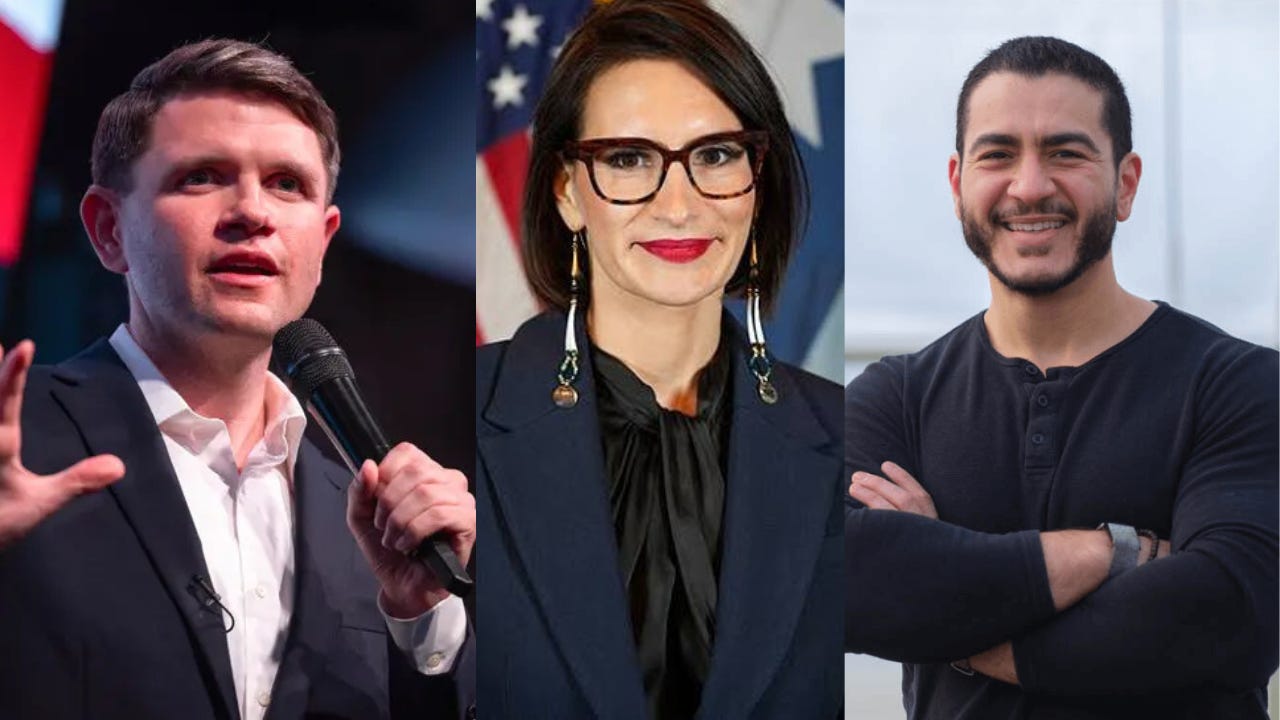
In Wisconsin, Francesca Hong lost by less than a point with 39.3% to David Crowley’s 39.8%. She was a Democratic socialist who was unknown before this race but came a few thousands votes from being the Democratic nominee for governor because she advocated sweeping changes to our rigged economic system. In Michigan, Abdul El-Sayed—who is not a Democratic Socialist, just a progressive Democrat--won promising change such Medicare for all.
Even Texas—a state Trump in 2024 carried by 14 points—we see Democratic Senate candidate James Talarico is up in the polls by 3 to 5 points over lifelong GOP politician Ken Paxton. Carefully Check out his message from a few days ago:
Here is the transcript of that clip so you can read the exact words delivered: “For too many Texans, the American dream has become an American nightmare. It is too expensive to buy a home. It’s too expensive to get married and have kids. It’s too expensive to retire comfortably. People are working hard every day. They’re playing by the rules. But the rules of today weren’t written for us. They were written for billionaires. We can’t afford a home, but Jeff Bezos has at least a dozen. We can’t afford to fill up our tanks, but Mark Zuckerberg is launching helicopters off his megayacht. The top 1% has put the American dream behind a paywall.”
Does that sound like middle of the road? Status quo? Centrist? No, it sounds like someone who gets that people are unhappy with a system rigged to help the rich at the expense of us? People want change!
In Michigan, Democratic Senate nominee Abdul El-Sayed’s is offering a very similar message about the rigged economy. In contrast, listen to what his GOP Senate opponent Mike Rogers is offering voters. On Fox News Wednesday, he laid out his message to voters: “You can almost hear a collective gasp across Michigan for all the things he spends time hating on. I mean, when I go back, I want to make sure we’re protecting our faith and our families and our factories and our freedoms, while he’s advocating doing away with our fireworks, football, the Fourth of July.”
That is a lot of alliteration—but zero substance! Now if the economy was going great that message focused on fabricated culture war issues like football and fireworks could potentially work. But we live in a time of economic struggle and pain. What we’ve seen in this primary season is that people want to hear candidates recognize this reality and offer policies to address it.
This is the summer of our discontent—that will likely be followed by a fall filled with anger. And from there, the 2028 presidential race begins. Given where we are today, the person and party that wins in 2028 is the one that speaks to what people are feeling and offers real policies to address that. Anything else is a loser!
We had a very spirited conversation on this topic yesterday on “You are my Guest” segment on Substack Live for those interested:
Comments
Nothing yet. Say the first thing.
Sign in to join the conversation.