
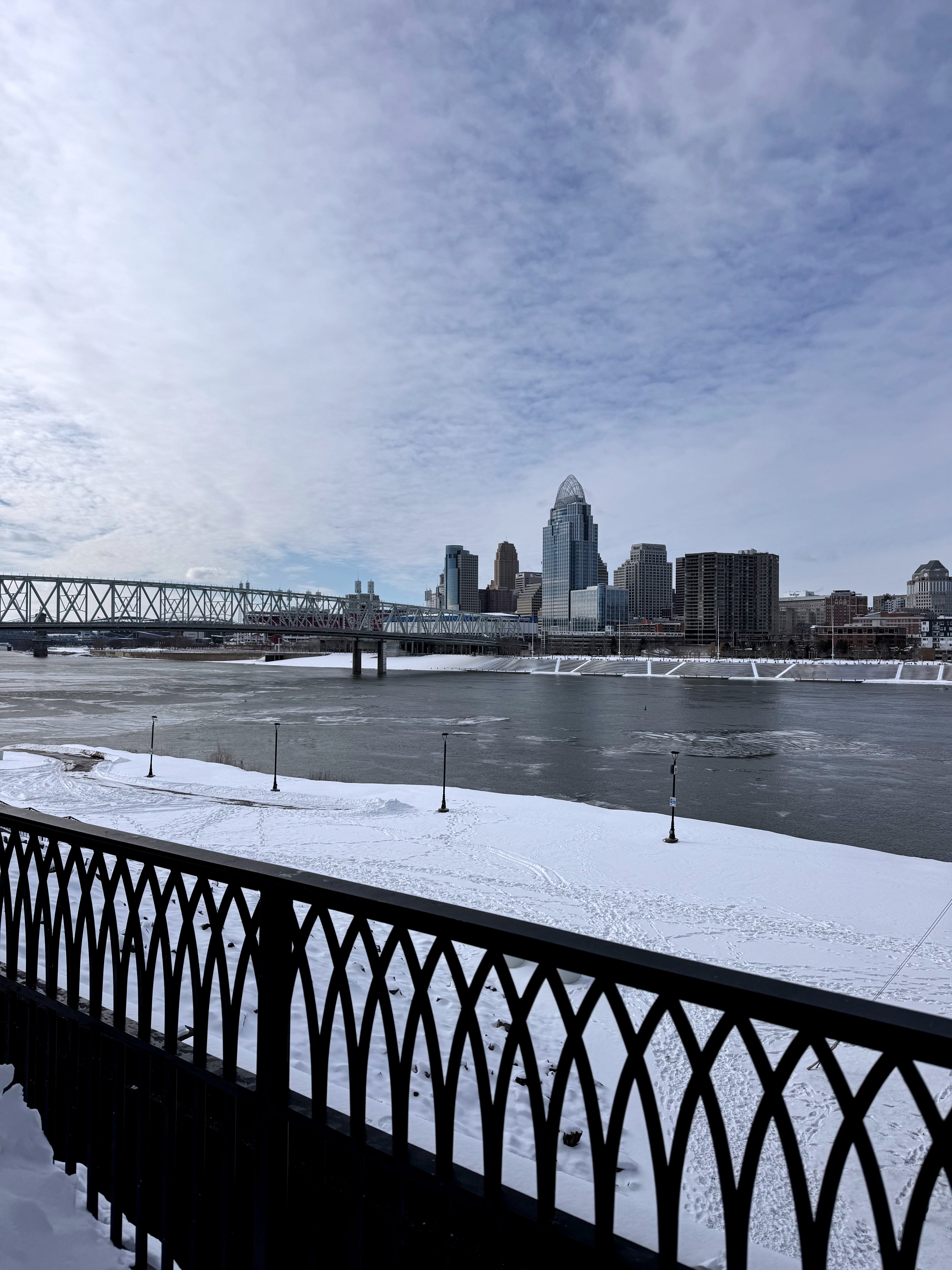
Much like most of the rest of the United States, it’s a snowy wonderland in Kentucky. There are thin ice floes drifting down the river, but nowhere near being as frozen as it was during the Blizzard of ‘77. And that just reminded me of a great Nada Surf song titled, you guessed it, “Blizzard of ‘77.”
Currently, in the kitchen, my husband is building a paper spreadsheet so we can be prepared for Harry Styles tickets to go on sale. It’s quite a process. And if you’re thinking, “Dude. You’re too old to fangirl over Harry Styles,” you can just get lost. You’re never too old for anything if it brings you joy. I also don’t believe in “guilty pleasures.” They’re just “pleasures.” Unless your guilty pleasure is murdering people. Then, I guess my scenario does not apply. MOVING ONNNNNN.
The Ohio River! Last post, I said I was going to start the premise of this whole shebang by starting with some history about the whole shebang — the Ohio River. But then I guess I got sidetracked because looking back, I wrote about bridges. So, this time, dear reader, we will chat about the actual river and any history I dig up about this area of the river in particular. If you’re new here, I live on the banks of the Ohio River, on the Kentucky side, right across from the Queen City of Cincinnati.
Here are the cold, hard facts about this particular part of the river:
Kentucky owns the Ohio River. The state boundary line is the low-water mark on the Ohio side, which is based on where the river sat in 1792 when Kentucky became a state. It’s one of the few major U.S. rivers where the border works this way!
As we learned in my last post, this area is one of the most bridge-dense river crossings in the country. There are five bridges within a mile.
The river freezing used to be a normal thing in the 19th century. It regularly froze thick enough to walk across, move wagons and hold temporary markets and camps. During extreme winters, ferries shut down and people just crossed on ice, but that stopped once upstream dams stabilized water levels, industrial discharge warmed the river slightly and winters became less severe.
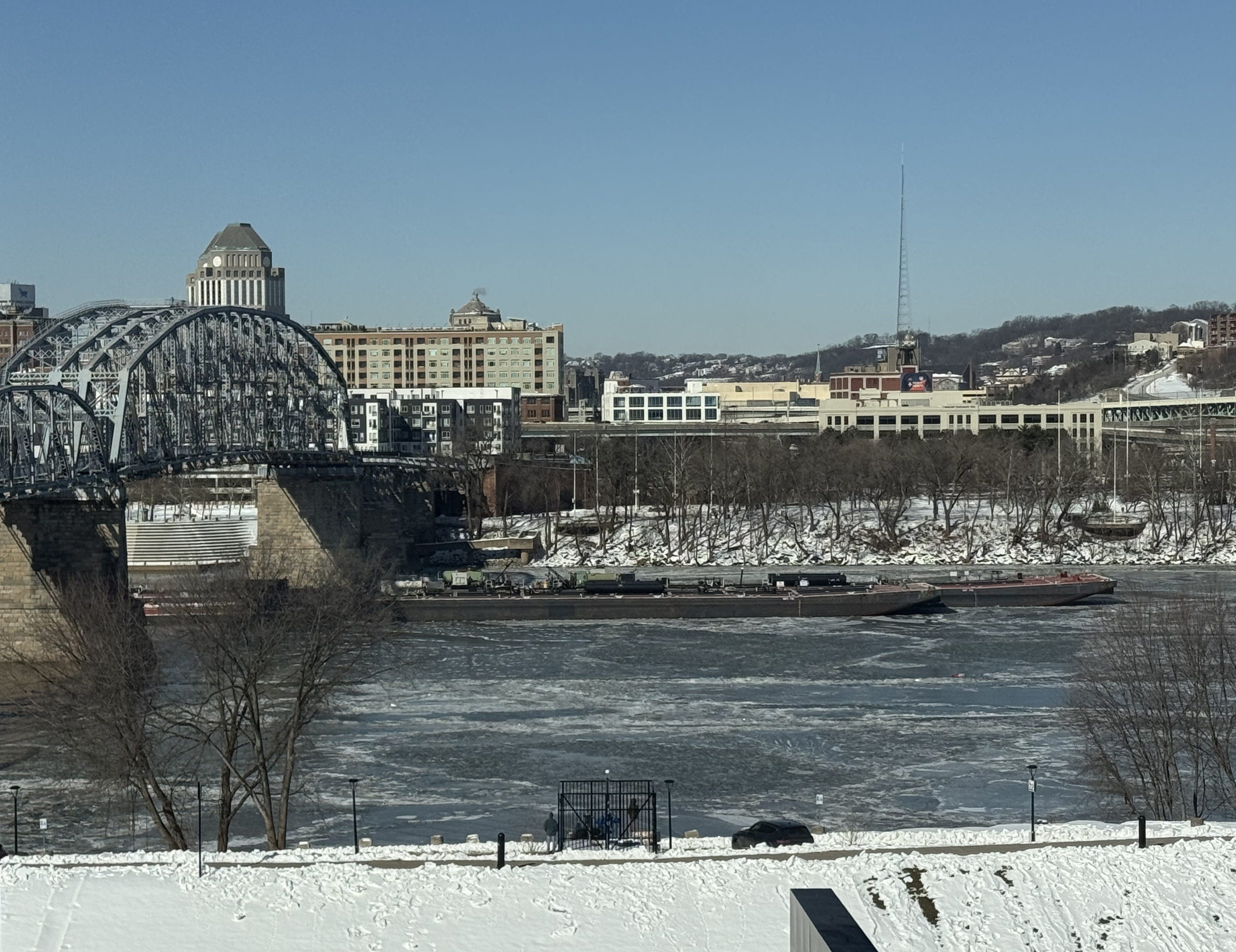
This area of the river was one of the most significant Underground Railroad crossings: Kentucky was a slave state, and Ohio was a free state. Crossing this exact stretch meant legal freedom (though not safety) Many freedom seekers crossed near today’s riverfront parks, downtown ferry landings and tributaries like the Licking River, which meets the Ohio just west of me. There are unmarked but documented crossing sites within eyesight of Sawyer Point, which I can see from my window too.
That’s all I will share for now. And when the weather gets nicer, I’ll go investigate more to see if there are signs or plaques marking significant areas over on the Ohio side. What should I talk about next?
No posts
Comments
Nothing yet. Say the first thing.
Sign in to join the conversation.